Bentley Historien
Bentley Motors Limited er en britisk designer, producent og forhandler af luksusbiler og SUV’er. Hovedkvarteret ligger i Crewe, England. Virksomheden blev grundlagt af W. O. Bentley (1888–1971) i 1919 i Cricklewood, Nordlondon, og blev kendt for at vinde 24-timersløbet i Le Mans i 1924, 1927, 1928, 1929 og 1930. Bentley har været et datterselskab af Volkswagen-koncernen siden 1998 og er siden 2022 konsolideret under VWs premium-mærke Audi.
Fremtrædende modeller strækker sig fra den historiske racer Bentley 4½ Litre og Bentley Speed Six; de nyere Bentley R Type Continental, Bentley Turbo R og Bentley Arnage; til den nuværende modelserie, inklusive Flying Spur, Continental GT, Bentayga og Mulsanne—som markedsføres globalt, med Kina som det største marked pr. november 2012.
I dag bliver de fleste Bentley-modeller samlet på virksomhedens fabrik i Crewe, mens et lille antal bliver samlet på Volkswagens fabrik i Dresden, Tyskland, mens karosserier til Continental bliver produceret i Zwickau og til Bentayga bliver de produceret på Volkswagen-fabrikken i Bratislava.
Sammenlægningen og den efterfølgende adskillelse af Bentley og Rolls-Royce fulgte en række fusioner og opkøb, der begyndte med Rolls-Royces opkøb af Bentley i 1931, som dengang var under konkursbehandling. I 1971 blev Rolls-Royce selv tvunget i konkurs, og den britiske regering nationaliserede selskabet – og delte det op i en luftfartsvirksomhed (Rolls-Royce Plc) og en bilvirksomhed (Rolls-Royce Motors Limited, inklusive Bentley). Rolls-Royce Motors blev efterfølgende solgt til ingeniørkoncernen Vickers, og i 1998 solgte Vickers Rolls-Royce til Volkswagen AG, inklusive Bentley med dets navn og logoer (men ikke navnet “Rolls Royce”).
Cricklewood (1919–1931)
Før Første Verdenskrig solgte Walter Owen Bentley og hans bror, Horace Millner Bentley, franske DFP-biler i Cricklewood, Nordlondon, men W.O., som Walter blev kaldt, havde altid ønsket at designe og bygge sine egne biler. På DFP-fabrikken i 1913 bemærkede han en papirvægt i aluminium og tænkte, at aluminium kunne være en passende erstatning for støbejern til at fremstille lettere stempler. De første Bentley aluminiumstempler blev monteret i Sopwith Camel flymotorer under Første Verdenskrig.
Samme dag som Paris-fredskonferencen for at afslutte Første Verdenskrig startede, grundlagde Walter Owen (“W.O.”) Bentley Bentley Motors Limited den 18. januar 1919 og registrerede Bentley Motors Ltd. i august 1919. I oktober udstillede han et bilchassis (med en dummy-motor) på London Motor Show. Den tidligere Royal Flying Corps-officer Clive Gallop designede en innovativ motor med fire ventiler pr. cylinder til chassisset. I december var motoren bygget og i drift. Levering af de første biler var planlagt til juni 1920, men udviklingen tog længere tid end forventet, så datoen blev udskudt til september 1921. Holdbarheden af de første Bentley-biler fik bred anerkendelse, og de deltog i bakkeløb og konkurrerede på Brooklands.
Bentleys første store race var 1922 Indianapolis 500, et løb domineret af specialbyggede biler med Duesenberg racerschassis. De deltog med en modificeret gadebil kørt af fabrikskører Douglas Hawkes, ledsaget af mekaniker H. S. “Bertie” Browning. Hawkes gennemførte de fulde 500 miles (800 km) og sluttede som nummer 13 med en gennemsnitshastighed på 120,62 km/t efter at have startet fra 19. position. Holdet blev derefter hastet tilbage til England for at deltage i 1922 RAC Tourist Trophy.
Kaptajn Woolf Barnato
I en ironisk reference til hans sværvægtsbokser-statur blev kaptajn Woolf Barnato kaldt “Babe”. I 1925 købte han sin første Bentley, en 3-liters. Med denne bil vandt han adskillige løb på Brooklands. Bare et år senere overtog han selve Bentley-virksomheden.
Bentley-virksomheden var altid underfinansieret, men inspireret af sejren ved Le Mans i 1924 af John Duff og Frank Clement, gik Barnato med til at finansiere Bentleys forretning. Barnato havde stiftet Baromans Ltd i 1922, som fungerede som hans finans- og investeringsselskab. Gennem Baromans investerede Barnato oprindeligt over £100.000, hvilket reddede virksomheden og dens medarbejdere. En finansiel omstrukturering af det oprindelige Bentley-selskab blev gennemført, og alle eksisterende kreditorer blev betalt med £75.000. De eksisterende aktier blev devalueret fra £1 hver til blot 1 shilling, eller 5 % af deres oprindelige værdi. Barnato ejede 149.500 af de nye aktier, hvilket gav ham kontrol over selskabet, og han blev formand. Barnato tilførte yderligere kapital til virksomheden: £35.000 sikret ved gældsbrev i juli 1927; £40.000 i 1928; £25.000 i 1929. Med denne fornyede finansiering kunne W. O. Bentley designe en ny generation af biler.
Fra W.O. Bentley, der grundlagde Bentley Motors i 1919, til det nuværende team på over 4.000 dedikerede medarbejdere, er virksomhedens ekstraordinære biler altid blevet designet og bygget af exceptionelle mennesker ved brug af de fineste materialer. De har også altid været kørt af exceptionelle personer. Fra de passionerede Bentley Boys og Girls, der kørte racerløb med bilerne i 1920’erne og opmuntrede W.O. Bentley til at opnå stadig større ingeniørmæssige bedrifter, til de visionære Bentley-ejere i dag, hjælper Bentley-kører med at forme verden omkring dem.
W.O. Bentley’s ekstraordinære liv.
“At bygge en hurtig bil, en god bil, den bedste i sin klasse.”
(W.O. Bentley, Stifter)
Født i 1888 som den yngste af ni søskende, grundlagde Walter Owen Bentley – selvom han foretrak at blive kaldt W.O. – det firma, der bærer hans navn, den 10. juli 1919. Nu, over 100 år senere, er hans navn kendt over hele verden for at skabe biler med en enestående kombination af ydeevne og det fineste håndværk og materialer.
Bentley Motors blev grundlagt af W.O. Bentley. Den første bil med hans navn kørte ud fra New Street Mews i London i 1919.
Fra beskeden begyndelse voksede virksomheden støt og roligt – i en utrættelig jagt på både luksus og ydeevne. Var det ikke for mærkets fem sejre ved Le Mans i 1920’erne samt en sjette i 2003, kunne denne kombination opfattes som en modsætning. I så fald kunne man sige, at Bentley fortsætter med at skabe de mest anerkendte modsætninger på vejen i dag.
Mere end et århundrede senere fortsætter W.O.’s vision med at vejlede vores tanker, handlinger og ambitioner. Bentley Motors, som ligger i Crewe, England, og har været ejet af Volkswagen AG siden 1998, er fortsat det definitive britiske luksusbilfirma, der skaber verdens mest eftertragtede højtydende grand tourere.
De tidlige år
Dampens kraft
W.O. Bentley blev født med en kærlighed til bevægelse. Da han var 9 år gammel, købte han en brugt cykel og skilte den ad for at finde ud af, hvordan den fungerede. Men hans sande passion var tog. Han forlod skolen som 16-årig for at begynde en lærlingeplads hos Great Northern Railway, og opnåede til sidst sin barndomsdrøm om at arbejde på et damplokomotiv, hvor han kastede kul i brændkammeret for at holde damptrykket oppe. Han gennemførte sin lærlingeuddannelse efter fem år, men på det tidspunkt var hans besættelse flyttet til vejen.
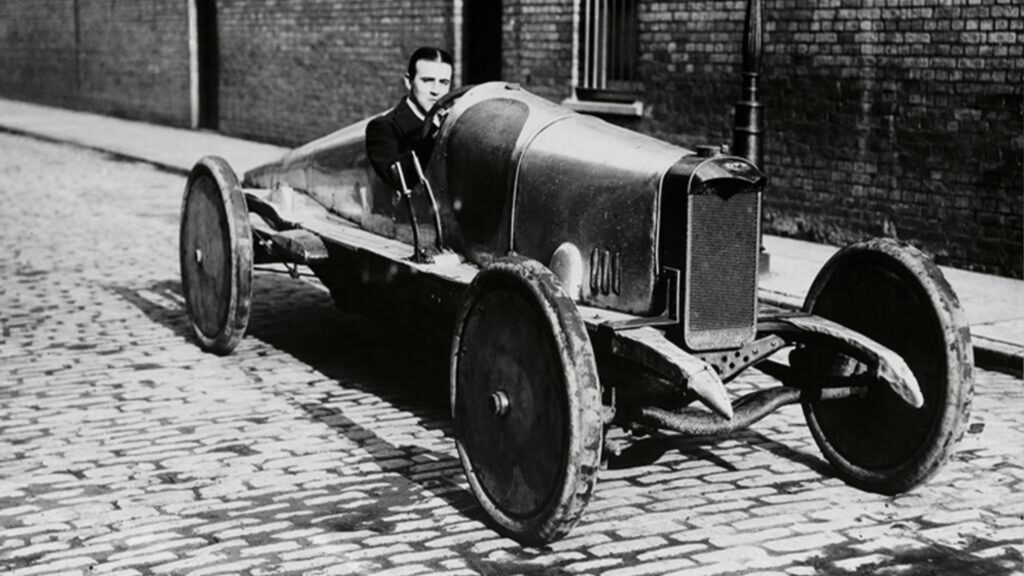
Mens han stadig arbejdede for jernbanen, købte W.O. en Quadrant motorcykel og kastede sig sammen med to af sine brødre entusiastisk ud i kapløb, hvor de trænede på vejene tidligt om morgenen, når politiets fartfælder ikke var i drift. I 1907 deltog han i London-Edinburgh racet, og selvom han brød sammen lige uden for Edinburgh, lykkedes det ham at reparere cyklen og nå i mål i tide til at kvalificere sig til en guldmedalje. Yderligere guldmedaljer fulgte i London-Plymouth og London-Land’s End racene i 1908. Efterhånden som hans kærlighed til kapløb voksede, blev W.O. mere og mere dygtig til at forbedre motorens ydeevne, og hans ændringer på en Speed model Rex var så succesfulde, at de blev taget i brug af det officielle Rex-hold.
Inspireret af en papirvægt
W.O.’s ingeniørfærdigheder blev endnu vigtigere, da han i 1912 dannede forretning med en af sine brødre og importerede franske biler lavet af Doriot, Flandrin & Parant. På et besøg i deres kontorer i Frankrig året efter opdagede W.O. en papirvægt lavet af aluminium og spekulerede på, om dette lette materiale kunne være et bedre stempel end stål og støbejern. For at øge styrken og forhindre, at det smeltede ved høje temperaturer, eksperimenterede han med at skabe en ny legering på et støberi og endte med en formel på 88% aluminium og 12% kobber. Hans nysgerrighed lønnede sig; ved at tilføje de nye stempler til DFP-bilerne opnåede han sejr på Brooklands og satte en ny rekord på 89,7 mph for en flyvende mil. Hans vigtige opdagelse viste sig at være afgørende for hans succes i de kommende år.
En luftbåren motor
Da Første Verdenskrig brød ud, satte W.O. sin ambition om at starte et bilfirma på pause og brugte i stedet sin hemmelige fordel til at hjælpe sit land. Som kaptajn i Royal Naval Air Service brugte han sine aluminiumstempler til at skabe en motor til jagerfly, der var betydeligt mere kraftfuld og pålidelig end tidligere versioner, som havde en tendens til at overophede og gå i stå under kamp. Den første Bentley Rotary-motor, BR.1, gjorde Sopwith Camel til det mest succesfulde britiske jagerfly i krigen. W.O. udviklede derefter BR.2 og besøgte aktive eskadriller, mens han overvågede produktionen. På en flyveplads, som han senere mindedes, “så det ud som om, at alle kanoner i Flandern åbnede ild mod os” under et strafangreb udført af Manfred von Richthofen, bedre kendt som Den Røde Baron. Heldigvis for bilens fremtid overlevede W.O. og den officer, der fulgte ham, ved at springe i en kanal.
Fødslen af Bentley Motors
W.O. Bentley blev tildelt en MBE
I anerkendelse af hans afgørende bidrag til krigsindsatsen blev W.O. Bentley tildelt en MBE (Most Excellent Order of the British Empire) i 1919. Han modtog også £8.000 fra Kommissionen for Opfinderpriser, hvilket gav ham den kapital, han havde brug for til at realisere sin drøm og starte sit eget bilfirma. Og således blev Bentley Motors grundlagt den 10. juli 1919. “Politikken var enkel,” sagde W.O. “Vi ville lave en hurtig bil, en god bil, den bedste i sin klasse.” Det var et mål, han ville nå igen og igen.
Suveræn på vej og bane
Mens W.O. udviklede den allerførste Bentley, rapporterede Autocar-magasinet, at han arbejdede på en model “beregnet til at appellere til de entusiastiske bilister, der ønsker en bil, som rent praktisk er en ægte racerbil med touring-tilbehør” – et mål, der stadig er en del af Bentleys DNA i dag. Efter succesen med 3 Litre blev hans sekcylindrede 6 ½ Litre motor lanceret i 1926, oprindeligt som Big Six og to år senere som Speed Six. I 1928 skabte han den firecylindrede 4 ½ Litre, og i 1930 den sekcylindrede 8 Litre. Disse var først og fremmest gade biler – men de havde styrken og udholdenheden til at opnå utrolige resultater i race.
På vej mod succes
W.O. var oprindeligt imod racerløb på Le Mans – et løb meget tæt forbundet med virksomhedens skæbne. “Jeg synes, det hele er vanvittigt,” sagde han. “Biler er ikke designet til at holde til sådan en belastning i fireogtyve timer.” Men efter at have set Frank Clement og John Duff komme på fjerdepladsen i 1923 og sætte den hurtigste omgangstid i en Bentley 3 Litre, blev han overbevist. Bentley kom snart til at dominere 24-timers løbet og vandt hele fem gange på syv år – hvilket skabte et væld af forsider.
160 km/t
8-Litren var W.O.’s sidste skabelse og betragtes bredt som hans mesterværk. Så stor var kraften og drejningsmomentet i rækkesekser-motoren, at virksomheden proklamerede, at 8-Litren ville være mere end i stand til at køre over 160 km/t, uanset hvilken type karrosseri ejeren havde valgt. W.O. sagde: “Jeg har altid ønsket at producere en 160 km/t bil, der var fuldstændig lydløs, og nu tror jeg, at vi har gjort det.” Denne dom blev gentaget af kaptajn W. Gordon Aston, der anmeldte 8-Litren for The Tatler, og sagde: “Aldrig i mit liv har jeg kendt et køretøj, hvor en så imponerende præstation var forbundet med en så glat og ubemærket stilhed.”
En passende hyldest
Med Wall Street-krakket, der skete kort før lanceringen af 8 Litre, blev der kun lavet 100 eksemplarer. Mens Bentley fortsætter med at lave biler, der kombinerer spændende ydeevne med udsøgt håndværk, er W.O.s bil stolt udstillet på fabrikken i Crewe. Hver gang en ny administrerende direktør udnævnes, får de nøglen på deres allerførste dag – en passende hyldest til manden, der startede det hele.
Oprindelsen af Flying B
I 1920’erne var en kølerhjelmsfigur det ultimative biltilbehør. Disse miniature skulpturer symboliserede ubesværet kraft og fart og annoncerede din ankomst med stil. Udover at skabe Bentleys vingede B-emblem designede den anerkendte kunstner F. Gordon Crosby også en ‘Icarus’ kølerhjelmsfigur. Denne optrådte i nogle af de første Bentley-kataloger, men kom aldrig i produktion, måske på grund af ophavsretlige problemer. I stedet blev ejere af Cricklewood-æraens Bentleys fra midten af 1920’erne tilbudt muligheden for den første firma-godkendte Flying B-figur – et udsmykket, opretstående messing ‘B’ med vinger holdt vandret, som også menes at være et design af Crosby.
Flyver højere
I 1930’erne var Bentleys Derby-byggede ‘stille sportsvogne’ blevet lavere og slankere. Derfor blev kunstneren Charles Sykes, designeren af Rolls-Royce Spirit of Ecstasy, i 1933 hyret til at skabe en ny maskot. Sykes designede en enkelt vinge med et fremadlænet ‘B’ i Art Deco-stil, med facetter der gjorde, at ‘B’et’ kunne læses korrekt fra begge sider. Den enkeltvingede version blev dog ikke populær, så designet blev ændret til at have et par vinger. En alternativ bagudvendt Flying B var også tilgængelig til MR- og MX-seriens overdrive Bentleys for at symbolisere deres sportslige karakter. Ejere skulle huske at dreje disse maskotter sidelæns, før de åbnede motorhjelmen, for ikke at risikere at bule karrosseriet.
Flyvende B’s tilbagevenden
Efter krigen dukkede en mindre version af den dobbelte vinge Flying B-maskot op på Crewe-fremstillede Bentleys indtil 1970’erne, hvor den blev trukket tilbage på grund af lovgivning om fodgængersikkerhed, som forbød markante faste ornamenter. I 2006 gjorde Flying B et triumferende comeback takket være en mekanisme, der gjorde den fuldt ud automatisk. Den blev tilbudt på Azure, Arnage og Brooklands og senere på Mulsanne. Særlige udgaver af Flying B-maskotten er blevet tilbudt af Bentleys Mulliner-afdeling til limited edition-modeller, en version med mørk toning og endda en Flying B i guld.
En følelse af at flyve
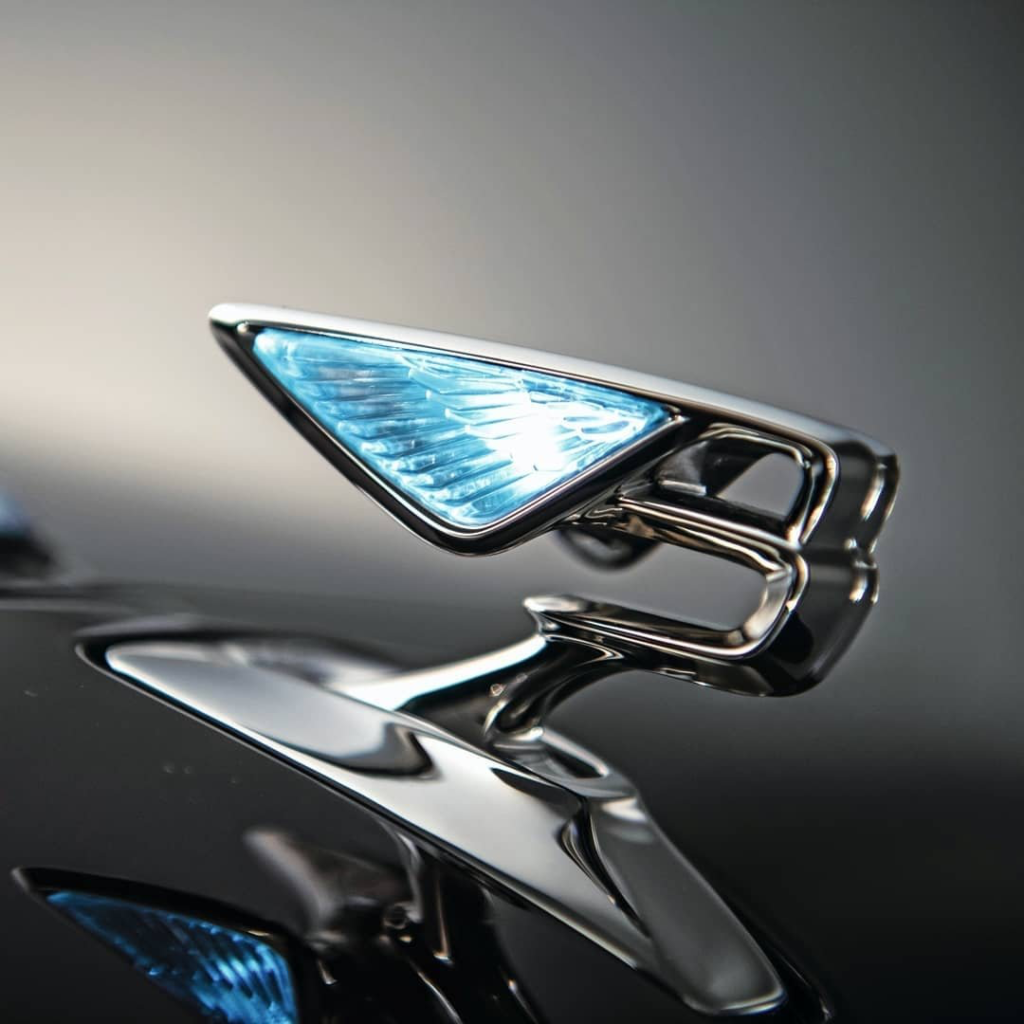
I 2019, Bentleys hundredeårsjubilæumsår, tog den nye Flying Spur, den definitive fire-dørs grand tourer, en ny retning – ledsaget af en ny udgave af Flying B. For at markere begivenheden afholdt de en konkurrence blandt alle Bentleys designere om at redesigne maskotten til deres andet århundrede. Det vindende design, af Hoe Young Hwang, var inspireret af uglen. Ro og værdighed, når den er stille, afslører uglen enorm kraft og smidighed i bevægelse – meget lig den nye Flying Spur. Den minimalistiske, moderne form af det nye design repræsenterer en ugle, der glider over en rolig sø på jagt efter bytte, mens maskottens bredere base tegner den bølge, der skabes i vandet. Med hver detalje af denne fængslende bil designet omkring føreren og passagererne, blev der lagt særlig vægt på at skabe et betagende vingefang, når det ses fra kabinen. Den nye Flying B er støbt i rustfrit stål, håndpoleret og fremstillet ved en proces, der normalt reserveres til turbo-motorer. Den forener de traditionelle asymmetriske fjer med et tydeligt moderne præg – når bilen låses op, aktiveres maskotten elektronisk, og fjerene lyser op i en omhyggeligt koreograferet velkomstsekvens, perfekt synkroniseret med forlygternes tænding.
Den første vingede B
Før den første maskot blev skabt, eksisterede Bentley Wings i en todimensionel form. Da W.O. Bentley startede sit bilfirma i 1919, havde han brug for et logo, der kunne opsummere hans stræben efter at presse grænserne for ydeevne. Han henvendte sig til sin ven F. Gordon Crosby, den mest berømte motorkunstner i mellemkrigstiden, som bragte fjerne motorløb og kontinentale ture til live for læserne af The Autocar. Crosby skabte den oprindelige Winged B – med ‘B’et’ fra Bentley indrammet af et par vinger, valgt for at symbolisere bevægelsens spænding – og måske også som en henvisning til W.O. Bentleys baggrund som designer af motorer til jagerfly under Første Verdenskrig. Crosby gav hver vinge et forskelligt antal fjer for at gøre den helt unik – og for at være et skridt foran falske efterligninger.
Vingerne ændrer retning
I 1930’erne, da Bentley var ejet af Rolls Royce, blev Bentley-vingerne strømlinet, hvor de nedadvendte fjer blev udglattet og gjort horisontale. Hver vinge fik også 10 fjer, og den oprindelige asymmetri forsvandt. Logoet blev revideret igen i 1990’erne, og som en hyldest til Crosby blev asymmetrien genindført, og det centrale ‘B’ blev ændret for at minde om det oprindelige. I 2002 blev en endelig ny virksomhedsidenditet skabt, inklusive den vingede ‘B’, der stadig er i brug i dag, en der indkapsler moderne Bentley-værdier samtidig med at respektere dets oprindelse.
Et hundrede års jubilæum
For at fejre 100 år med Bentley blev der skabt en version af Winged B eksklusivt til biler bygget i jubilæumsåret. Bentley ‘B’et’ og ovalen omkring det blev fremhævet i en særlig metallisk finish kaldet Centenary Gold, og årstallene 1919 og 2019 blev tilføjet på hver side af ‘B’et’ – en passende hyldest til Crosby i et år, der også markerede et århundrede siden hans oprindelige design.
De tidlige år inden for racerløb
Uden racerløb ville Bentley måske aldrig have eksisteret overhovedet. W.O. Bentley var mere end bare en ingeniør; han var også en passioneret konkurrent – en mand, der ubetinget troede på vigtigheden af billøb for hans succes. Som han selv sagde: “Racerpolitikken var en del af selve grundlaget for Bentley Motors, med to vitale formål: at teste og reklamere for vores biler.” Selvom han var drevet, kendte W.O. værdien af teamwork – og vigtigheden af at samarbejde med sine kunder. Fra det øjeblik hans første bil begyndte at tiltrække opmærksomhed, var han ivrig efter at se Bentleys konkurrere. De spændingssøgende mænd og kvinder, der købte dem, var mere end villige til at imødekomme det. Det hold, der opstod i 1920’erne – en tidlig udgave af det, vi i dag kender som et fabrikshold – viste sig ustoppeligt på racerbanerne i Storbritannien og Nordeuropa.
Tidlige år
På Brooklands racerbane den 16. maj 1921 brølede den håndbyggede Bentley EXP 2 over målstregen foran alle sine rivaler. Det var Junior Sprint Handicap – det første konkurrenceløb vundet af en Bentley. Brooklands, der blev anlagt i 1907 og er berømt for sine 9,5 meter høje hældende sving, blev bredt betragtet som ‘Ascot inden for motorsport’ – hvilket gjorde det til den perfekte testbane for Bentleys biler. Mange af løbene, der blev afholdt der, var handicaps, hvor biler med mindre motorer fik et forspring foran de større, kraftfulde Bentleys. Men W.O.’s ingeniørkunst sejrede – og hans biler blev hyppige vindere.
Bentley 3 Liter
Hans ambition ville dog snart føre virksomheden ud over de britiske grænser. I Frankrig mødte W.O. to britiske kørere: Harry Varley og Frank Burgess. Sammen udviklede de en hurtig touringbil: Bentley 3 Litre. Med fire cylindre, en overliggende knastaksel og fire ventiler per cylinder blev den sat til salg for første gang i 1921 – og snart kørte den internationalt. I 1922 sluttede den som nummer 13 i 500-mile løbet i Indianapolis (nu kendt som Indy 500), før et hold på tre biler tog anden, fjerde og femtepladsen i 1922 TT, hvor de vandt holdprisen. Bag rattet i bilen, der kom på fjerdepladsen, sad W.O. selv.
Bentley på Brooklands
På trods af Bentleys voksende internationale berømmelse forblev Brooklands afgørende for virksomhedens succes. I 1929 vandt Bentley Brooklands 500, og i 1930 den prestigefyldte Double Twelve – et udholdenhedsløb, der strakte sig over to krævende 12-timers etaper. Samarbejdet fortsatte godt ind i det næste årti. I marts 1932 satte Tim Birkin en omgangsrekord på Brooklands med 222 km/t i sin enkeltmands Bentley Blower. Og selvom banen forbød kvindelige racerkørere indtil 1928, deltog Margaret Allan der og vandt i en Bentley i midten af 1930’erne.
Erobring af Le Mans
Bentleys banebrydende vision har længe været indbegrebet af dets køreres udholdenhed og ambition. Men det var først, da W.O. deltog i det første 24-timersløb i Le Mans, at virksomhedens definerende æra begyndte.
Den første sejr
I starten havde han været skeptisk. “Jeg synes, det hele er skørt,” erklærede han. “Ingen vil klare det hele. Biler er ikke designet til at tåle den slags belastning i 24 timer.” Men efter det første løb i 1923, hvor en Bentley 3 Litre kom på fjerdepladsen og satte en ny omgangsrekord, ændrede han mening. Året efter vendte han tilbage og vandt. Det markerede begyndelsen på et glorværdigt årti – et årti hvor W.O. og hans kørere, de oprindelige Bentley Boys, kom til at dominere Le Mans.
En række sejre
Le Mans-årene blev til en bemærkelsesværdig periode med innovation. I 1924 vandt en Bentley 3 Litre løbet. I 1928 var det en 4½ Litre. Og i 1930 tog to 6½ Litre Speed 6 biler første og andenpladsen. Efterhånden som motorerne blev større og mere sofistikerede, finpudsede W.O. og Bentley Boys deres færdigheder – fra selve kørselen til deres pitprocedurer. De blev et ubesejret hold.
Gamle Nummer 7
Af alle Le Mans-sejre er den mest mindeværdige fra 1927. To fabriks-4½ liters biler deltog det år – men ved White House Corner indtraf katastrofen. Begge blev alvorligt beskadiget i en kollision med flere biler og måtte udgå. Heldigvis var der en anden Bentley med i løbet. ’Gamle Nummer 7’ var en Bentley 3 Liter kørt af Dudley Benjafield og Sammy Davis. Selvom den også blev skadet i uheldet, foretog holdet de reparationer, de kunne – og formåede at holde den på banen. For at erstatte de knuste forlygter spændte de en lommelygte fast på forruden, så Davis og Benjafield kunne køre gennem natten og krydse målstregen som Le Mans-vindere. Tilbage i London blev der holdt en festmiddag på Savoy. Efter en skål “for en, der burde være til stede” blev bilen rullet ind i spisesalen. Hele holdet rejste sig op for at hylde ’Gamle Nummer 7’ – deres slagfærdige, firehjulede æresgæst.
Returen til Le Mans
Efter årtiers fravær fra banen vendte Bentley tilbage til racerløb – og til Le Mans – i 2001. Som led i en treårig jagt på at genvinde 24-timers trofæet deltog en helt ny Bentley banebil, EXP Speed 8, i løbet. På trods af kraftig regn sikrede holdet tredjepladsen. Da Bentley-kørerteamet bestående af Andy Wallace, Butch Leitzinger og Eric van de Poele for første gang i over 70 år trådte op på podiet, bar de Bentley-overalls i 1920’er-stil.
Året efter sluttede en forbedret bil med en endnu mere kraftfuld motor på fjerdepladsen – en nyttig testkørsel for den nye teknologi. Men det var først året efter – næsten 73 år til dato siden to Bentleys tog første- og andenpladsen i 1930 – at Guy Smith, Dindo Capello, Tom Kristensen, Johnny Herbert, David Brabham og Mark Blundell gentog denne imponerende bedrift. Le Mans-vindere igen, og en af Bentley Speed 8-bilerne satte også hurtigste omgangstid. For at fejre denne fantastiske sejr var nummer 7 Speed 8 æresgæst ved en middag på Savoy, præcis som ‘Old Number 7’ havde været i 1927. Selv drikkelisten var den samme som for 76 år siden. Af alle de baner, hvor Bentley har kørt løb, er der ingen, der har spillet en mere afgørende rolle i virksomhedens hundredeårige historie end Le Mans.
I 2019, for at fejre Bentleys hundredeårsjubilæum, omdøbte byen Le Mans en gade til ære for de oprindelige ‘Bentley Boys’, som vandt fem Le Mans 24-timers løb mellem 1924 og 1930, samt deres efterfølgere, der vandt i 2003. Gaden har fået navnet ‘Rue des Bentley Boys’.
Inspirerer generationer. Uophørligt.
Altid klar til et løb, en udfordring eller et glas champagne var den første generation af Bentley Boys en sammentømret gruppe af ekstraordinære playboys, racerkørere og eventyrere, der opnåede global berømmelse i 1920’erne og 30’erne. De inspirerede en hel generation af Bentley-kørere og beundrere med deres passion for kørsel og dybe kærlighed til en udfordring. Bag rattet i Bentley-biler dominerede de Le Mans med fem sejre på blot otte år.
“Jeg tror ikke, mange virksomheder på så kort tid har formået at opbygge en tilsvarende kilde til legender og myter, historier og anekdoter. Virksomhedens aktiviteter fangede offentlighedens fantasi og tilføjede et strejf af farve, af indirekte glamour og spænding til grå og kedelige liv.”
W.O. Bentleys ord opsummerer til perfektion tiltrækningen ved Bentley Boys og deres biler.
The Bentley Drenge. Et ekstraordinært team
Bentley Boys omfattede den tidligere jagerpilot Sir HRS ‘Tim’ Birkin, specialisten fra Harley Street J.D. ‘Benjy’ Benjafield, motorsportsjournalisten SCH ‘Sammy’ Davis, den ‘født eventyrer’ Glen Kidston, ledet af Woolf ‘Babe’ Barnato – alle mænd med uafhængige midler. De levede livet fuldt ud og skabte overskrifter med deres bedrifter uden for racerbanerne, lige så ofte som for deres præstationer på den.
Den Ærede Sir ‘Tim’ Birkin
Med sit blå og hvide polkaprikkede tørklæde og veltrimmede overskæg var den tidligere jagerpilot og baron Sir Henry ‘Tim’ Birkin en sand britisk sportshelt. Besat af fart var han berygtet for at være hård ved sine biler. Han overtalte den velhavende arving Dorothy Paget til at finansiere et hold af superladede 4 ½ liters Bentleys, kendt som ‘Blowers’. For skrøbelige til langdistanceløb, var de ubesejrede i sprintløb med Birkin bag rattet, og i 1932 satte han en imponerende rekord på Brooklands med 222 km/t.
Glen Kidston
Kidston, som vandt Le Mans i 1930 sammen med Barnato, syntes at trives med fare. Som Lieutenant Commander i Royal Navy overlevede han to torpedobeskydninger; som ubådssoldat undslap han, efter at hans ubåd sad fast på havbunden. Han var den eneste overlevende fra en civil flyulykke på en flyvning fra Croydon til Amsterdam, hvor han to gange gik tilbage ind i det brændende vrag i et modigt forsøg på at redde andre. Barnato beskrev ham som “… det ypperste eksempel på en sportsmand. Ordet frygt var udeladt fra hans ordbog … en bymand når han var i humør, en mand af handling i en anden.” Kidstons held slap op kort efter, at han havde sat en flyver rekord fra England til Cape Town, da hans lånte de Havilland Puss Moth gik i stå i luften.
DR J.D. ‘Benjy’ Benjafield’
Enhver vennegruppe har sin stille figur, drillet men alligevel elsket af de andre. Harley Street-specialisten ‘Benjy’ spillede denne rolle perfekt sammen med sine livlige holdkammerater. Beskeden, betænksom og snedigt dygtig var Benjafield ikke den hurtigste af Bentley-drengene, men han havde disciplinen til at følge holdets ordrer for at opnå et resultat. Han og Sammy Davis gav Bentley deres mest berømte Le Mans-sejr nogensinde i 1927, da de bragte ‘Old Number 7’ hjem efter, at resten af holdet var blevet elimineret i det berygtede White House-kryds. I 1928 ydede Benjafield et lige så betydningsfuldt bidrag til britisk motorsport, da han grundlagde British Racing Drivers’ Club.
John Duff
John Duff var den første Bentley-fører til at vinde Le Mans 24-timers løbet i 1924. Ved krigens udbrud i 1914 rejste han fra Lushan i Kina gennem det forrevolutionære Rusland for at melde sig til tjeneste. Han blev såret ved Ypres. Efter krigen begyndte han med billøb og var ansvarlig for at overtale W.O. Bentley til at tage mærket til Le Mans; Duff sluttede som nr. 4 i 1923 sammen med Bentley-fabrikskøreren Frank Clement og vandt året efter. Han trak sig fra billøb efter en alvorlig ulykke ved Indianapolis 500 i 1926. Som olympisk kårdeudøver underviste han i fægtning for Hollywood-stjerner i Santa Monica, USA og stod som stuntmand for sin ven Gary Cooper i fægtescener. Senere i livet begyndte han med konkurrence i springridning og døde efter en rideulykke i 1958.
Levende legender
Fire af Bentley Boys boede i tilstødende lejligheder på Mayfairs eksklusive Grosvenor Square, hvor deres fester, der varede i flere dage, blev legendariske. Det var almindeligt at se deres Bentleys parkeret i det sydøstlige hjørne af pladsen, hvilket førte til, at Londons taxachauffører kaldte det for ‘Bentley Corner’.
Deres berømmelse og bedrifter betød, at de blev anerkendt og fejret, hvor end de kom – de inspirerede endda Harry Craddock, den berømte bartender på Savoy, til at skabe The Bentley Cocktail. I 2003 blandede chefbartenderen på American Bar på Savoy, Woolf Barnato-cocktailen til ære for den førende Bentley Boy.
Savoy var også stedet for en af deres mest berømte fester. Efter sejren for en 4 ½ liters Bentley ved Le Mans i 1927 blev Bentley Boys inviteret til en særlig middag på hotellet, arrangeret af magasinet The Autocar. Æresgæsten var naturligvis bilen selv, som blev kendt som Old No. 7 – stadig beskidt og mærket af kampen fra løbet. Boys satte sig til en elleve-retters banket omkring et hesteskoformet bord med bilen i ærespladsen i midten.
The Bentley-girls. Bentleys flyvende legende
Bentley-boys satte måske tempoet, men Bentley-girls nægtede at træde i baggrunden og gjorde deres indtryk med den uforlignelige Bentley-stil. Mary Petre Bruce, Dorothy Paget og Diana Barnato – Bentleys Flyvende Dame – spillede hver især en ekstraordinær rolle i at opbygge Bentley-legenden.
Mary Petre Bruce: født til fart
Mary Petre blev født med en trang til fart. En modstander for enhver af Bentleys racerkørere, hun var den første kvinde, der fik en fartbøde i Storbritannien, kun 15 år gammel. I 1926 giftede hun sig med Victor Bruce, vinderen af det års Monte Carlo Rally. Hårdt konkurrencepræget deltog hun i rallyet året efter. Hun tilbagelagde 1.700 miles på 72 timer uden søvn og sluttede som nummer seks samlet, hvor hun vandt Coupé des Dames. Utilfreds med at hvile på laurbærrene kom hun i 1928 på andenpladsen. I de følgende år satte Mary og hendes mand, Victor Bruce, også adskillige distance-rekorder fra 4.000 til 15.000 miles.
En usædvanlig anmodning
I 1929 besluttede fru Victor Bruce at forsøge at sætte den eftertragtede Class C 24-timers rekord på den bankede Montlhéry-bane nær Paris. Men hendes AC var simpelthen ikke kraftfuld nok. Hun aftalte hurtigt et møde med W.O. Bentley og bad om at låne en team Bentley 4 ½ Litre. Da W.O. spurgte, “Hvem er din medkører?” svarede hun, “Jeg har ingen medkører. Jeg kører alene.” Der var en lang stilhed. Endelig vendte W.O. sig mod Woolf Barnato og sagde, “Jeg tror, hun kan klare det.” Han lånte hende Tim Birkins 4 ½ Litre Bentley.
Rekordbryder på land, til vands og i luften
Mary havde aldrig kørt i en Bentley før dagen for rekordforsøget og måtte låne puder fra de officielle tidstagere, så hun kunne nå pedalerne. På trods af tåge, kulde og farlige baneforhold tilbagelagde hun 2.164 miles på 24 timer med en gennemsnitshastighed på næsten 90 mph og satte dermed rekorden. Den præstation gav hende livsvarigt medlemskab af British Racing Drivers’ Club. Samme år satte hun en powerboat-rekord for den hurtigste dobbelte krydsning af kanalen, inden hun købte sig et fly og lærte at flyve på kun seks uger. Derefter begav hun sig ud på en solo jorden rundt-flyvning, hvor hun slog rekord efter rekord undervejs – og blev den første kvinde til at flyve jorden rundt alene. Som 81-årig tog hun et genopfriskningskursus og under sin første flyvning i 37 år lavede hun en loop. Tilbage på land udbrød hun: “Sikke en oplevelse! Det har givet mig 50 år ekstra liv!”
Dorothy Paget og Blower Bentley
Den ærede Dorothy Paget var både utrolig rig og dybt excentrisk. Hun spillede en afgørende rolle i skabelsen af en af de mest ikoniske Bentleys; 4 ½ Litre Supercharged, kendt som Blower Bentley.
Eksentrisk og talentfuld
Blandt sine mange ejendommeligheder omdøbte Paget sine personlige tjenere efter regnbuens farver. Hun var kendt for at gamble hele natten, sove hele dagen og havde ry for at være en handlekraftig kvinde, der vidste, hvad hun ville. Som debutant i 1920’erne, mens andre unge damer prioriterede at finde en bejler, prioriterede Paget sin passion for fart og kraft. Hendes interesse for motorløb opstod første gang under et besøg på Brooklands, hvor hun tog kørelektioner hos Bentley Boy og racerkører Sir Tim Birkin. Han beskrev hende som en af de bedste kvindelige kørere, han nogensinde havde mødt, “i stand til at håndtere enhver type racerbiler, produceret herhjemme eller i udlandet”. I 1929 var Birkin blevet besat af at få mere ydeevne ud af Bentley 4 ½ Litre. Han var overbevist om, at Amherst Villiers’ kompressor var vejen frem. På trods af modstand fra W.O. overbeviste Birkin Dorothy Paget om at sponsere et racerteam med superladede Blowers. Fire 4 ½ Litre Supercharged Blowers blev bygget, og Birkins team konkurrerede side om side med Bentleys team på Brooklands og Le Mans.
Som fader, så datter
Datter af den tredobbelte Le Mans-vinder Woolf Barnato, Diana Barnato Walker arvede sin fars flair og modige ånd. Hun var en dygtig rytter og ivrig bilentusiast, der kørte en sølvgrå Bentley 4 ¼ Litre Park Ward sedan, givet til hende af hendes far på hendes 21-års fødselsdag.
Bentleys flyvende dame
Ligesom Mary Petre Bruce blev flyvning Dianas livslange passion. Hun fløj solo i Brooklands Flying Club i 1938 efter kun seks timers undervisning og sluttede sig til Air Transport Auxiliary i 1941, hvor hun leverede fly fra fabrikkerne til frontlinjens eskadriller. Det var et farligt job – hun måtte navigere selv uden nogen kontakt til jorden, da radiofrekvenserne var reserveret til frontlinjens eskadriller. Berømt for sit glamourøse udseende og enestående flyvefærdigheder havde hun ved krigens slutning leveret 260 Spitfires og adskillige andre fly til deres eskadriller.
Den hurtigste kvinde i verden
I 1962 modtog hun Jean Lennox Bird-trofæet for bedrifter inden for luftfart, og i 1963 fløj hun et English Electric Lightning T14-jagerfly med en imponerende hastighed på 2031 km/t – det svarer til næsten Mach 2 eller dobbelt så hurtigt som lydens hastighed.
Bentley ind til benet
Da Team Bentley vandt Le Mans i 2003, var Diana Barnato en af de få levende personer med personlige minder fra den oprindelige Bentley Boys-æra. Ved festmiddagen – som en del af Bentleys tradition, afholdt på Savoy – blev der arrangeret en spontant ‘pit stop’-konkurrence for at se, hvem der hurtigst kunne kravle ind i cockpittet på den vindende Speed 8 og smække døren i. Den 85-årige Diana Barnato Walker sparkede skoene af, løb over gulvet og kæmpede sig ind i bilen til tordenende bifald. Hendes far ville have været stolt.
En ny racertidsalder
I 2013 – et årti efter denne spændende Le Mans-sejr – bragte Bentley en ny bil på banen: Continental GT3, en racerbilsmodel baseret på den almindelige Continental GT. Denne formidable bil gennemførte en hel sæson i Blancpain Endurance Championship året efter. I 2014 vandt Team Bentley M-Sport Continental GT3 ved Paul Ricard og Silverstone – sidstnævnte repræsenterede den første britiske sejr for en fabriks-Bentley siden Double Twelve ved Brooklands i 1930.
Løb for løb forbedrede holdets præstation sig yderligere, indtil Team Bentley M-Sport i 2017 vandt Blancpain GT Series Endurance Cup samlet. Efter introduktionen af den nye Continental GT i 2017 blev en ny GT3 skabt. Denne anden generation kombinerer den fantastiske V8-motor fra sin forgænger med det dynamiske karrosseri fra den nye gadebil.
I 2019, Bentleys jubilæumsår, opnåede de en række sejre, herunder den første afdeling af British GT Championship på Oulton Park, tredje og fjerde afdeling af Blancpain GT World Challenge America samt Paul Ricard 1000 km.
Motorsport
Motorsport har været kernen i Bentley gennem hele dets eksistens. I 1921, kun to år efter den første Bentley prototype blev præsenteret, deltog de i det verdenskendte 24-timers løb i Le Mans. I dag kører Bentley med Continental GT3, deres mest dynamiske og kraftfulde racerbilsmodel baseret på deres mest avancerede vejbil til dato. Continental GT3 er designet af Bentley på hovedkontoret i Crewe og køres af luksusmærkets succesfulde og prestigefyldte teams verden over.
Bentley Speed Six. Den mest succesfulde racerbentley
Speed Six blev den mest succesfulde racerbentley i historien som en højtydende version af 6½ Litre og vandt Le Mans i 1929 og 1930 med Woolf Barnato Sir Henry ‘Tim’ Birkin og Glen Kidston bag rattet
Udvikling af en ny motor
W.O. Bentley mente, at den bedste måde at øge effekten på var at øge cylindervolumen, i modsætning til Tim Birkins tro på kompressorer. Derfor udviklede han en ny, større motor til at efterfølge 4½ Litre. Med en boring på 100 mm og en slaglængde på 140 mm havde hans nye rækkesekser en kapacitet på næsten 6,6 liter. I grundudgave, med en enkelt Smiths femdyse karburator, dobbelt magnettænding og et kompressionsforhold på 4,4:1, leverede 6½ Litre 147 hk ved 3500 omdr./min. 362 eksemplarer blev bygget på Bentleys fabrik i Cricklewood, Nordlondon, på forskellige chassis i forskellige længder afhængigt af karrosseritypen, som den enkelte kunde ønskede.
Speed Six chassiset
Speed Six-chassiset blev introduceret i 1928 som en mere sportslig version af 6½ Litre. Motoren blev modificeret for at frigøre mere kraft, med dobbelte SU-karburatorer, en højere kompressionsforhold og en højtydende knastaksel, hvilket resulterede i en stigning til 180 hk. Speed Six-chassiset var tilgængeligt for kunder med akselafstande på 3505 mm, 3569 mm og 3874 mm, hvor det korte chassis var mest populært. 182 Speed Six-modeller blev bygget mellem 1928 og 1930, og fabrikkens racerbiler blev bygget på et 134 tommer (11’2”) chassisramme.
En racerversion af Speed Six
Racerversionen af Speed Six havde en videreudviklet motor med et kompressionsforhold på 6,1:1 og ydede 200 hk. To sejre ved Le Mans i 1929 og 1930 sikrede Speed Sixs plads i Bentleys historie, hvor sejren i 1929 satte en ny standard for dominans ved løbet. Kørt af Woolf Barnato og Sir Henry ‘Tim’ Birkin førte en Speed Six fra første omgang til målflaget, fulgt af en række på tre andre Bentleys. Birkin satte en ny omgangsrekord på 7:21, hvilket var 46 sekunder hurtigere end den tidligere rekord og krævede en gennemsnitshastighed på 133,5 km/t. Ved at tilbagelægge en distance på 2844 km blev en yderligere rekord også sat. En så dominerende præstation af én producent blev ikke set igen ved Le Mans i næsten 30 år.
‘Blue Train’ Bentley Speed Six
Få biler indkapsler glamouren, hastigheden og kraften fra den førkrigs Bentley-æra bedre end ‘Blue Train’ Bentley Speed Six. I denne bil kæmpede Bentley Boy Woolf Barnato med det berømte Blue Train på vej nordpå fra Côte d’Azur til Calais – og vandt. Hans bedrift var så bemærkelsesværdig, at et 2015-genløb foretaget af Car Magazine i en Continental GT3-R kun lige akkurat formåede at overgå Barnatos gennemsnitshastighed sat i 1930. I årevis blev Bentleyen, der slog Blue Train, antaget at være en Speed Six coupé bygget af karrosseribyggerne Gurney Nutting. Den lave taglinje og 2+1 cockpit med et enkelt ‘side-sadel’ bagsæde giver bilen et slankt, lavt og målrettet udseende; dette unikke design blev nævnt af Bentleys designteam som en af inspirationerne til den moderne Continental GT. Alligevel er der et mysterium om, hvilken Speed Six Barnato kørte gennem Frankrig under sit berømte væddemål. Var det Gurney Nutting-coupéen, eller hans Mulliner-karrosseri sedan? Måske har enhver legende sine hemmeligheder…
Køreren og udfordringen
Woolf Barnato – arving til en stor formue fra Kimberley diamantminer i Sydafrika – var den ultimative ‘Bentley Boy’. En fremragende sportsmand, livsnyder og generøs vært, han blev formand for Bentley Motors i 1926, da virksomheden kæmpede med kapitalen. W.O. Bentley betragtede ham som den bedste af holdets kørere, og Barnatos 100% statistik ved Le Mans – tre sejre i tre starter – bekræfter W.O.s vurdering. Barnato var ved en middag ombord på en yacht nær Cannes i marts 1930, da emnet om at race mod det berømte Blue Train kom op, da både Rover og Alvis for nylig havde slået toget fra St Raphael til Calais. Barnato var ikke imponeret og kaldte bedriften ‘ikke noget særligt’. Han satsede £200 på, at han bag rattet i sin Speed Six let kunne slå toget til Calais. Da alle vidste, hvor snu Barnato var, ville ingen af hans selskab tage væddemålet – så han besluttede alligevel at gennemføre turen for at bevise sin pointe. Næste dag kl. 17:45, da Blue Train forlod togstationen i Cannes, forlod Barnato og hans ledsager, amatørgolfspiller Dale Bourne, Carlton Bar i Cannes og satte afsted i Speed Six.
Regn, tåge og punkteringer
Under de næsten 300 km fra Cannes til Lyon oplevede de to mænd kraftig regn, som sænkede deres fart. Omkring kl. 4 om morgenen, mellem Lyon og Paris nær Auxerre, mistede holdet tid på at lede efter deres forud aftalte tankningssted. På trods af denne forsinkelse, tæt tåge nær Paris og en punktering, som brugte deres eneste reservehjul, nåede Barnato og Bourne endelig Calais kl. 10:30 om morgenen. De havde tilbagelagt over 900 km med en gennemsnitshastighed på næsten 70 km/t, en imponerende præstation på datidens støvede og ujævne veje.
I London inden toget når Calais
Barnato var ankommet til Calais så langt foran toget, at han besluttede sig for at fortsætte til London. Efter at have krydset Kanalen med en pakkefærge, blevet vinket igennem tolden og kørt hårdt i næsten 1100 km, parkerede Woolf Barnato sin Speed Six uden for Conservative Club i St. James’ Street kl. 15.20. Bare fire minutter senere ankom det Blå Tog til stationen i Calais. Barnato havde vundet sit uofficielle væddemål, selvom den franske Motorproducenters Forening udstedte en bøde til Bentley Motors for omkring £160 for at have kørt racerløb på offentlige veje og udelukkede Bentley fra Paris Salon i 1930. Barnato hævdede, at han havde kørt racerløb som privatperson og ikke som formand for Bentley … en påstand, der ikke overbeviste myndighederne.
Hvilken Speed Six?
I mange år blev det antaget, at Bentley Speed Six, som Woolf Barnato brugte til at slå Blue Train, var en tohjulet coupé med karosseri fra karrosseribyggeren Gurney Nutting. Bentley-formanden ejede bestemt bilen; og det var Gurney Nutting coupéen, som den samtidige kunstner Terence Cuneo afbildede i sin berømte maleri af duellen. Men for nylig afdækkede Bruce McCaw, den nuværende ejer af Gurney Nutting Speed Six, beviser på, at den muligvis ikke var færdiggjort før efter kørselsdatoen. Nogle historikere mener, at Barnato, som ejede en række Bentleys, kørte mod Blue Train i sin Mulliner-fire-dørs Speed Six sedan, ikke Gurney Nutting coupéen. For at afslutte kontroversen sporede den Seattle-baserede samler McCaw chassis og motor på Barnatos Mulliner-karossererede Speed Six, og fandt også karrosseriet på et andet Bentley-chassis. Han forenede chassiset med dets originale karrosseri og viste den restaurerede Mulliner Speed Six sammen med sin Gurney Nutting Speed Six ved Pebble Beach Concours d’Elegance i august 2003. Bruce McCaw accepterer, at det sandsynligvis var Mulliner-sedan, der kørte mod Blue Train, selvom endegyldigt bevis måske aldrig findes. Men Gurney Nutting Coupé er stadig bredt kendt som Blue Train Coupé og forbliver et af de mest ikoniske bildesigns i Bentleys historie.
Bentley 8 Litre. Den fineste grand tourer
8 Litre var W.O. Bentleys fineste grand tourer. Det var også den sidste bil, han designede for Bentley Motors. Den blev lanceret i 1930 og var den største og mest luksuriøse Bentley på sin tid. Lanceringen faldt dog sammen med den verdensomspændende depression forårsaget af Wall Street-krakket. Efterspørgslen på bilen faldt, og virksomheden oplevede økonomiske vanskeligheder, hvilket førte til ejerskabsskifte. Som følge heraf blev der kun produceret 100 eksemplarer af 8 Litre mellem 1930 og 1932.
I 2006 blev W.O.’s 8 Litre erhvervet af Bentley Motors og nænsomt restaureret. Den er siden blevet et symbolsk ’firmabil’ for hver efterfølgende Bentley CEO og bevarer en tradition, der går tilbage til virksomhedens grundlægger.