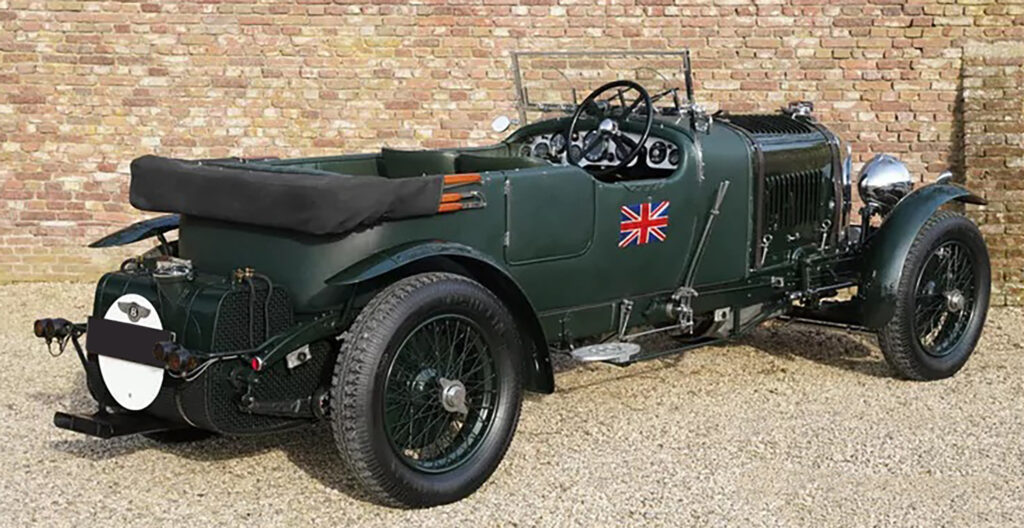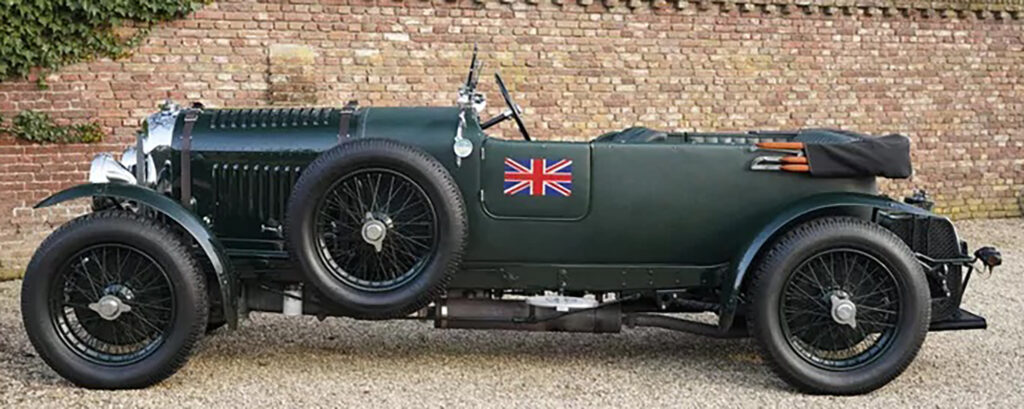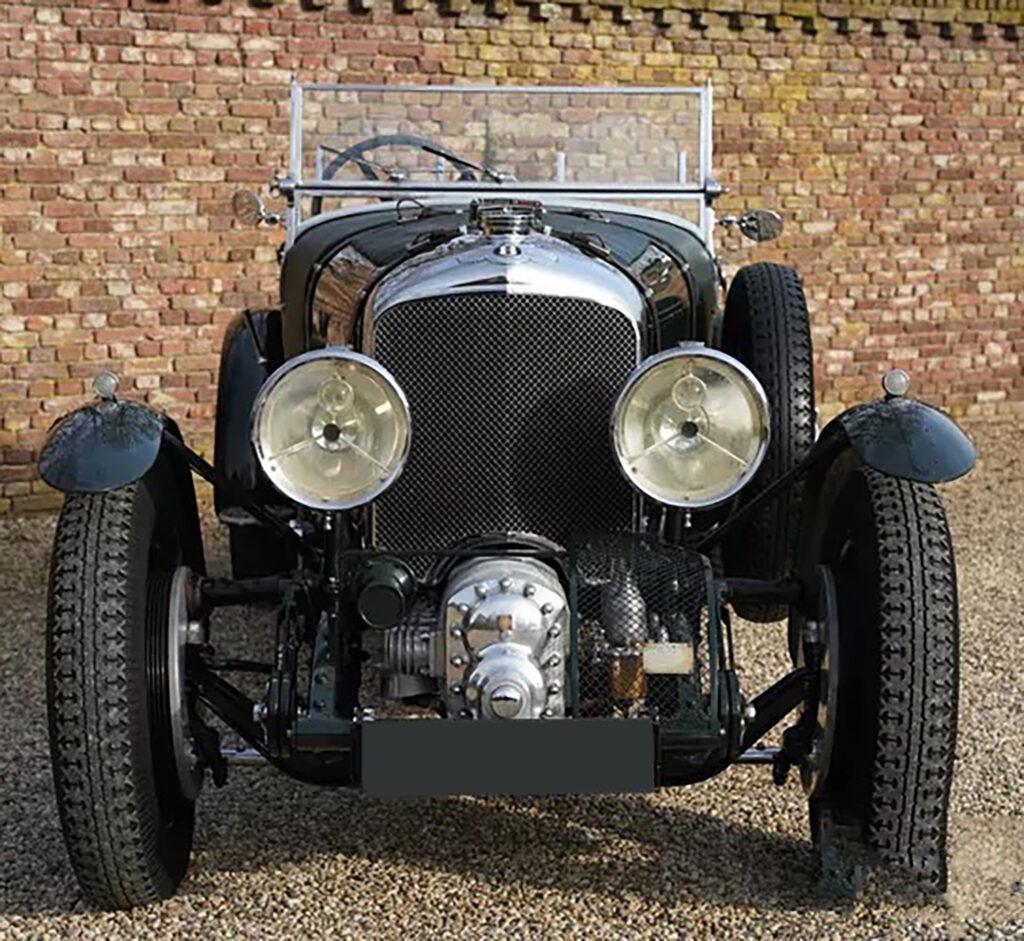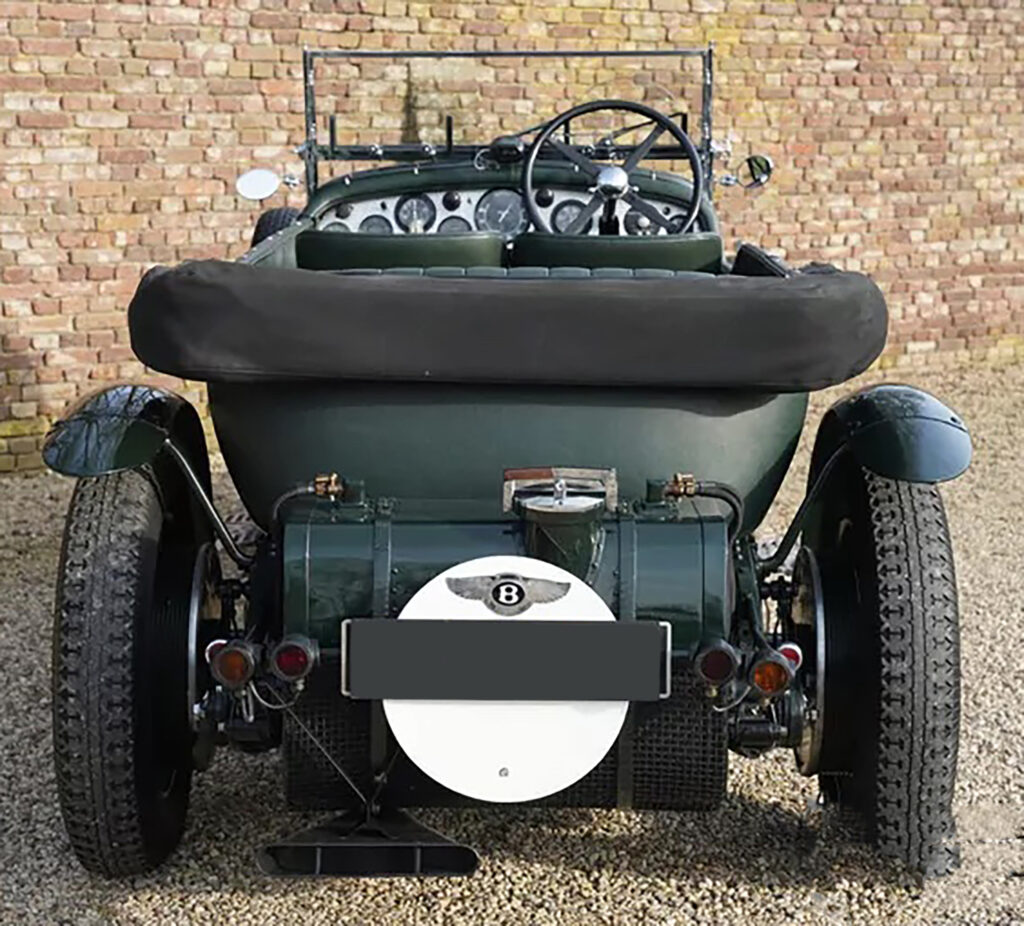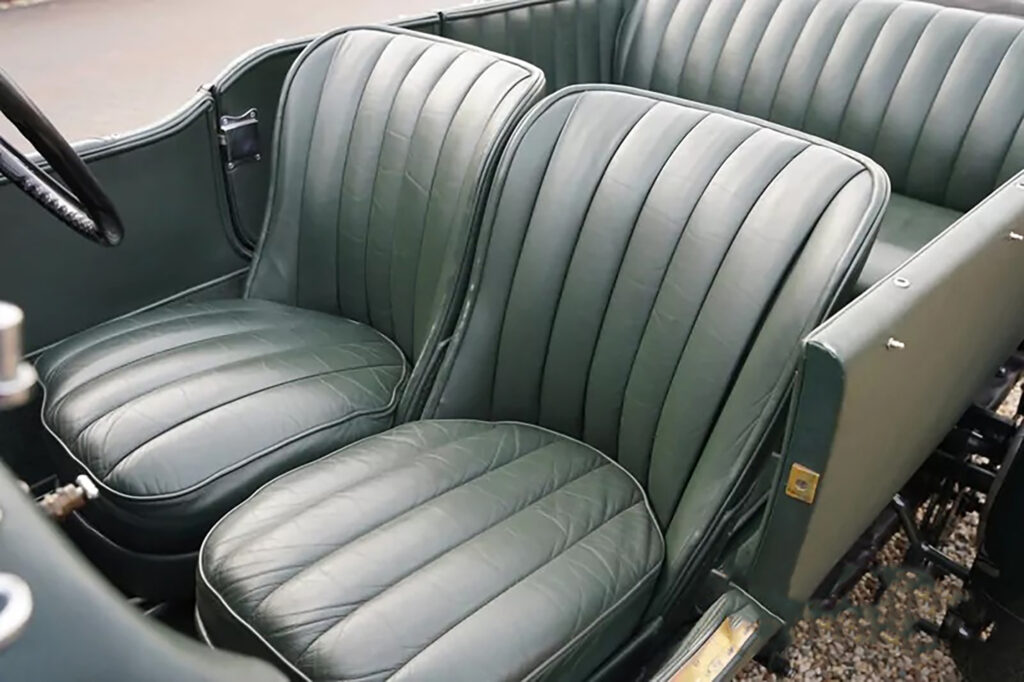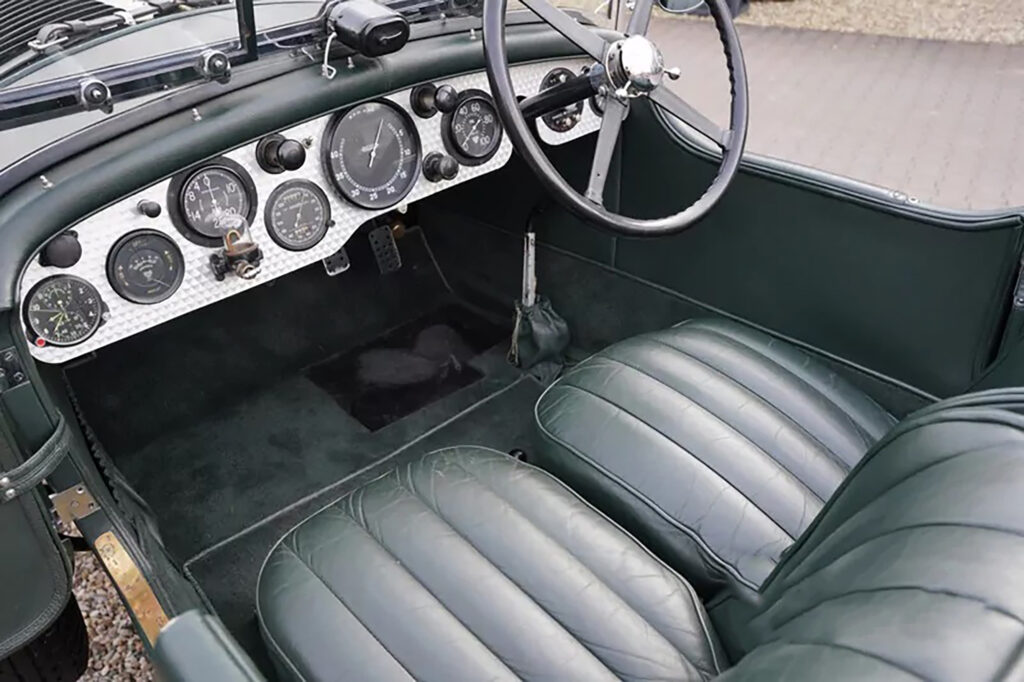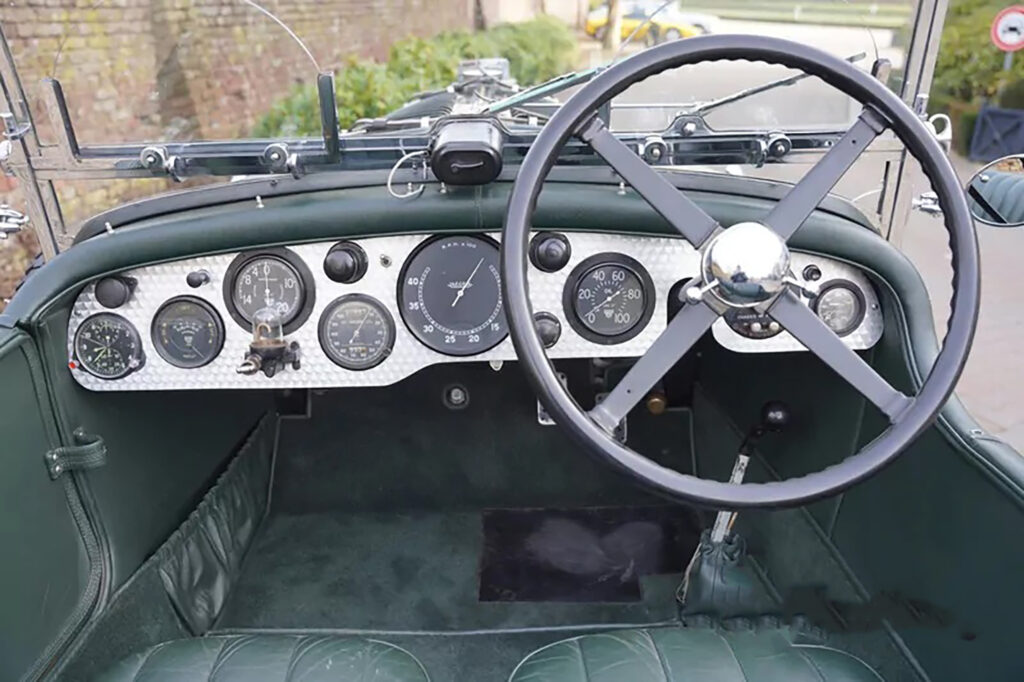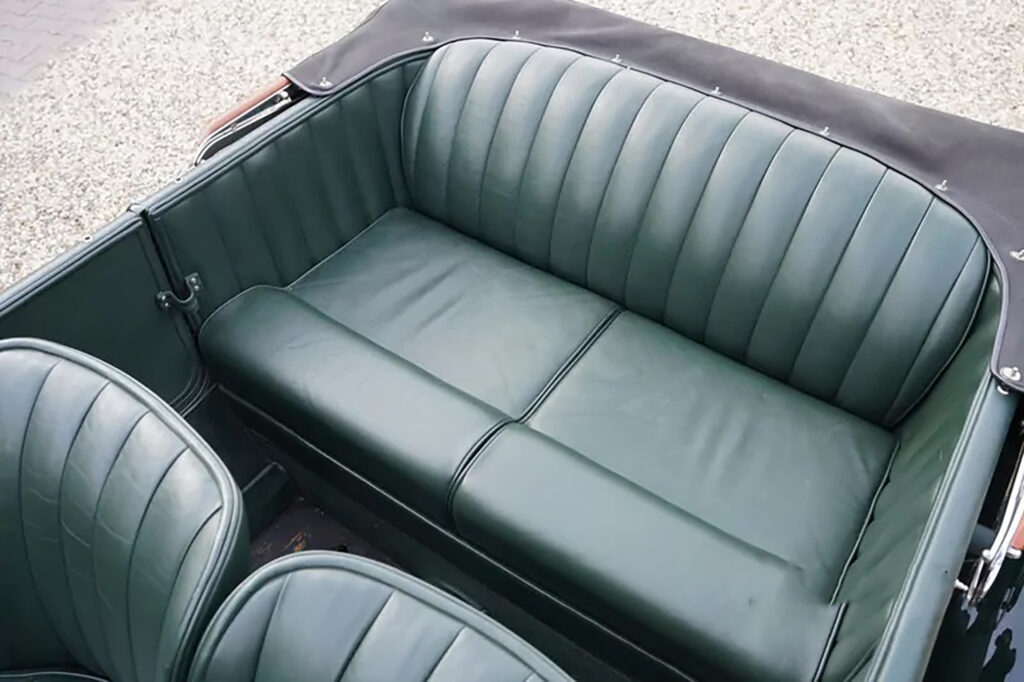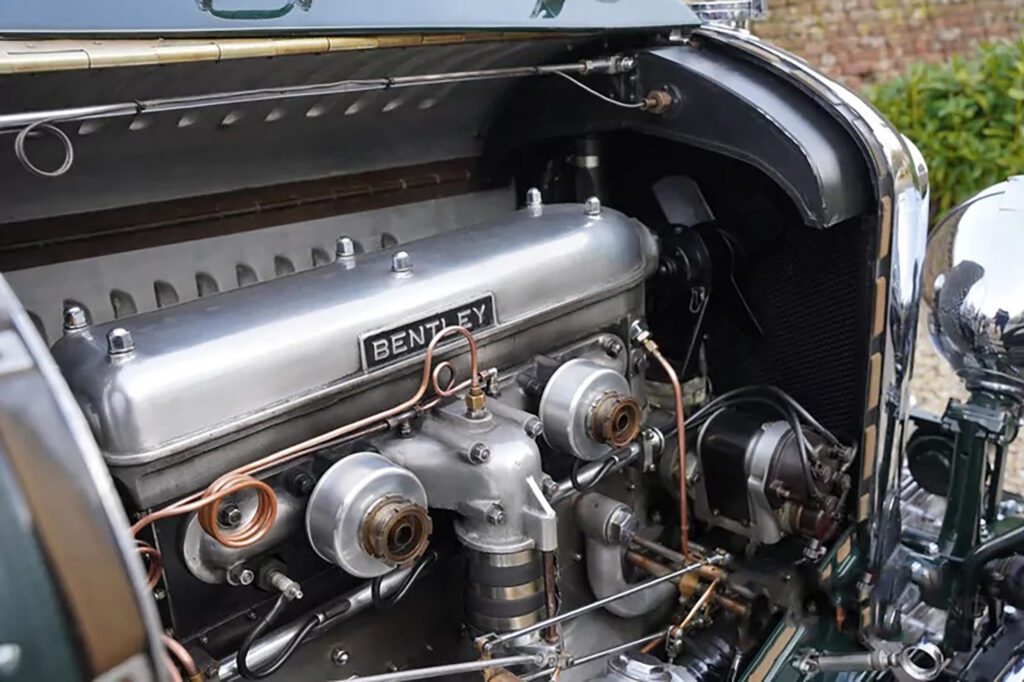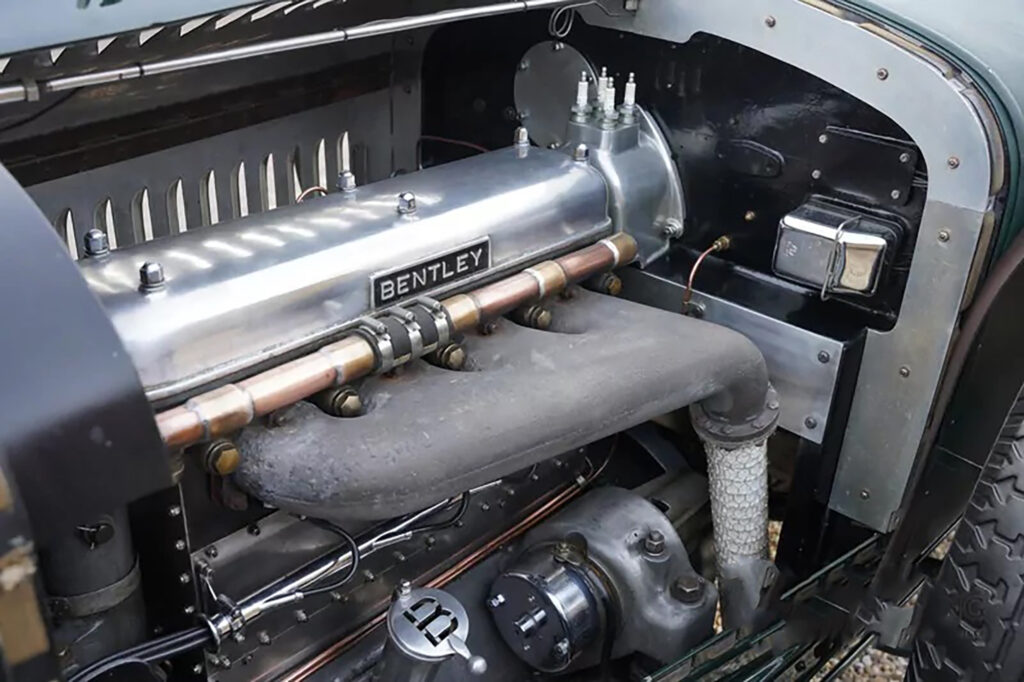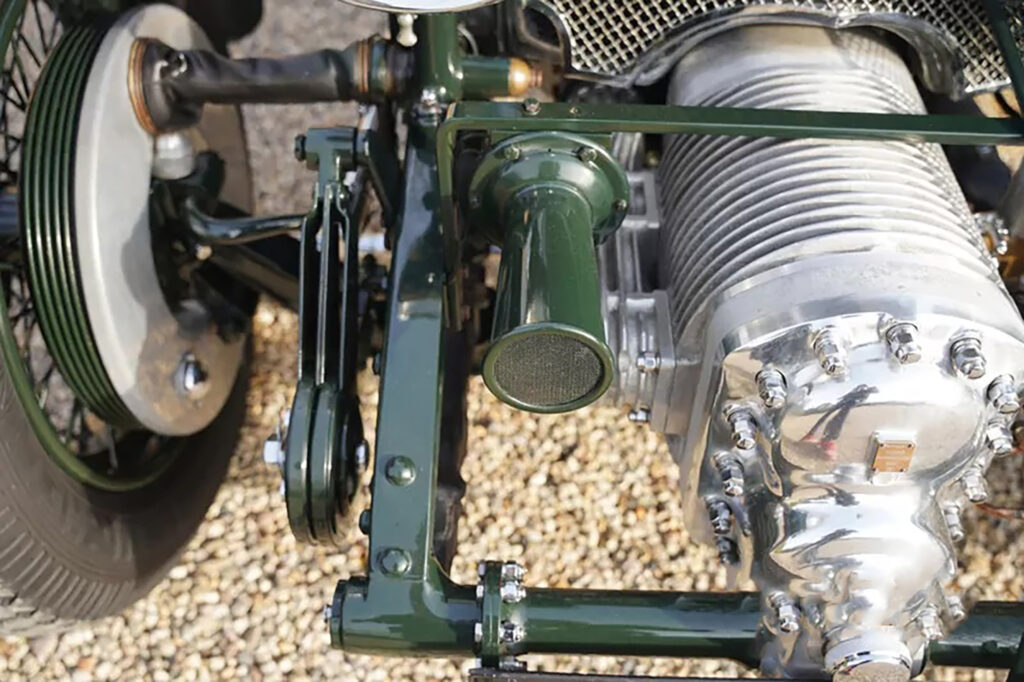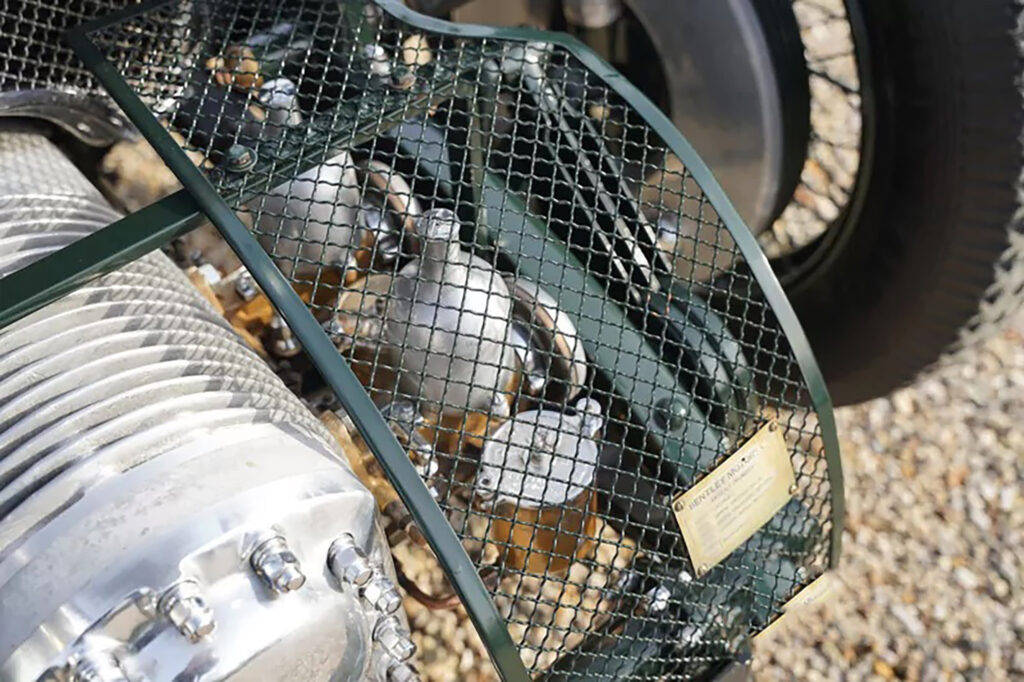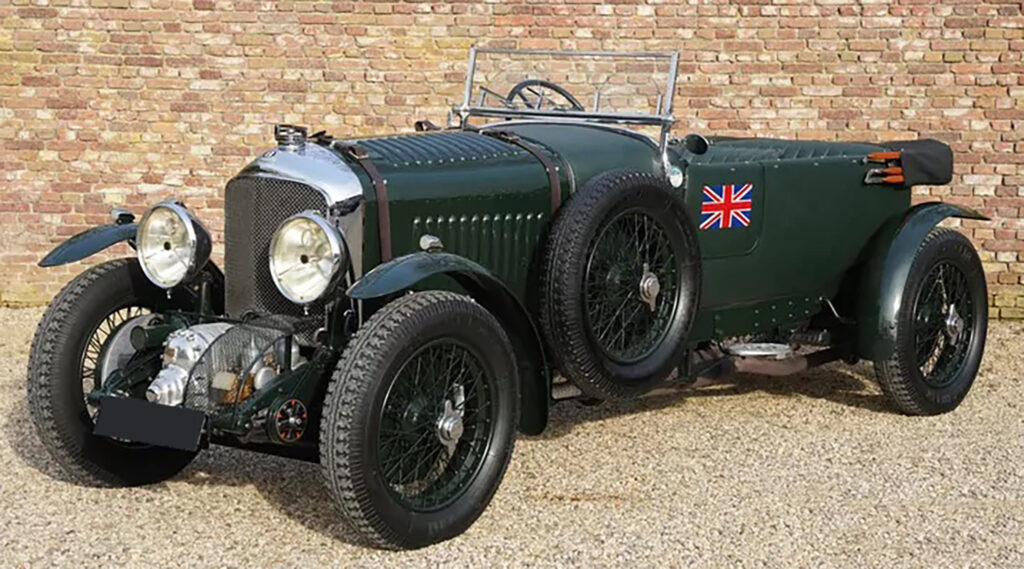
With it’s front mounted supercharger, the 4½ became one of Walter Owen Bentley’s quintessential British sportscars. It was the vision and product of Sir Henry Ralph Stanley ‘Tim’ Birkin who persuaded Bentley to produce 50 examples of the model.
The company Birkin & Couper Ltd. was established to specifically supercharge Bentley’s four-cylinder cars despite W.O. Bentley’s apprehension. W.O. Bentley said “They would lack in their preparation all the experience we had built up in (our own) racing department over 10 years. I feared the worst and looked forward to their first appearance with anxiety.”
Unblown, the standard 4.5 liter engine put out 110HP. The use of a Roots supercharger offered an increase in power to 240 bhp. The power was necessary due to the massive size and weight of the car.
The overall design of the car was heavy and large. The tall engine forced the driver to sit with his head 63 inches above ground. To help compensate for a high center of gravity & weight Bentley employed the use of stiff and heavily damped springs. Excessive weight of the car due to huge brakes, large chassis & a bulky rear axle put the car in a class of its own. The Blower is one of the heaviest cars to compete in racing.
The first single seat prototype was initially built in 1929 with racer Mike Couper. The finished product was a 1½-seat Bentley with a massive 10 feet 10 inch wheelbase. It had a fabric skin stretched over steel structure that barely covered the components. It became the fastest racecar in Britain by holding the Brooklands Outer Circuit Lap Record in 1930.
Birkin established Birkin & Couper Ltd. where the first Blowers were made. W.O. Bentley said “They would lack in their preparation all the experience we had built up in (our own) racing department over 10 years. I feared the worst and looked forward to their first appearance with anxiety…”
The first appearance of the car was the Brooklands 6-Hour race on June 29,1929. Later in the year more 4½ Litre Bentleys were fitted with Birkin’s blower system and one placed second in the RAC Tourist Trophy, but they never won a race.
Bentley described the model at the end of the season “The supercharged 4½ never won a race, suffered a never-ending series of mechanical failures, brought the marque Bentley disrepute and incidentally cost Dorothy Paget a large sum before she decided to withdraw her support in October 1930…”
Despite the lack of results, Wolf Barnato allowed Birkin to try the cars again at Le Mans but none of them endured to finish. This meant Bentley was obliged to produce 50 road going examples of the model which they did.
The number 9 car featured above, UU5872, is an original Birkin car known as ‘Birkin Blower No.2’. This car made an appearance at the 1930 Lemans. The first car featured above is an unrestored 1928 works blower.
| type | Series Production Car |
| production years | 1929 – 1931 |
| engineers | Walter Owen Bentley |
| production | 55 |
| engine | Inline-4 |
| aspiration | Amhurst Villiers Roots-Type Supercharger |
| block material | Cast Iron |
| valvetrain | SOHC 4 Valves / Cyl |
| fuel feed | 2 SU HVG5 Carburettors |
| displacement | 4398 cc / 268.38 in³ |
| bore | 100 mm / 3.94 in |
| stroke | 140 mm / 5.51 in |
| power | 130.5 kw / 175 bhp @ 3500 rpm |
| specific output | 39.79 bhp per litre |
| bhp/weight | 90.67 bhp per tonne |
| body / frame | Fabric Body over Steel Ladder-Type Chassis |
| driven wheels | RWD |
| front tires | Dunlop 6×21 |
| rear tires | Dunlop 6×21 |
| front brakes | Mechnical Drums |
| rear brakes | Mechnical Drums |
| front wheels | F 53.3 x 15.2 cm / 21.0 x 6.0 in |
| rear wheels | R 53.3 x 15.2 cm / 21.0 x 6.0 in |
| steering | Worm & Wheel |
| f suspension | Solid Axle w/Semi-Elliptic Leaf Springs, Friction Dampers |
| r suspension | Live Axle w/Semi-Elliptic Leaf Springs, Friction Dampers |
| curb weight | 1930 kg / 4250 lbs |
| wheelbase | 3302 mm / 130.0 in |
| front track | 1384 mm / 54.5 in |
| rear track | 1384 mm / 54.5 in |
| length | 4369 mm / 172.0 in |
| width | 1740 mm / 68.5 in |
| height | 1600 mm / 63.0 in |
| transmission | 4-Speed Manual |
| top speed | ~209.2 kph / 130.0 |