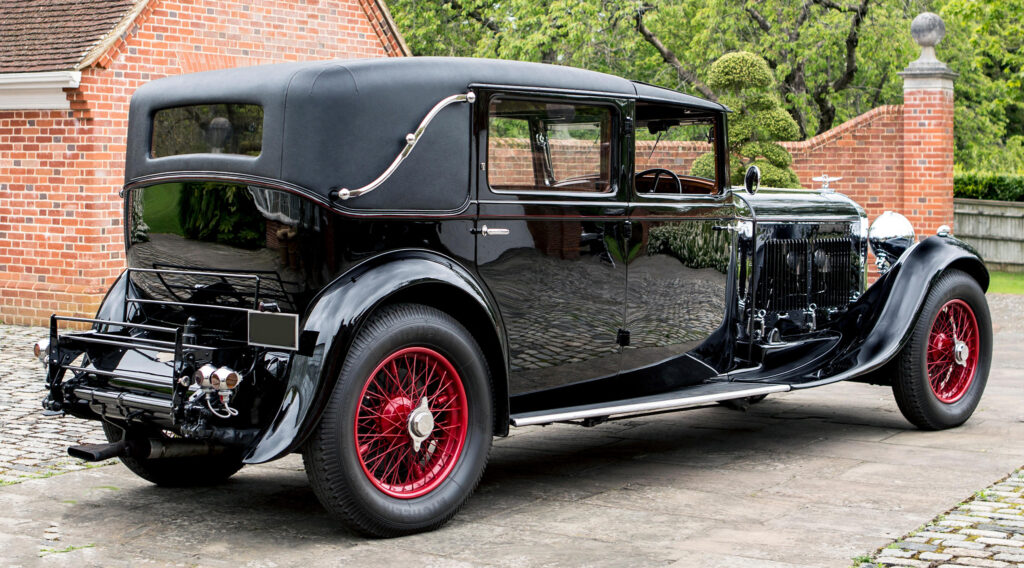
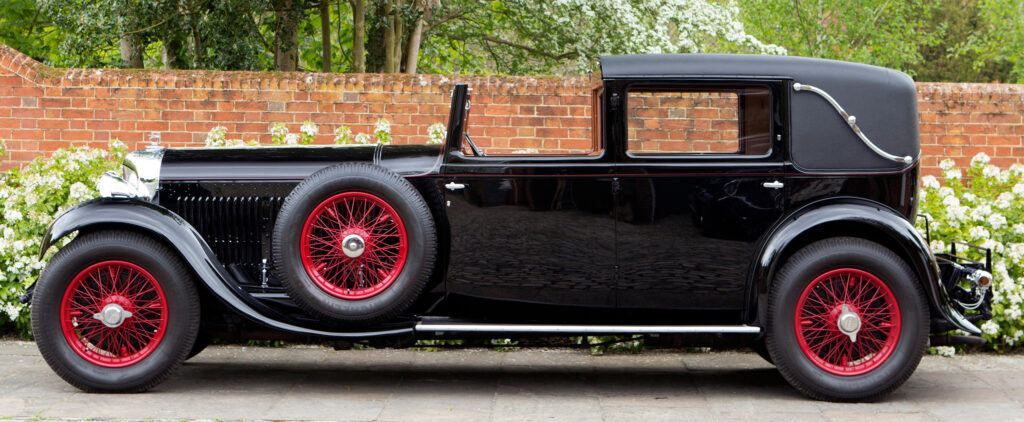
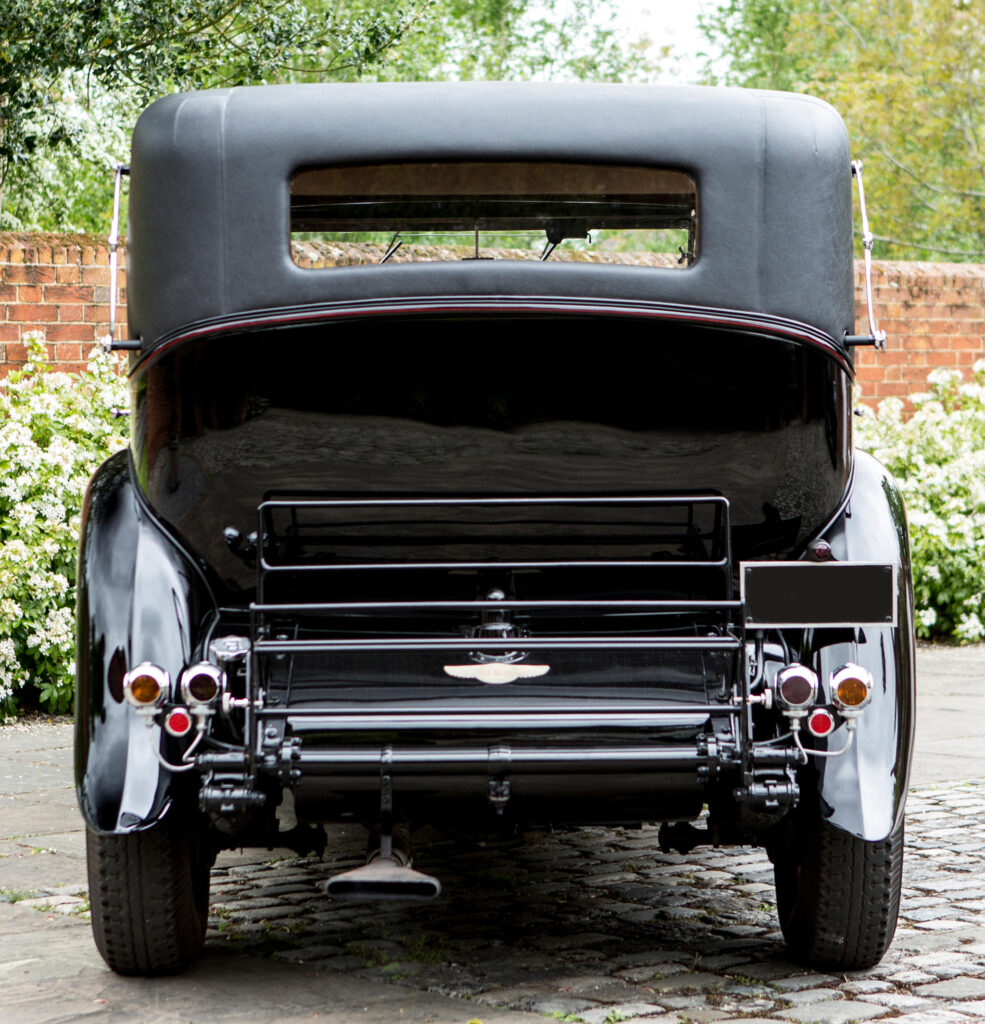
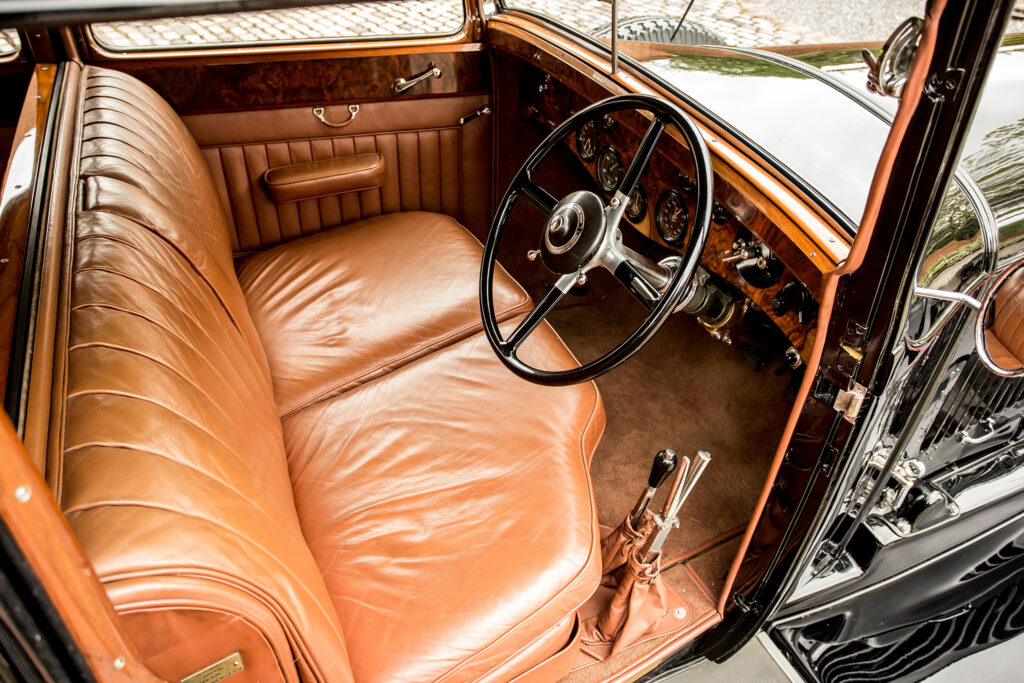
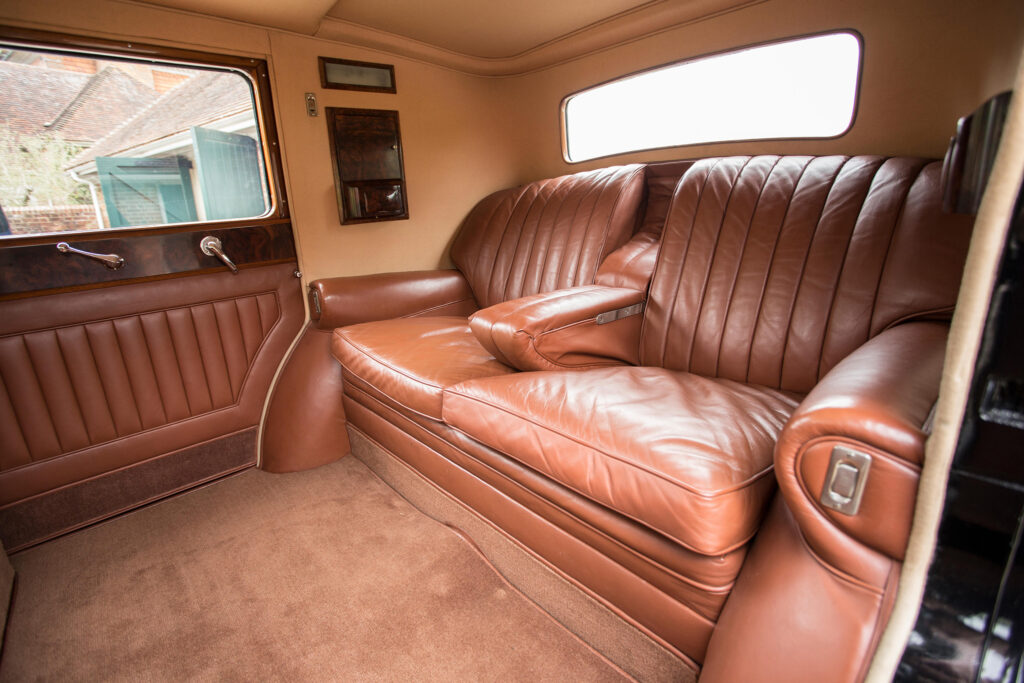
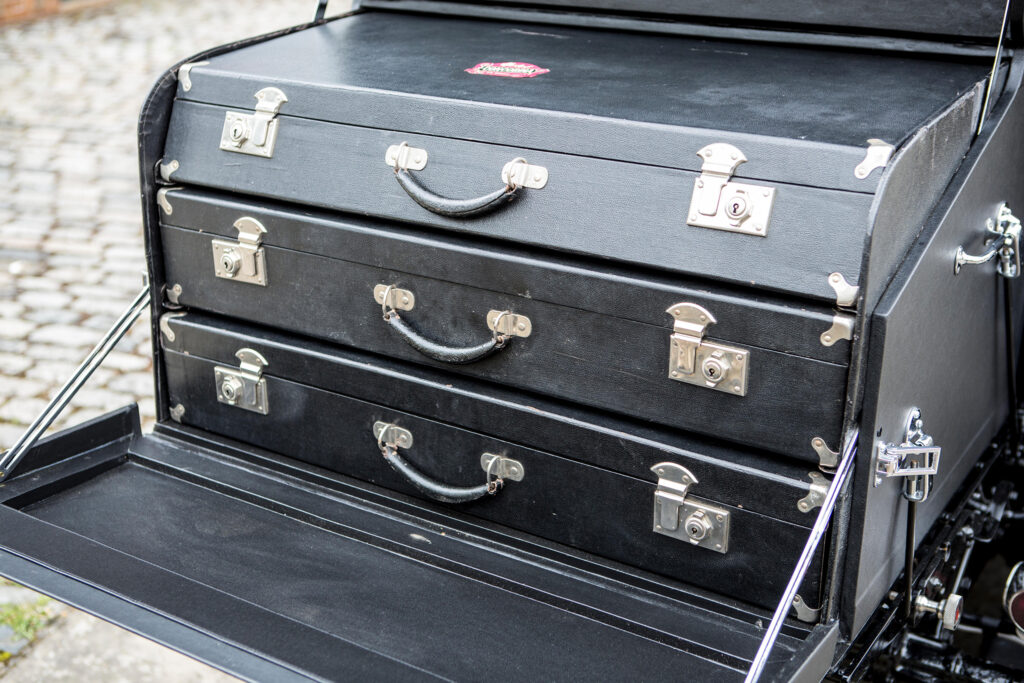
After Bentley had won the 24 Hours of Le Mans and retired from racing, they released their largest model called simply the 8 Litre. Around 100 examples were made and they all featured custom coachwork, mainly from the firms in England. In the 1920s it was competition for the Duesenberg Model J, supercharged Bugatti Type 57, supercharged Mercedes-Benz and the Rolls-Royce Phantom II.
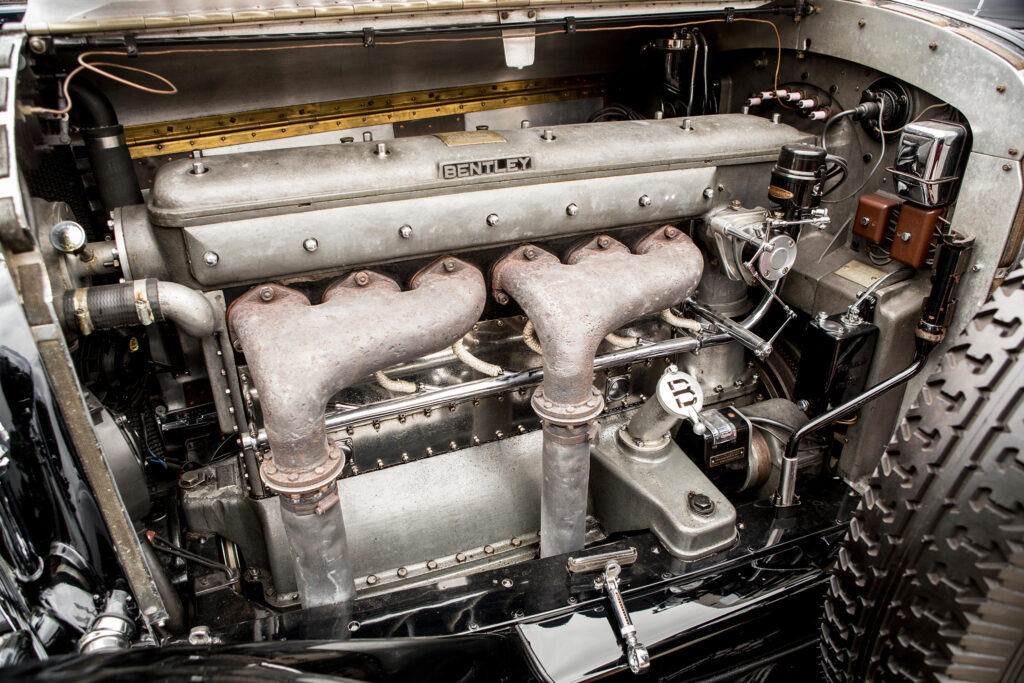
The centerpiece of the 8 Litre was its six-cylinder engine based of the preceeding 6½ Litre. Displacing 7982 cc, the available 220 bhp could power even the heaviest bodies to 100 mph. To reduce weight the engine’s crankcase was made from electron.
Built on the foundations of the successful Speed 6, the 8 Litre received a new lower chassis. It was built with either a 144″ short wheel base model or had the optional 156″ wheel base. This rather large chassis had a steel ladder-type frame with seven cross members. To keep weight down, many of the drive train components were mast from aluminum castings.
Bentley Sales Manager Arthur describes the car: “Eight litres! Nearly three times the cubic capacity of the never-to-be-forgotten 3! And what a motor it was! Having a six-cylinder engine with a bore and stroke of 110 mm by 140 mm respectively, and a top-gear speed range (with a ratio of 3.5 to 1) of a minimum of 6 mph and a maximum of 104 mph – what more could man ask for? Yes, indeed; and add to that an acceleration capacity of 10 mph to 100 mph in 50 seconds with a fully equipped saloon body, and surely we had the answer to the sporting motorist’s prayer? The sporting motorist! Speed cum refinement in its highest form! A creation evolved from years of racing experience!”
A 1930 edition of Autocar described how smooth the 8 Litre was: “this car can be driven really softly on its high top gear, as slowly as a man walks, and can accelerate from that without snatch and without difficulty, and the whole time the engine, being well within its power, is silent and smooth. In fact, it is only rarely apparent that there is a big engine working under the bonnet at all, and that so high a top ratio is used, when the machine is accelerated from a crawl. For all practical purposes, therefore, the machine does its work on the one gear…”
All the great English coachbuilders got a chance to body the 8 Litre including Corsica, Vanden Plas, Barker and Gurney Nutting. Of the 100 or so chassis that were built less than 20 were convertibles.
Unfortunately the released of the 8 Litre at the 1930 London Motor Show was bad timing. The Great Depression was taking its toll on luxury cars and Bentley was in a very tight financial situation. Remarkably they managed to produce 100 example of the 8 Litre before reality sunk in. Verging on bankruptcy and were bought out by rival Rolls-Royce. Afterward, the new owners had Bentley focus on entry level luxury.
| type | Series Production Car |
| production years | 1930 – 1932 |
| released at | 1930 London Motor Show |
| built at | England |
| engineers | Walter Owen Bentley |
| production | 100 |
| price £/td> | £3,700 |
| engine | Inline-6 |
| position | Front, Longitudinal |
| valvetrain | SOHC, 4 Valves per Cyl |
| fuel feed | Twin SU Carburetors |
| displacement | 7982 cc / 487.09 in³ |
| bore | 110 mm / 3.9 in |
| stroke | 140 mm / 5.5 in |
| power | 164.1 kw / 220 bhp @ 3500 rpm |
| specific output | 27.56 bhp per litre |
| body / frame | Body over Steel Ladder-Type Chassis |
| driven wheels | RWD |
| wheel type | Wire Wheels |
| front brakes | Drums w/Servo Assist |
| rear brakes | Drums w/Servo Assist |
| f suspension | Solid Axle w/Half-Elliptic Leaf Springs |
| r suspension | Live Axle w/Half-Elliptic Leaf Springs |
| wheelbase | 3962.4 mm / 156 in |
| transmission | 4-Speed Sliding Pinion Manual |
| top speed | ~167.34 kph / 104 mph |
| 0 – 100 mph | ~50 second |