Sportsvognsmærket Porsche er bogstaveligt talt en stor lyd i bilverdenen. Den karakteristiske lyd fra dets højtydende motorer indkapsler det ultimative inden for kraft og dynamik. Mærket er opkaldt efter den verdenskendte designer Ferdinand Porsche. Med sportsvognsmodeller som 356 og 911 samt racerbiler som 550 Spyder og 917 har Porsche-familievirksomheden skabt bil ikoner fyldt med ren passion. Porsche-køretøjer, der produceres i Zuffenhausen og Leipzig, er eftertragtede over hele verden og repræsenterer en ægte drøm for mange bilentusiaster. Siden den 1. august 2012 har high-performance-mærket været en del af Volkswagen-koncernen. Opkøbet af de resterende 50,1 procent af aktierne i Dr. Ing. h.c. F. Porsche AG af Porsche SE skabte en integreret bilkoncern, som blev igangsat af en principaftale underskrevet den 13. august 2009.
Det markerede sammenfletningen af to virksomheder, som gennem deres historie havde haft mange berøringspunkter. Ferdinand Porsche (1875-1951) var en innovatør, hvis banebrydende design gjorde ham til en af de store skikkelser i bilindustriens historie i første halvdel af det 20. århundrede. Allerede i 1898 begyndte han at undersøge konstruktionen af elektriske køretøjer. Lohner-Porsche med en motor monteret i hjulnavet havde en rækkevidde på 50 kilometer og var en stor succes på Exposition Universelle i Paris i 1900. Samme år udviklede Porsche Semper Vivus, verdens første funktionelle hybridkøretøj, der blev sat i produktion. Porsche lagde grundlaget for sit internationale ry under sin tid som teknisk direktør for Austro-Daimler fra 1906 med design som “Prinz Heinrich”-bilen, “Landwehr-Train” terrængående hybridkøretøj og “Sascha” letvægtsraceren. Efter at være blevet teknisk direktør for Daimler-motorfirmaet i Stuttgart i 1923, byggede Porsche sportsvogne med store, kompressor motorer. Omkostningerne ved det højtspecialiserede udviklingsarbejde stod dog i modsætning til sparepolitikken, der blev indført efter fusionen mellem Daimler og Benz i 1926. Porsche forlod derfor virksomheden i 1928 og sluttede sig i 1929 til det østrigske motorfirma Steyr.
I december 1930, midt under den globale finanskrise, etablerede den 55-årige Porsche en selvstændig virksomhed. Den 25. april 1931 grundlagde Porsche firmaet “Dr. Ing. h. c. F. Porsche GmbH” i Stuttgart sammen med sin svigersøn Anton Piëch og Adolf Rosenberger, som dog trak sig igen i 1933. Den nyoprettede virksomhed tilbød motordesign, køretøjsdesign og rådgivningstjenester og havde oprindeligt 12 ansatte. Et vigtigt udtryk for virksomhedens innovative designkapacitet var patenteringen af torsionsfjederophæng i 1931.
Efter at have gennemført en række mindre projekter, blev designfirmaet i 1933 tildelt den lukrative kontrakt om at bygge en racerbilsmodel for Auto Union. P-typen, der vejede 750 kilo og havde en midtmotor, var Porsches første grandprix-bils design og sikrede virksomhedens fortsatte eksistens. Derefter fulgte en kontrakt fra NSU om at udvikle en lille bil, Type 32, som med sin luftkølede bagmonterede motor, torsionsfjederophæng og karakteristiske afrundede bagende viste elementer, der senere skulle kendes fra Volkswagen. Ideen om en billig lille bil til massemarkedet fascinerede Porsche, som – ligesom mange andre designere og ingeniører på det tidspunkt – så mod den massemotorisering, der fandt sted i USA. I sit “Notat om konstruktionen af en tysk folkebil”, indsendt til Rigstransportministeriet den 17. januar 1934, fremlagde Porsche sin plan for et fuldt praktisk køretøj til massemarkedet. Da “Folkebil”-projektet blev støttet af naziregimet under ledelse af Adolf Hitler, blev det taget op af Reich Automotive Industry Association (RDA), som den 22. juni 1934 tildelte det uafhængige Porsche designbureau en kontrakt om at udvikle og bygge prototyper. Porsche-teamet løste de tekniske problemer, og Porsche selv blev en af hoveddirektørerne i det selskab kendt som “Gesellschaft zur Vorbereitung des Deutschen Volkswagens mbH”, grundlagt i 1937. Porsches designbureau, i 1937 omdøbt til Dr. Ing. h.c. F. Porsche KG, fungerede som en ekstern forsknings- og udviklingsafdeling for Volkswagenwerk GmbH.
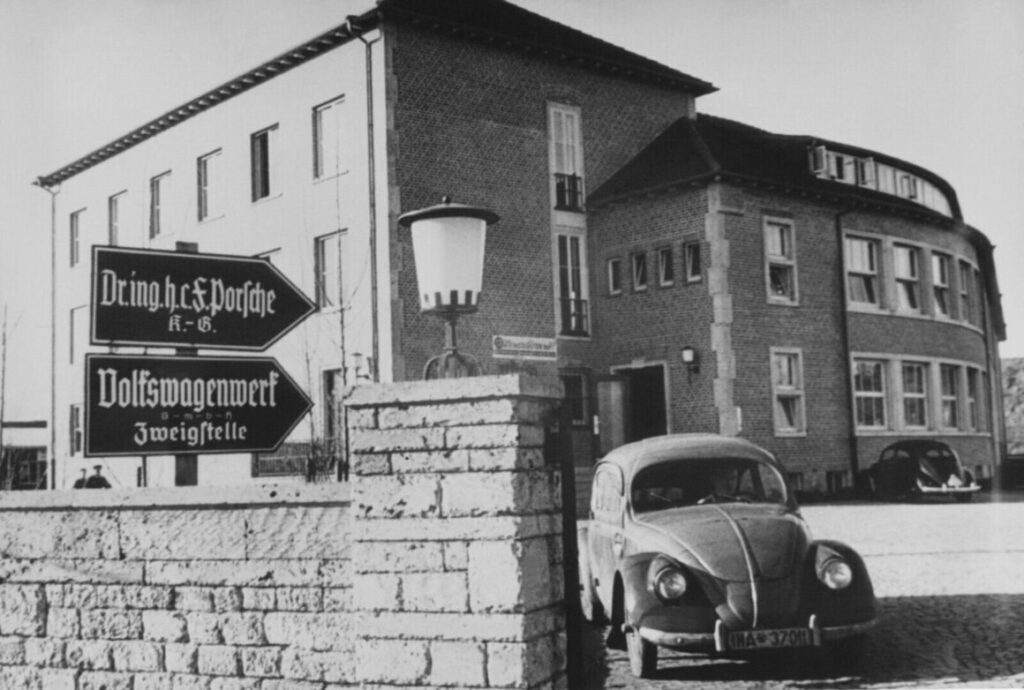
I 1938/39 udviklede Porsche KG Type 64 “Berlin-Rome bilen”, et internt sportsvognskoncept, som betragtes som stamfaderen til den senere Porsche sportsvognsfamilie. Porsche KG designede også traktorer til landbruget og senere kampvogne og andre militære køretøjer. Bombardementer af Stuttgart i 1944 fik ledelsen til at flytte designkontoret til et tidligere savværk i Gmünd i Kärnten-regionen i Østrig og materialelageret til en flyveskole i Zell am See, som også var beliggenheden for Porsche-familiens hjemsted, kendt som “Schüttgut”.
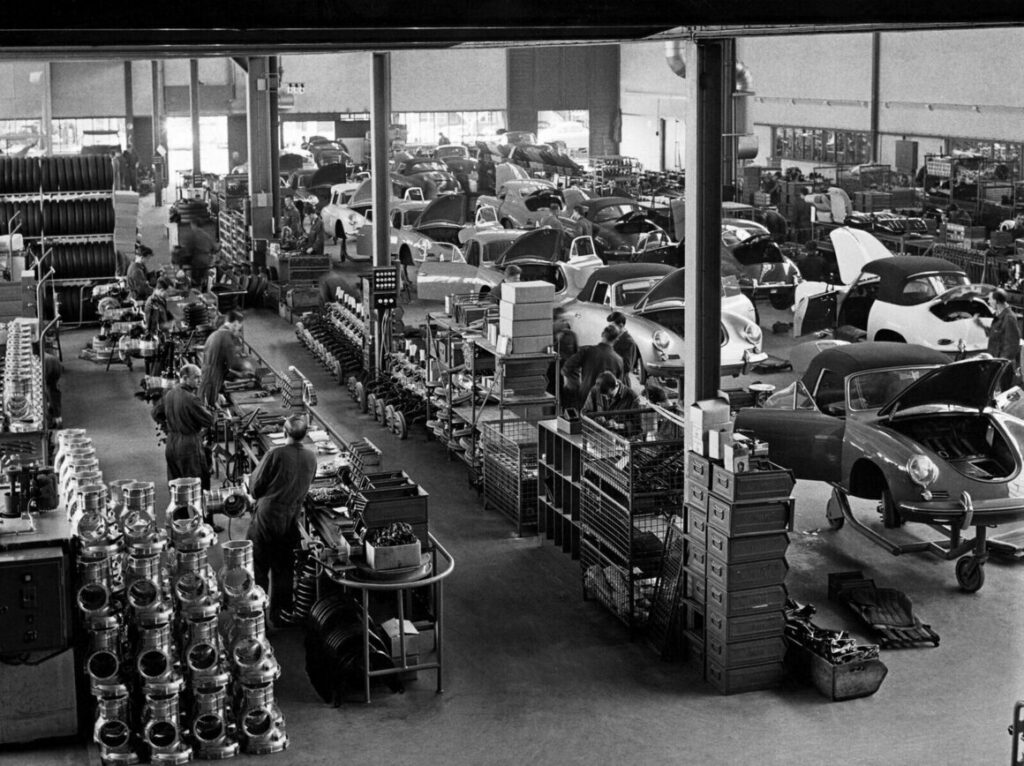
Efter lanceringen i september 1964 skulle den nye 911-model blive hjørnestenen i Porsche-mærket. Syv generationer af modellen er blevet produceret på fabrikken i Zuffenhausen nær Stuttgart siden produktionsstart. 911’eren er blevet et symbol på opfyldelsen af bilens drøm; lige så elegant som den er spændende at køre og sidde i. At få den nye modelserie i produktion var dog en reel udfordring for virksomheden. Porsche investerede 15 millioner DM i køb af en karrosserifabrik, men for at gøre det måtte de trække sig ud af Formel 1 og dermed opgive en del af deres motorsportaktiviteter. Porsches voksende ry blev yderligere styrket af racersejrene med Porsche 917. Udviklet under ledelse af Ferdinand Piëch, med en 12-cylindret V-motor med en start effekt på 520 hk, omfattede dens mange triumfer fra 1969 og frem en række sejre ved Le Mans.
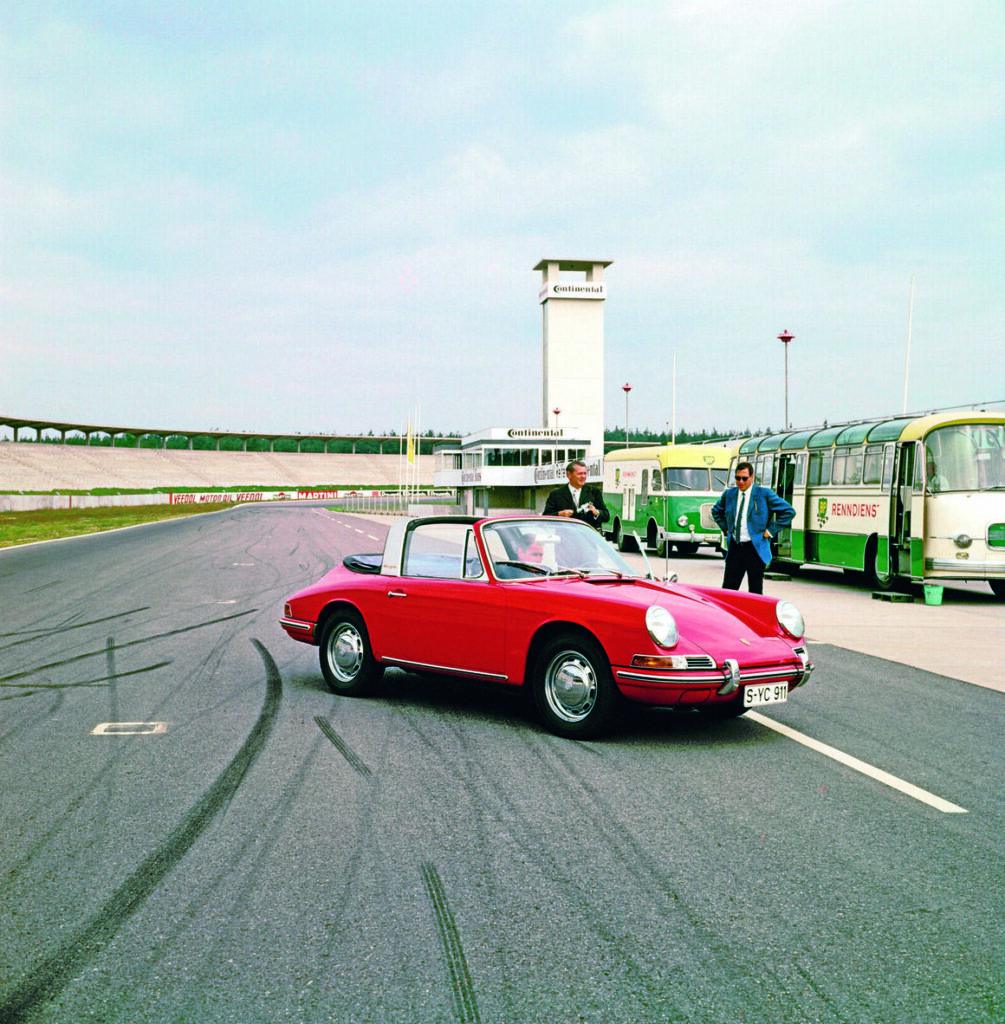
Et foreslået forbud mod cabrioleter på det vigtige amerikanske marked i 1965 truede med at ramme Porsche hårdt. Sportsvognsproducenten reagerede ved at bygge 911 Targa, udstyret med en stabilisator som standard. I 1967 overvandt Porsche flere salgshindringer ved at blive den første europæiske bilproducent, der opfyldte de strengere amerikanske emissionsstandarder.
Porsche intensiverede også sit samarbejde med Volkswagen. I 1966 blev de to virksomheder enige om at udvikle en efterfølger til den forældede Volkswagen Karmann Ghia sports coupe. Planen var at positionere det, der skulle blive VW-Porsche 914, under 911-segmentet og gøre modellen kompatibel med begge producenters salgsprogrammer. For at sælge den anden Porsche-modellinie blev VW-Porsche Vertriebsgesellschaft etableret, hvor begge producenter ejede en lige stor andel af salgsselskabet. Den såkaldte “Volksporsche”, der blev lanceret i 1969, levede dog kun delvist op til salgs forventningerne. Mens VW-Porsche 914 med 6-cylindret motor solgte langsomt, var efterspørgslen efter den langt billigere 4-cylindrede variant høj: 914/4 solgte 13000 enheder alene i 1970.
Omdannelsen af Porsche til et aktieselskab med virkning fra 1. august 1972 ændrede grundlæggende selskabsstrukturen. Familierne Piëch og Porsche, som ejede virksomheden, besluttede, at familiemedlemmerne skulle træde tilbage fra den daglige ledelse og overlade den til en udpeget ledelse. Fra det tidspunkt udfyldte familierne deres rolle gennem tilsynsrådet, som i mange år blev ledet af Ferry Porsche. Aktieselskabets økonomi var fortsat under stort pres, blandt andet som følge af opførelsen af en ny administrationsbygning i Tammerfeld-kvarteret i Ludwigsburg. Forbud mod søndagskørsel og hastighedsbegrænsninger efter olieprischokket i 1973 skabte usikkerhed blandt bilkøbere i Tyskland. Porsche reducerede sin daglige produktion fra 72 til 50 enheder og indførte korttidsarbejde, men udvidede samtidig sit modelprogram. Med G-serien satsede Porsche oprindeligt på en ny generation af 911 med sikkerhedskofangere, integrerede nakkestøtter, airbags i rattet og automatiske trepunkts sikkerhedsseler. På højden af recessionen i 1974 lancerede Porsche sin 911 Turbo 3.0 Coupé super-sportsvogn, udviklet i tæt forbindelse med virksomhedens motorsportsaktiviteter. Porsche-modellen med den karakteristiske bagspoiler var oprindeligt planlagt som en lille serie, men den turboladede model med interne ventilerede skivebremser og en kombination af dagligdags anvendelighed og luksus blev en overraskende succes. Porsche byggede 2850 eksemplarer af modellen i de første tre år efter lanceringen, hvilket gjorde det muligt for virksomheden at komme stærkt ud af krisen.
I bunden af modelprogrammet erstattede den nye 924-model i 1976 VW-Porsche 914, som ophørte med produktionen samme år. Ligesom forgængermodellen var et samarbejde med Volkswagen planlagt for at reducere omkostningerne baseret på stordriftsfordele i leveringen af komponenter. Volkswagen stoppede det fælles projekt i 1975 for at fokusere sine kræfter på den nye generation af modeller fra Polo til Passat og overførte 924-modellen til Porsche. Lanceringen som Porsche 924 skete uafhængigt, og bilen blev produceret hos Audi i Neckarsulm. Den nye Porsche til entry-level segmentet brød med det traditionelle designkoncept. 924-modellen havde en vandkølet 4-cylindret motor monteret foran, med en trans-aksel transmission, der sendte kraften til baghjulene. I regnskabsåret 1976/77 udgjorde 924 næsten halvdelen af virksomhedens samlede bilsalg. Da produktionen ophørte i 1988, var der bygget 150684 eksemplarer af modellen.
I 1977 lancerede Porsche en tredje modelserie, placeret over 911: 928 luksus højtydende sportsvogn. 928, designet under ledelse af Anatole Lapine som efterfølger til 911, delte den trofaste Porsche-kundebase med sit utraditionelle design, der bevægede sig væk fra den luftkølede bagmonterede boksermotor til en frontmonteret vandkølet 8-cylindret motor, samt med baghjulstræk, et aluminiumschassis og en ny bagaksel.
Efter det andet olieprischok i 1979 følte Porsche presset fra konkurrencen på de internationale bilmarkeder. Billigere japanske sportsvognsmodeller, der trængte ind på det vigtige amerikanske marked, påvirkede Porsche 924. I 1979/80 oplevede Porsche et fald i salget på 19,7 procent, selvom salgsindtægterne holdt sig stabile. Porsche reagerede på konkurrencepresset i 1981 ved at lancere 944, en økonomisk 4-cylindret bil designet som en sofistikeret indgangsmodel, der gav adgang til mærket og forbinder sortimentet mellem 924 og 911 SC. Den ramte en nerve hos kunderne, og fra januar til september 1982 solgte Porsche alene 4000 enheder af 944. I 1983 udgjorde modellen 51 procent af det samlede bilsalg.
Konkurrencemæssige pres på internationale markeder intensiveredes i løbet af 1980’erne. Porsche formåede i første omgang at holde kursen og opnåede sit femte rekordår i træk i 1985/86, primært takket være sin stærke forretning i USA, hvor mere end hver anden af deres biler blev eksporteret til USA. Efter udløbet af aftalen med Volkswagen of America Inc. den 31. august 1984 begyndte det nystiftede Porsche Cars North America Inc. at sælge biler på egne vegne. Gennem en udstedelse af præferenceaktier den 4. maj 1984 skaffede Porsche yderligere kapital til opgraderinger, og frem til 1988 investerede de over en milliard DM i nye faciliteter, herunder en miljøvenlig lakering og en topmoderne lakfabrik. Udviklingscentret i Weissach, hjemsted for Porsches ingeniører siden 1971, blev betydeligt udvidet. Det leverede udviklingsarbejde til både egen og tredjeparts bilproduktion, herunder for Airbus, Lada og Volkswagen. I 1981 præsenterede udviklerne en dobbeltkoblingsgearkasse, som for første gang tillod gearskifte uden at afbryde kraftoverførslen, og fra 1983 blev den monteret i Porsche 956.

Tilføjelsen af en tredje modelserie til produktudvalget – Cayenne sportsutility-køretøjet udviklet i samarbejde med Volkswagen – gjorde det muligt for Porsche at udvide produktionen og åbne en ny fabrik i Leipzig i 2002. I august 2002 godkendte tilsynsrådet introduktionen af en fjerde modelserie – en luksuriøs Gran Turismo kaldet Panamera – som har været i produktion siden 2009, ligeledes på fabrikken i Leipzig.
Tradition og fremskridt udgør en stærk kombination som grundstenene i Porsche-mærket. Med sin plug-in hybridmotor til Cayenne og Panamera modellerne bygger virksomheden i dag videre på ingeniørarven fra Ferdinand Porsche. I september 2013 blev den elektrificerede 918 Spyder super-sportsvogn den første vejlovlige bil til at gennemføre den 20,6 kilometer lange Nordschleife-bane på Nürburgring på under syv minutter – nærmere bestemt seks minutter og 57 sekunder. Den 887 hk motor kombinerer maksimal køredynamik med minimal brændstofforbrug og udleder i kombineret køremodus kun 79 gram CO₂ pr. kilometer. Nye drivsystemer og nye modeller, såsom Macan, indkapsler virksomhedens fortsatte strategi om at producere sportsvogne, der opfylder alle kundebehov. Porsche fortsætter med at køre stærkt fremad. Med en arbejdsstyrke på 22190 medarbejdere forbedrer Porsche igen sin præstation i regnskabsåret 2014, sælger 190000 køretøjer, genererer en omsætning på 17,2 milliarder euro og opnår et driftsresultat på 2,718 milliarder euro.