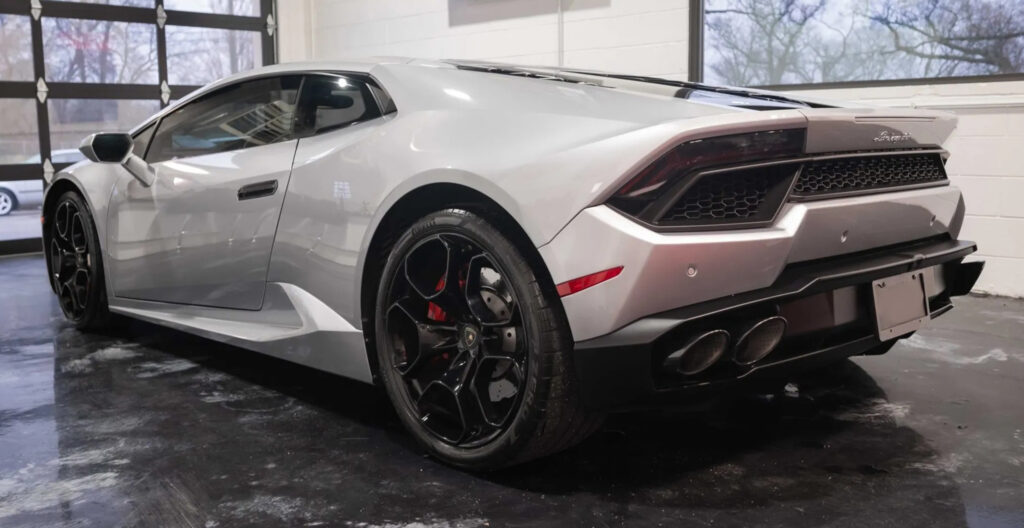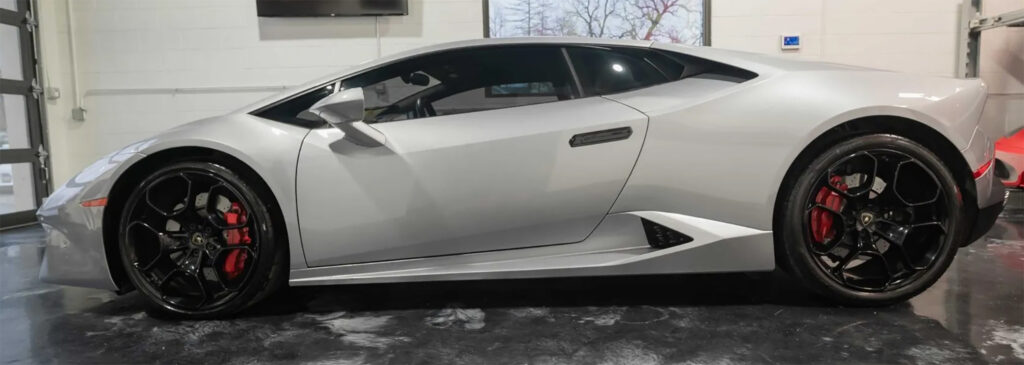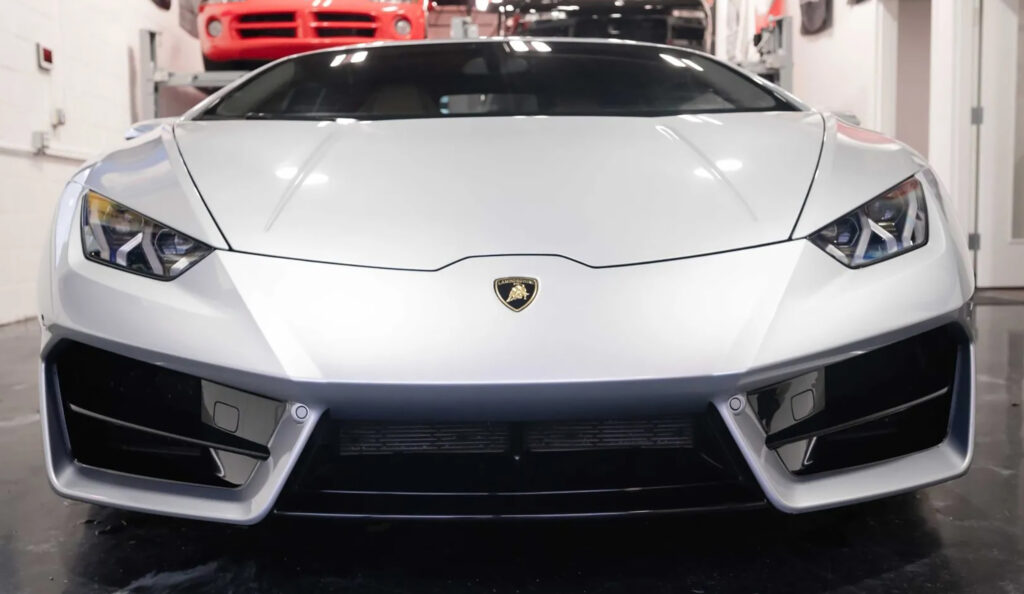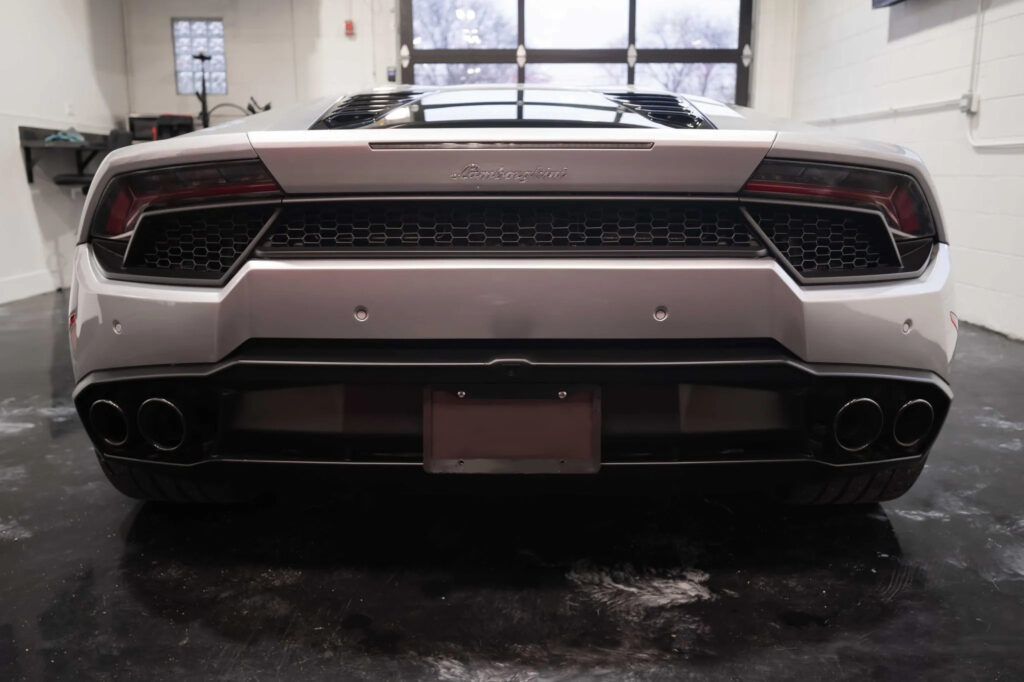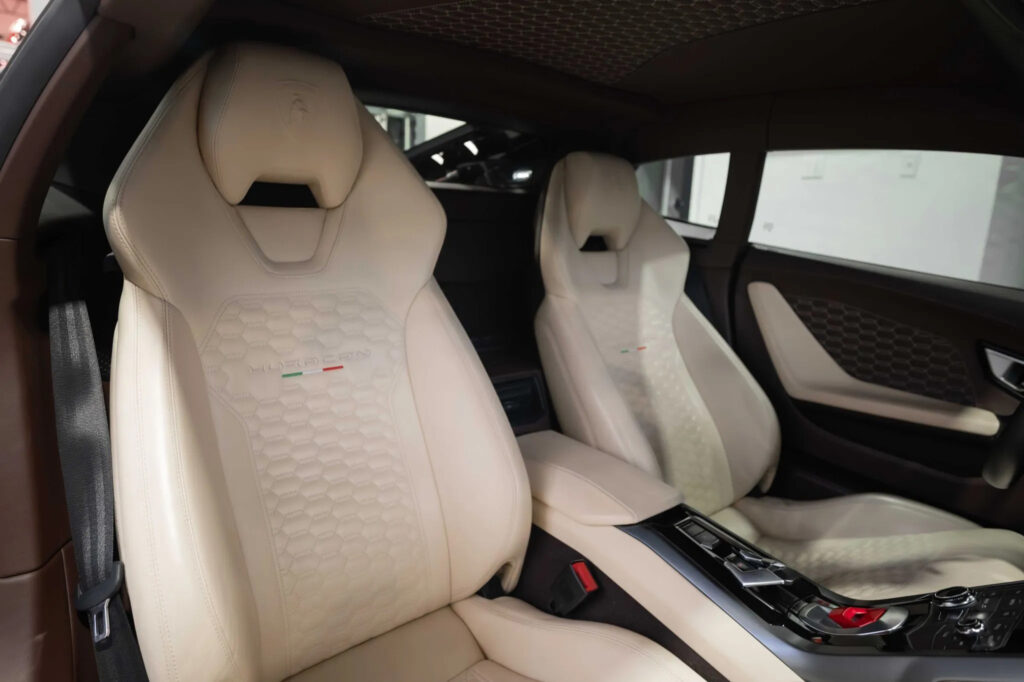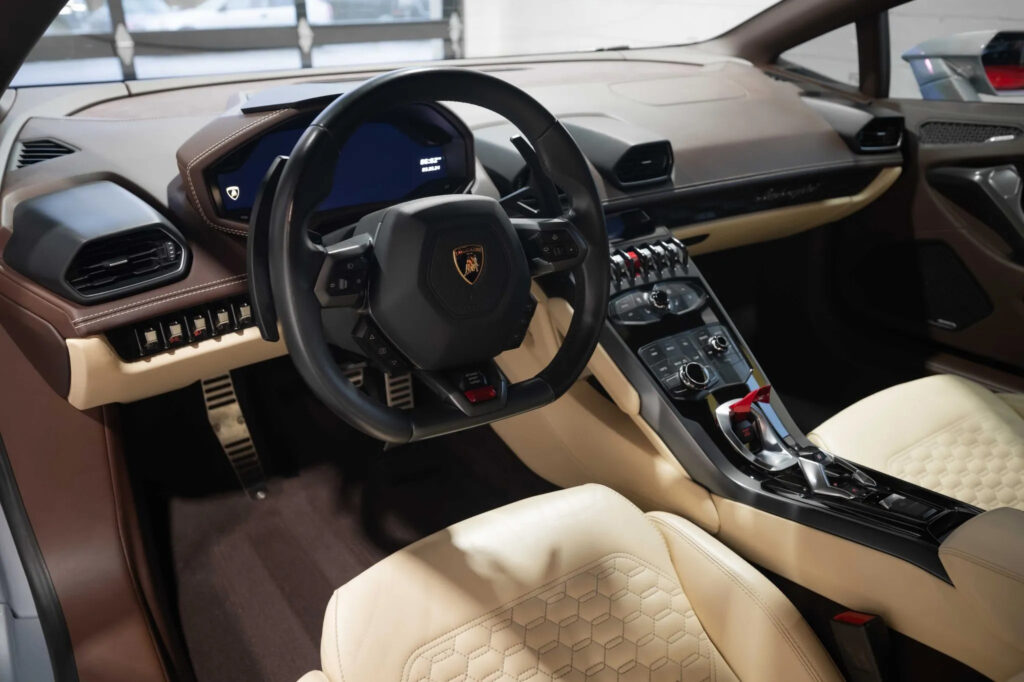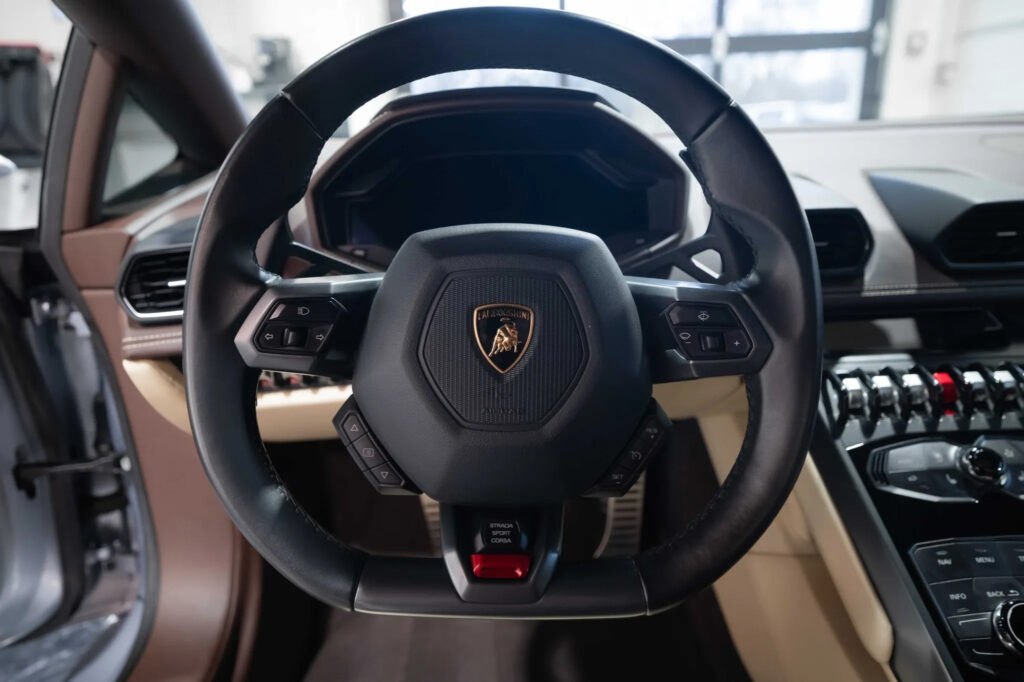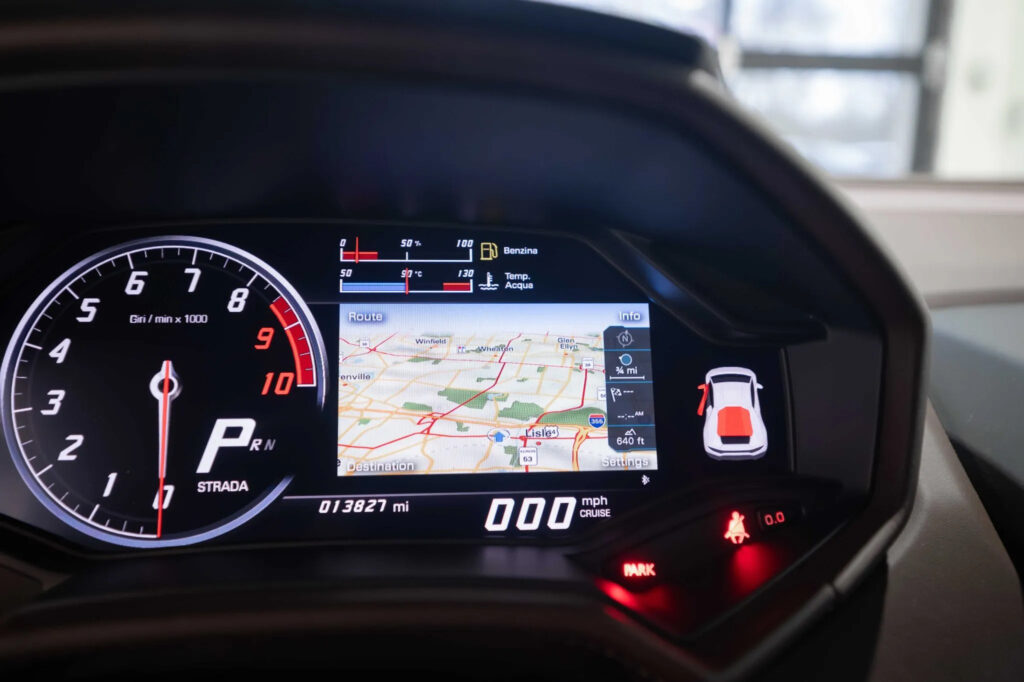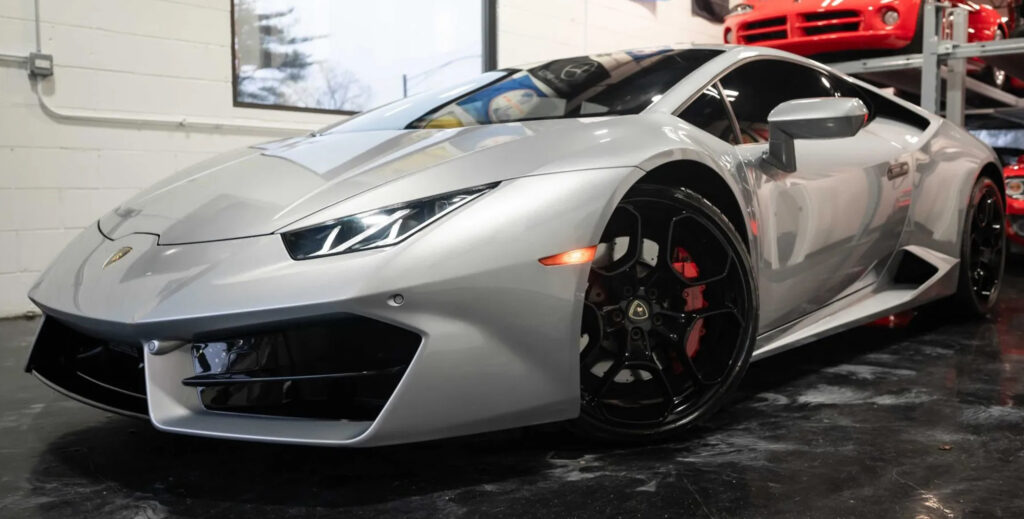
Without a doubt, the rear-wheel-drive Lamborghini Huracán LP 580-2, is arguably the best handling Lamborghini.
Lamborghinis have always been good at blasting down the Autostrada in a more or less straight line, but they have not traditionally been renowned for flying through corners with anything that could be labeled precision. But the new rear-drive Huracan takes this “entry-level” supercar further into the corner than anything that has ever come out of Sant’Agata Bolognese.
To make the AWD Huracan into an RWD Huracan, engineers simply removed the front driveshaft, differential, and half shafts. The front springs and antiroll bar are 10 percent softer, there is just a bit more camber in the front wheels and Pirelli whipped up a new batch of P Zeros.
The new Lamborghini Huracán LP 580-2 is 73 pounds lighter and has more weight on its rear axle, for a weight distribution of 40/60 front/rear versus 43/57 on the AWD Huracan. With a new engine calibration, you give up 30 hp in the LP 580-2, but the loss of those 73 pounds means it has almost the same power-to-weight ratio as the all-wheel-drive Huracan.
It is, again, the best road-going Lamborghini ever made, especially if that road has curves in it. Turn-in is lighter, faster and far more effortless in this new car, aided by electric power steering that is accurate and unambiguous (we did not have the optional dynamic steering). The calibration of the stability control allows a little bit of what Lamborghini execs called “drifting” through corners.
As in the AWD coupe and Spyder Huracans, there are three modes for the LPI (Lamborghini Piattaforma Inerziale) stability program. We chose Corsa for our first track excursion. Corsa keeps you lined up straight and true, and slots you through the corner the quickest of the three modes. It is fast and stable, but you don’t get much feedback out of it. For feedback, fun and a little oversteer, you want sport mode, which we used for the rest of our day at the track. In sport, we could make the rear end come out maybe 10 or 15 degrees when powering out of corners, and we could push the front end to understeer a little, too. Exiting fast corners and hammering down long straights, we could feel the rears squiggle a little bit. As the day wore on and we gained more confidence in sport mode, we occasionally found ourselves just tossing the car into corners and then trying to sort things out as we went.
Sport mode was by far the most engaging of the three driving modes, which is what we wanted at the track. In Corsa mode, you tend to learn less and you don’t improve your driving as much because the LPI is doing everything for you and not telling you about it. The third mode, Strada, is for daily commuting, which 40 percent of Huracan owners do with their cars, Lamborghini said.
In a straight line, the new car gets to 62.5 mph in 3.4 seconds then back to zero in 105 feet, according to Lamborghini. Top speed is listed at 199 mph. Excellent numbers all.
Product cycles are getting more efficient over at Lamborghini as the supercar maker pushes to sell more and more cars. It took eight years for the Gallardo to get a rear-drive variant; the Huracan took just 18 months. This year will be the first time the Italian marque tops 3,000 sales, with projections pointing at 3,200 total by year’s end. There are many more models coming from Sant’Agata in the next few years, including the massive and promising Urus SUV in 2018. So the addition of this fun and sporty entry-level model is just one more reason to celebrate for the shopper in the $200,000 market segment.
For pure handling supremacy, the McLaren 650S and 675LT as well as the Ferrari 488 GTB are still tops, but the LP 580-2 gets closer than ever before to those competitors and is reason to celebrate for the Lambo faithful.
| Engine | |
| Transmission | 7-speed automatic |
| Drivetrain | RWD |
| CO₂ emissions | 6,194 kg/year |
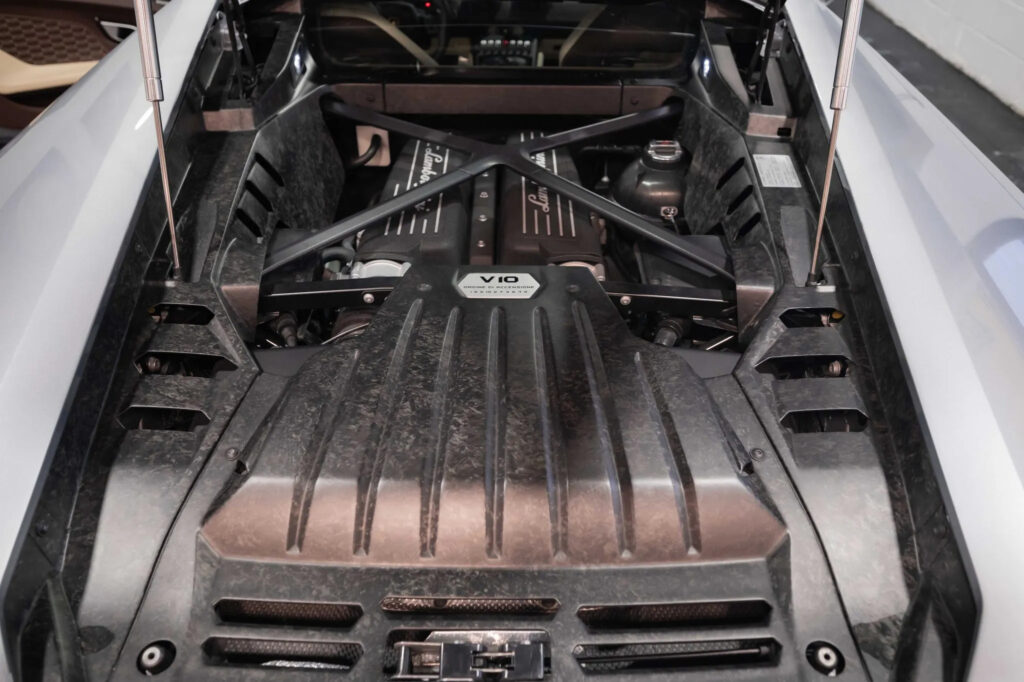
| Type | V10 5.2 litres |
| Power | 580 hp @ 8,000 rpm (433 kW) |
| Torque | 397 lb·ft @ 6,500 rpm (538 N·m) |
| Induction | Atmospheric |
| Bore | 84 mm |
| Stroke | 92 mm |
| Fuel type | Premium |
| Vehicle type / Category | |
| Vehicle type | Coupe |
| Category | Sports Car over $100,000 |
| Assembly | Sant’Agata, IT |
| Generation | 1 |
| What’s new | N/A |
| Fuel efficiency / Autonomy | |
| City | 17.2 l/100km |
| Highway | 8.9 l/100km |
| Autonomy | 465 km |
| Tires / Suspension / Brakes / Safety | |
| Steering | rack and pinion, electric assistance |
| Traction control | yes |
| Stability control | yes |
| Seat belts | 2 |
| Airbags | 4 |
| Front suspension | independent, double wishbones |
| Rear suspension | independent, double wishbones |
| Front brakes | disc (ABS) |
| Rear brakes | disc (ABS) |
| Front tires | P245/35R19 |
| Rear tires | P305/35R19 |
| Dimensions / Weight | |
| Length | 4,460 mm (176″) |
| Width | 1,924 mm (76″) |
| Height | 1,165 mm (46″) |
| Wheelbase | 2,620 mm (103″) |
| Front track | 1,668 mm (66″) |
| Rear track | 1,620 mm (64″) |
| Weight | 1,389 kg (3,062 lbs) |
| Weight distribution front-rear | N/A |
| Capacities | |
| Passengers | 2 |
| Fuel tank | 80 l (21 gal) |
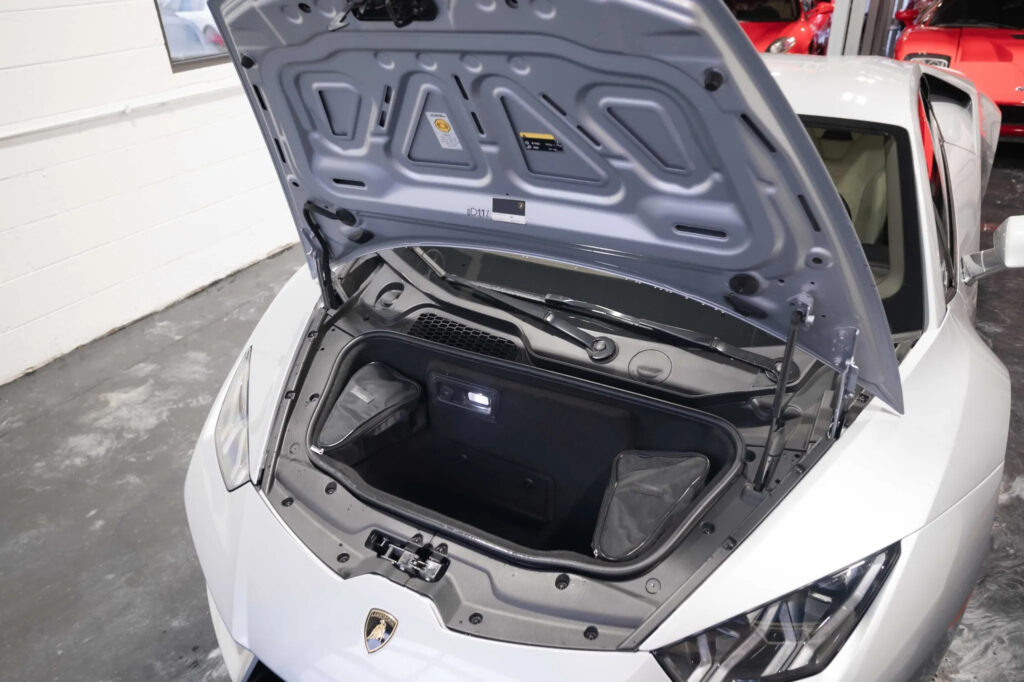
| Trunk | 113 l (4 ft³) |
| Towing | N/A |
| Box length | N/A |
| Performance | |
| Power to weight ratio | 311.0 W/kg |
| 0-100 km/h | 3.4 s |
| 80-120 km/h | N/A |
| Top speed | 320 km/h |
| Braking distance | N/A |