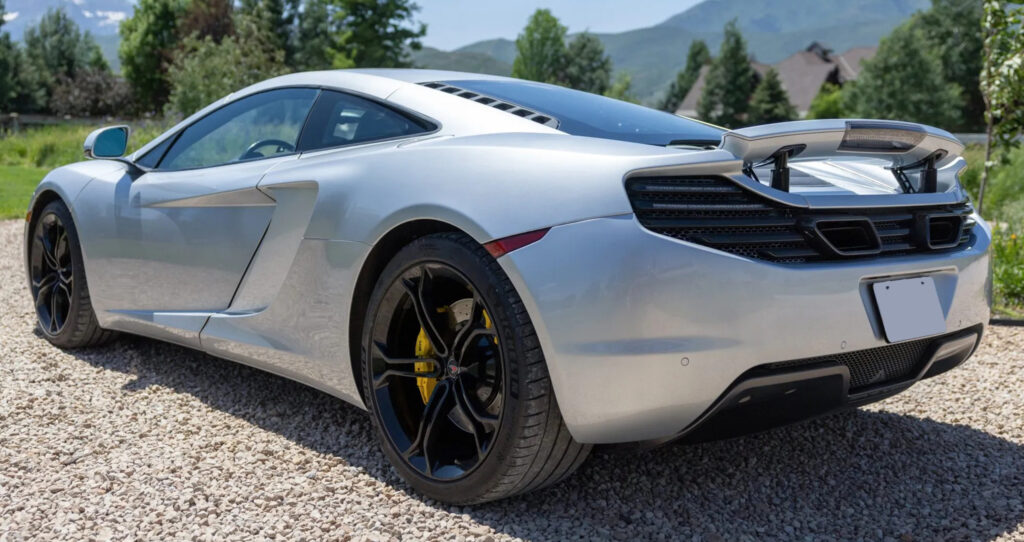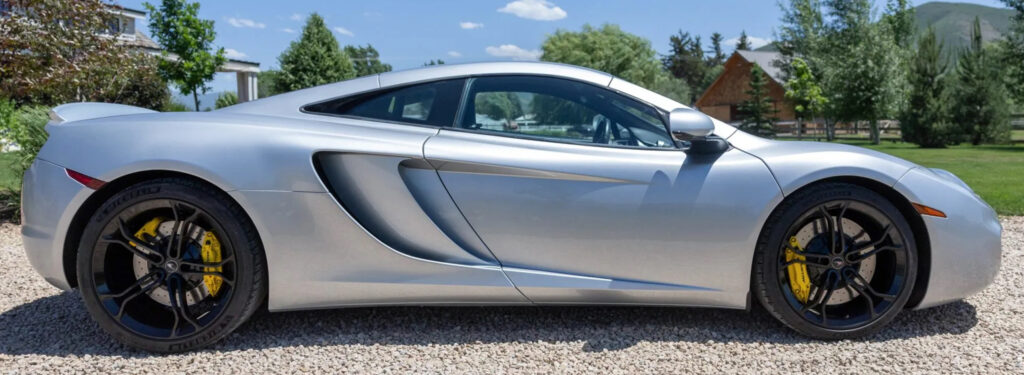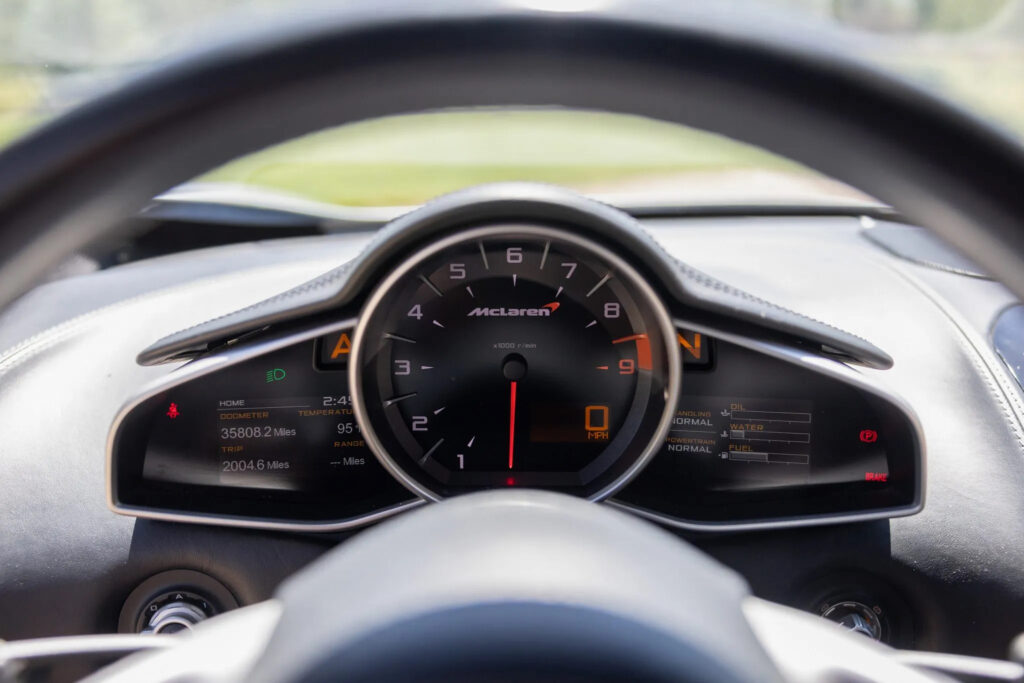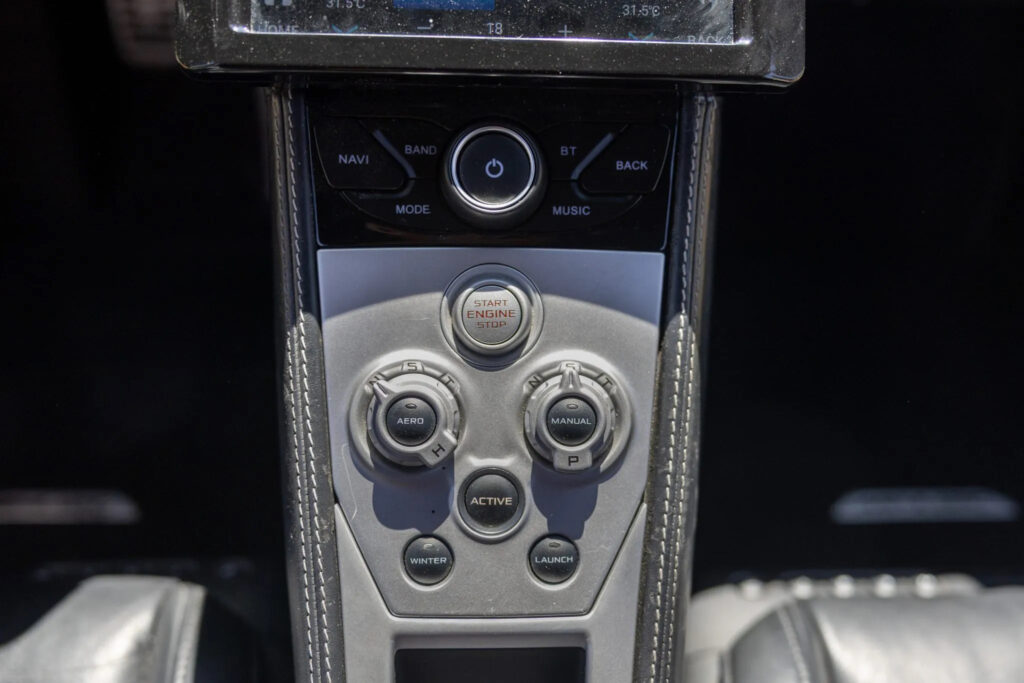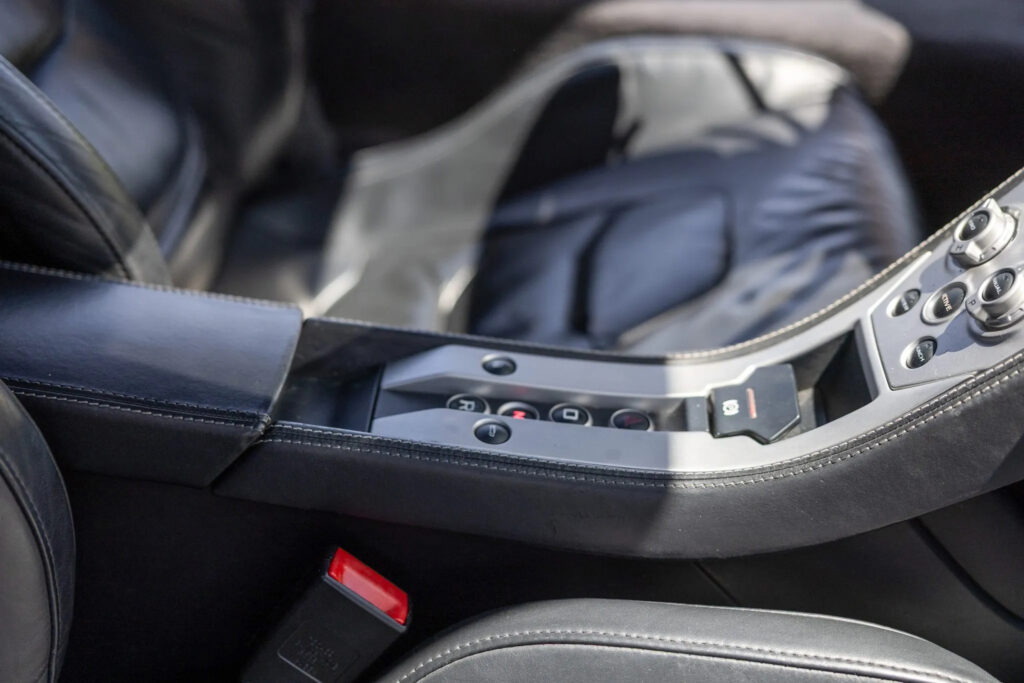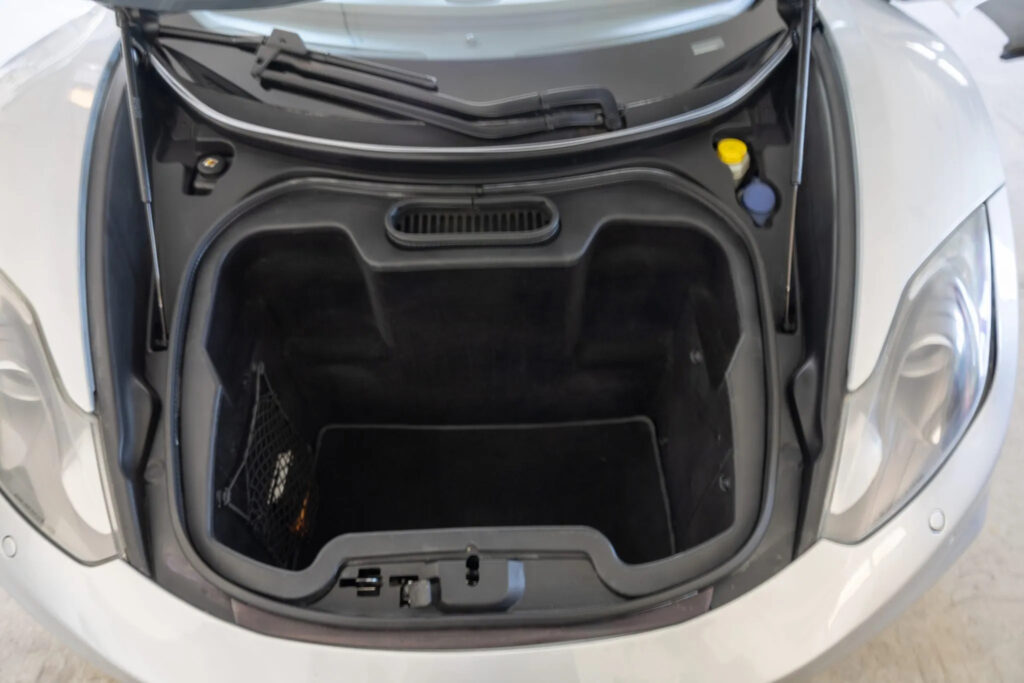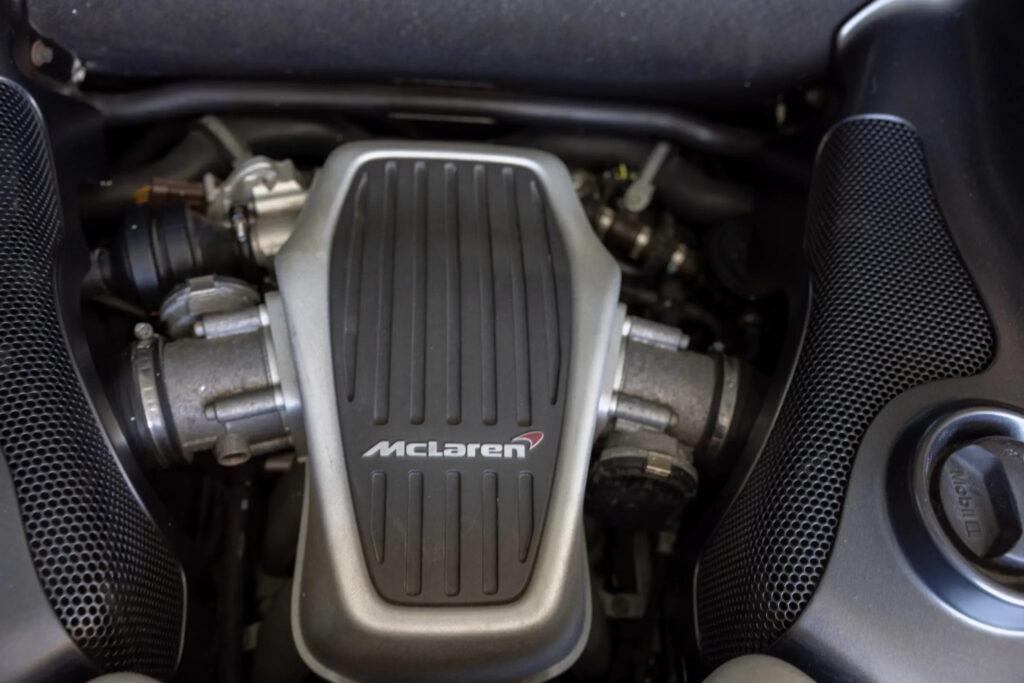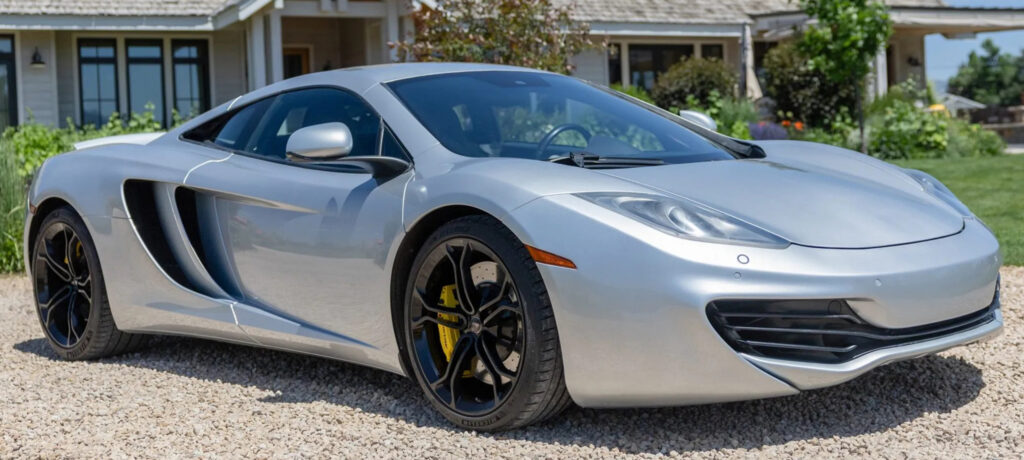
The McLaren 12C, initially launched as the MP4-12C in 2011, marked McLaren Automotive’s return to the production road car market since the iconic F1. The 12C featured a carbon fiber composite chassis and was powered by a twin-turbocharged 3.8-liter V8 engine, delivering around 600 horsepower. Its pioneering use of active aerodynamics and a Proactive Chassis Control system set new benchmarks in handling and ride dynamics. It cemented McLaren’s reputation as a maker of innovative and highly competitive supercars in the modern era.
When McLaren Automotive announced the launch of the MP4-12C in 2011 (later simplified to 12C), it marked a significant chapter in the world of supercars. This model was McLaren’s first production car since the legendary F1 and was set to re-establish the brand in the road car market. The 12C was not just a car; it was a statement of McLaren’s engineering prowess and its ambition to dominate the high-performance sports car sector.
The genesis of the 12C can be traced back to McLaren’s decision to expand its automotive division beyond Formula 1. The goal was to compete directly with established marques like Ferrari and Lamborghini. The 12C was designed to be the most technologically advanced supercar on the market, embodying the very essence of what McLaren stood for: innovation, efficiency, and performance.
At the heart of the 12C was the MonoCell, a carbon fiber monocoque chassis that offered exceptional rigidity and lightness, a technology derived directly from Formula 1. It was powered by a 3.8-liter twin-turbo V8 engine, producing around 600 horsepower initially, which was later upgraded to 616 hp in subsequent versions. The engine was mated to a seven-speed dual-clutch transmission, providing blistering acceleration and seamless gear shifts.
The 12C also featured a slew of technological innovations, such as Brake Steer (a system that improves cornering speeds by applying brakes to the inside rear wheel), Proactive Chassis Control (a suspension system that adapts to driving conditions without compromising ride comfort), and active aerodynamics that adapted to the car’s speed to optimize downforce.
The 12C was available in both coupe and spider variants. The 12C Spider, introduced in 2012, offered the same performance as the coupe but added a retractable hardtop for those who desired open-air exhilaration. Both models underwent continuous improvements over their production lifecycle, including power upgrades and enhanced drivability features.
In addition to the standard models, McLaren also introduced several special editions and bespoke versions through McLaren Special Operations (MSO). These included limited-run models with unique color schemes, enhanced aerodynamics, and custom interiors, allowing owners to personalize their vehicles to an even greater extent.
Understanding the importance of motorsport for its brand identity, McLaren developed the 12C GT3, a race-prepared version of the 12C. The 12C GT3 was immensely successful in various GT championships worldwide, securing numerous victories and proving the capabilities of the 12C under the most demanding conditions.
The production of the 12C ended in 2014, making way for its successor, the 650S, which built upon the foundation laid by the 12C with enhanced performance and luxury. The 12C’s impact, however, extends beyond its production years. It set a new standard for what customers could expect from a supercar in terms of technology, performance, and versatility.
The 12C’s legacy is one of a trailblazer; it redefined the parameters of supercar engineering and performance. Its influence can be seen in all subsequent McLaren models, each inheriting and evolving from its combination of lightweight construction, innovative technology, and extraordinary performance capabilities. As McLaren continues to push the boundaries of automotive engineering, the 12C stands as a monument to where this era of innovation began, setting the pace for a bright, high-speed future.
BODYWORK
BODY TYPE 2 seater fixed-head coupé
NUMBER OF DOORS 2
DESIGNER Frank Stephenson
DIMENSIONS & WEIGHTS
WHEELBASE 2670 mm 105.1 inches
TRACK/TREAD (FRONT) 1656 mm 65.2 inches
TRACK/TREAD (REAR) 1583 mm 62.3 inches
LENGTH 4507 mm 177.4 inches
WIDTH 1908 mm 75.1 inches
HEIGHT 1199 mm 47.2 inches
GROUND CLEARANCE
LENGTH:WHEELBASE RATIO 1.69
KERB WEIGHT 1434 kg 3161 lb
WEIGHT DISTRIBUTION 42.5% front
FUEL TANK CAPACITY
AERODYNAMICS
DRAG COEFFICIENT
FRONTAL AREA
CDA
POWERTRAIN
ENGINE TYPE turbocharged petrol
ENGINE MANUFACTURER McLaren
ENGINE CODE M838T
CYLINDERS V 8 in 90° vee
CAPACITY 3.8 litre
3799 cc
(231.829 cu in)
BORE × STROKE
93 × 69.9 mm
3.66 × 2.75 in
BORE/STROKE RATIO 1.33
VALVE GEAR double overhead camshaft(DOHC)
4 valves per cylinder
32 valves in total
MAXIMUM POWER OUTPUT 625 PS (616 bhp) (459 kW)
at 7500 rpm
MAXIMUM TORQUE 600 Nm (443 ft·lb) (61.2 kgm)
at 3000-7000 rpm
SPECIFIC OUTPUT 120.9 kW/litre
164.4 ps/litre
162.1 bhp/litre
2.66 bhp/cu in
SPECIFIC TORQUE 157.94 Nm/litre
1.91 ft·lb/cu3
ENGINE CONSTRUCTION aluminium block & head
SUMP dry sumped
COMPRESSION RATIO 8.7:1
FUEL SYSTEM EFI
BMEP (BRAKE MEAN EFFECTIVE PRESSURE) 1984.7 kPa (287.9 psi)
MAXIMUM RPM 8500 rpm
CRANKSHAFT BEARINGS
ENGINE COOLANT Water
UNITARY CAPACITY 474.88 cc
ASPIRATION Turbo
COMPRESSOR 2 turbochargers
INTERCOOLER
CATALYTIC CONVERTER Y
PERFORMANCE
ACCELERATION 0-80KM/H (50MPH)
ACCELERATION 0-60MPH
ACCELERATION 0-100KM/H 3.1 s
ACCELERATION 0-160KM/H (100MPH) 6 s
STANDING QUARTER-MILE 10.6 s
@ 136 mph
STANDING KILOMETRE
MAXIMUM SPEED 333 km/h (207 mph)
POWER-TO-WEIGHT RATIO Higher is better
435.54 PS/tonne (1000 kg)
0.44 PS/kg
320.33 kW/tonne (1000 kg)
0.32 kW/kg
429.57 bhp/tonne (1000 kg)
0.43 bhp/kg
0.19 bhp/lb
WEIGHT-TO-POWER RATIO Lower is better
3.12 kg/kW
5.21 lb/bhp
FUEL CONSUMPTION
FUEL CONSUMPTION
UNIVERSAL FUEL CONSUMPTION (CALCULATED FROM THE ABOVE)
LITRES/100KM
KM/LITRE
UK MPG
US MPG
CARBON DIOXIDE EMISSIONS 279.0 g/km NEDC
CARFOLIO CALCULATED CO2 ?
VED BAND (UK) M
CO2 EFFIZIENZ (DE) G
CHASSIS
ENGINE POSITION mid
ENGINE LAYOUT longitudinal
DRIVE WHEELS rear wheel drive
TORQUE SPLIT N/A
STEERING
TURNS LOCK-TO-LOCK
TURNING CIRCLE
FRONT SUSPENSION
REAR SUSPENSION
WHEEL SIZE FRONT 8½J x 19
WHEEL SIZE REAR 11J x 20
TYRES FRONT Pirelli P Zero 235/35 R 19
TYRES REAR Pirelli P Zero 305/30 R 20
BRAKES F/R VeDi/VeDi-S-ABS
FRONT BRAKE DIAMETER 370 mm
REAR BRAKE DIAMETER 350 mm
BRAKED AREA
GEARBOX 7 speed sequential