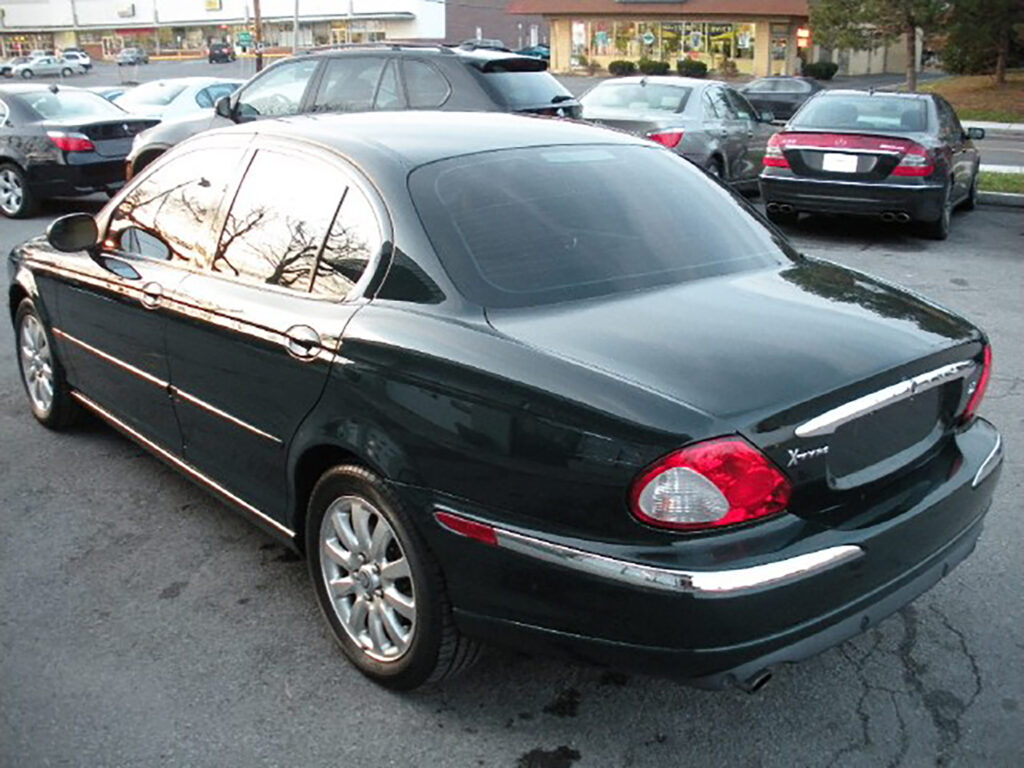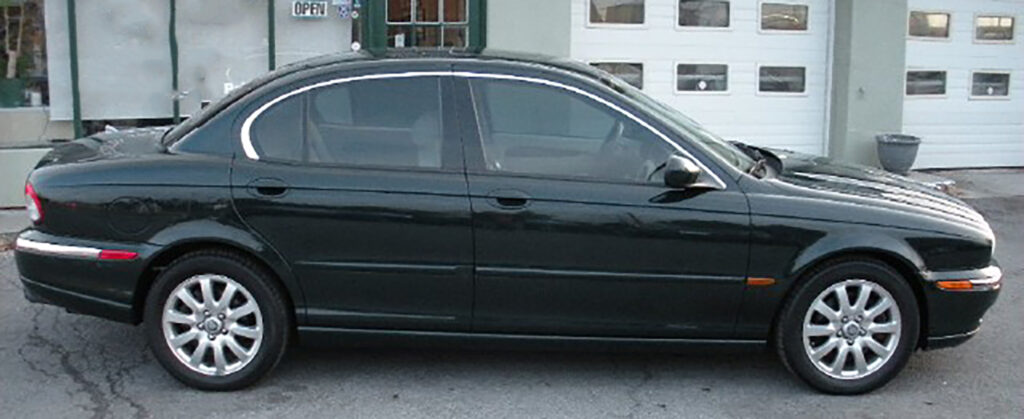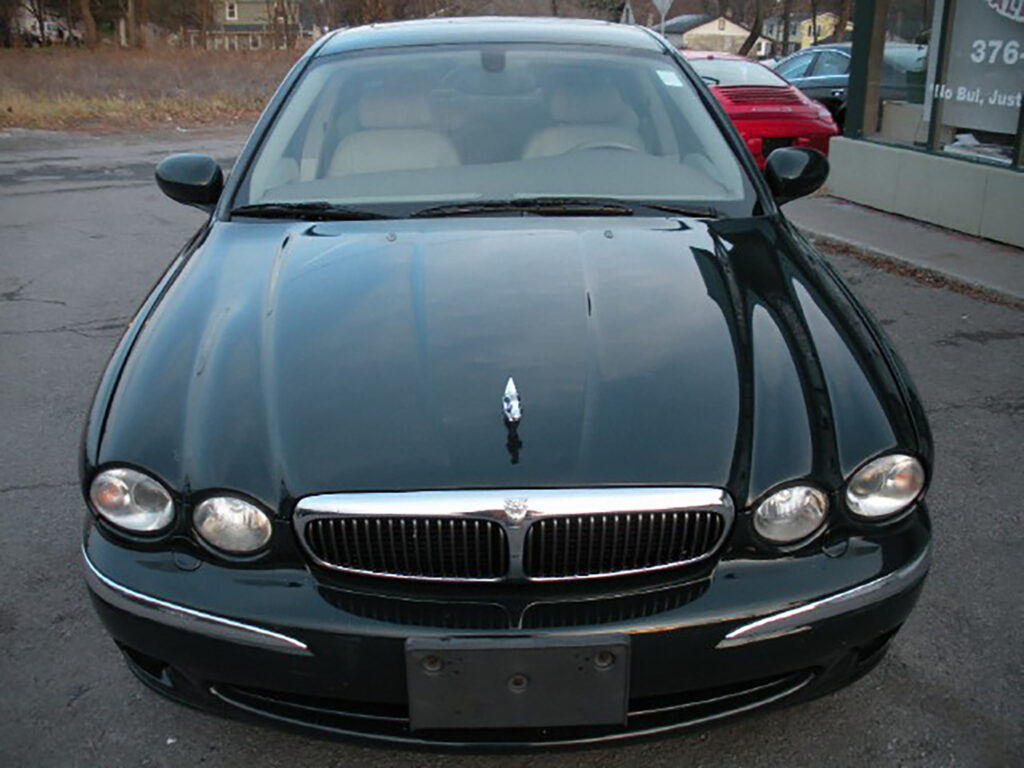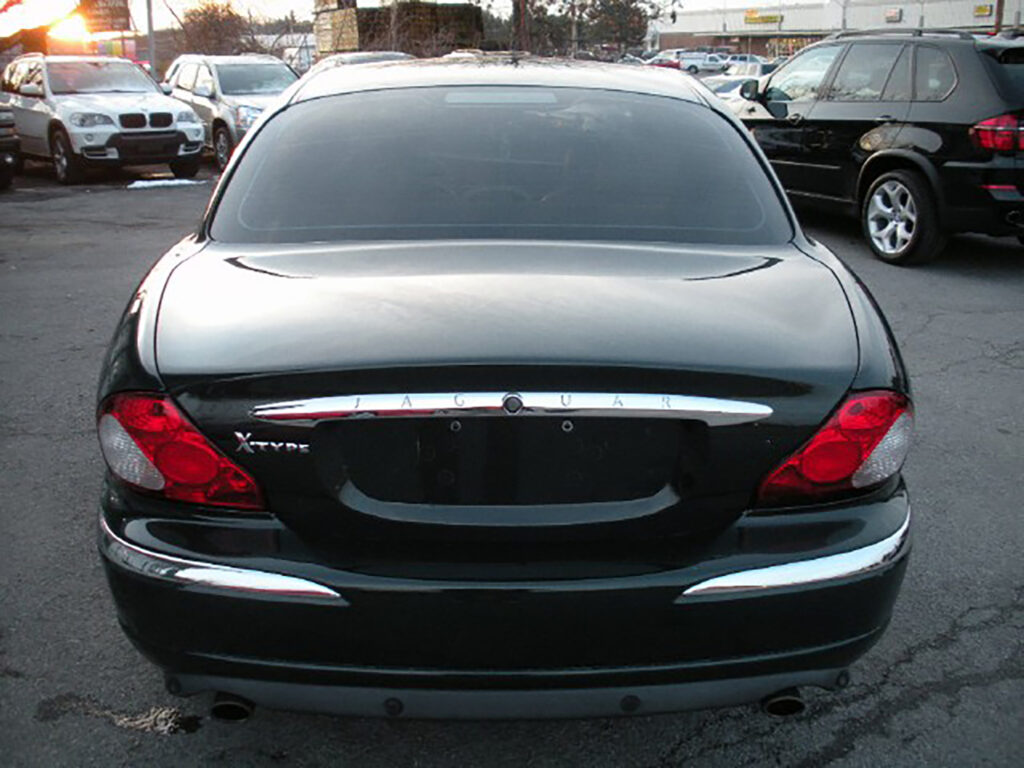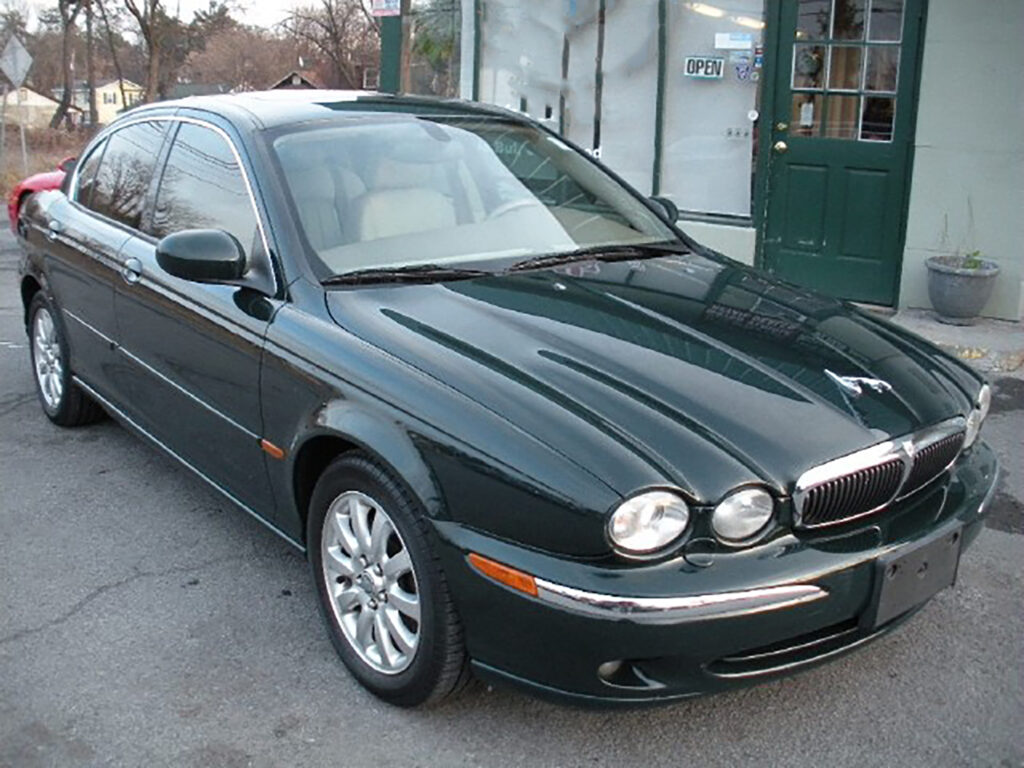
The Jaguar X-Type is a front-engine, all-wheel/front-wheel drive compact executive car[1][2] manufactured and marketed by Jaguar Cars from 2001 to 2009 under the internal designation X400, for a single generation, in sedan/saloon and wagon/estate body styles. In addition to offering Jaguar’s first station wagon/estate in series production, the X-type would ultimately introduce its first diesel engine, four-cylinder engine and front-wheel drive configuration.
The X-Type was developed during the period when Jaguar was owned by Ford as a division of its Premier Automotive Group (PAG) (1999-2009) — and marked Jaguar’s entry into the critical compact executive segment. The programme aimed to double the marque’s worldwide sales — requiring expansion of engineering resources, factory capacity, marketing capability, sales support and service.[3] At launch, Autocar called the X-Type “the most important Jaguar ever”.[4]
With annual projections of 100,000 sales, the X-Type recorded a production of 350,000 over its eight-year manufacturing run.
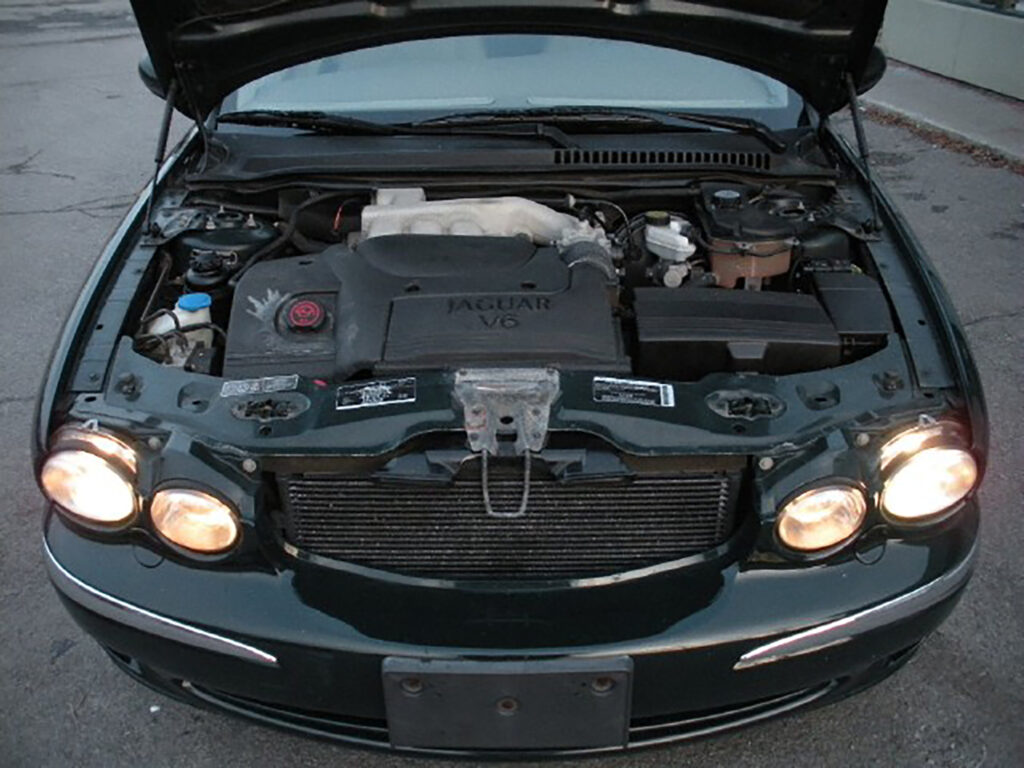
The X-Type was based on a modified version of the Ford CD132 platform shared with the Ford Mondeo. The X-Type was initially offered as all-wheel drive only and mated to a 2.5 litre and 3.0 litre AJ-V6 petrol engine. One notable addition to AJ-V6 engine design is the use of variable valve timing. The X-Type’s petrol engine is also set apart by the use of SFI fuel injection, four valves per cylinder and featured fracture split forged powder metal connecting rods, plus a one piece cast camshaft, and has direct acting mechanical bucket (DAMB) tappets.
In 2003, the X-Type was also offered in front-wheel drive with the introduction of Jaguar’s first four-cylinder diesel engines (based on the Ford Duratorq ZSD unit from the Mondeo and Transit), and with the smaller 2.1 litre petrol V6. The six speed automatic transmission supplied on the later 2.2 litre diesel models includes Jaguar Sequential Shift.
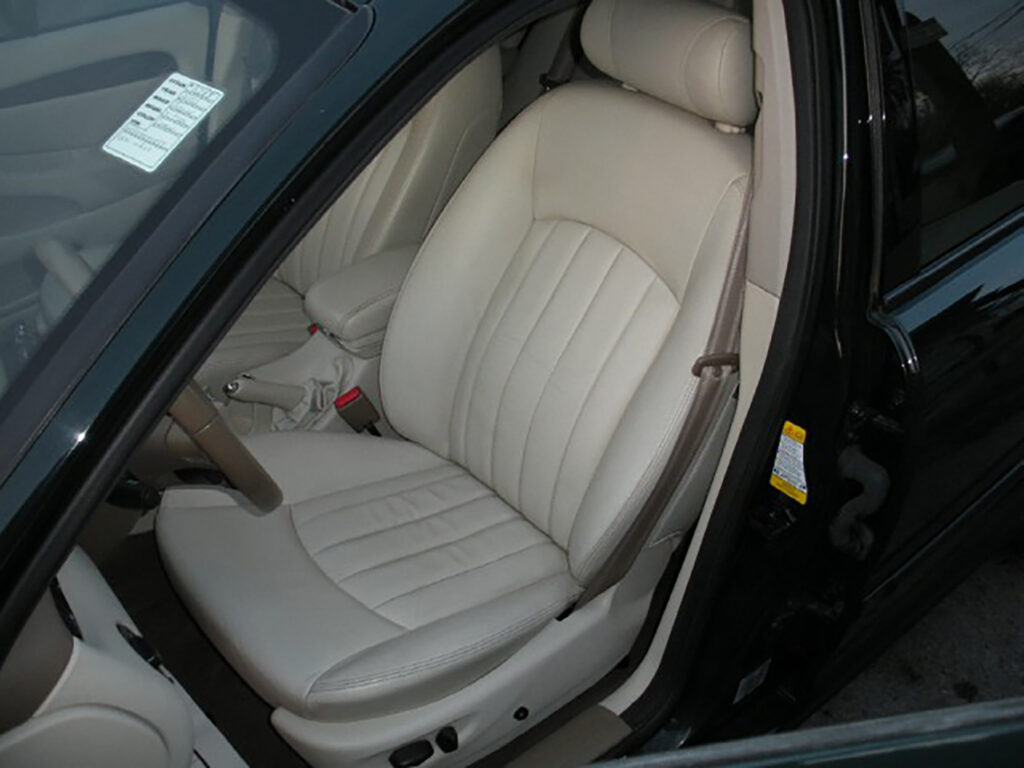
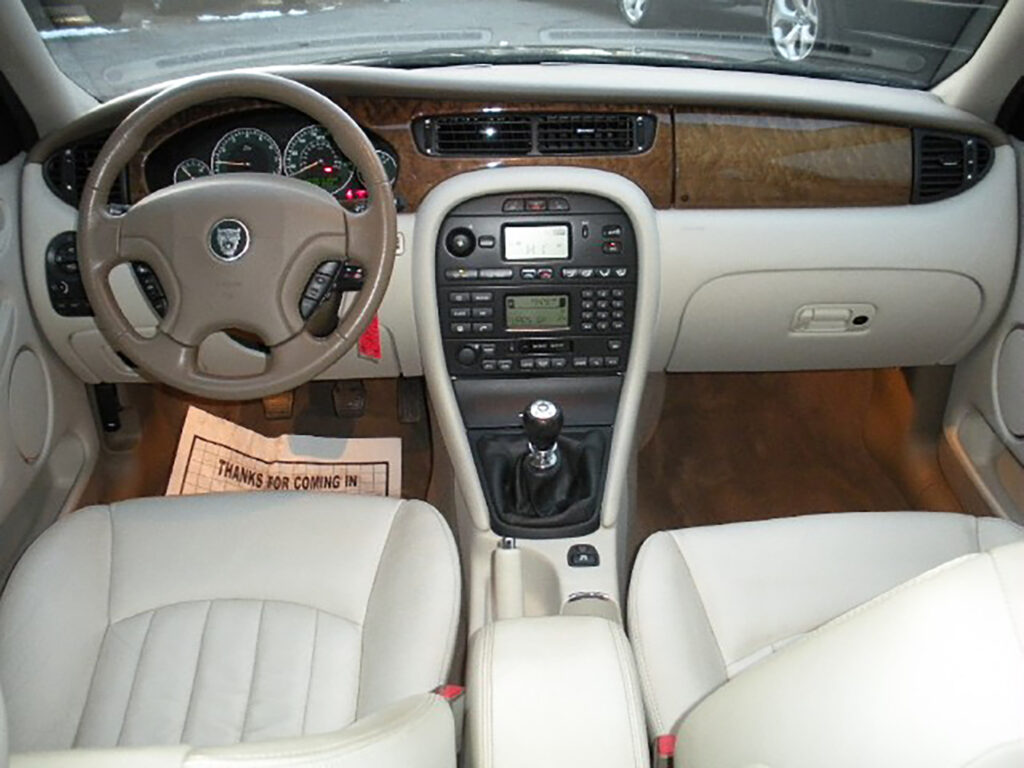
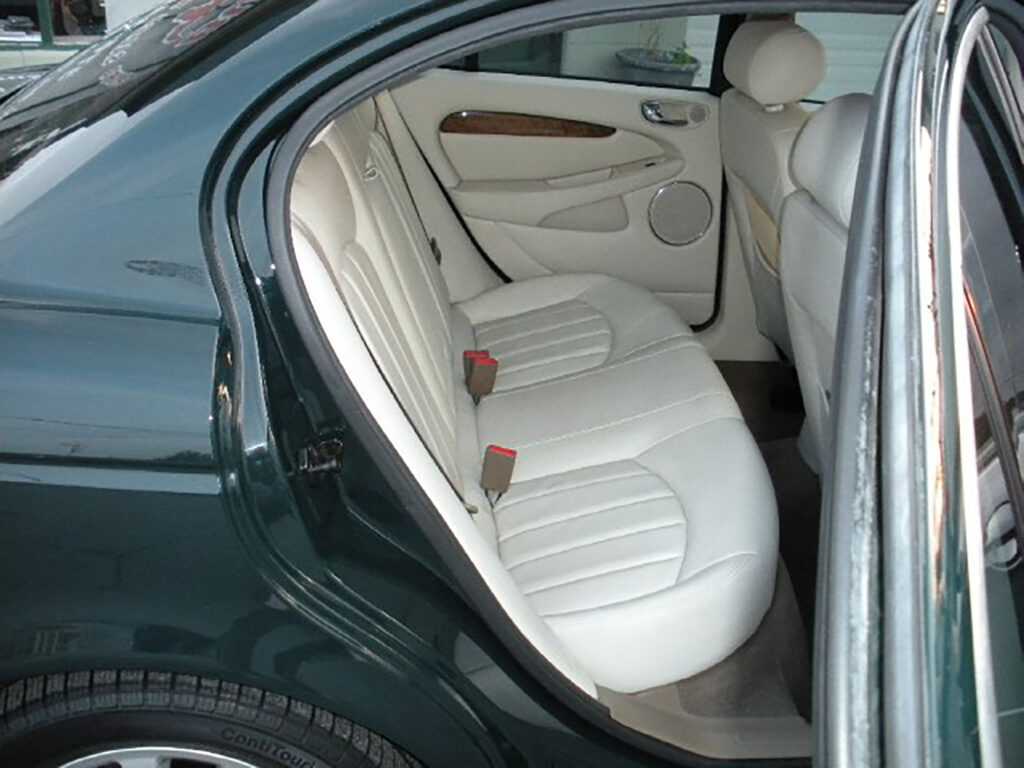
At the X-Type’s launch, standard equipment included automatic climate control; leather upholstery; eight-way power driver’s seat; 70/30 split folding rear seats; Sapele wood interior trim; tilt-and-telescope steering wheel; six-speaker, 120-watt AM/FM/CD stereo; power locks; one-touch power windows; a power tilt-and-slide glass sunroof; automatic headlights; and 16-inch alloy wheels.[11] Later trim configurations would introduce carbon fibre dash panels Alcantaraseat surfaces. All interior wood was genuine, manufactured with veneers for the rest of the Jaguar line-up at Browns Lane’s Veneer Manufacturing Centre, including the door trim pieces on higher models, increasing the development and production costs.[4]
The estate adds a 320-watt premium Alpine sound system, wood-and-leather steering wheel, 10-way power adjustable seats for driver and front-seat passenger, electrochromic mirrors inside and out, rain-sensing windshield wipers, a programmable garage-door opener, message centre and trip computer, Reverse Park Control, and 17-inch alloy wheels.
| engine | V6 |
| valvetrain | DOHC 4 Valves / Cyl |
| displacement | 3000 cc / 183.1 in³ |
| bore | 89 mm / 3.5 in |
| stroke | 79.5 mm / 3.13 in |
| power | 172.3 kw / 231.1 bhp @ 2800 rpm |
| specific output | 77.03 bhp per litre |
| bhp/weight | bhp per tonne |
| torque | 284 nm / 209.5 ft lbs @ 3000 rpm |
| driven wheels | Front Engine / 4WD |
| front tires | 225/45R17 |
| rear tires | 225/45R17 |
| front brakes | Discs w/ABS |
| f brake size | x 300 mm / x 11.8 in |
| r brake size | x 280 mm / x 11.0 in |
| front wheels | F 43.2 x 17.8 cm / 17.0 x 7.0 in |
| rear wheels | R 43.2 x 17.8 cm / 17.0 x 7.0 in |
| transmission | 5-Speed Manual |
| gear ratios | :1 |
| final drive | 3.8:1 |