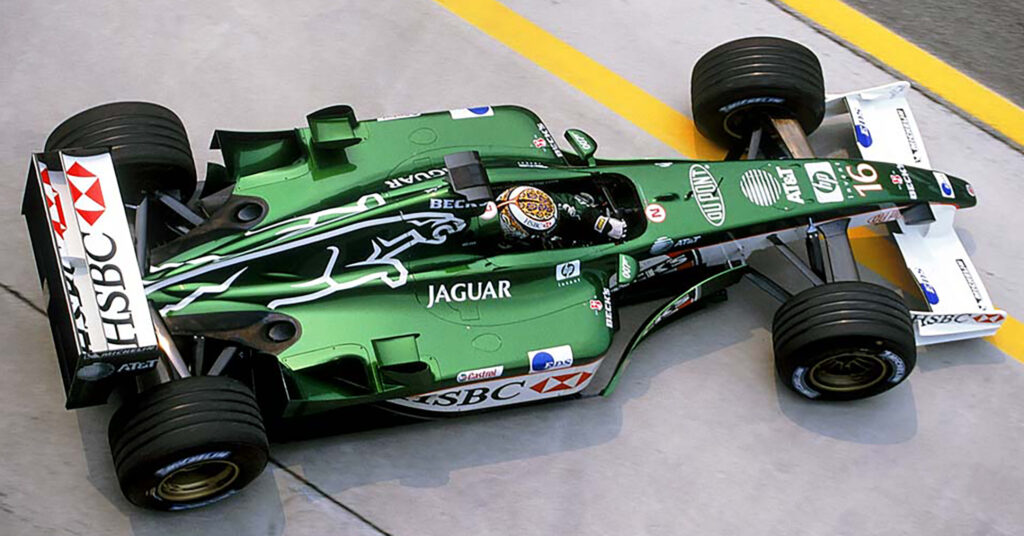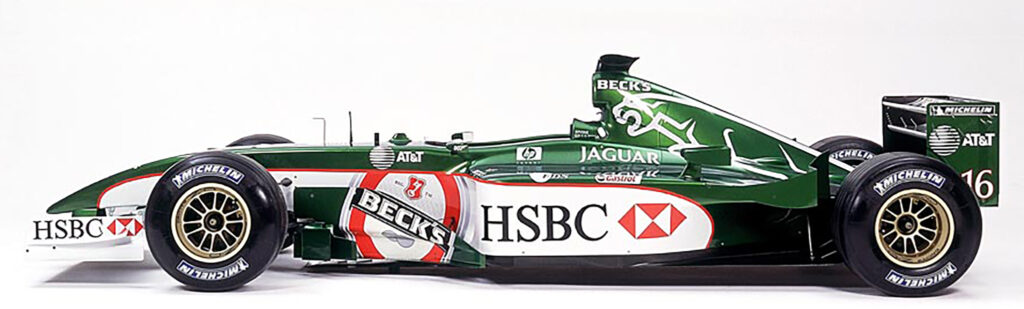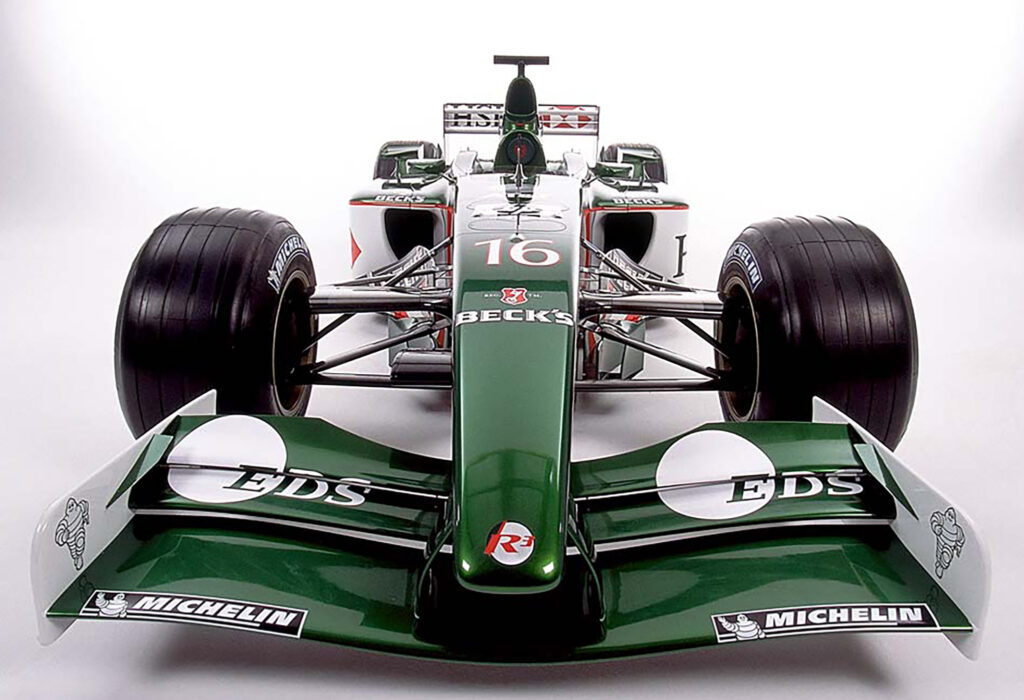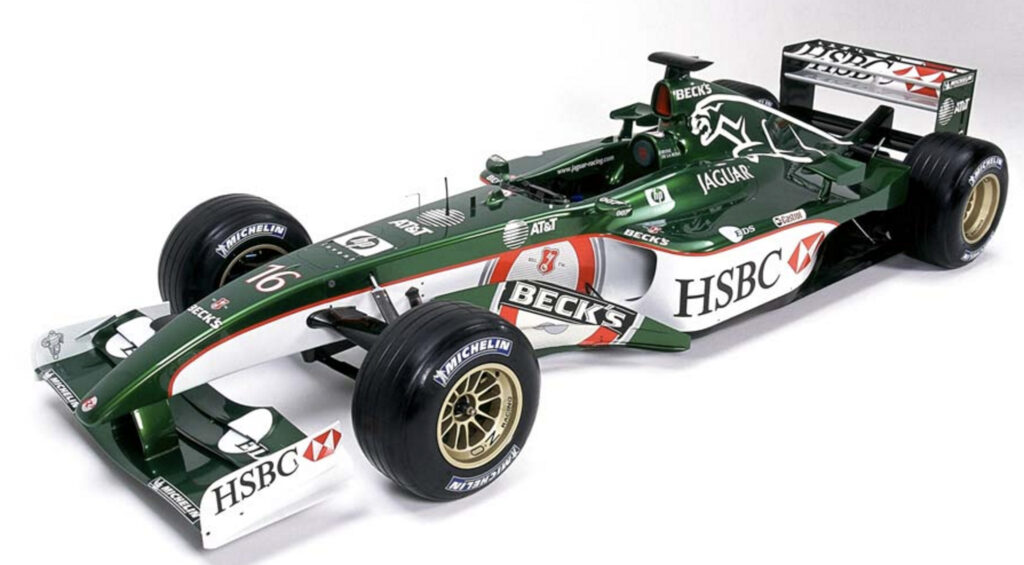
Building on lessons learned in 2000 (with R1) and 2001 (with R2), this season’s Jaguar challenger is a more adventurous design than either of its predecessors. The R3 was designed by Chief Designer John Russell and Chief Aerodynamicist Mark Handford and their teams, under the overall direction of Technical Director Steve Nichols.
As is self-evident, the R3 looks dramatically different from its predecessors. But at its core, R2 had significant strengths so the slate has not been wiped completely clean.
Cosworth Racing, the most successful engine builder in Formula One history, will continue to develop the CR-3 V10 engine that powered the Jaguar R2 last season. Nick Hayes, Managing Director at Cosworth Racing takes up the engine story: I’m confident that, with the right development, the Cosworth CR-3 V10 engine will make significant further gains in 2002, says Hayes. For example, the block and heads incorporate new design features, and we will introduce further modifications throughout the coming season.
2002 Season Drivers: Eddie Irvine & Pedro de la Rosa
| engine | 72 Degree, Cosworth CR-3 V10 |
| position | Mid Longitudinal |
| aspiration | Natural |
| valvetrain | DOHC 4 Valves / Cyl |
| displacement | 2998 cc / 182.9 in³ |
| bhp/weight | bhp per tonne |
| driven wheels | RWD |
| front tires | Michelin |
| rear tires | Michelin |
| front brakes | Brembro Carbon discs w/AP Racing 6-Pot Calipers |
| f brake size | mm / in |
| rear brakes | Brembro Carbon discs w/AP Racing 6-Pot Calipers |
| r brake size | mm / in |
| front wheels | F 32.3 x 33.0 cm / 12.7 x 13.0 in |
| rear wheels | R 34.0 x 33.0 cm / 13.4 x 13.0 in |
| f suspension | Double Wishbones w/Torsion Bar, Anti Roll bar |
| r suspension | Double Wishbones w/Torsion Bar, Anti Roll bar, Coil Springs |
| transmission | Jaguar 7-Speed w/AP Racing Triple Plate Clutch |
Chassis:
R3 composite monocoque structure, designed and built in-house, carrying the Cosworth Racing CR-3 V10 engine as fully stressed member, Jaguar steering and power assistance.
Engine: Cosworth Racing CR-3 V10
Fuel: Castrol Racing Fuel
Transmission:
Jaguar magnesium-cased seven-speed gearbox, longitudinally mounted high-pressure hydraulic system for power shift and clutch operation. AP Racing triple-plate pull-type clutch. Independent oil system using Castrol Fluid Technology.
Suspension:
Front: Cast titanium uprights/steel axles. Upper and lower carbon wishbones and pushrods. Torsion bar springing and anti-roll bar, Jaguar/Penske damper layout.
Rear: Cast titanium uprights/steel axles. Upper and lower carbon links and pushrods. Coil springs and torsion anti-roll bar, Jaguar/Penske damper layout.
Brakes:
Front: AP Racing lithium alloy six-piston callipers. Carbon Industrie or Brembo carbon/carbon discs and pads.
Rear: AP Racing lithium alloy six-piston callipers. Carbon Industrie or Brembo carbon/carbon discs and pads.
Wheels: OZ Racing
Front: 12.7 x 13 in
Rear: 13.4 x 13 in
Tyres: Michelin
Electronics:
Pi ‘VCS’ system. Integrated engine/chassis electronic control system. DASM and DATA logger.
Cosworth Racing CR-3 V10 Engine
No. of cylinders: 10
Vee angle: 72-degree
No. of valves: 40
Capacity: 2998 cc
Power output: not disclosed!
Max. engine speed: 18,000 rpm
Construction: Aluminium block and heads cast in Cosworth Racing’s own foundry. Aluminium alloy pistons. Steel crankshaft.
Engine management: Pi
Ignition system: Cosworth Racing
Spark plugs: Champion
Weight: 105 kg including ballast…
Length: 569 mm
Width: 490 mm
Height: 490 mm