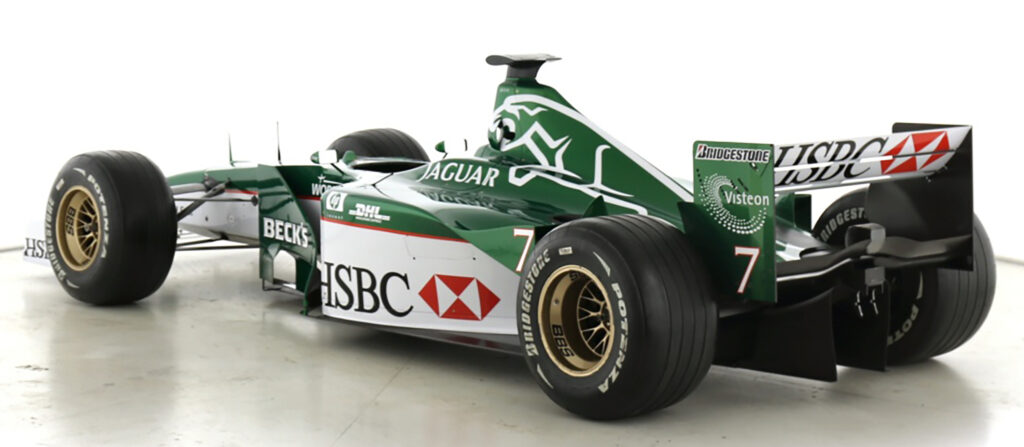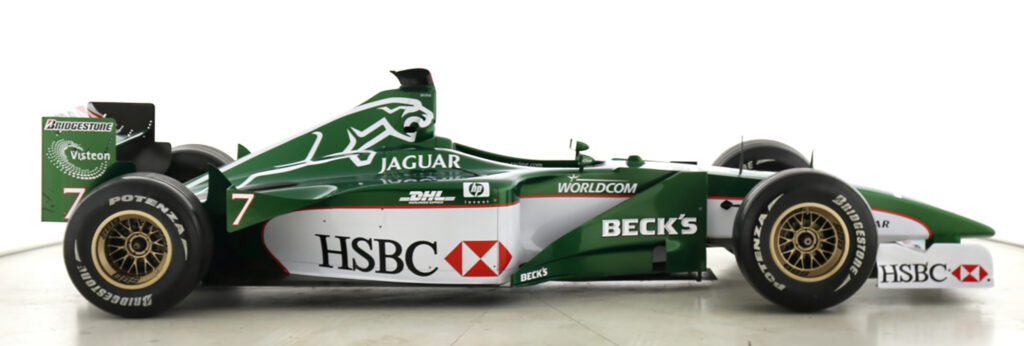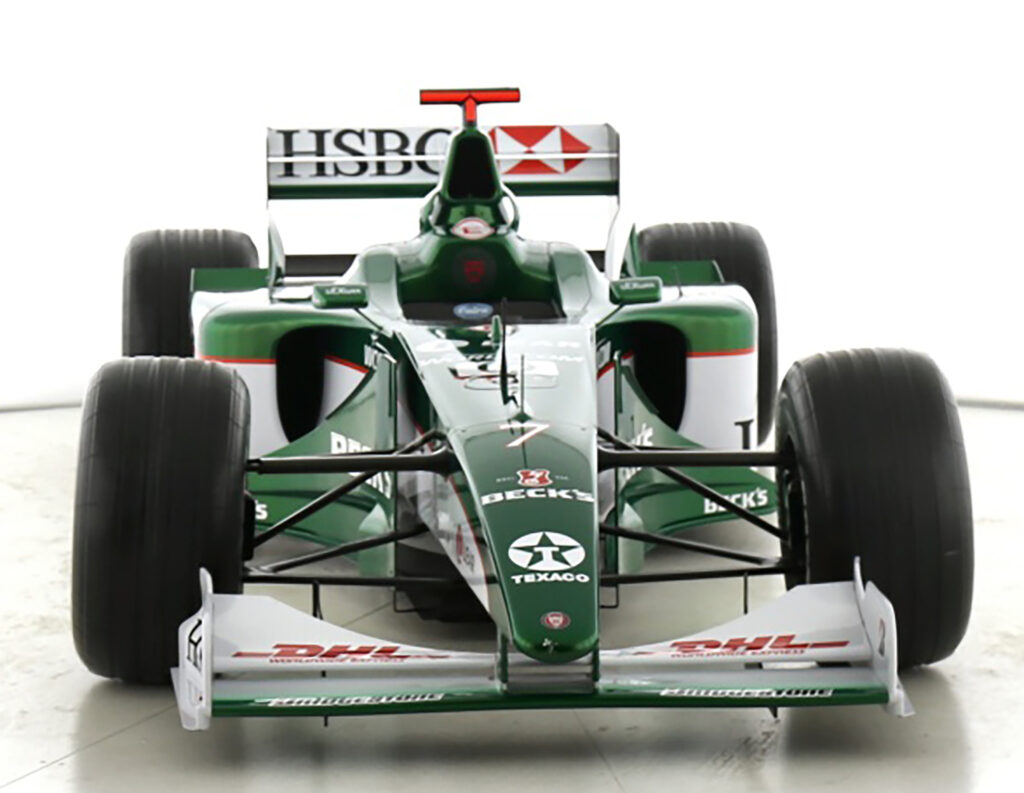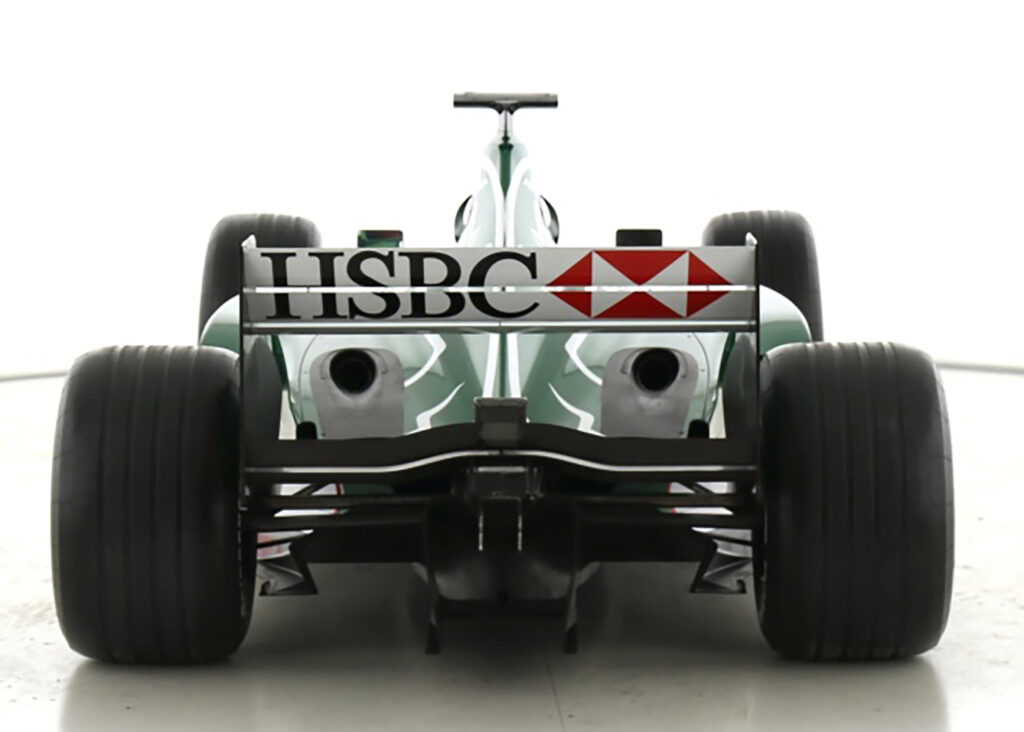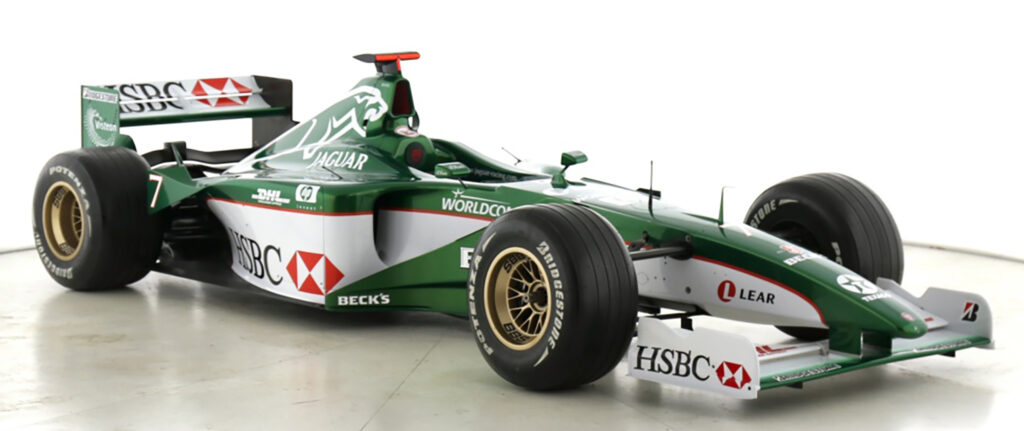
After having been absent from motor racing for almost ten years since the last of the TWR Jaguar XJR prototype sports cars finished their successful run in 1992, at the Frankfurt Motor Show on 14 September 1999 Jaguar’s Chairman Dr Wolfgang Reitzle announced that the existing Stewart-Ford Formula One Grand Prix team (bought by Ford in June 1999) would become the Jaguar Racing team. Naturally the return of Jaguar to motor racing, especially in the high-profile Formula One category, attracted a great deal of interest, both from the media and from many thousands of loyal Jaguar fans.
At first managed by Sir Jackie Stewart OBE and his son Paul, the new team was based at Milton Keynes. The first Jaguar single-seater racing car, the R1, was developed from the existing Stewart-Ford, and was unveiled at the Lord’s Cricket Ground in London on 25 January 2000. The engine was a Cosworth V10, supplied by this Ford-owned company at Northampton. Major sponsors included the HSBC Bank, MCI WorldCom, Beck’s Bier, Hewlett-Packard, DHL and Lear Corporation.
The team drivers were Eddie Irvine who in 1999 had finished second in the Drivers’ Championship in a Ferrari, and Johnny Herbert, winner of the 1999 European Grand Prix at the Nürburgring in the Stewart. The debut race for the new team came in the Australian Grand Prix in March 2000, the traditional season opener.
Throughout the 2000 season, two Jaguars contested most of the races, but this turned out to be the beginning of a learning curve for the new team. The best result achieved was a fourth place for Eddie Irvine in the Monaco Grand Prix. Altogether he scored six championship points during this first season.
| Engine | |
| Configuration | Ford Cosworth CR-2 72º V10 |
| Location | Mid, longitudinally mounted |
| Construction | aluminium alloy block and head |
| Displacement | 2,998 cc / 182.9 cu in |
| Valvetrain | 4 valves / cylinder, DOHC |
| Fuel feed | Fuel Injection |
| Lubrication | Dry sump |
| Aspiration | Naturally Aspirated |
| Drivetrain | |
| Chassis | composite monocoque |
| Front suspension | double wishbones, push-rod torsion bar springs |
| Rear suspension | upper carbon fibre wishbone, lower hybrid composite steel wishbone, torsion springs |
| Brakes (fr/r) | carbon ceramic discs |
| Gearbox | 6 speed Semi-automatic |
| Drive | Rear wheel drive |
| Performance figures | |
| Top Speed | 370 km/h (230 mph) |
| Car type | Open-wheeler |
| Curb weight | 550 kg (1213 lbs) |
| Years built | 2000 – 2000 |
| Engine type | V10 |
| Displacement | 3.0 l (183 ci / 2998 cc) |
| Power | 816 ps (805 bhp / 600 kw)@ 17500 rpm |
| Torque | 1000 Nm (738 lb-ft) |
| Power / liter | 272 ps (269 hp) |
| Power / weight | 1484 ps (1464 bhp) / t |
| Torque / weight | 1818 Nm (1341 lb-ft) / t |
| Transmission | 6 speed |
| Layout | middle engine, rear wheel drive |