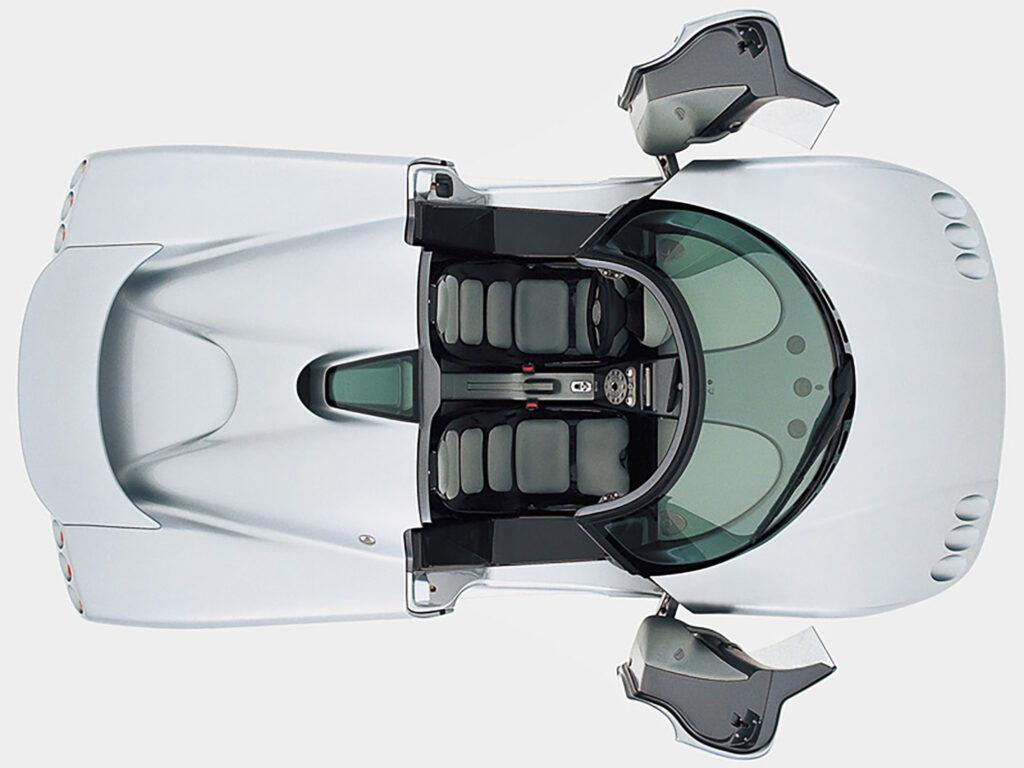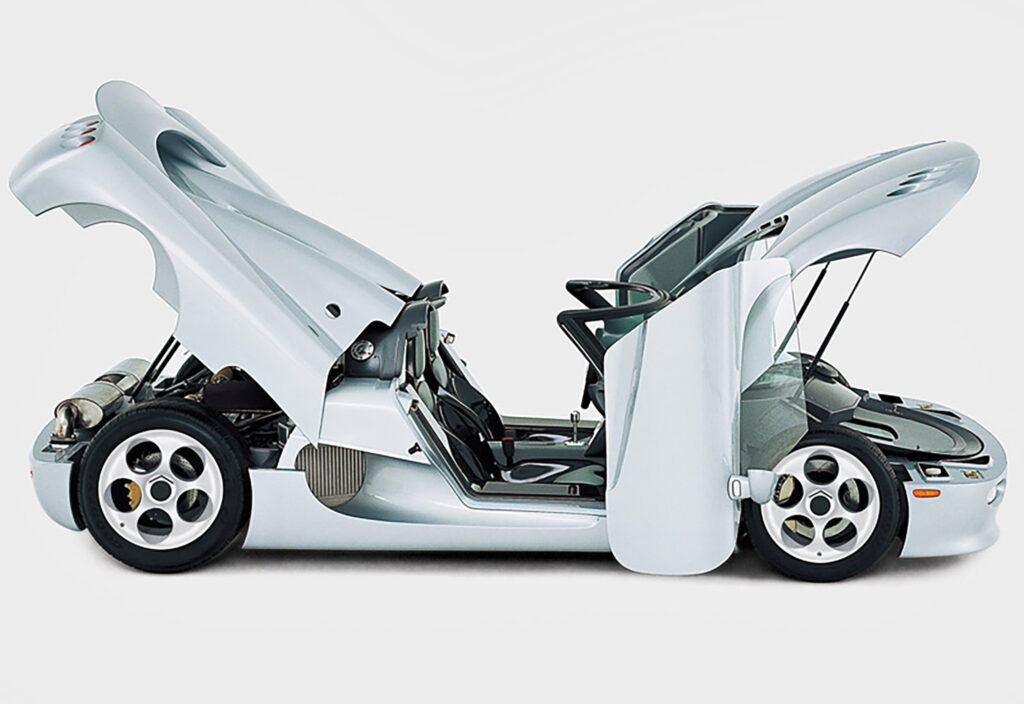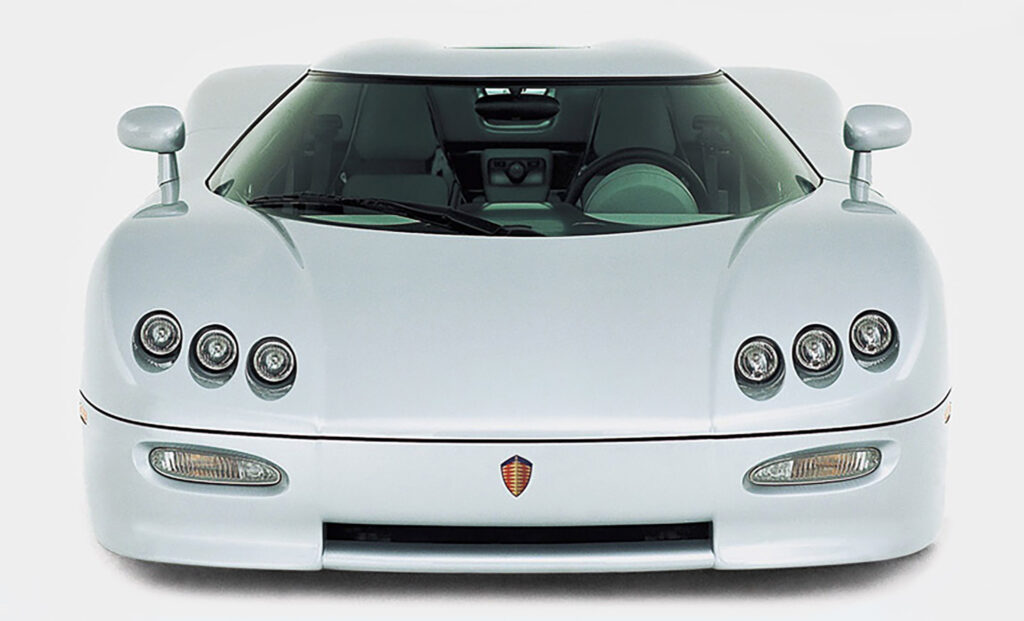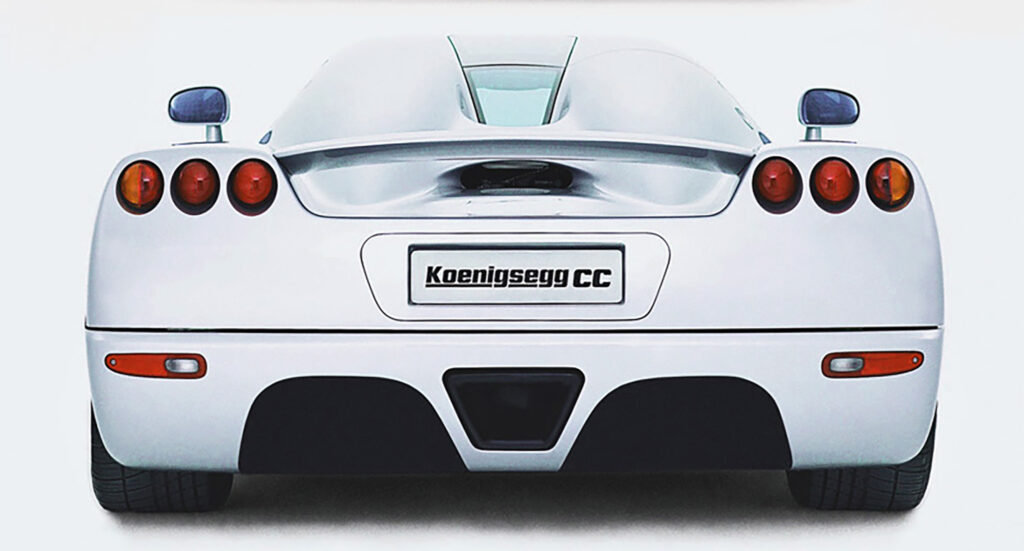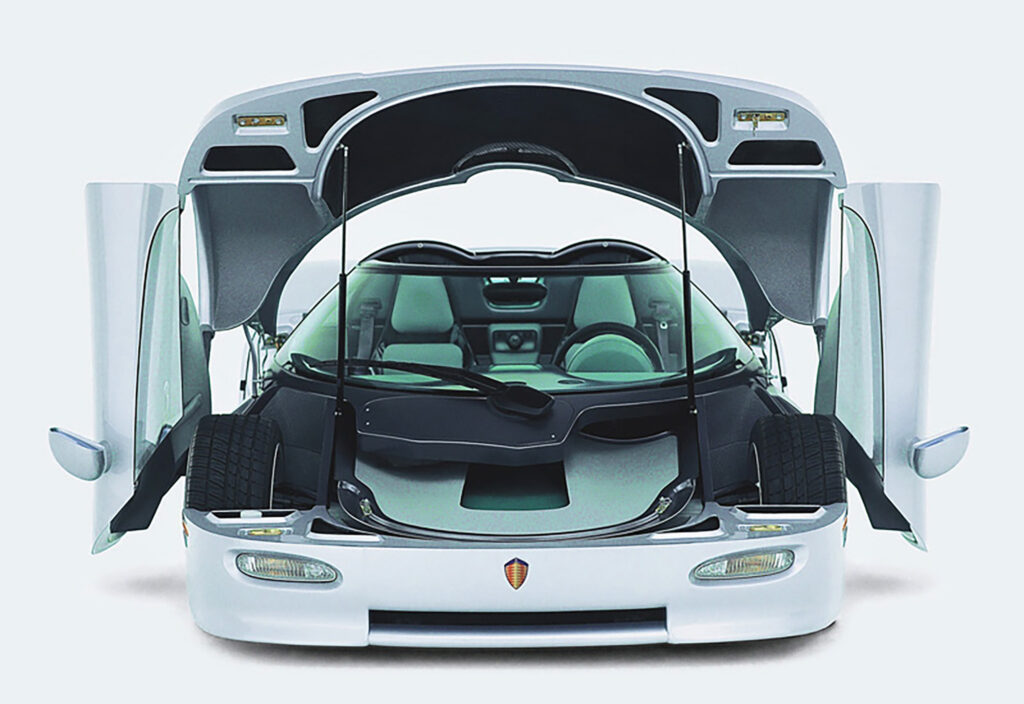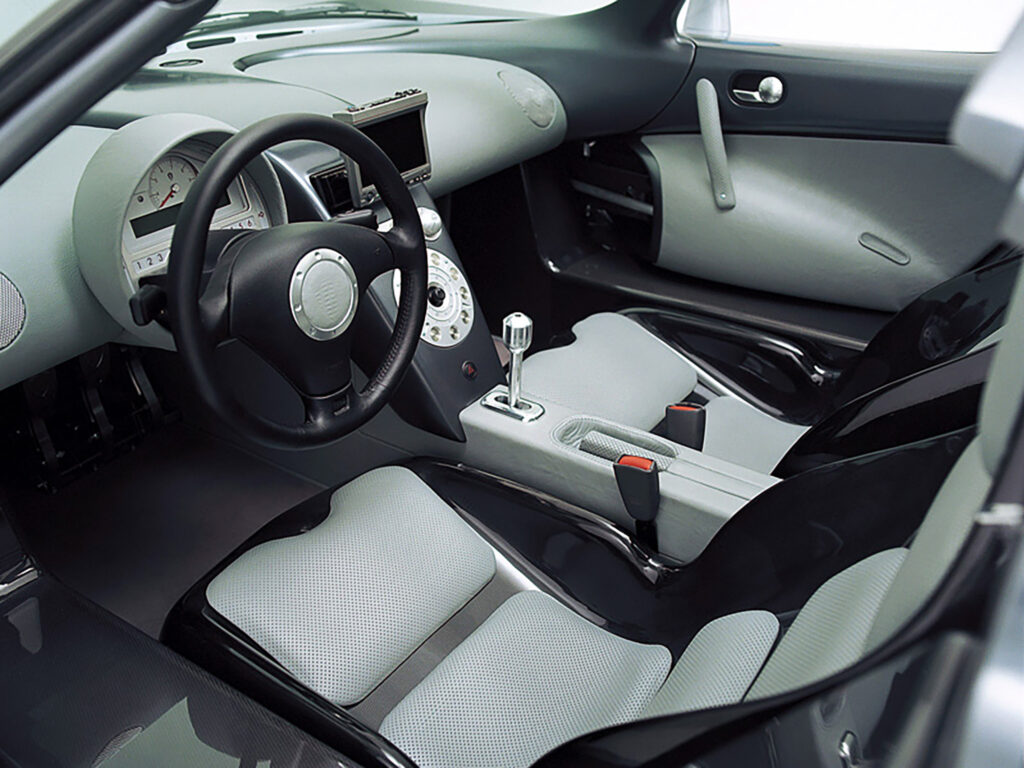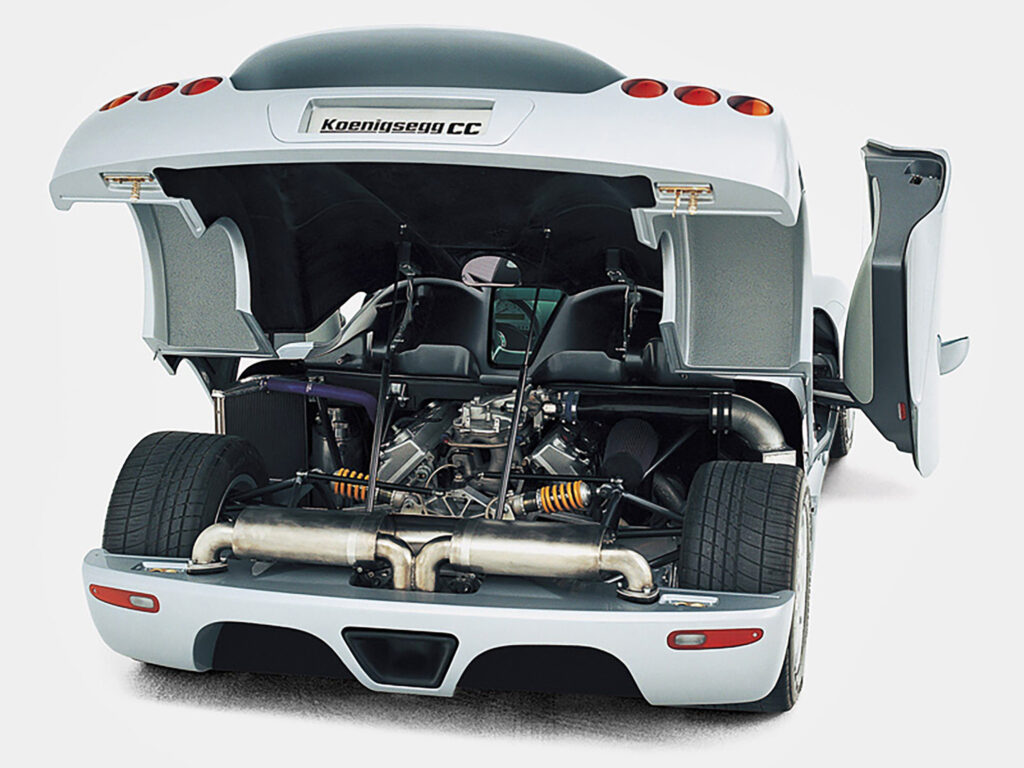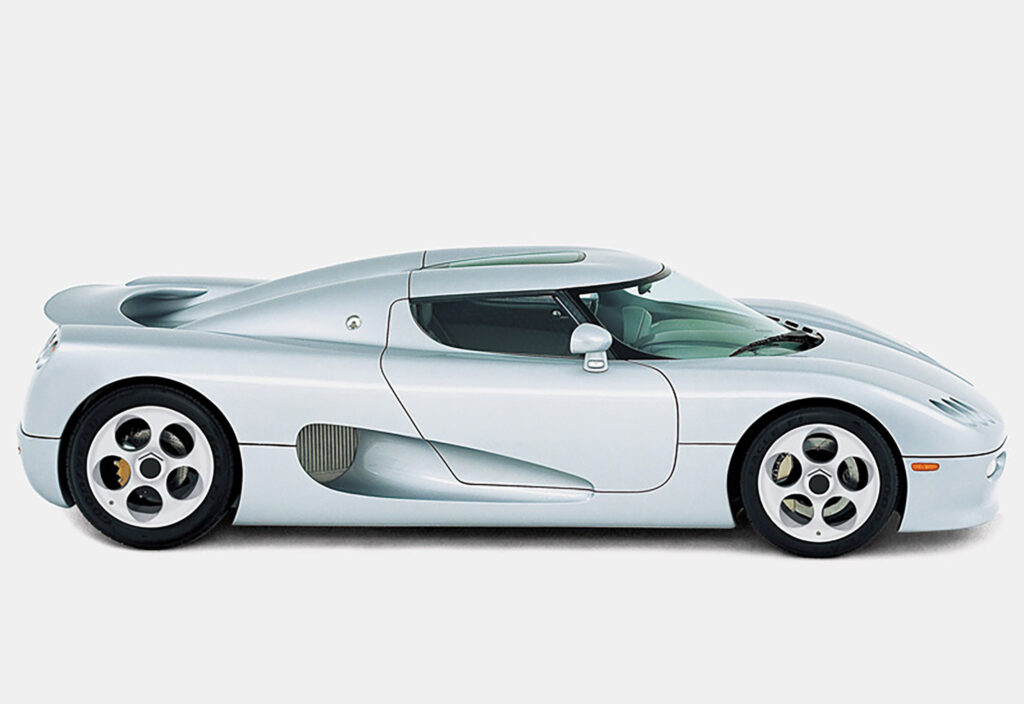
Christian von Koenigsegg grew up with the dream of creating the perfect sportscar. A car that in every detail would offer the ultimate driving experience, that would unite aesthetics and unequalled competence. This dream was based on his clear perception that all existing sports cars still lacked certain qualities, that there were artistic improvements to be made and a revolution in technology that car manufacturers ignored.
The Koenigsegg project is launched. With a long tradition of building high quality cars and a large number of suppliers to the racing car industry, Sweden offered a suitable breeding ground for the development of a world-class sportscar.
The concept for this supercar set from the start, a two-seat mid engine construction with a hardtop, all based on state of the art Formula 1 technology. A network of competent designers and engineers, with connections both to the Swedish car industry and the universities, were tied together.
| engine | V12 |
| valvetrain | DOHC 4 Valves / Cyl |
| displacement | 3820 cc / 233.1 in³ |
| power | 410.1 kw / 550 bhp @ 9000 rpm |
| specific output | 143.98 bhp per litre |
| bhp/weight | 611.11 bhp per tonne |
| torque | 500.0 nm / 368.8 ft lbs @ 9000 rpm |
| body / frame | Honeycomb Carbon Fibre |
| driven wheels | Mid Engine |
| front tires | F 235/45ZR-17 |
| rear tires | R 315/45ZR-17 |
| front brakes | Vented Discs |
| f brake size | x 380 mm / x 15.0 in |
| rear brakes | Vented Discs |
| r brake size | x 295 mm / x 11.6 in |
| steering | Rack & Pinion |
| curb weight | 900 kg / 1984 lbs |
| wheelbase | 2660 mm / 104.7 in |
| front track | 1660 mm / 65.4 in |
| rear track | 1660 mm / 65.4 in |
| length | 4190 mm / 165.0 in |
| width | 2000 mm / 78.7 in |
| height | 1070 mm / 42.1 in |
| transmission | 6-Speed Manual |
| gear ratios | :1 |
| top speed | ~354.1 kph / 220.0 mph |
| drag | 0.30 Cd |