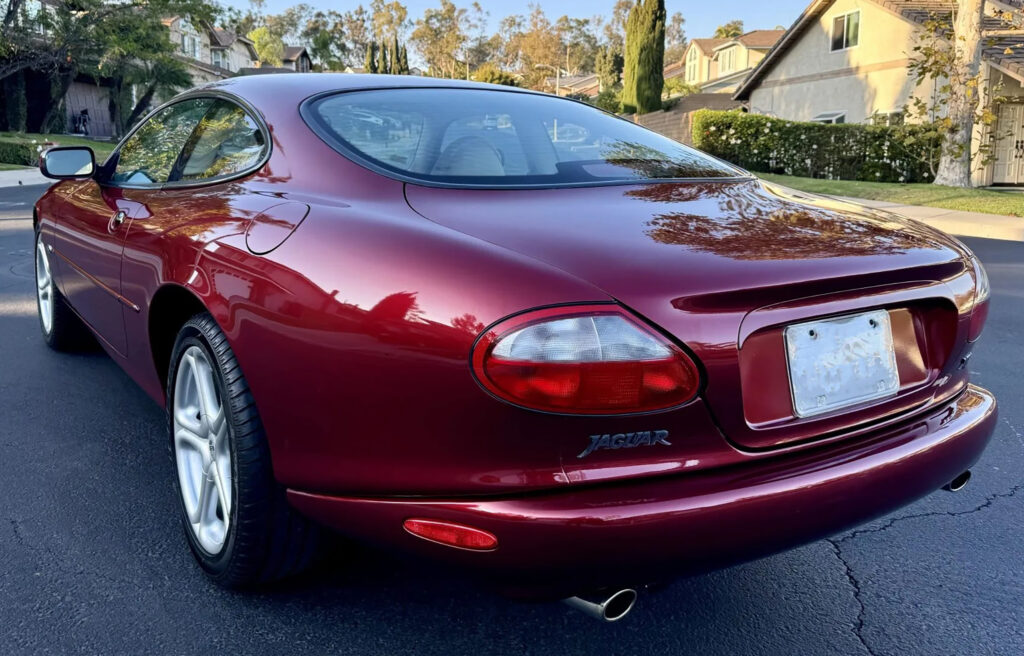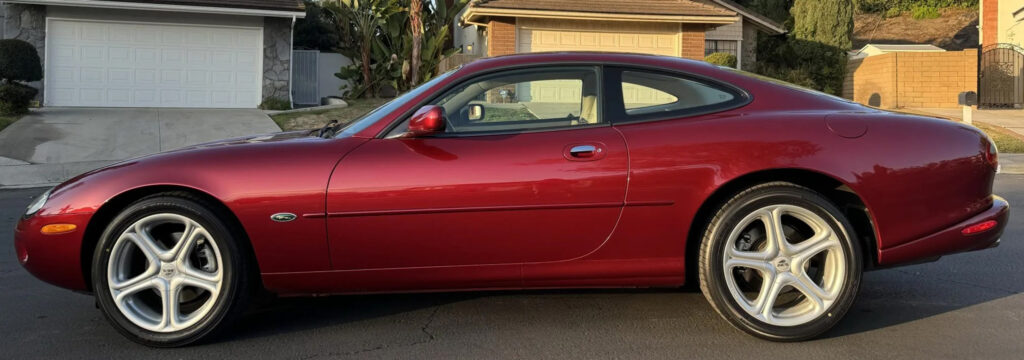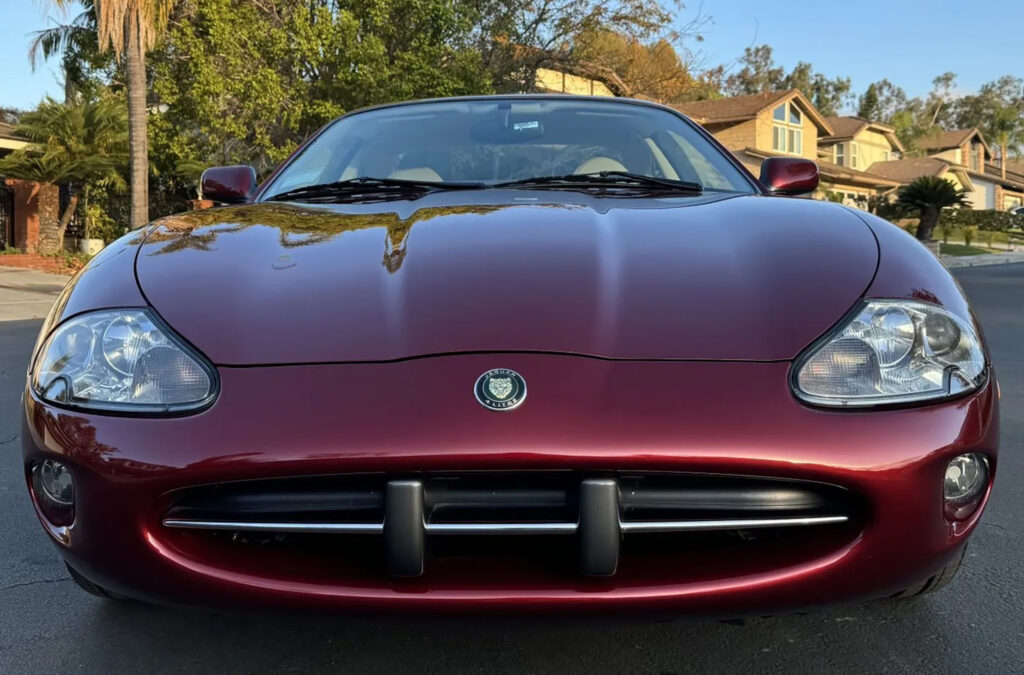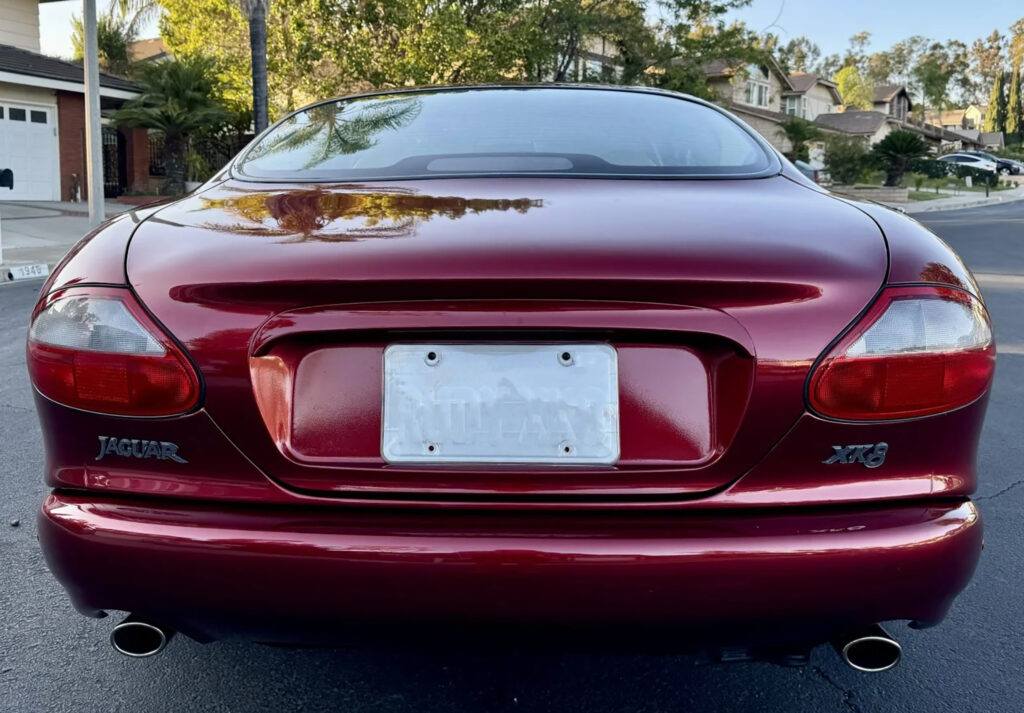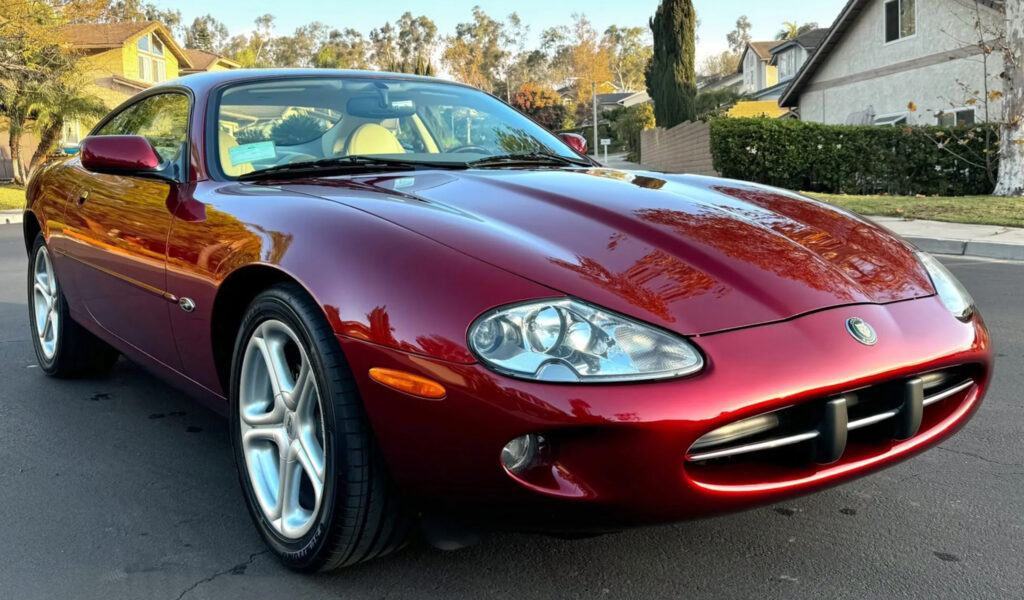
The Jaguar XK8 (project code X100) is a grand tourer launched by Jaguar Cars in 1996, and was the first generation of a new XK series. The XK8 was available in two-door coupé or two-door convertible body styles with the new 4.0-litre Jaguar AJ-V8 engine. In 1998, the XKR was introduced with a supercharged version of the engine. In 2003, the engines were replaced by the new 4.2-litre AJ34 engines in both the naturally aspirated and supercharged variations. The first-generation of the XK series shares its XJS-derived platform with the Aston Martin DB7, with both cars tracing their history back to an abandoned Jaguar development study in the mid-1980s known as XJ41/XJ42, which had been mooted to be known as the F-Type.
One of the revisions is the use of the second generation of Jaguar’s independent rear suspension unit, taken from the Jaguar XJ (XJ40). Development began in 1992, with design work starting earlier in late 1991. By October 1992 a design was chosen and later frozen for production in 1993. Prototypes were built from December 1993 after the X100 was given formal approval and design patents were filed in June 1994. Development concluded in 1996, with the car being unveiled in March of that year and going on sale from October 1996.
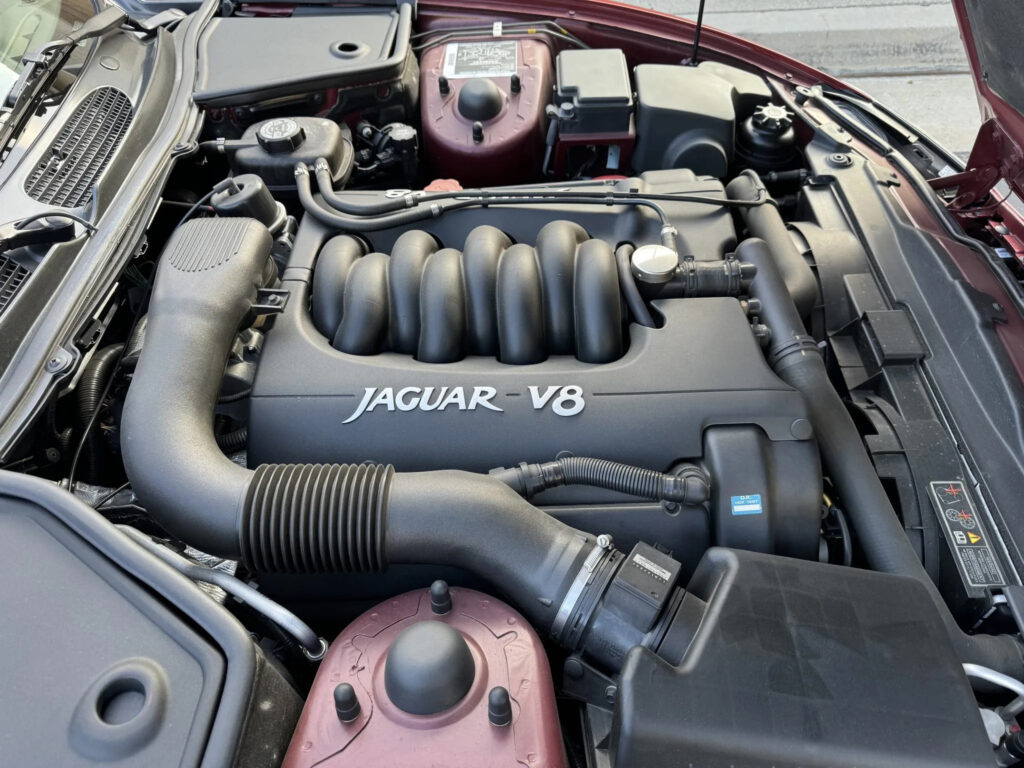
The initial model available in the XK range of grand tourers was the XK8 coupé and convertible which were later joined by the more powerful XKR models. The XK8 used the new 4.0-litre 32-valve Jaguar AJ-V8 engine and was available in a two-door coupé and two-door convertible bodystyles. The new CATS (Computer Active Technology Suspension) adaptive suspension, which was already an option on the coupé, was added to the convertible models in 1997. Other changes for 1997 were the addition of light sensitive headlamps and an automatically dipping rear view mirror.
The XKR, which was introduced in May 1998, used a supercharged variant of the V8 engine used in the XK8 which is also shared with the XJR albeit with a few air-to-water intercooler modifications and a two piece drive shaft. The supercharger is a 1.8 L (112 cu in) Eaton unit shared with the Ford F-150 SVT Lightning pickup. The supercharger spins at 1.9 times the engine’s speed and has 11.9 pounds of boost pressure. Other visual differences from the XK8 include a small rear spoiler and bonnet louvres on the bonnet for improved engine airflow along with a meshed front grille.
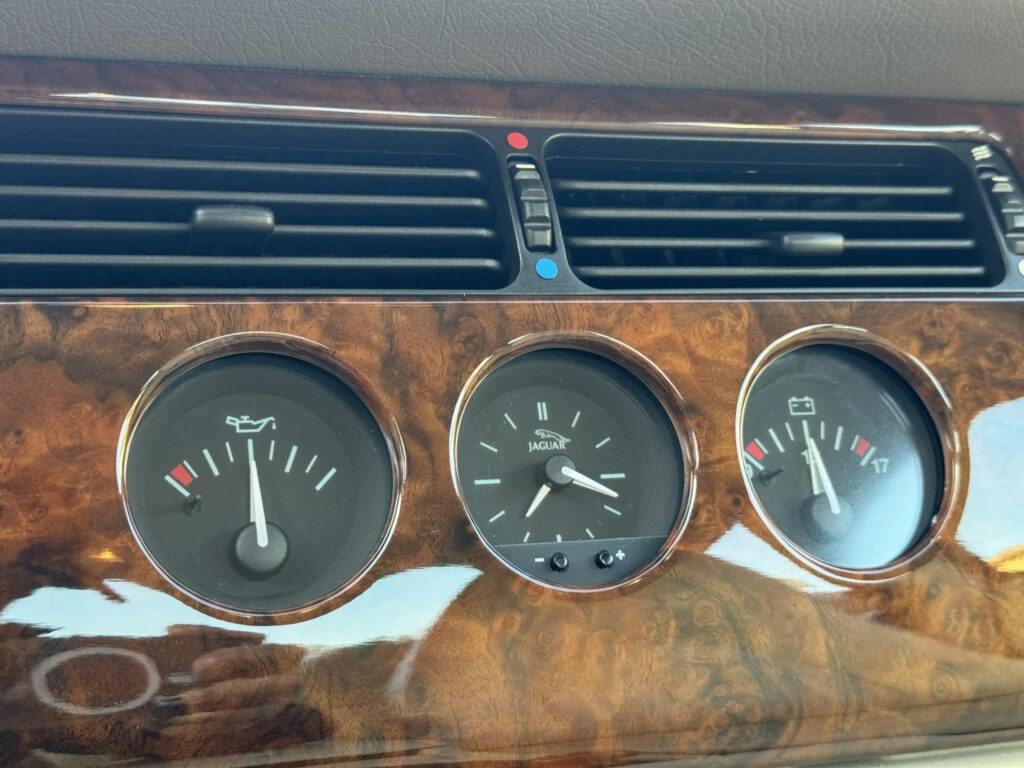
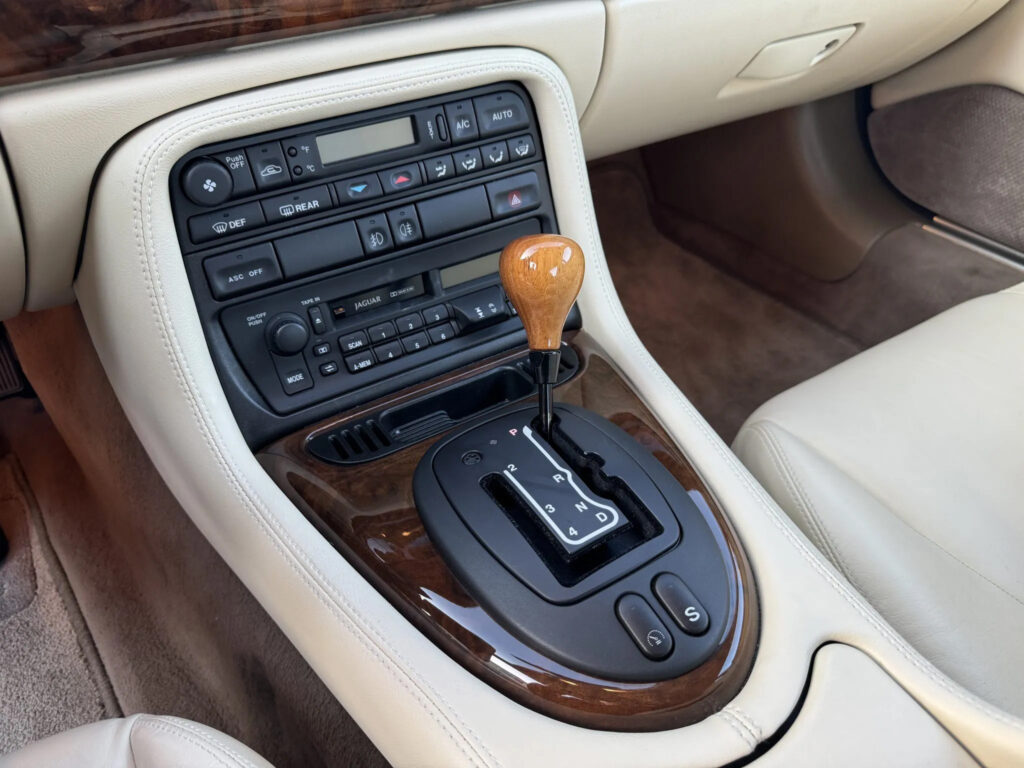
From 1998 onwards, all models of the XK lineup were fitted with the Servotronic II power steering. From late 1999, an optional R kit became available for the XKR which included a stiffer suspension system and gold coloured wheels. Since at least 2000, a GPS system was available as an option on all XK models which replaced the three gauges on the centre console.
The XK range received a mechanical update in 2002 with the engines in both the XK8 and XKR models being enlarged to 4.2-litres, the front headlamps were also updated by the addition of a clear lens. Further changes included new exterior colours and wheels along with different badging. The models were revised again in spring 2004 and notable changes included new wheel designs, bigger front and rear spoilers and a redesigned grille.
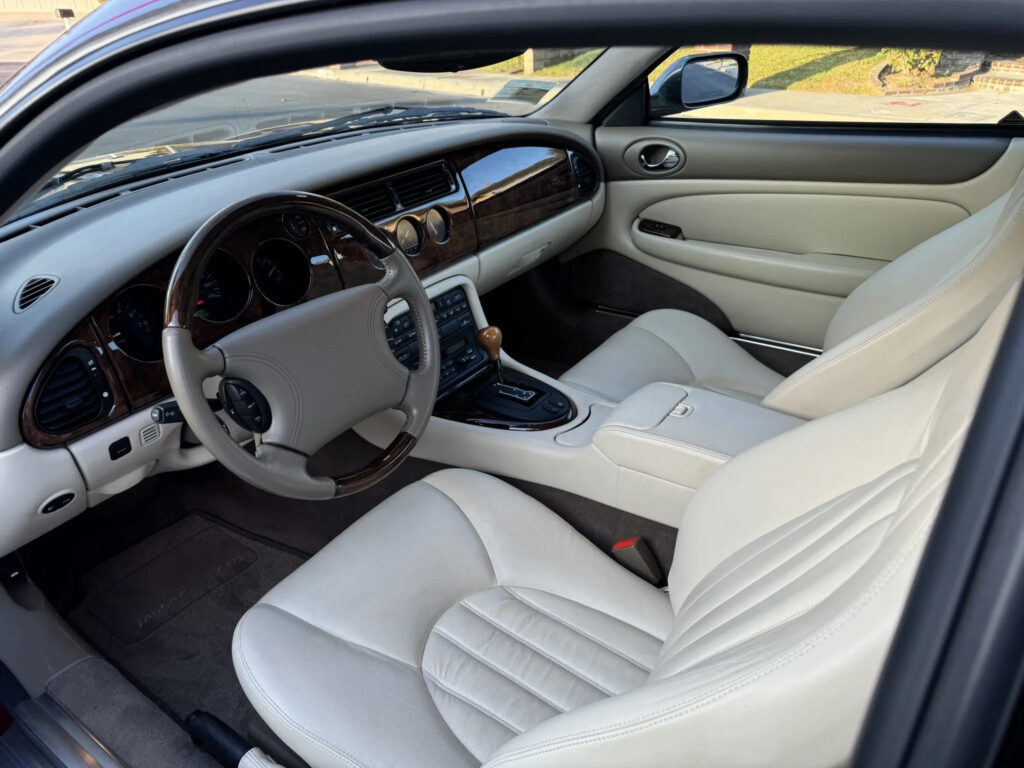
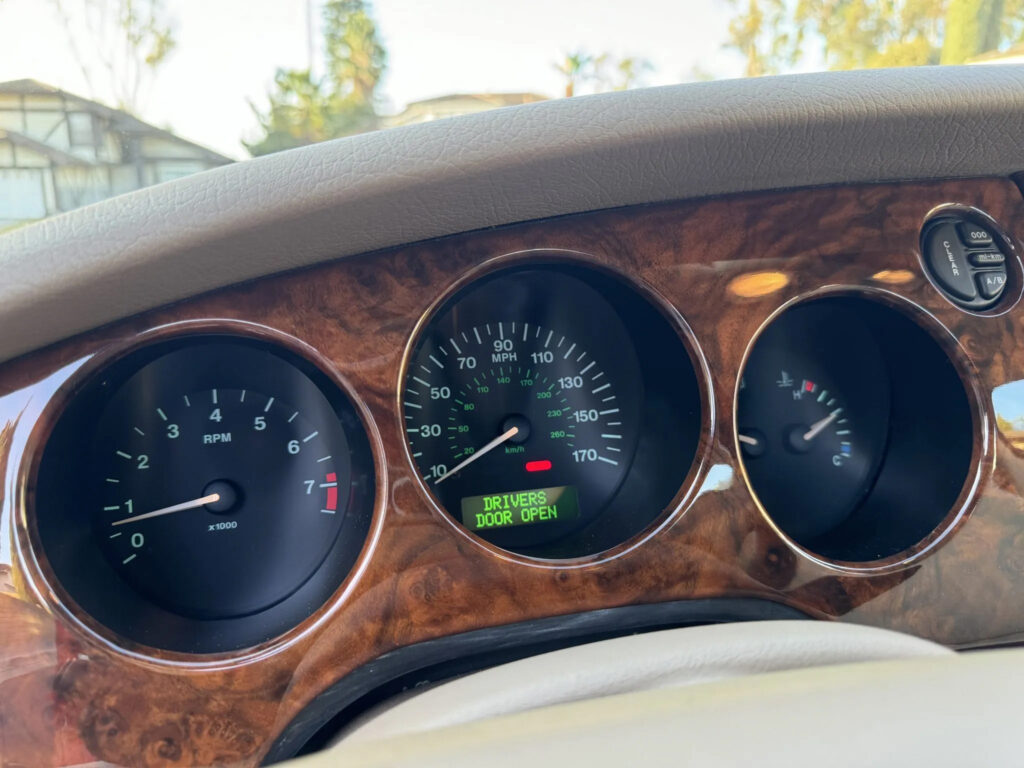
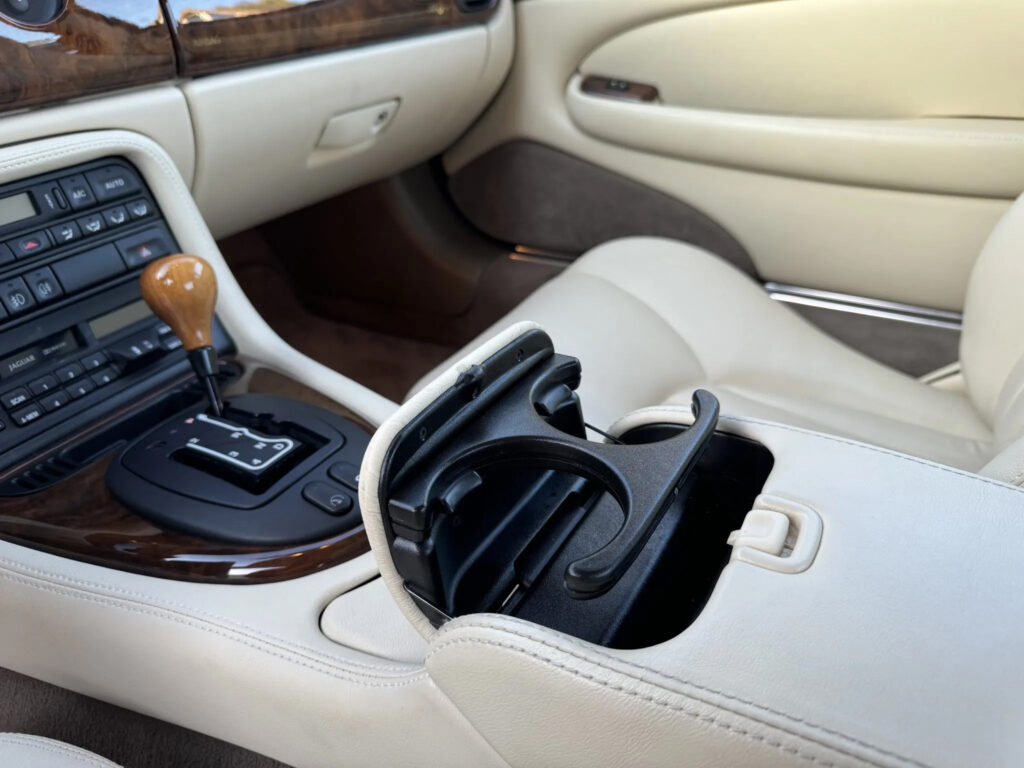
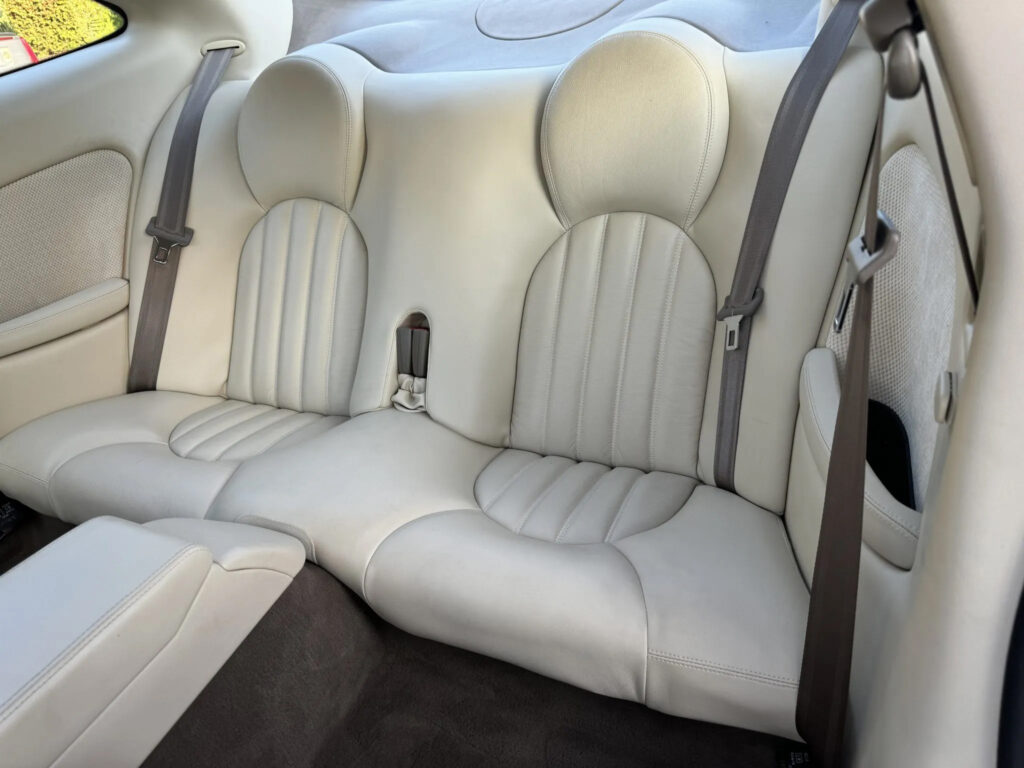
Both the XK8 and XKR are electronically limited to a maximum speed of 250.1 km/h (155.4 mph). The XK8 came standard with 17-inch alloy wheels, while 18-inch (Standard on the XKR), 19-inch, and 20-inch wheels were available for additional cost. The XKR models used Pirelli P Zero tyres measuring 245/45ZR-18 at the front and 255/ 45ZR-18 at the rear. Jaguar’s Adaptive Cruise Control, introduced in late 1999, is an optional feature available on both models. Both the two-door coupé and two-door convertible came with an all-leather interior, burl walnut trim, and side airbags. The interior was available in two trims, classic and sport. The sport interior trim was aimed for younger buyers and featured an interior designed by Karen Anderson which involved leather upholstery with cloth seats. The classic trim was a more luxurious option and featured heavy use of leather. Jeremy Clarkson, during a Top Gear test-drive, likened the interior of the original XK8 to sitting inside Blenheim Palace. Although reviewers have criticised the high seating position and the improper gauge layout of the interior.
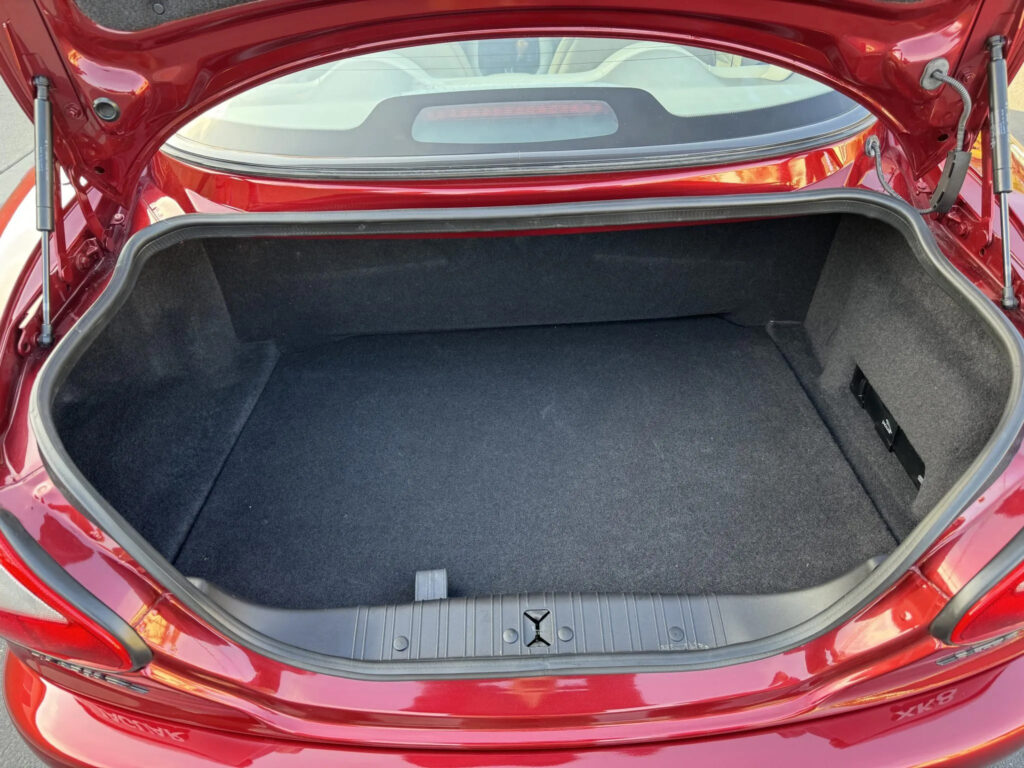
Like its predecessor, the XJS, the XK models use a 2+2 seating layout for the interior. An optional “Jaguar boot” option involved the removal of the small rear seats in favour of increased luggage space.
Compared to the XJS, the XK models are 25 per cent stiffer and have a more responsive powertrain.
| price $ | $64 900 USD |
| engine | V8 |
| valvetrain | DOHC 4 Valves / Cyl |
| displacement | 3996 cc / 243.9 in³ |
| bore | 86.0 mm / 3.39 in |
| stroke | 86.0 mm / 3.39 in |
| compression | 10.7:1 |
| power | 216.3 kw / 290.1 bhp @ 6100 rpm |
| specific output | 72.6 bhp per litre |
| bhp/weight | 175.5 bhp per tonne |
| torque | 393.2 nm / 290.0 ft lbs @ 4250 rpm |
| redline | 6800 rpm |
| body / frame | Unit Steel |
| driven wheels | Front Engine / RWD |
| front tires | F 245/50ZR-17 |
| rear tires | R 245/50ZR-17 |
| front brakes | Vented Discs w/Vacuum Assist & ABS |
| f brake size | x 307 mm / x 12.1 in |
| rear brakes | Vented Discs w/Vacuum Assist & ABS |
| r brake size | x 307 mm / x 12.1 in |
| front wheels | F 43.2 x 40.6 cm / 17.0 x 16.0 in |
| rear wheels | R 43.2 x 40.6 cm / 17.0 x 16.0 in |
| steering | Rack & pinion w/Variable Power Assist |
| curb weight | 1653 kg / 3644 lbs |
| wheelbase | 2591 mm / 102.0 in |
| front track | 1504 mm / 59.2 in |
| rear track | 1499 mm / 59.0 in |
| length | 4760 mm / 187.4 in |
| width | 1829 mm / 72.0 in |
| height | 1295 mm / 51.0 in |
| transmission | 5-Speed Auto |
| gear ratios | 3.57:1, 2.20:1, 1.51:1, 1.00:1, 0.80:1, :1 |
| final drive | 3.06:1 |
| top speed | ~251.1 kph / 156.0 mph |
| 0 – 60 mph | ~6.4 seconds |
| 0 – 100 mph | ~15.7 seconds |
| 0 – 1/4 mile | ~14.8 second |