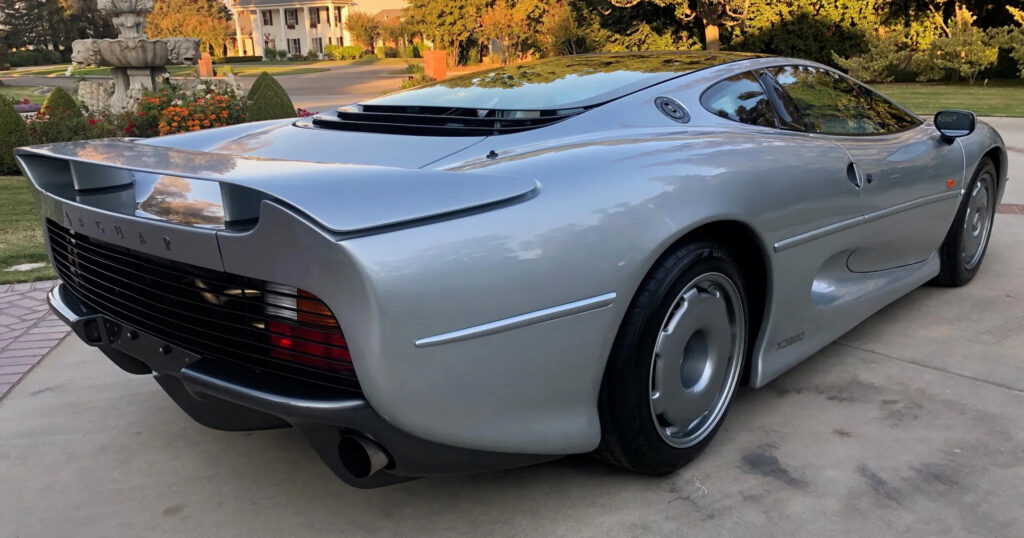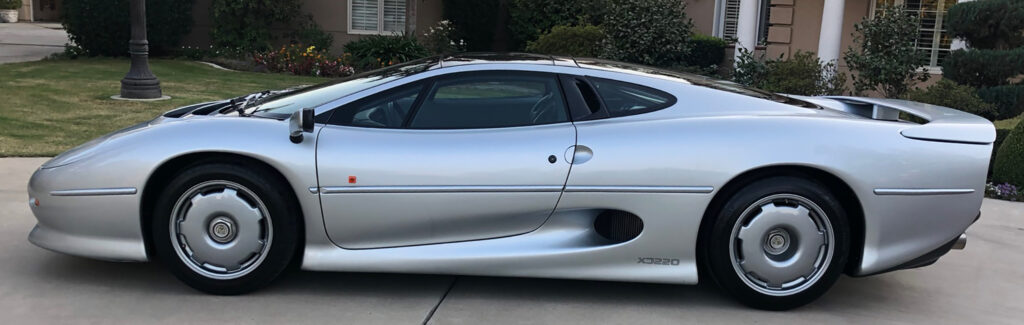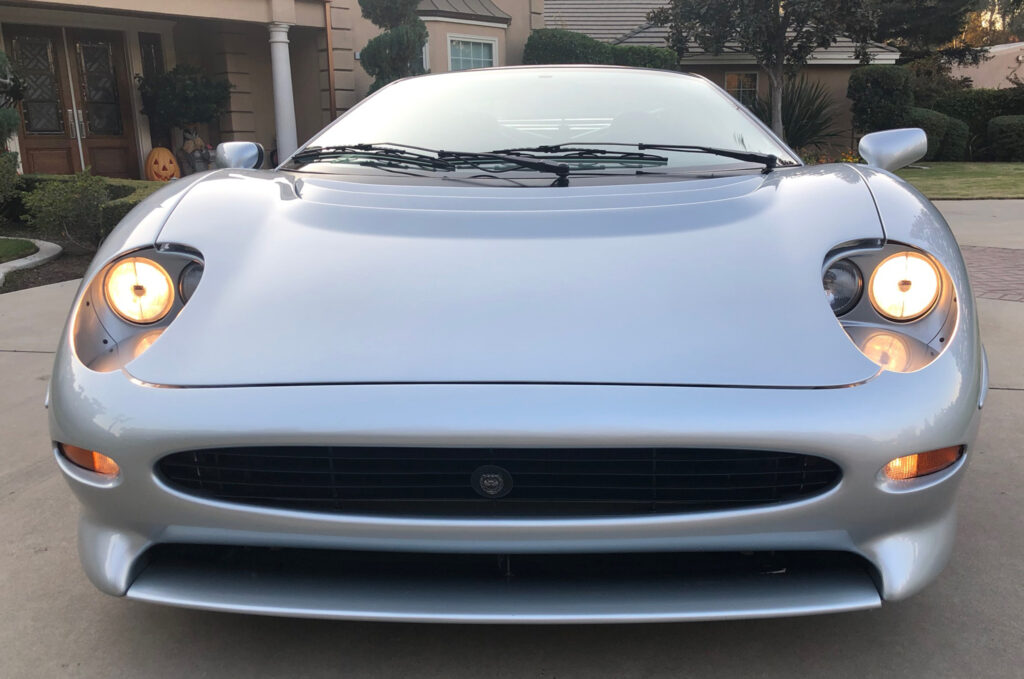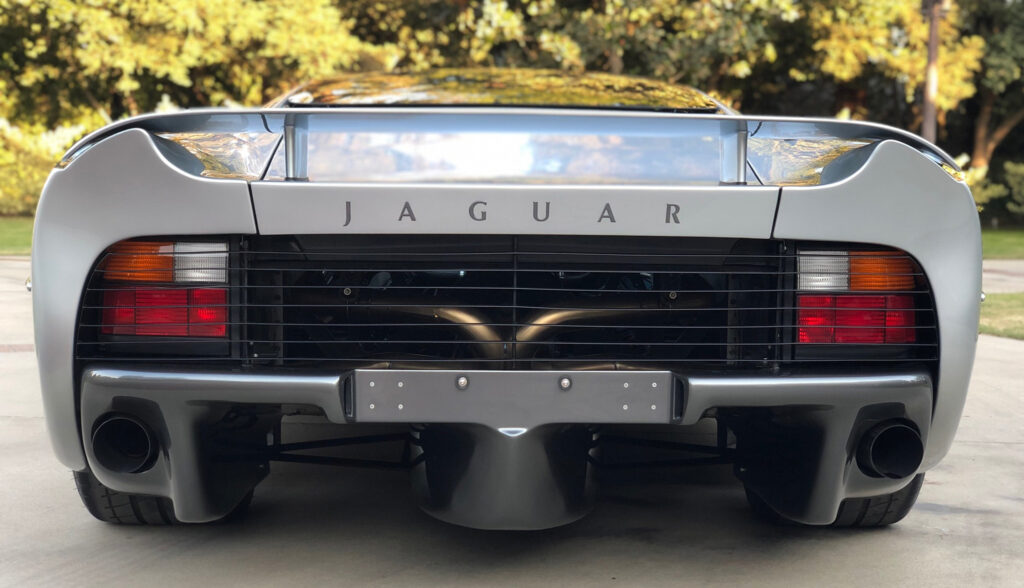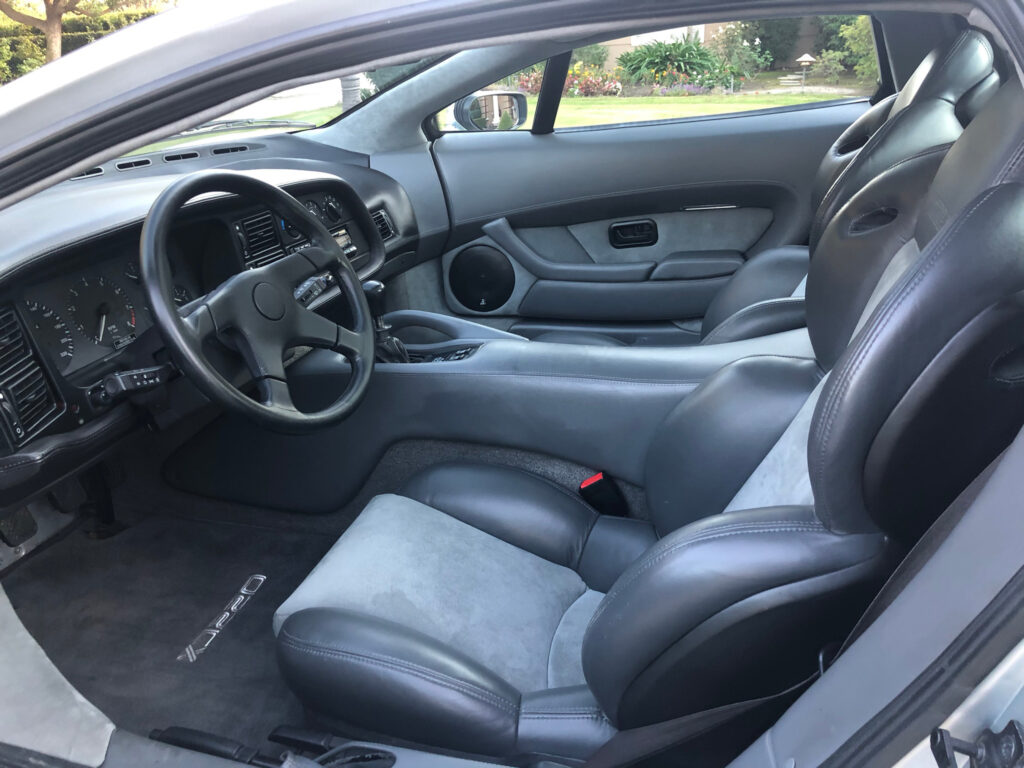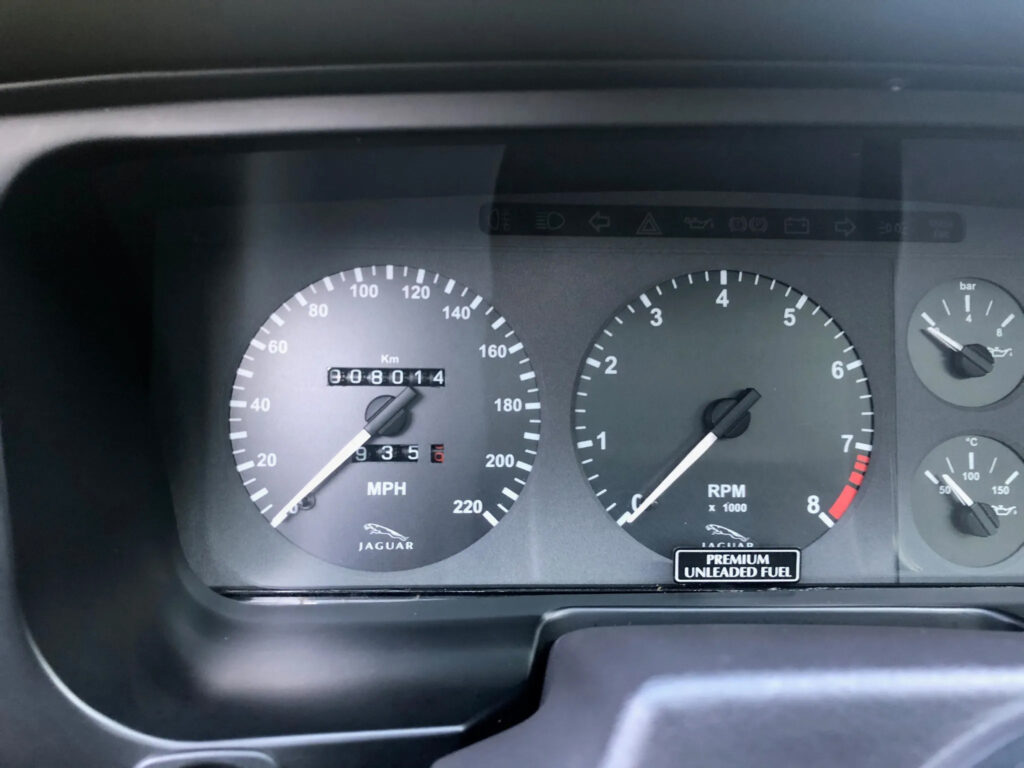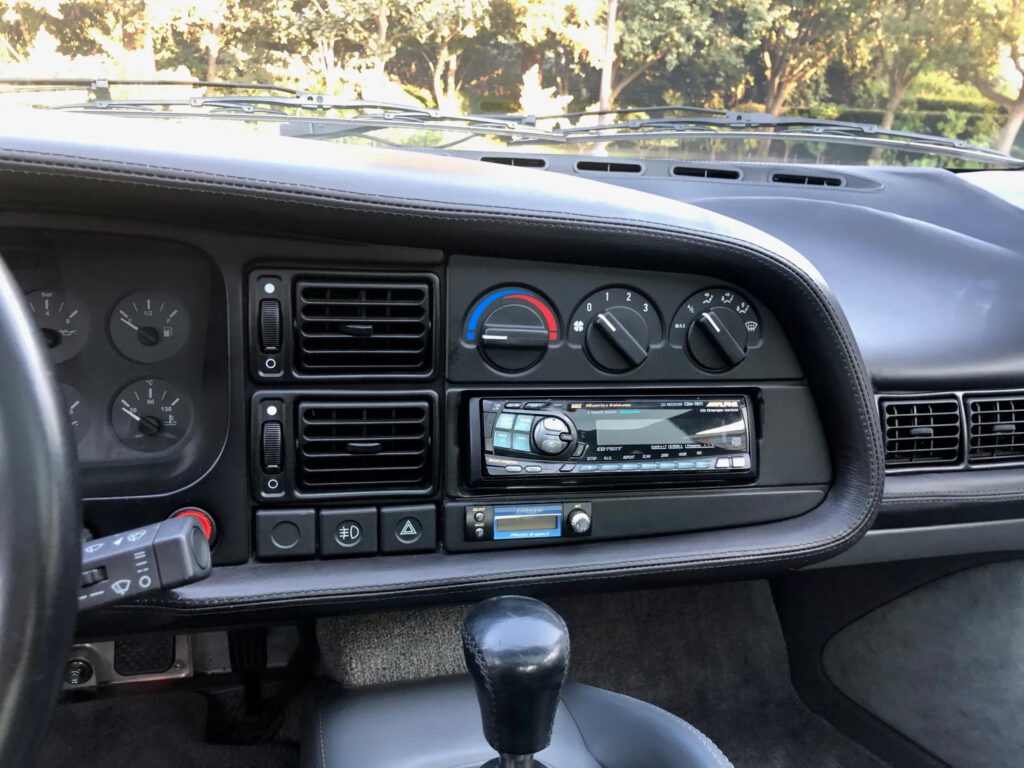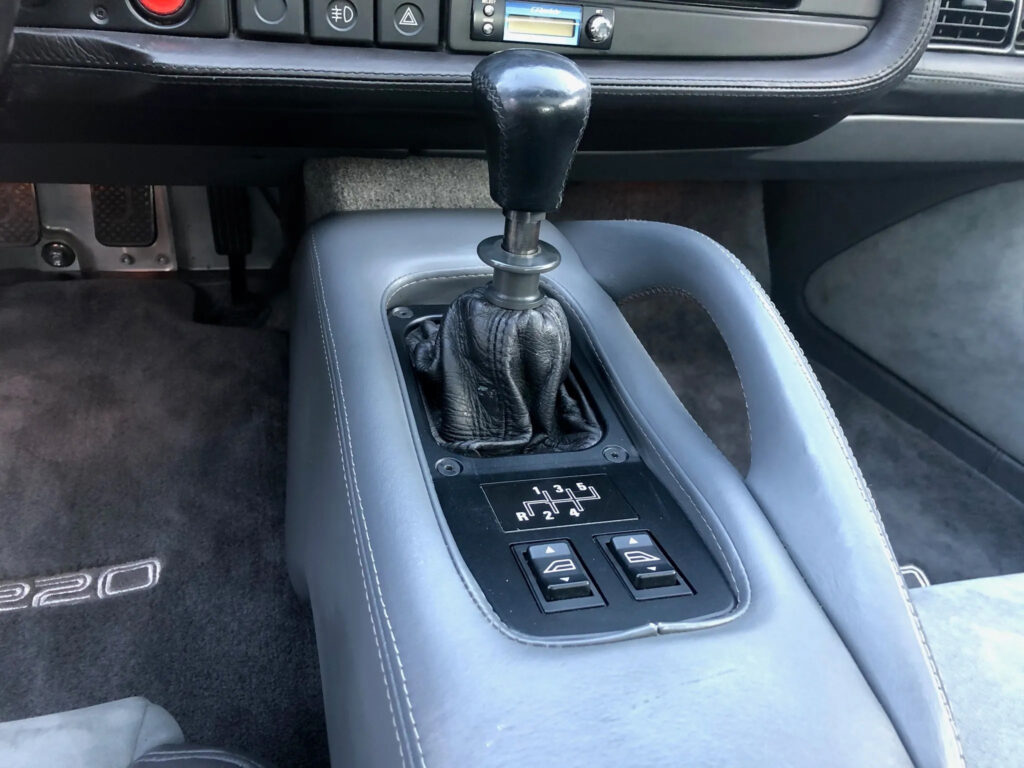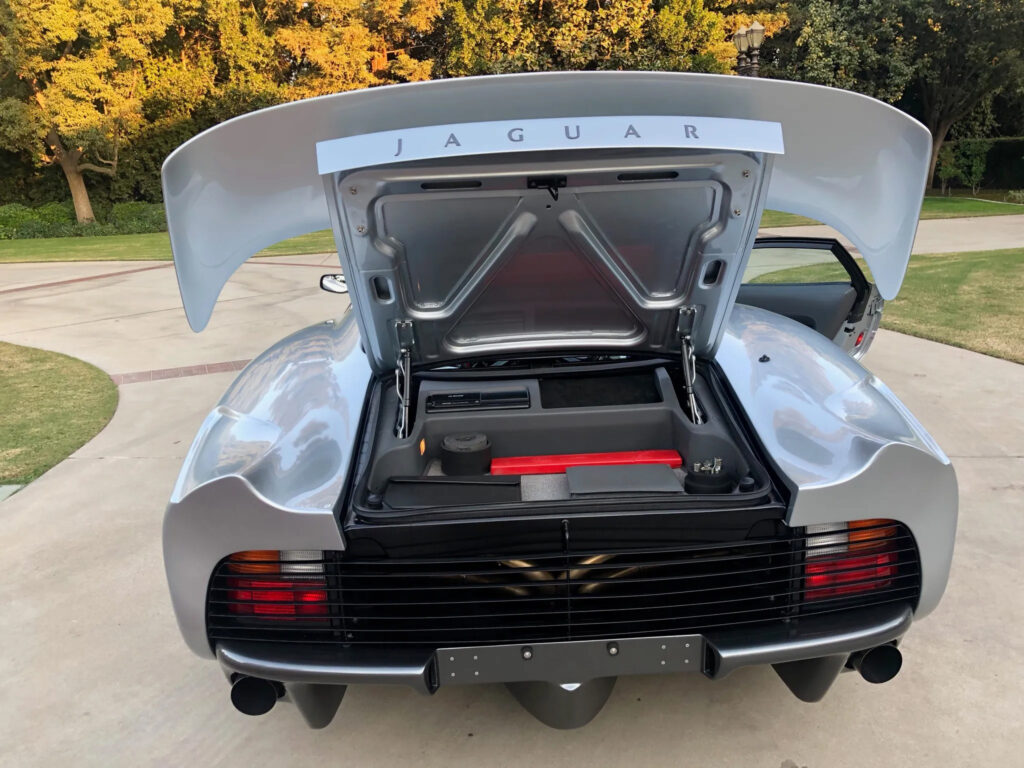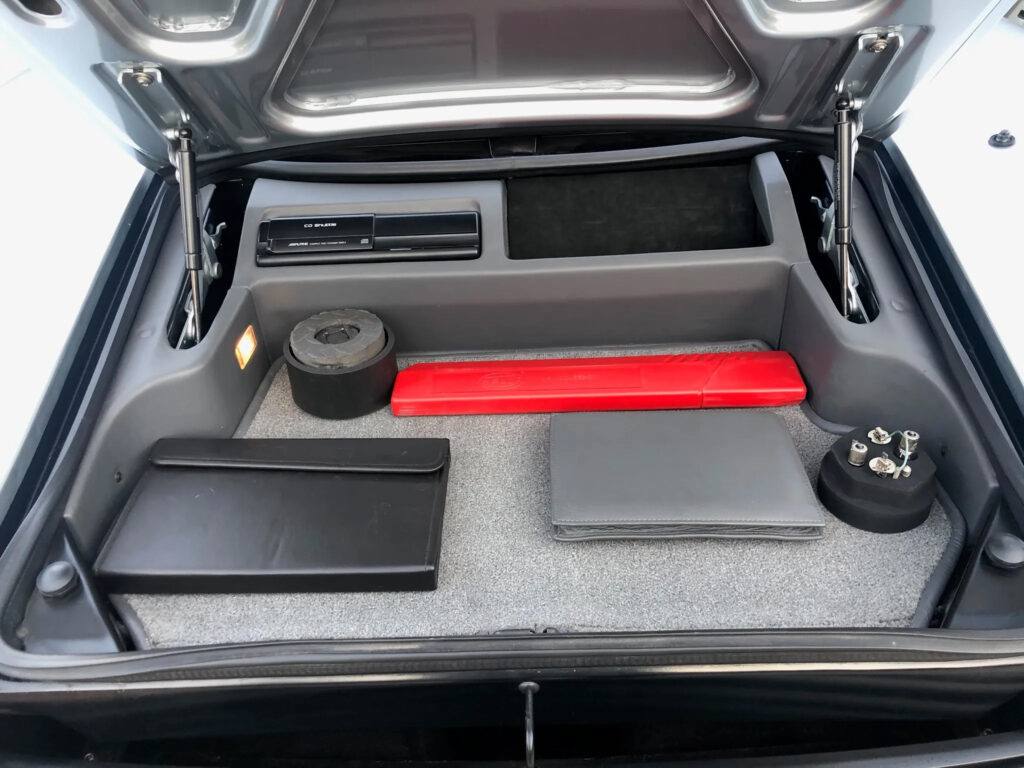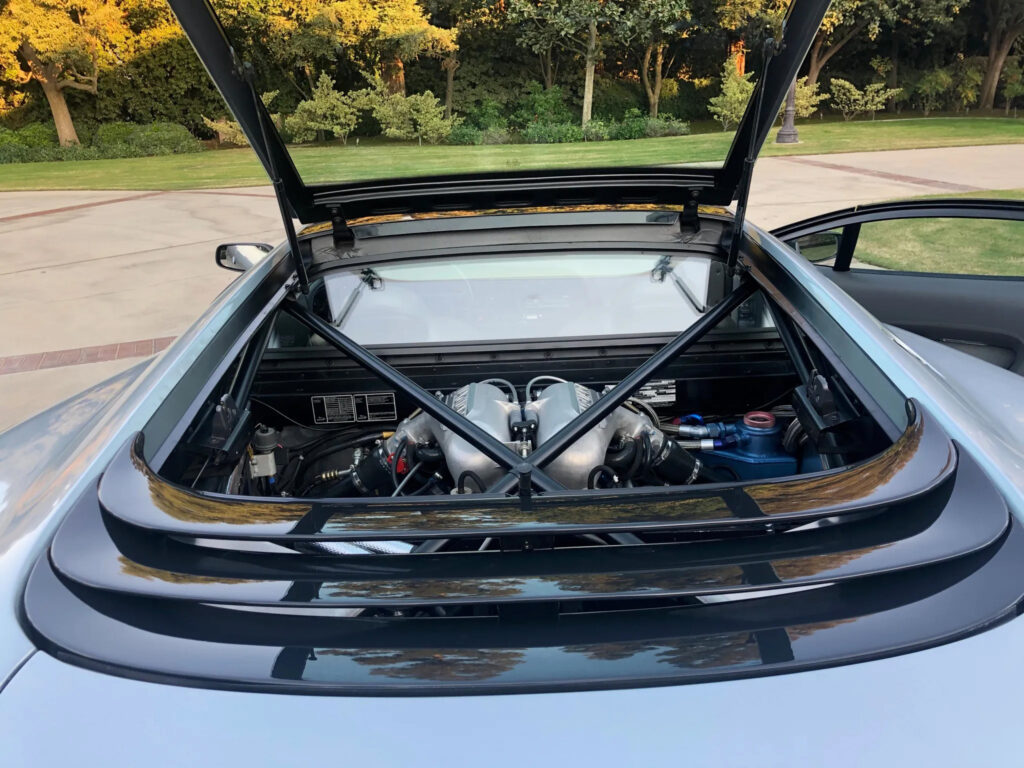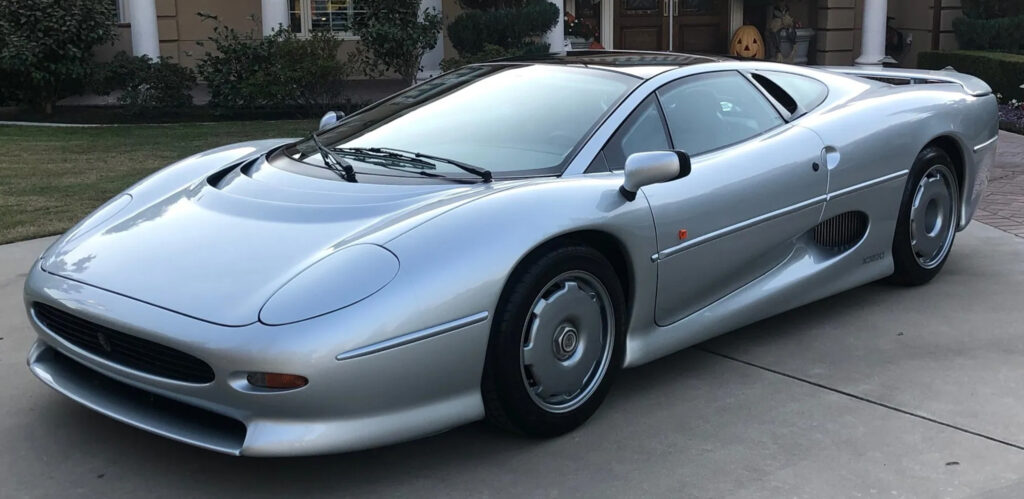
As Jagaur’s first production supercar, the XJ220 was a bold step for the British company. Looking at the company’s history, you would have to stretch back to the XK120 to find an equally impressive machine. During the forty years between these models, there are many LeMans winning racecars and striking styling concepts, but nothing that pushes the same thresholds of performance while maintaining production readiness.
Eventually the XJ220 would become the fastest Jaguar and the fastest production car in the world, reaching 217 mph. Other accolades include a first in class at LeMans and a full production of over 200 cars.
The XJ220 was first conceived by engineering director Jim Randle and a small group known as the “The Saturday Club”. They witnessed the launch of the Porsche 959 which was a four-wheel drive supercar prepared for Group B racing. As early as 1984, the small team at Jaguar thought a similarly driven, 4WD Jaguar with V12 power would take Jaguar to the top.
From the car’s outset, Randle’s team maintained production feasibility and racing performance. This naturally meant that the V12 was mounted in the middle of a lightweight aluminum chassis. It was supplied by Tom Walkinshaw Racing who produced a 6.2 litre version of their racing engine. Four wheel drive was chosen to better split up the estimated 500 bhp in conditions such as rain which was common in Britain.
Randle fashioned a performance-shaped chassis out of cardboard and then had principle designer Keith Helfet fashion a body for it. Both considered this project a spiritual successor the XJ-13-a 1960s mid-engine prototype that was never raced. Some ideas like the exposed engine and purposeful bodywork were taken from the XJ-13, but Helfet kept the XJ220’s shape thoroughly modern. Helfet’s said the “major challenge of the design was to make it aerodynamically comepetitive” and still meet road regulations.
The first prototype was completed without much executive influence until the car was fully prepared. Just one week before the car’s debut at the 1988 British Motor Show the car got the executives blessing to show the car to potential customers.
This was the first time that many people saw Keith Helfet’s purposeful body, which paid special attention to underbody aerodynamics and lift at high speeds. Other features included scissor doors, covered headlights and a promised top speed of over 200 mph. Immediate reception for the car was excellent. Official production was announced in 1989 with a price tag of £361,000 and production limited to 350 cars.
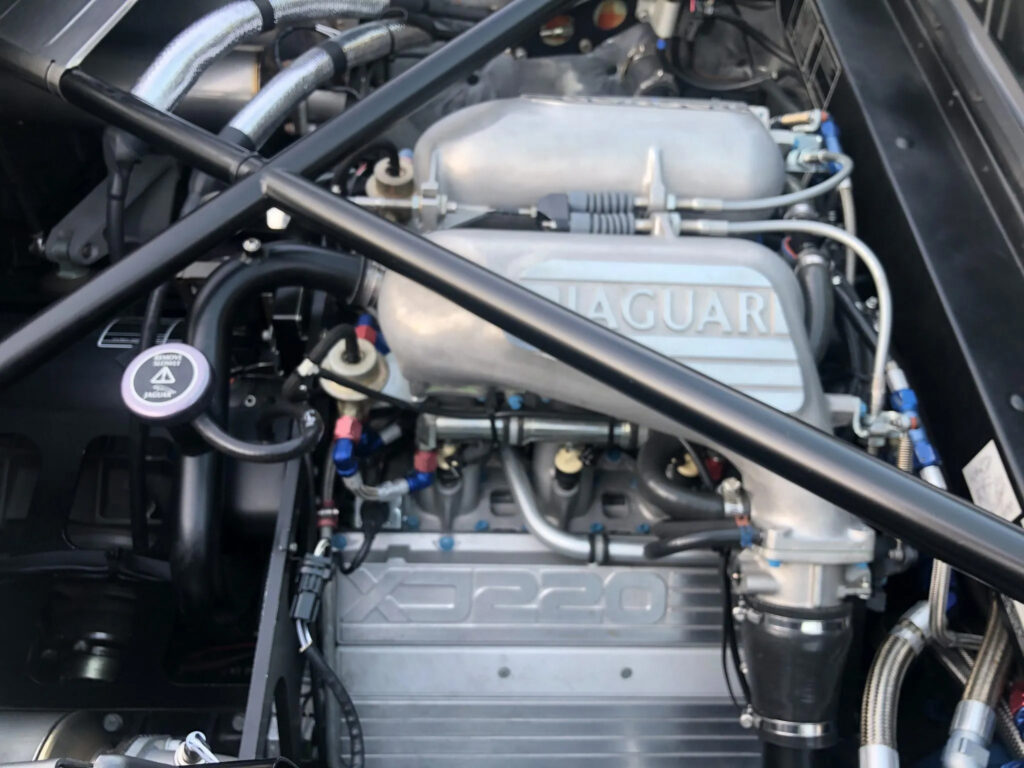
Enough deposits were made to finance development of the XJ220, but it would take two long years before a final specification was reached. Much to the customer’s dismay, Jim Randle and his team had to change the concept’s radical specification to meet production requirements. Due to the emissions and size of TWR’s V12 engine, a twin-turbo V6 from the Rover Metro 6R4 rally car was used instead. This used twin Garrett T3 turbochargers to make nearly 550 bhp. Despite making more horsepower than the V12, the V6 was criticized because it only drove the rear wheels. Furthermore other factors such as turbo lag and a harsh exhaust note made Jaguar’s first V6 discouraging.
While the small team at Jaguar was trying to sort out their order book, Jaguar Sport and TWR released a limited XJR-15 based on the Le Mans-winning Jaguar XJR-9. It was much more expensive and exclusive, but retained the desirable V12.
Despite the XJR-15 and a price increase to £403,000, the XJ220 went into production at a special factory in Bloxham. First customers included the Sultan of Brunei and Elton John. From 1992 to 1994, the factory produced 208 cars, just shy of the scheduled 220 initial units.
From its conception, Jim Randle wanted to race the XJ220 instead of the more distantly engineered Group C prototypes fielded by TWR. Much like the legendary C and D-Types, he wanted a direct link in between Jaguar’s race and road cars. Despite losing Group B racing, three cars still contested the 1993 Lemans. Only one of three cars managed to survive the race. It was driven to first in class by John Nielsen, David Brabham and David Coulthard, but was revoked weeks later for a technical infringement.
| type | Series Production Car |
| production years | 1992 – 1994 |
| built at | Bloxham, England |
| body stylist | Keith Helfet |
| coachbuilder | Abbey Panels |
| engineers | Jim Randle |
| production | 281 |
| price $ | $ £403,000 |
| engine | TWR Rover Metro 6R4 V6 |
| position | Mid, Longitudinal |
| aspiration | Twin Garrett T3 Turbos |
| block material | Aluminum Alloy |
| valvetrain | DOHC 4 Valves / Cyl |
| displacement | 3498 cc / 213.5 in³ |
| bore | 94.0 mm / 3.7 in |
| stroke | 84.0 mm / 3.31 in |
| compression | 8.3:1 |
| power | 404.2 kw / 542.0 bhp @ 7000 rpm |
| specific output | 154.95 bhp per litre |
| bhp/weight | 395.04 bhp per tonne |
| torque | 644.0 nm / 475.0 ft lbs @ 4500 rpm |
| redline | 7200 |
| body / frame | Aluminum and Honeycomb Body over Bonded & Riveted Aluminum Panel Chassis w/Aluminum Engine Subframe |
| driven wheels | Mid Engine / RWD |
| front tires | F 255/45ZR17 |
| rear tires | R 345/35ZR-18 |
| front brakes | AP Racing Vented Discs w/Power Assist |
| rear brakes | AP Racing Vented Discs w/Power Assist |
| front wheels | F 43.2 x 22.9 cm / 17.0 x 9.0 in |
| rear wheels | R 45.7 x 35.6 cm / 18.0 x 14.0 in |
| steering | Unassisted Rack & Pinion |
| curb weight | 1372 kg / 3025 lbs |
| wheelbase | 2640 mm / 103.9 in |
| length | 4860 mm / 191.3 in |
| width | 2000 mm / 78.7 in |
| height | 1150 mm / 45.3 in |
| transmission | 5-Speed Manual |
| gear ratios | 3.00:1, 1.95:1, 1.42:1, 1.09:1, 0.85:1 |
| final drive | 2.88:1 |
| top speed | ~349.2 kph / 217 mph |
| 0 – 60 mph | ~3.9 seconds |
| 0 – 100 mph | ~8.0 seconds |
| fuel econ epa | 12 L/100 km |