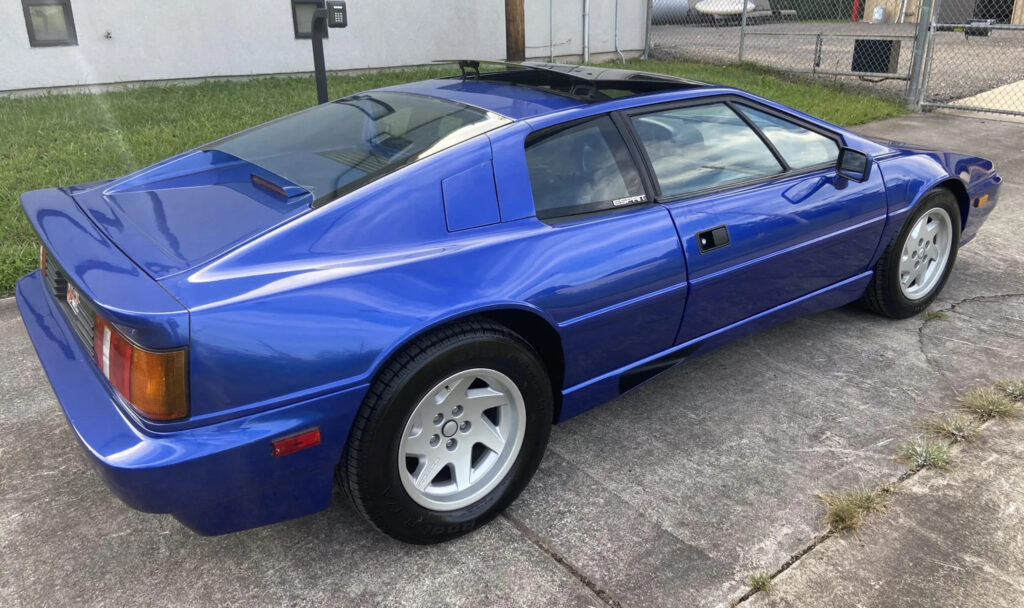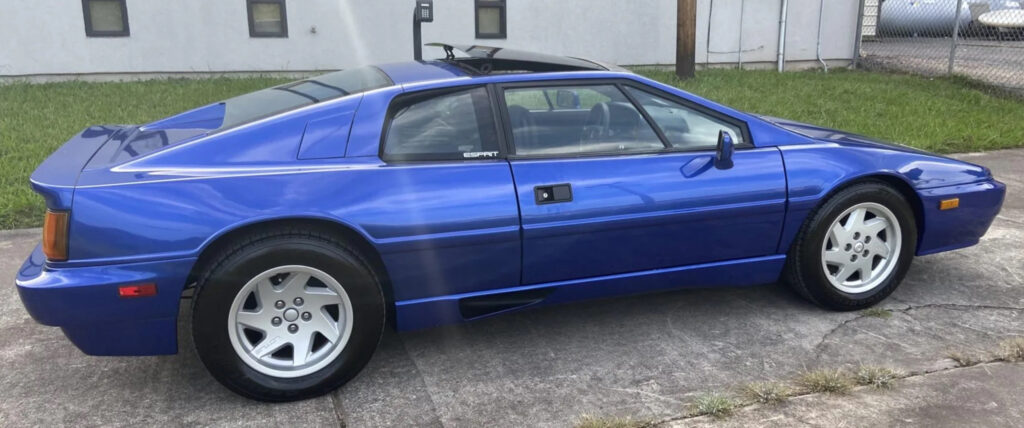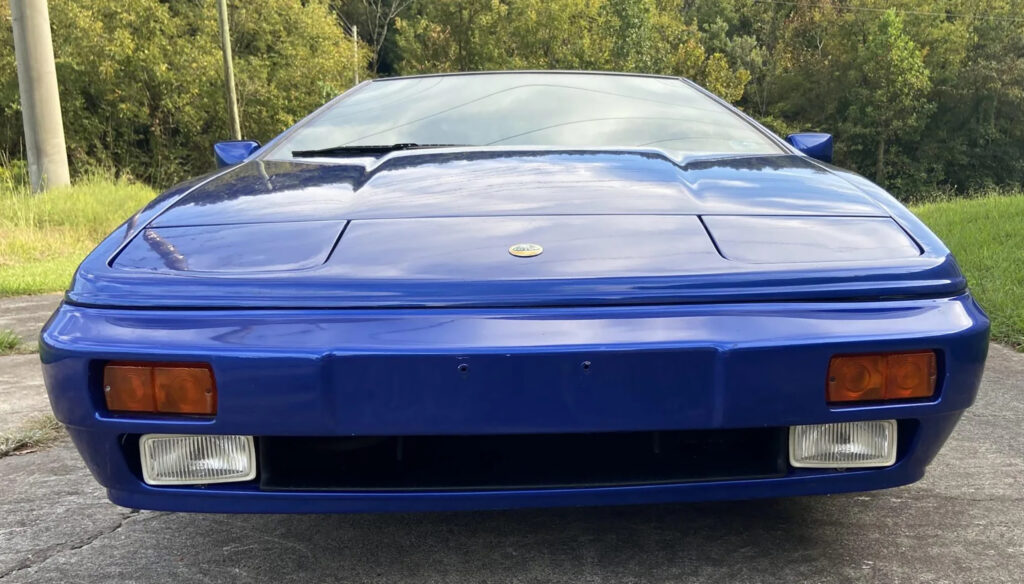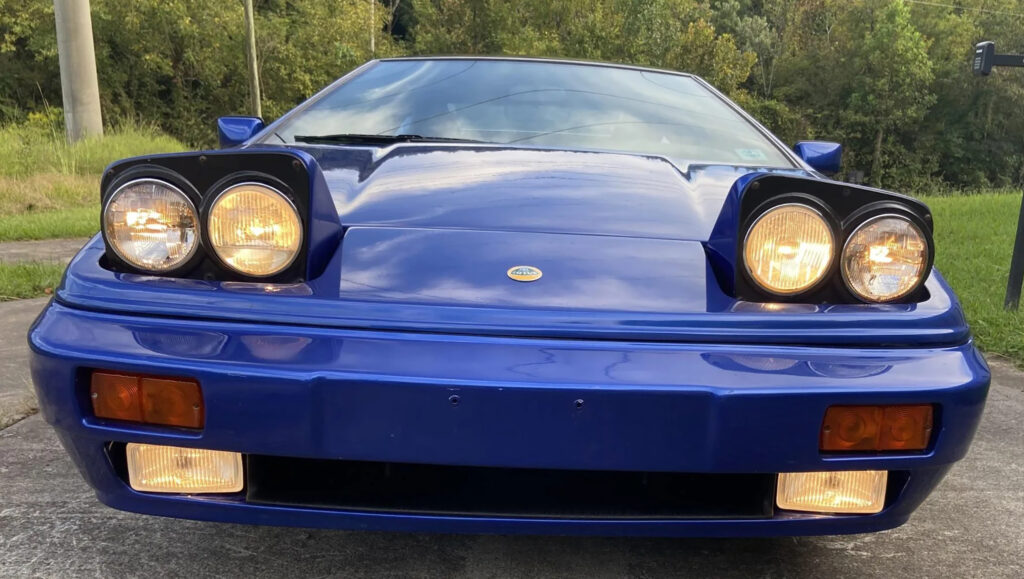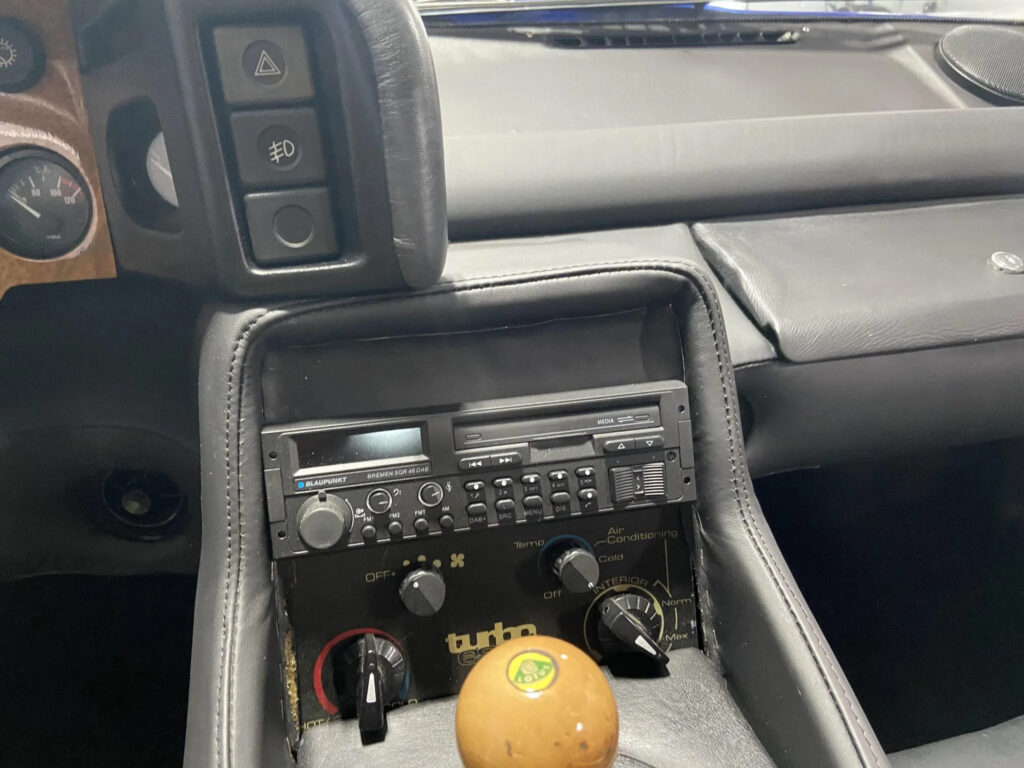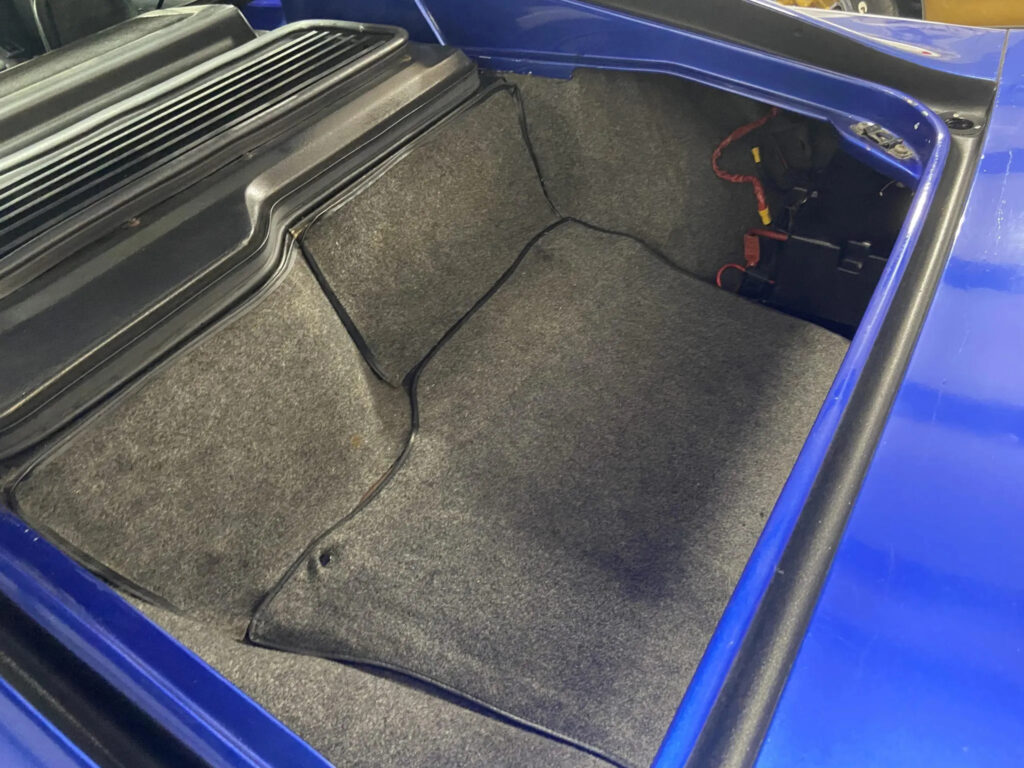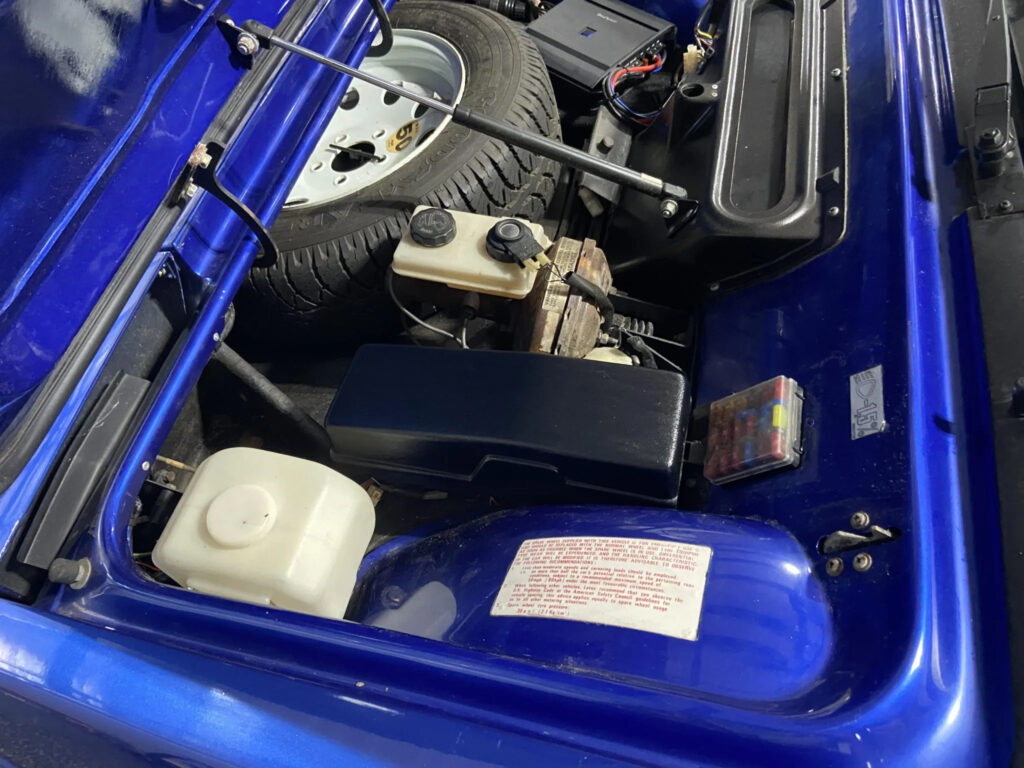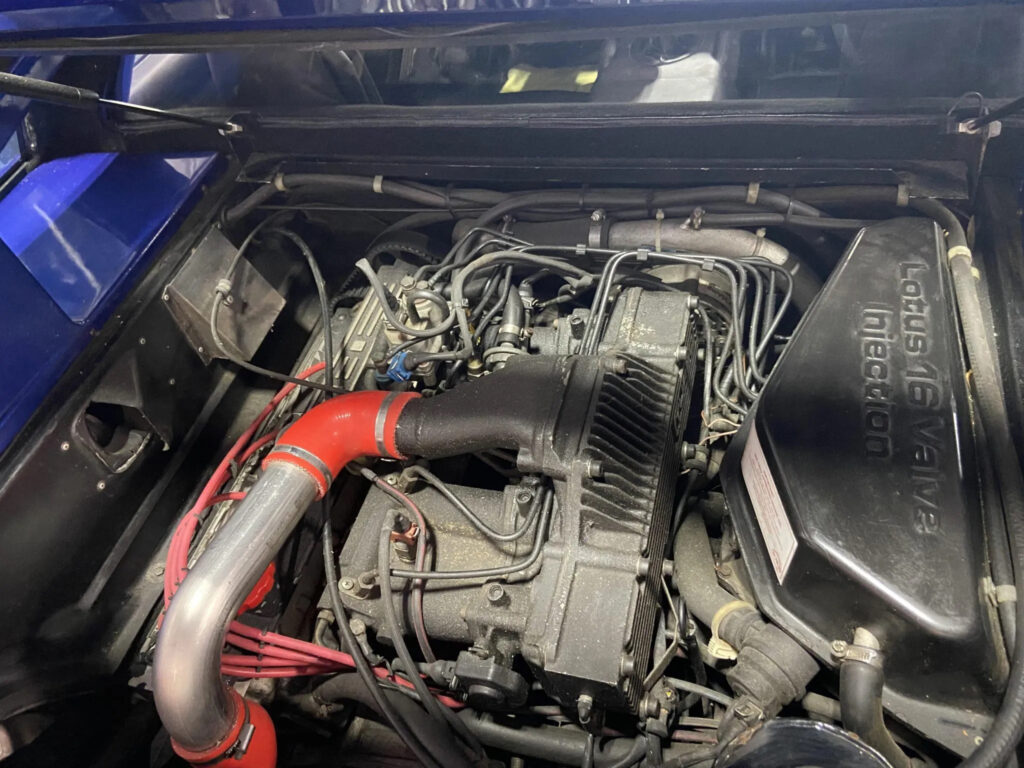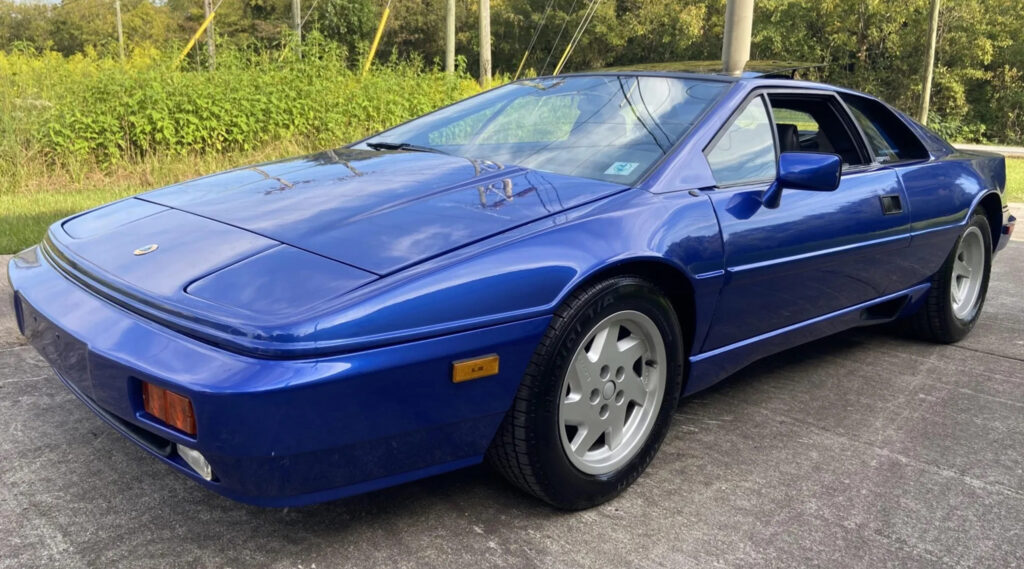
Throughout its 28 year history there were many variations of the Lotus Esprit but all of them can be grouped into two design groups.
The first category is what is commonly referred to as the Giugiaro Esprit; named after the original Italian designer of the car, Giorgetto Giugiaro. The easiest way to identify those cars is if the car was built before 1988 MY (model year) then it is a Giugiaro Esprit. Styling-wise, the Giugiaro Esprit is distinguished by sharp angles and a wedge shape.
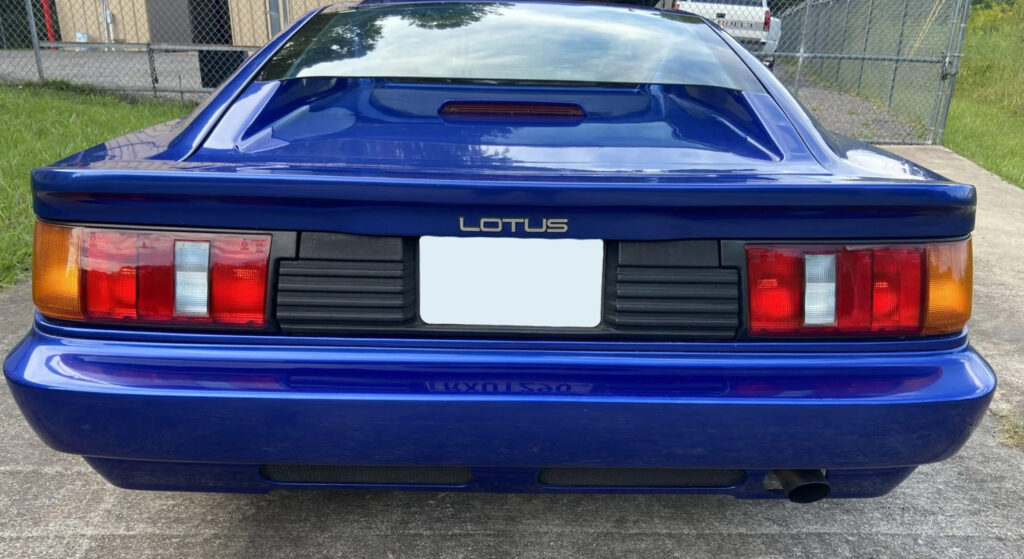
In 1988, designer Peter Stevens who is also famous for designing the McLaren F1 supercar softened the crisp edges of the Esprit. It was more modern looking and more sexy from a design perspective.
The Esprit was built completely by hand. The Esprit production line was established back in 1976. Until the end of production in 2004, nothing changed much since those days a quarter of a century ago. There were only 21 people on the line. Each car took about 584 man-hours to assemble.
With multiple people working on the car, total assembly was accomplished in about one week. One car rolled out of the assembly line every business day. Upon completion, each vehicle was driven on the test track.
After the test drive, the car was put on a lift and thoroughly inspected and adjusted. Afterwards, the car was test driven a second time to verify everything was perfect.
Although the Esprit was developed over 30 years, the basics remained the same throughout its life, all the way from the S1 through to the very last V8 02. The basics are pure supercar with its two-seater, mid-engined, rear wheel drive layout and that wedge shape.
The Esprit was built around a steel backbone chassis, with the body panels made of Glass Fibre. All Esprit engines were designed and produced by Lotus from the first 2.0 liter inline 4 to the strong V8. Gearboxes on the other hand were sourced from other manufacturers. This was done as Lotus couldn’t afford to buy the tools to make their own gearboxes due to the small Esprit sales volumes.
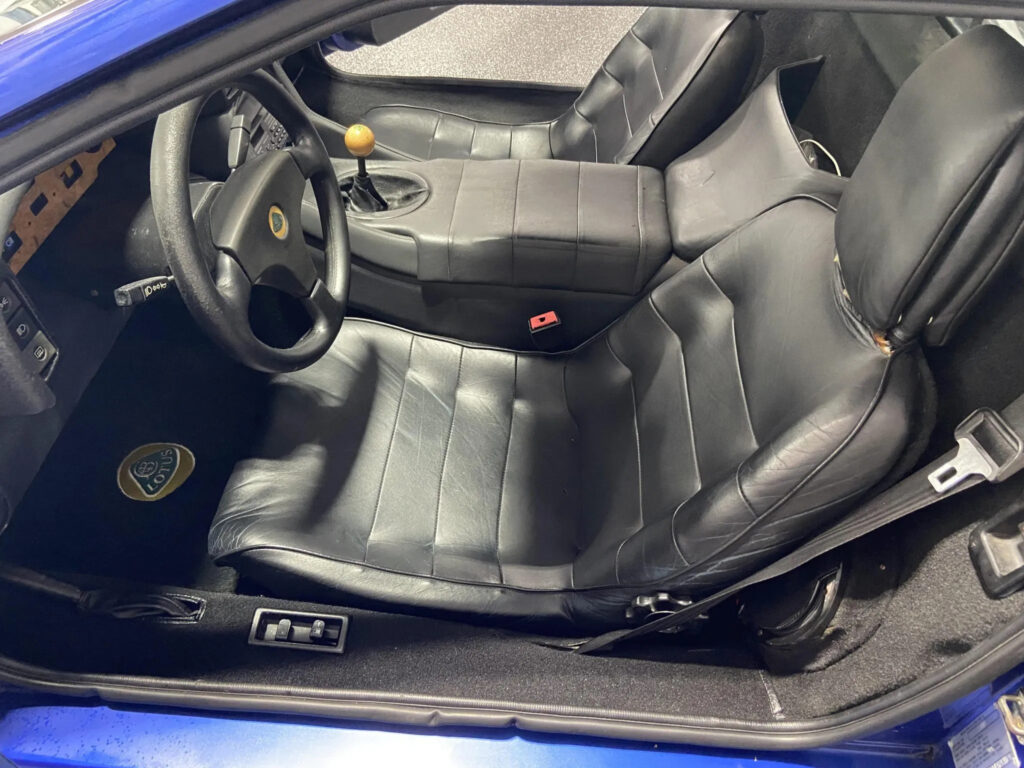
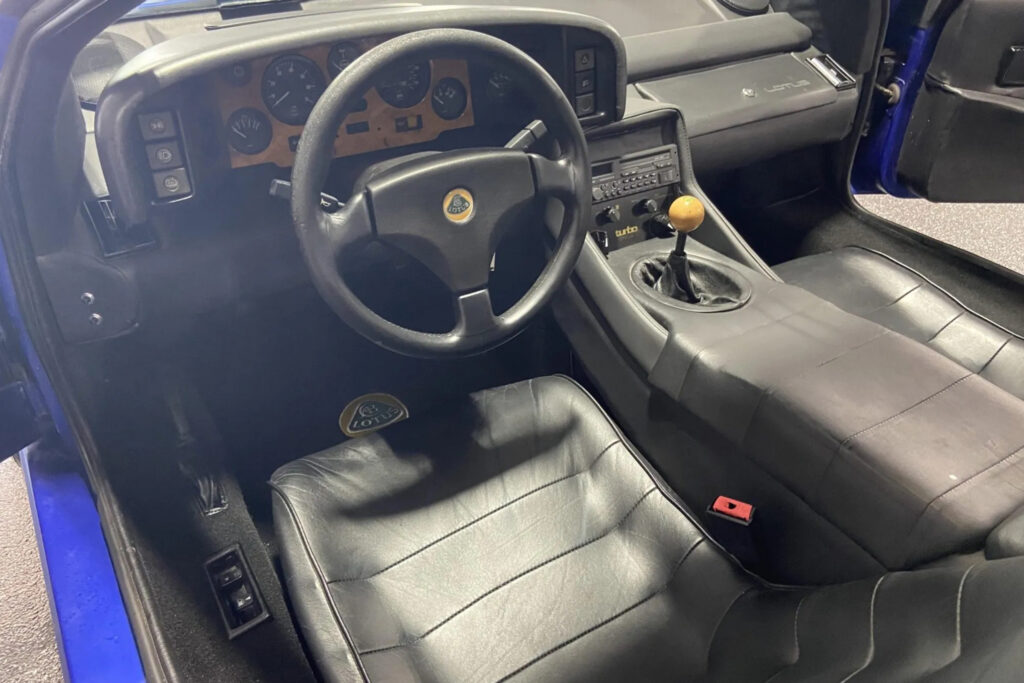
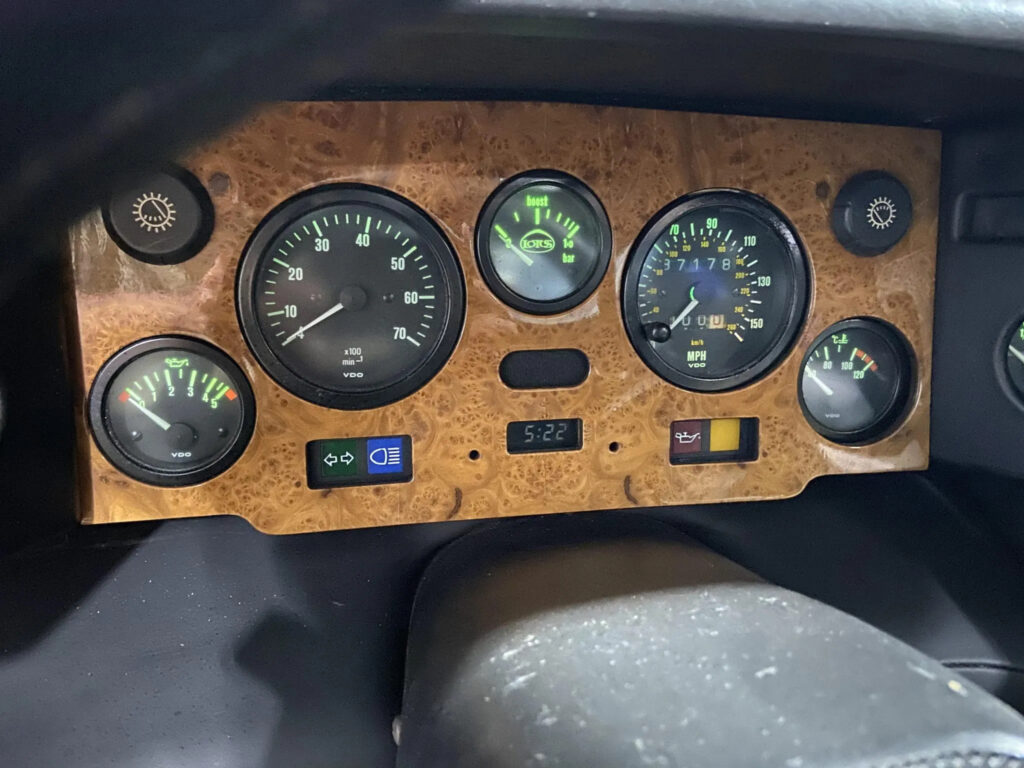
October 1987 to September 1990. In the latter part of 1987, Lotus produced 2 Esprit models, the top of the range Esprit Turbo and the cheaper Normally Aspirated “Esprit”. The cars were virtually identical visually. Known as the Steven’s Esprits.
BODYWORK
BODY TYPE 2 seater fixed-head coupé
NUMBER OF DOORS 2
DESIGNER
DIMENSIONS & WEIGHTS
WHEELBASE 2458 mm 96.8 inches
TRACK/TREAD (FRONT) 1524 mm 60 inches
TRACK/TREAD (REAR) 1554 mm 61.2 inches
LENGTH 4331 mm 170.5 inches
WIDTH 1859 mm 73.2 inches
HEIGHT 1138 mm 44.8 inches
GROUND CLEARANCE 150 mm 5.9 inches
LENGTH:WHEELBASE RATIO 1.76
KERB WEIGHT 1100 kg 2425 lb
WEIGHT DISTRIBUTION
FUEL TANK CAPACITY 67 litres 14.7 [17.7] UK [US] gal.
AERODYNAMICS
DRAG COEFFICIENT 0.36
FRONTAL AREA
CDA
POWERTRAIN
ENGINE TYPE naturally aspirated petrol
ENGINE MANUFACTURER Lotus
ENGINE CODE 912 S
CYLINDERS Straight 4
CAPACITY 2.2 litre
2174 cc
(132.666 cu in)
BORE × STROKE
95.3 × 76.2 mm
3.75 × 3 in
BORE/STROKE RATIO 1.25
VALVE GEAR double overhead camshaft(DOHC)
4 valves per cylinder
16 valves in total
MAXIMUM POWER OUTPUT
(DIN) 174 PS (172 bhp) (128 kW)
at 6500 rpm
MAXIMUM TORQUE
(DIN) 221 Nm (163 ft·lb) (22.5 kgm)
at 5000 rpm
SPECIFIC OUTPUT
(DIN) 59 kW/litre
80.2 ps/litre
79.1 bhp/litre
1.3 bhp/cu in
SPECIFIC TORQUE
(DIN) 101.66 Nm/litre
1.23 ft·lb/cu3
ENGINE CONSTRUCTION
SUMP
COMPRESSION RATIO 10.9:1
FUEL SYSTEM 2 De DHLA 45 carbs
BMEP (BRAKE MEAN EFFECTIVE PRESSURE) 1277.4 kPa (185.3 psi)
MAXIMUM RPM
CRANKSHAFT BEARINGS 5
ENGINE COOLANT Water
UNITARY CAPACITY 543.5 cc
ASPIRATION Normal
COMPRESSOR N/A
INTERCOOLER None
CATALYTIC CONVERTER N
PERFORMANCE
ACCELERATION 0-80KM/H (50MPH)
ACCELERATION 0-60MPH 6.5 s
ACCELERATION 0-100KM/H
ACCELERATION 0-160KM/H (100MPH)
STANDING QUARTER-MILE
STANDING KILOMETRE
MAXIMUM SPEED 222 km/h (138 mph)
POWER-TO-WEIGHT RATIO Higher is better
158.54 PS/tonne (1000 kg)
0.16 PS/kg
116.6 kW/tonne (1000 kg)
0.12 kW/kg
156.36 bhp/tonne (1000 kg)
0.16 bhp/kg
0.07 bhp/lb
WEIGHT-TO-POWER RATIO Lower is better
8.58 kg/kW
14.33 lb/bhp
FUEL CONSUMPTION
FUEL CONSUMPTION 6.9/8.3/16.1 l/100km 90km/h / 120km/h / urban
UNIVERSAL FUEL CONSUMPTION (CALCULATED FROM THE ABOVE)
LITRES/100KM 6.9/8.3/16.1 l/100km 90kmph/120kmph/urban
KM/LITRE 14.5/12.0/6.2 km/l 90kmph/120kmph/urban
UK MPG 40.9/34.0/17.5 UK MPG 90kmph/120kmph/urban
US MPG 34.1/28.3/14.6 US MPG 90kmph/120kmph/urban
CARBON DIOXIDE EMISSIONS
CARFOLIO CALCULATED CO2?
VED BAND (UK)
CO2 EFFIZIENZ (DE)
CHASSIS
ENGINE POSITION mid
ENGINE LAYOUT longitudinal
DRIVE WHEELS rear wheel drive
TORQUE SPLIT N/A
STEERING power assisted rack & pinion
TURNS LOCK-TO-LOCK 3.000
TURNING CIRCLE 11.80 m
FRONT SUSPENSION I.DW.CS.ARB.
REAR SUSPENSION I.DW.TA.CS.
WHEEL SIZE FRONT
WHEEL SIZE REAR
TYRES FRONT 195/60 VR 15
TYRES REAR 235/60 VR 15
BRAKES F/R VeDi/Di-S
FRONT BRAKE DIAMETER
REAR BRAKE DIAMETER
BRAKED AREA
GEARBOX 5 speed manual