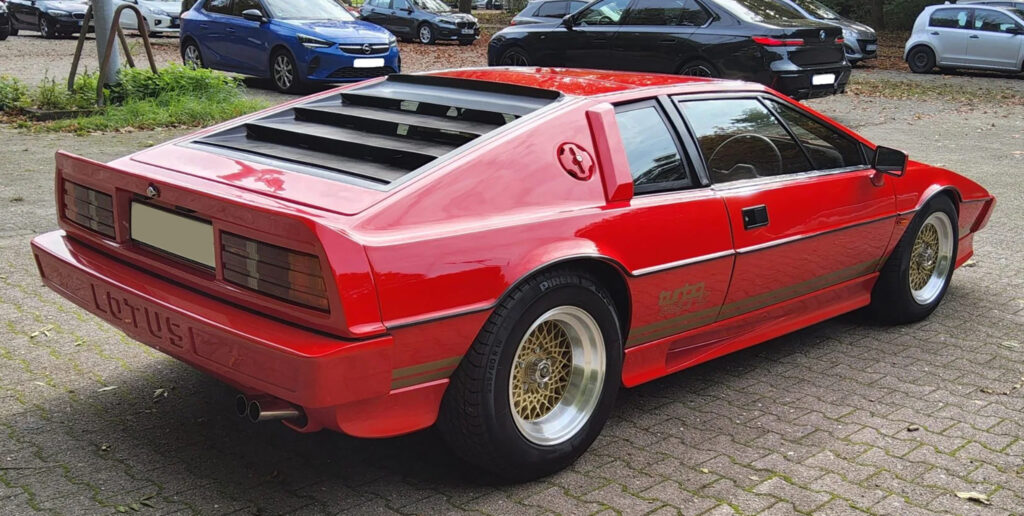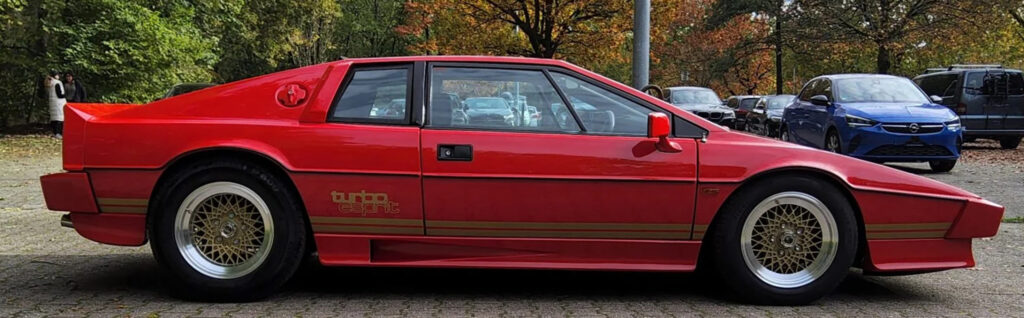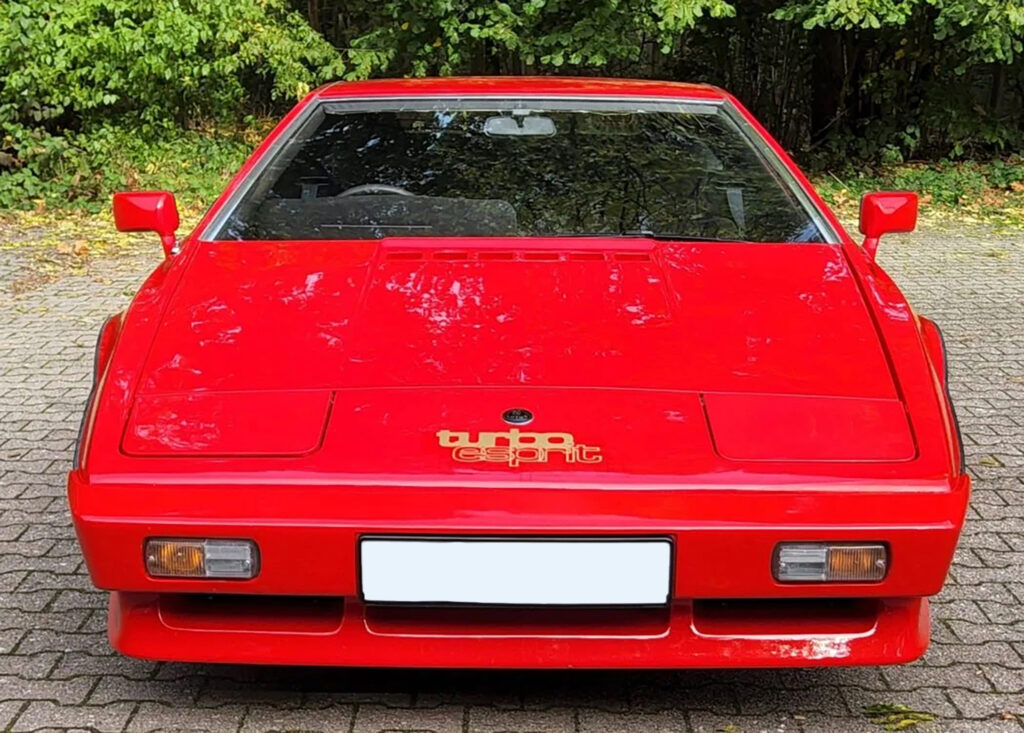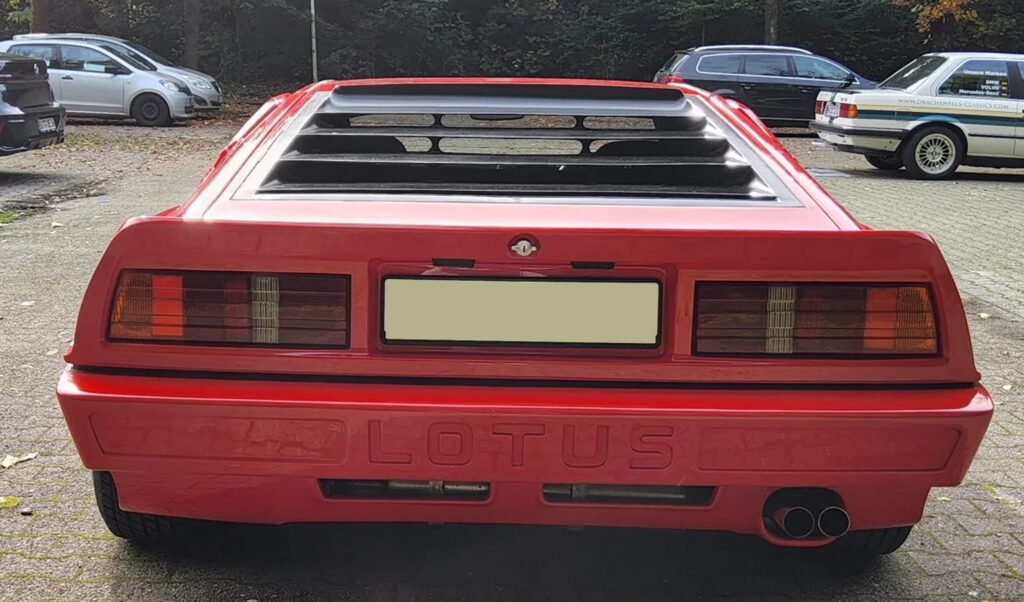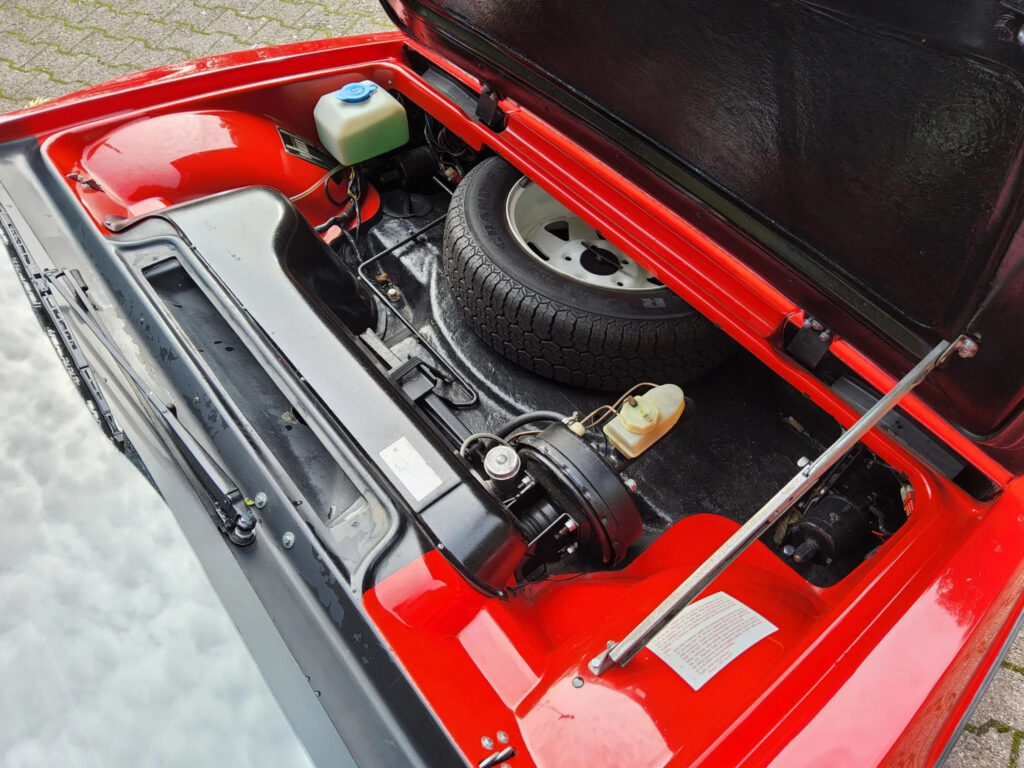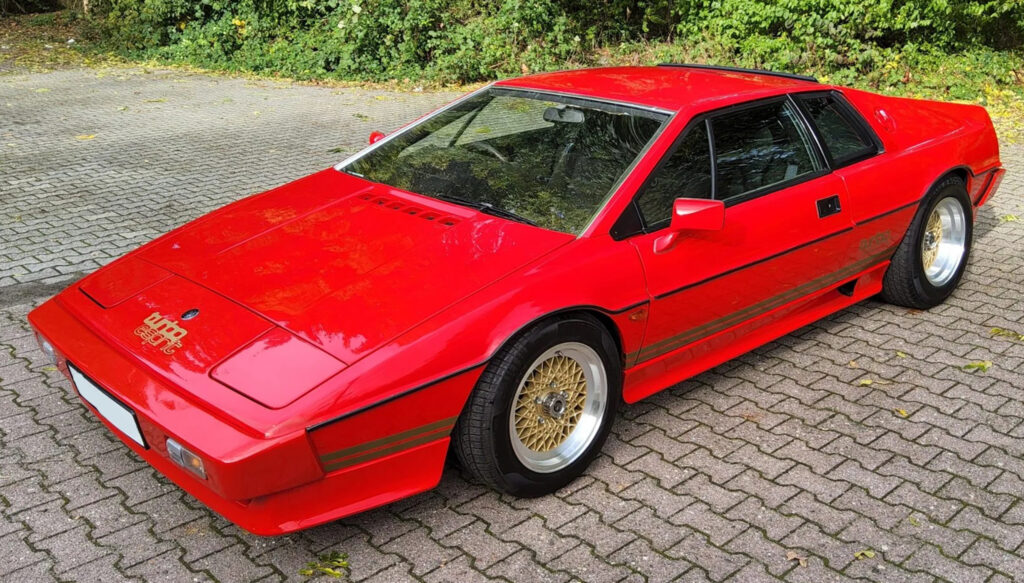
October 1986 to October 1987. The final incarnations of the Giugiaro-styled Esprit had higher compression ratios for the engines was indicated by the ‘HC’ moniker. High-compression version (up from 7.5:1 to 8:1), with Mahle forged pistons and new exhaust manifolds.
The high-compression route for the normally-aspirated SE was a hint of how the final Turbo models ran out of production, prior to the October 1987 adoption of a completely new and much more rounded outline for the Esprit.
The Turbo Esprit HC (High Compression) appeared at the October 1987 Motor show in London. That occasion was also used to unveil another limited edition, based on HC running gear, that was intended to celebrate twenty years of Lotus in Norfolk and up the price per Esprit.
Sharing the limited Earls Court stand space in the autumn of 1986 were two versions of the HC, both offering 215bhp at an unchanged 6,250rpm (a 2.5 per cent bonus in power). Torque (the power to pull you through mid-range blues) was more urgently tweaked: 220lb ft at 4,250rpm representing a 10 percent elevation, and a 250 rpm drop in peak torque engine revs.
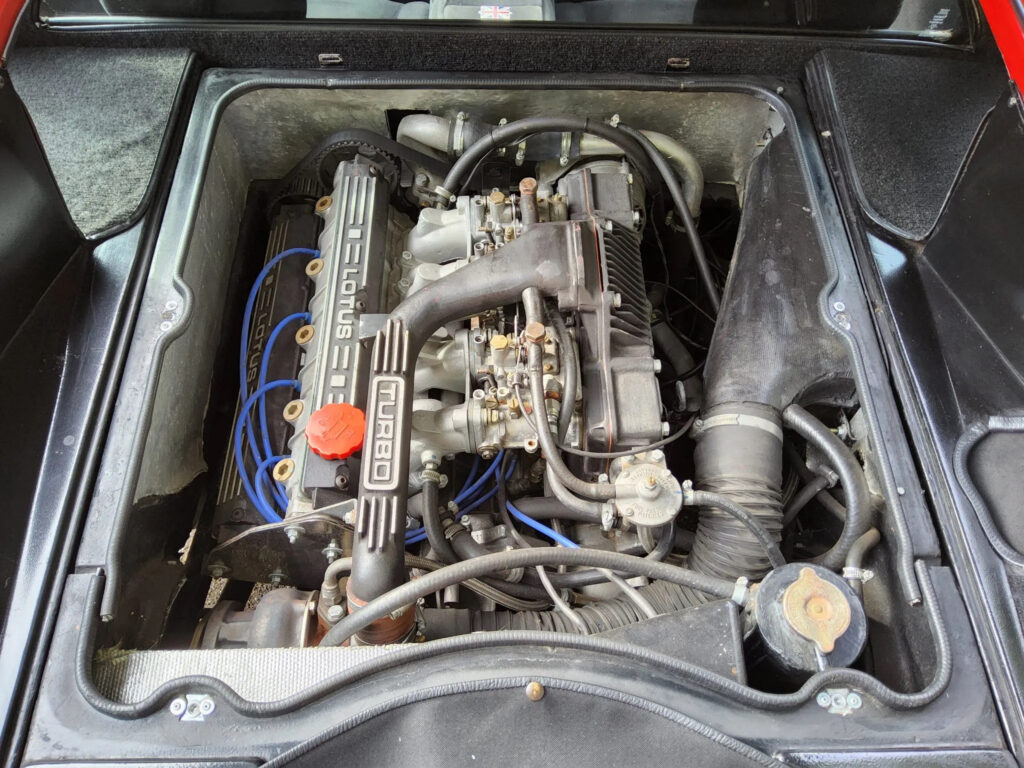
To make an Esprit HC yield another 5bhp and an additional 20 lb of torque, Lotus had utilized some Excel SE engine techniques. Compression could not escalate beyond 10:1 with a turbocharger huffing in its four-valve-per-cylinder ears, but 8:1 was then reasonably advanced, especially given that this was not an electronically-managed fuel injection engine. In fact, Lotus increased the size of the carburettors (specifying Dell’Orto DHLA 45M), specified a balance pipe and ensured that the intake tracts were modelled on those of the Excel SE.
Mahle-forged pistons brought the increase in ration from 7.5:1 to 8:1; Nikasil process for the liners was specified once more. Other fundamental changes to the engine at this point included new cast-iron manifold castings ‘to improve gas flow’ and a replacement casing for the Garrett AiResearch T3 turbocharger. Lotus also allow the boost to increase from 8 psi to 9.5 psi, which was approaching boldness, given the increase in the compression ratio.
Full performance results, according to Lotus, are given below, but can be summarized as offering a lot more mid-range acceleration (plus 20 percent, said Lotus). Maximum speed was unaffected; fuel consumption was improved at constant speeds, and acceleration was just fractionally better than the already sensationally rapid 0-60 mph time of 5.5 seconds achieved by the 210bhp turbocharger.
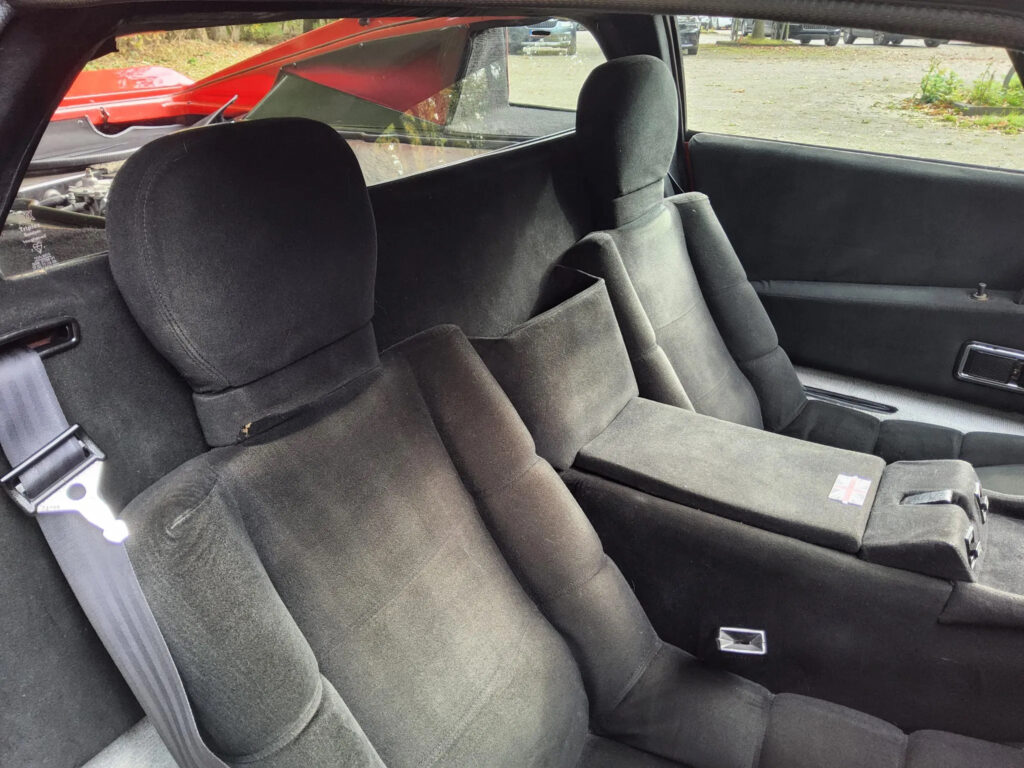
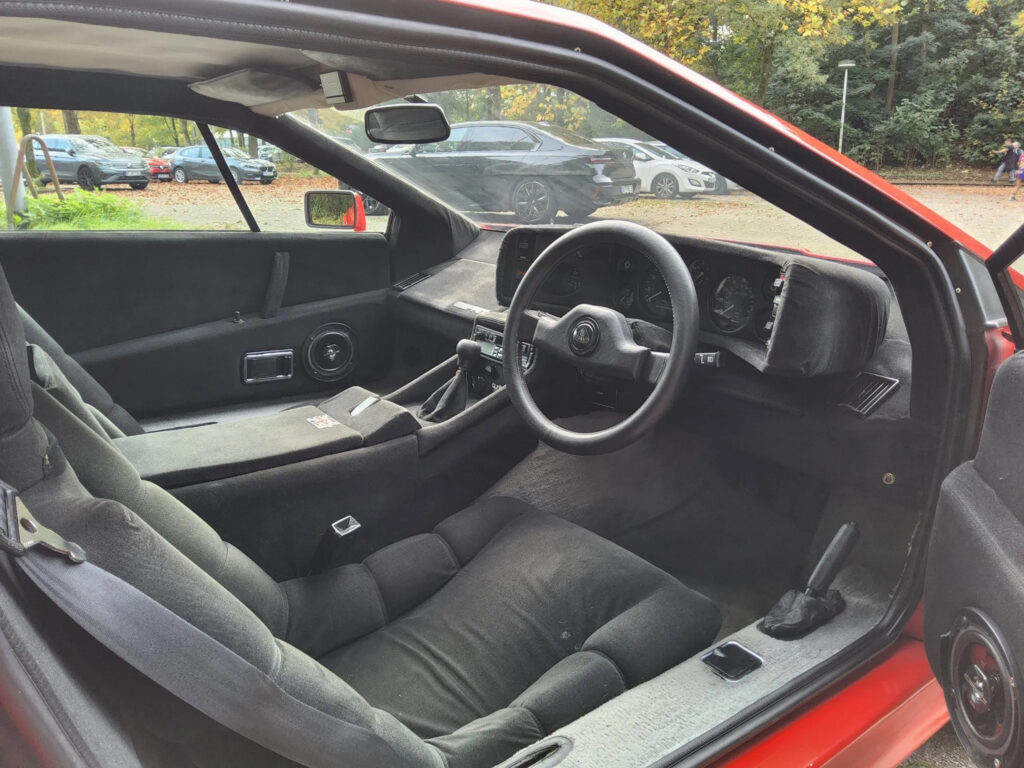
Interior improvements on all Esprits now included adjustable rake for the seat backs, and you could release the rear ‘hatch’ from within via remote control.
BODYWORK
BODY TYPE 2 seater fixed-head coupé
NUMBER OF DOORS 2
DESIGNER Giugiaro
DIMENSIONS & WEIGHTS
WHEELBASE 2438 mm 96 inches
TRACK/TREAD (FRONT) 1511 mm 59.5 inches
TRACK/TREAD (REAR) 1511 mm 59.5 inches
LENGTH 4191 mm 165 inches
WIDTH 1852 mm 72.9 inches
HEIGHT 1118 mm 44 inches
GROUND CLEARANCE
LENGTH:WHEELBASE RATIO 1.72
KERB WEIGHT 1148 kg 2531 lb
WEIGHT DISTRIBUTION 42.6% front
FUEL TANK CAPACITY 86 litres 18.9 [22.7] UK [US] gal.
AERODYNAMICS
DRAG COEFFICIENT 0.35
FRONTAL AREA
CDA
POWERTRAIN
ENGINE TYPE turbocharged petrol
ENGINE MANUFACTURER Lotus
ENGINE CODE 910 S
CYLINDERS Straight 4
CAPACITY 2.2 litre
2174 cc
(132.666 cu in)
BORE × STROKE
95.3 × 76.2 mm
3.75 × 3 in
BORE/STROKE RATIO 1.25
VALVE GEAR double overhead camshaft (DOHC)
4 valves per cylinder
16 valves in total
MAXIMUM POWER OUTPUT
(DIN) 218 PS (215 bhp) (160 kW)
at 6000 rpm
MAXIMUM TORQUE
(DIN) 298 Nm (220 ft·lb) (30.4 kgm)
at 4250 rpm
SPECIFIC OUTPUT
(DIN) 73.7 kW/litre
100.3 ps/litre
98.9 bhp/litre
1.62 bhp/cu in
SPECIFIC TORQUE
(DIN) 137.07 Nm/litre
1.66 ft·lb/cu3
ENGINE CONSTRUCTION
SUMP wet sumped
COMPRESSION RATIO 8:1
FUEL SYSTEM 1 De DHLA 45M carburettor
BMEP (BRAKE MEAN EFFECTIVE PRESSURE) 1722.5 kPa (249.8 psi)
MAXIMUM RPM
CRANKSHAFT BEARINGS 5
ENGINE COOLANT Water
UNITARY CAPACITY 543.5 cc
ASPIRATION Turbo
COMPRESSOR 1 Garrett AiResearch T3 turbocharger
INTERCOOLER Y
CATALYTIC CONVERTER
PERFORMANCE
ACCELERATION 0-80KM/H (50MPH) 4.4 s
ACCELERATION 0-60MPH 5.6 s
ACCELERATION 0-100KM/H
ACCELERATION 0-160KM/H (100MPH) 15 s
STANDING QUARTER-MILE 14.4 s
@ 96 mph
STANDING KILOMETRE 26.2 s
@ 196 km/h
MAXIMUM SPEED 245 km/h (152 mph)
POWER-TO-WEIGHT RATIO Higher is better
189.89 PS/tonne (1000 kg)
0.19 PS/kg
139.66 kW/tonne (1000 kg)
0.14 kW/kg
187.28 bhp/tonne (1000 kg)
0.19 bhp/kg
0.08 bhp/lb
WEIGHT-TO-POWER RATIO Lower is better
7.16 kg/kW
11.96 lb/bhp
FUEL CONSUMPTION
FUEL CONSUMPTION
UNIVERSAL FUEL CONSUMPTION (CALCULATED FROM THE ABOVE)
LITRES/100KM
KM/LITRE
UK MPG
US MPG
CARBON DIOXIDE EMISSIONS
CARFOLIO CALCULATED CO2 ?
VED BAND (UK)
CO2 EFFIZIENZ (DE)
CHASSIS
ENGINE POSITION mid
ENGINE LAYOUT longitudinal
DRIVE WHEELS rear wheel drive
TORQUE SPLIT N/A
STEERING rack & pinion
TURNS LOCK-TO-LOCK 2.800
TURNING CIRCLE
FRONT SUSPENSION I.DW.CS.ARB.
REAR SUSPENSION I.U<ransLi.TrailRA.CS.
WHEEL SIZE FRONT
WHEEL SIZE REAR
TYRES FRONT 195/60 VR 15
TYRES REAR 235/60 VR 15
BRAKES F/R VeDi/VeDi-S
FRONT BRAKE DIAMETER 258 mm
REAR BRAKE DIAMETER 275 mm
BRAKED AREA
GEARBOX 5 speed manual