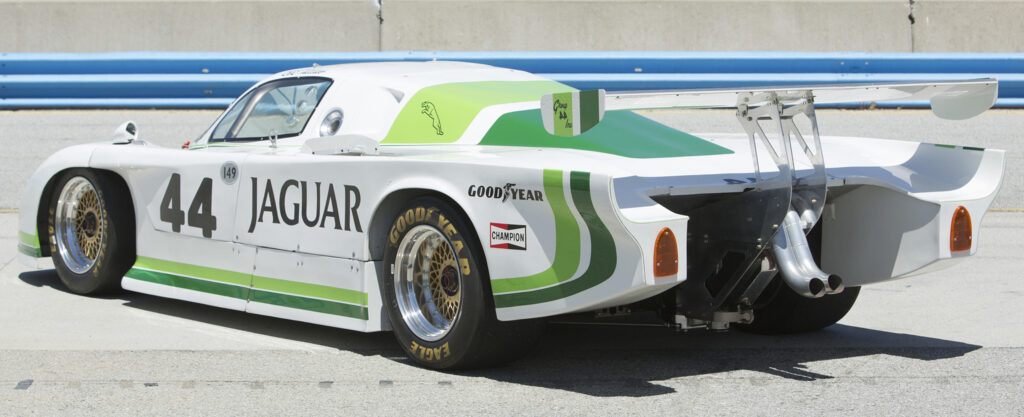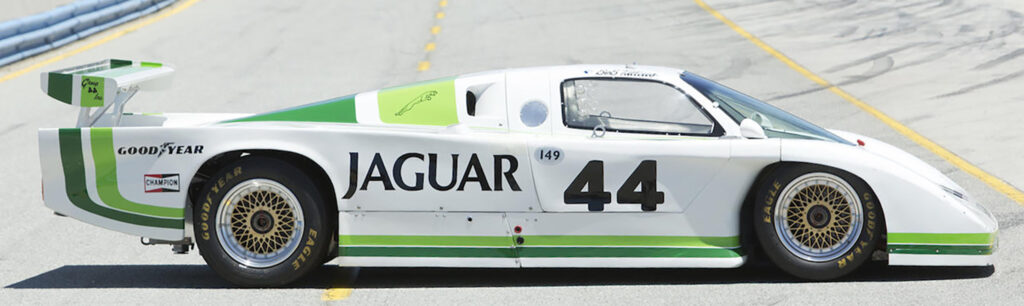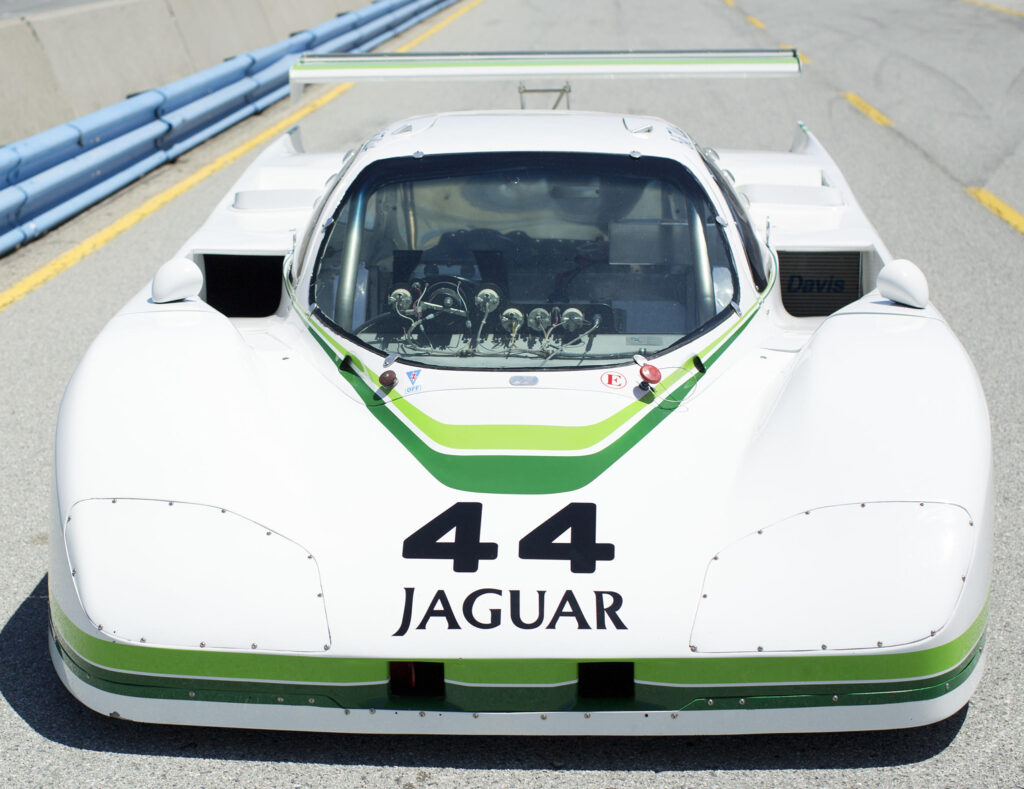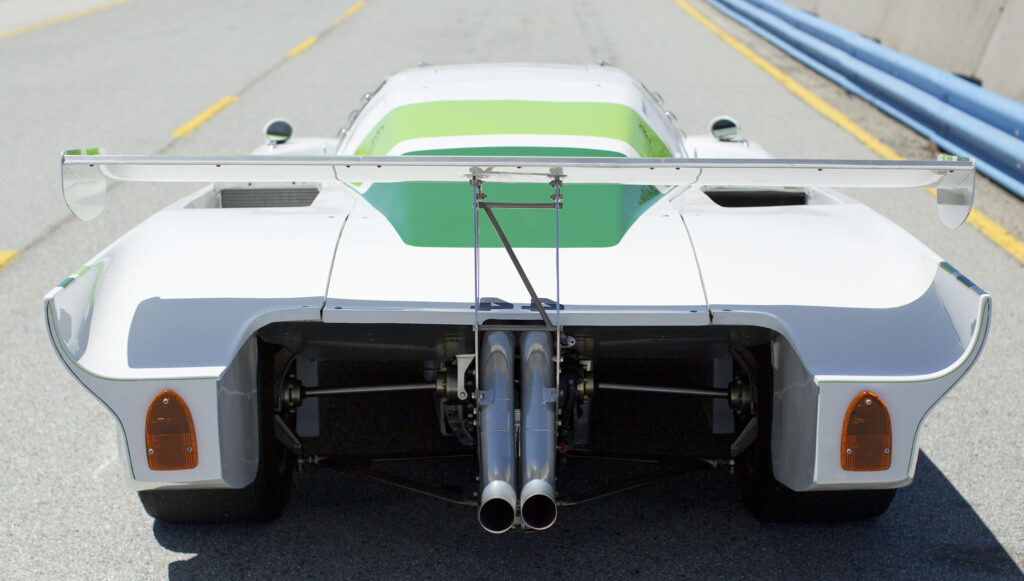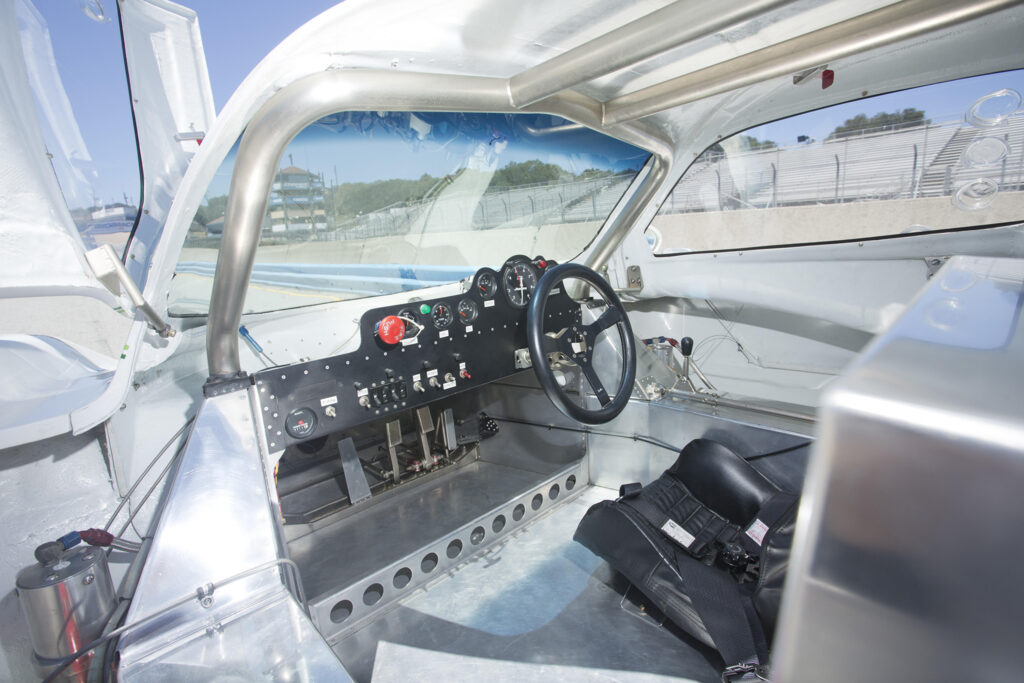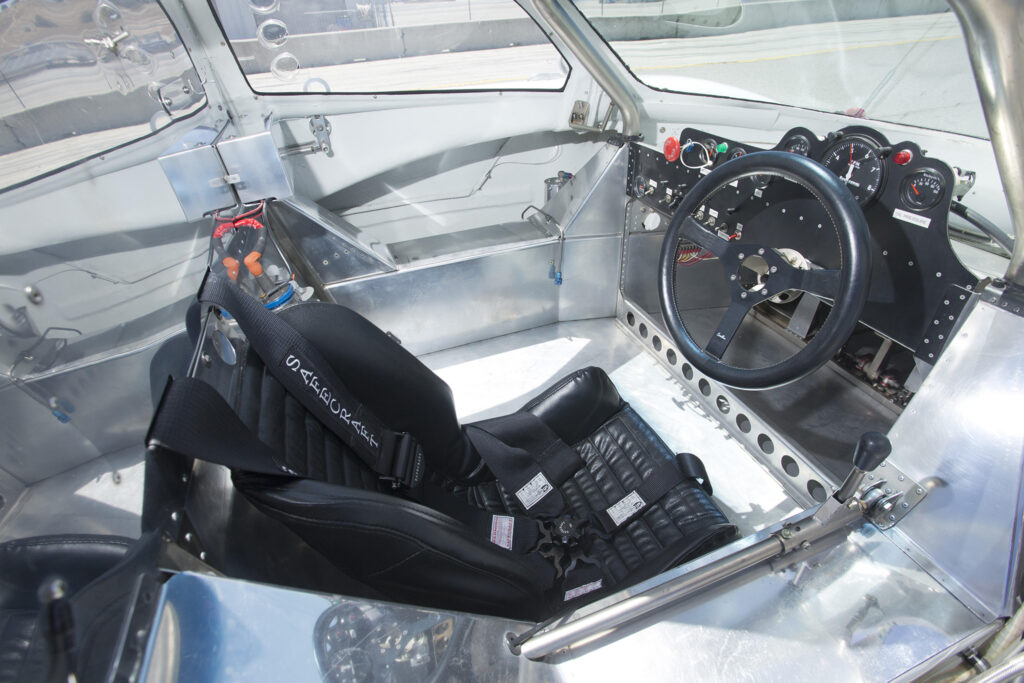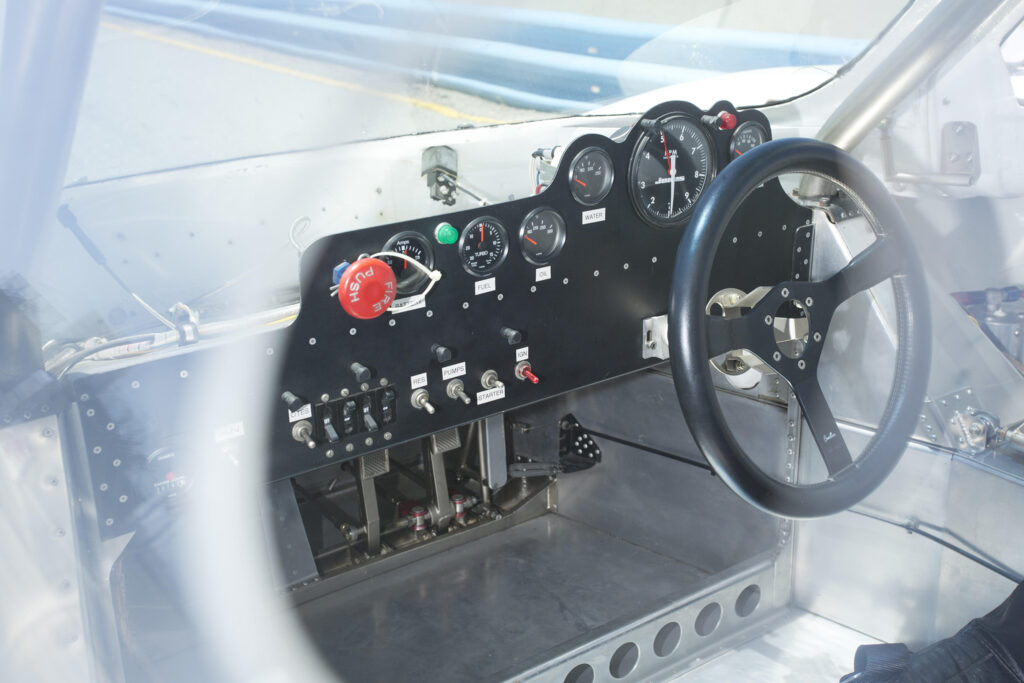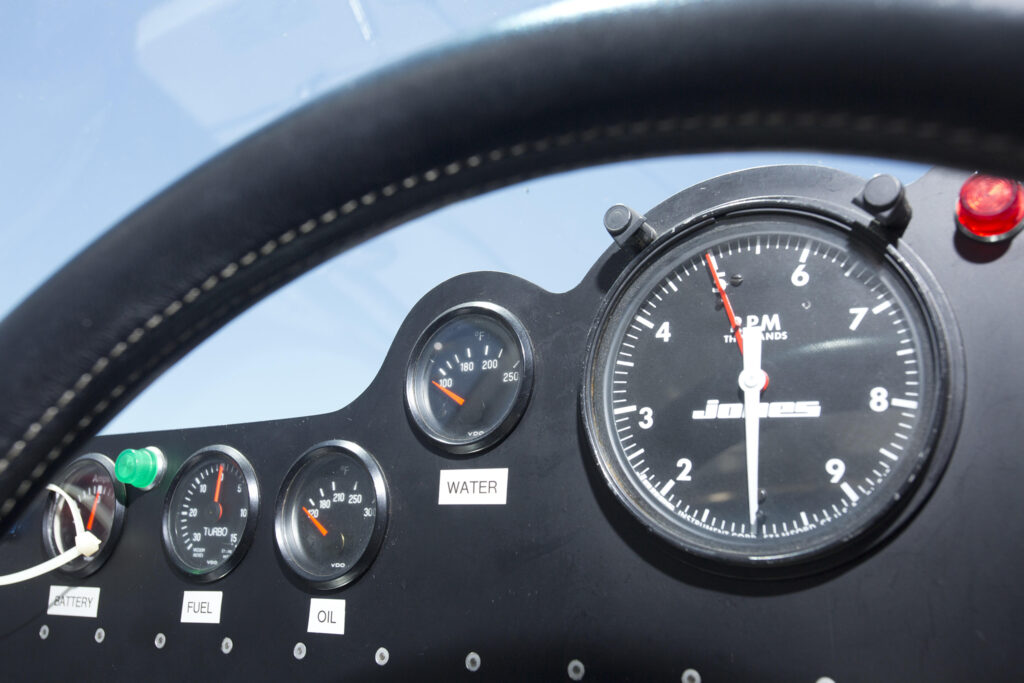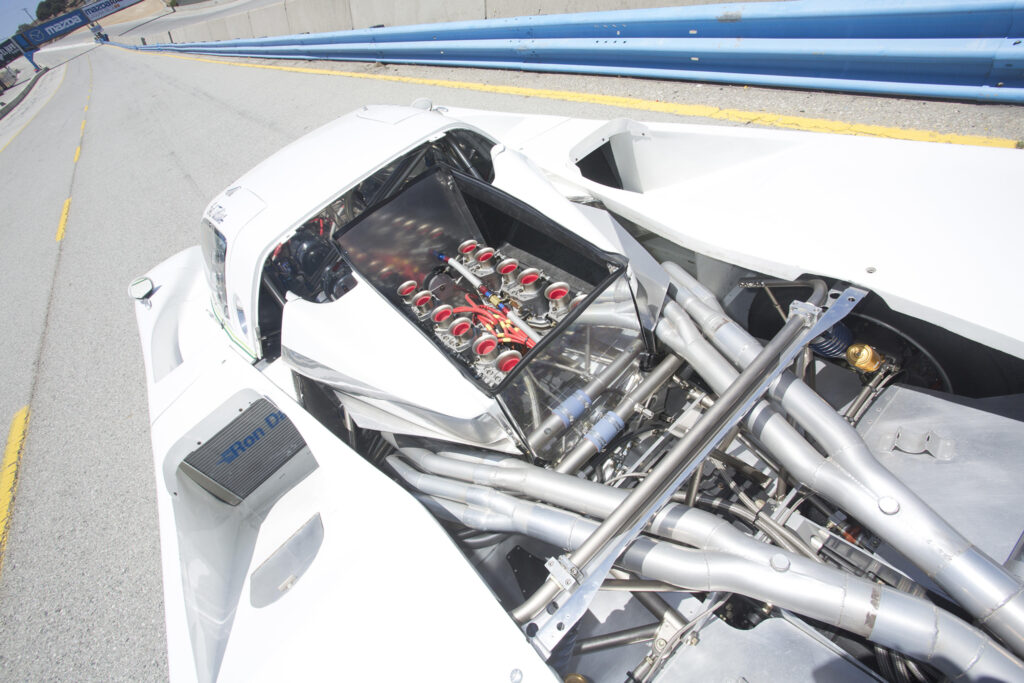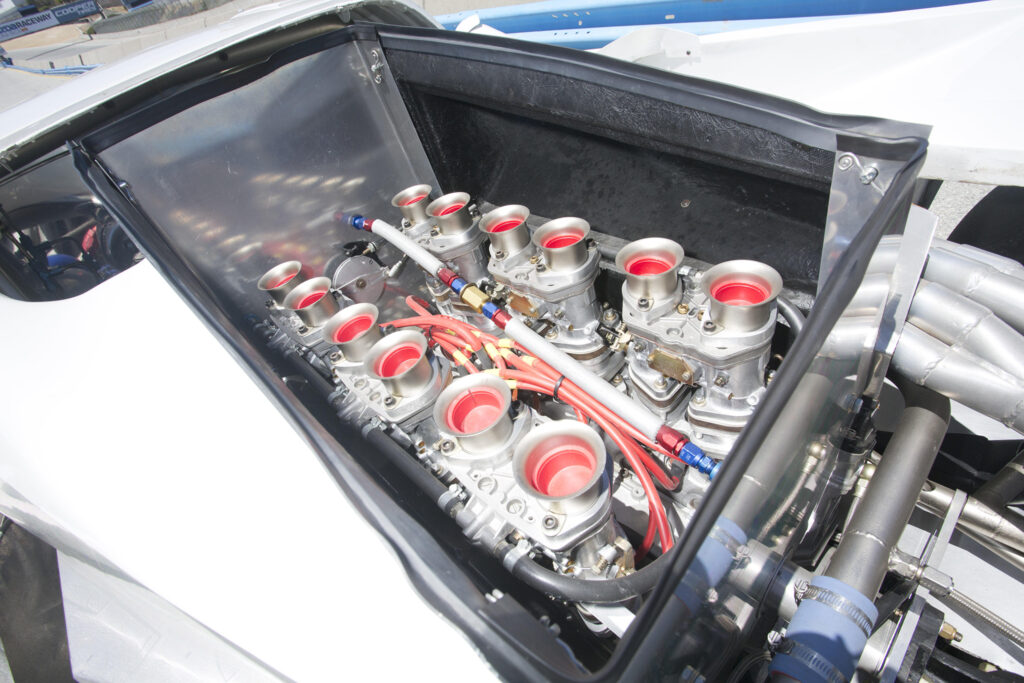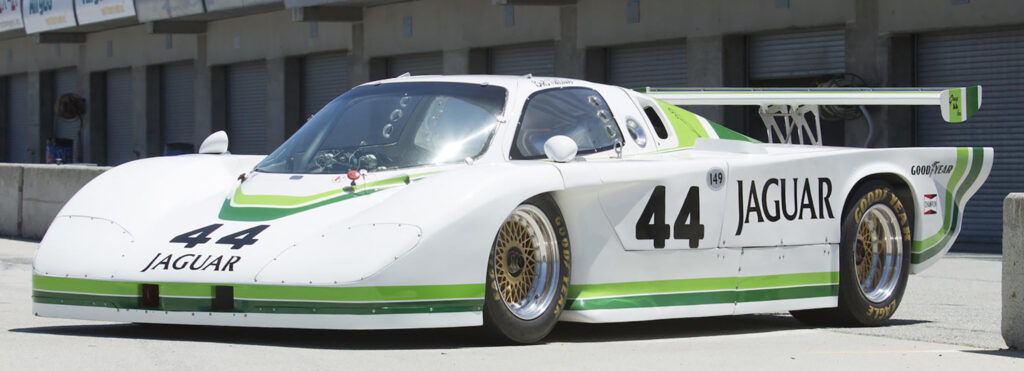
This XJR-5 epitomizes everything that is best about American racing design, construction and preparation combined with the best of British international racing heritage and pedigree from Jaguar. It was campaigned in IMSA Championship by the best drivers such as Brian Redman and built by Bob Tullius’ Group 44 racing.
Bob Tullius had been a long time enthusiast for the British marque when he formed the Group 44 racing team in the early 1960s with partner Brian Feurstenau. He loyally campaigned Jaguar E-Types – in addition to MGs and Triumph TR8s – in the USA for the following two decades. He had also found time to be deeply involved with the ground-breaking Howmet gas turbine-engined Le Mans car project of 1968 and his experience of racing that car at Le Mans – in the world-famous 24-Hour race which Jaguar had won five times through the 1950s – determined him to return there one day in a car of his own construction. The result was the Jaguar XJR-5, which was built essentially with the IMSA race organization’s premier GTP class in mind. Bob Tullius persuaded Mike Dale of Jaguar Cars Inc, New Jersey, to fund the project, and he engaged former GM and Ford designer Lee Dykstra to design an up-to-date car for him, to accept the Jaguar V12 racing engine as already prepared by Group 44 for their Championship-winning E-Type variant.
By January 1982 drawings and clay models of the Lee Dykstra-designed ground-effect aerodynamics Coupe contender were released for public consumption. Dykstra’s design was for a sheet aluminum monocoque chassis with honeycomb floor section and tubular-reinforced steel bulkheads. Long underfloor aerodynamic venture tunnels extended from behind the flat-bottomed cockpit area alongside the fully-stressed V12 engine block, curving inwards towards the rear to exit beneath the full-width rear wing. The graceful and beautifully-proportioned bodywork was fashioned in carbon fiber and Kevlar composite and the first 5.3-liter V12-engined XJR prototype was tested at Summit Point as early as June 1982.
In late-August it made its racing debut at Road America, where Bob Tullius and Bill Adam co-drove to a third-place finish behind two of the familiar Porsche 935s. They were the first GTP crew home – a most promising debut.
| type | Racing Car |
| production years | 1983 – 1985 |
| built at | USA |
| body stylist | Lee Dykstra |
| coachbuilder | Group 44 |
| production | 12 |
| engine | 60º V12 |
| position | Front Longitudinal |
| aspiration | Natural |
| block material | Aluminum Alloy |
| valvetrain | SOHC, 2 Valves per cylinder |
| fuel feed | 6 Weber Carburetors |
| displacement | 5955 cc / 363.40 in³ |
| bore | 91.9 mm / 3.6 in |
| stroke | 74.9 mm / 2.9 in |
| compression | 12.2:1 |
| power | 484.7 kw / 650 bhp @ 7500 rpm |
| specific output | 109.15 bhp per litre |
| bhp/weight | 698.92 bhp per tonne |
| torque | 650.8 nm / 480 ft lbs @ 6000 rpm |
| body / frame | Aluminum Tub Chassis |
| driven wheels | RWD |
| steering | Rack & Pinion |
| f suspension | Double Wishbones |
| r suspension | Double Wishbones |
| curb weight | 930 kg / 2051 lbs |
| wheelbase | 2591 mm / 102.0 in |
| front track | 1676 mm / 66.0 in |
| rear track | 1600 mm / 63.0 in |
| length | 4547 mm / 179.0 in |
| width | 2007 mm / 79.0 in |
| height | 1003 mm / 39.5 in |
| transmission | 5-Speed Manual |
| top speed | ~349.15 kph / 217 mph |
| key drivers | Hurley Haywood, Brian Redman |