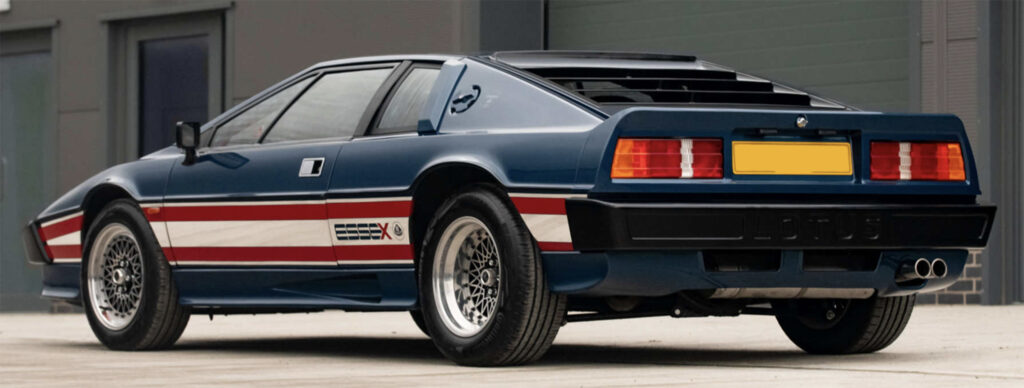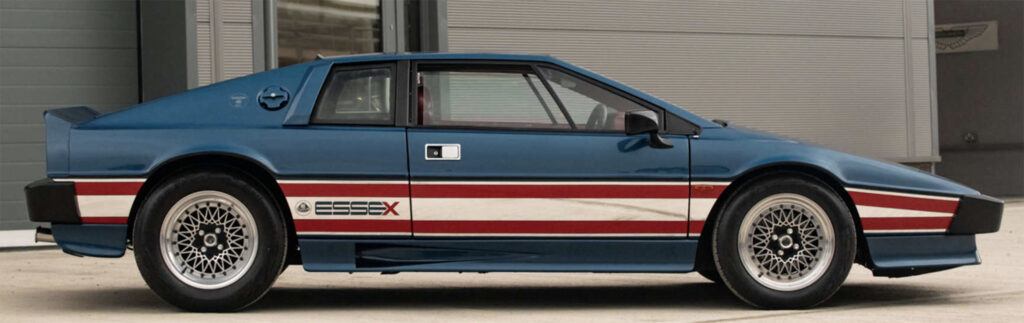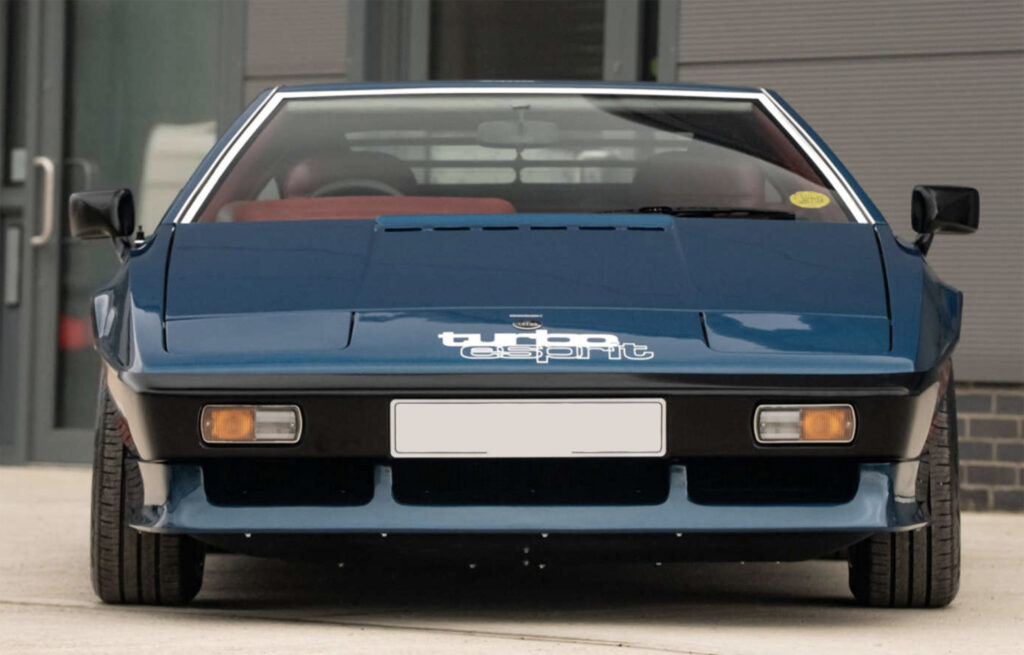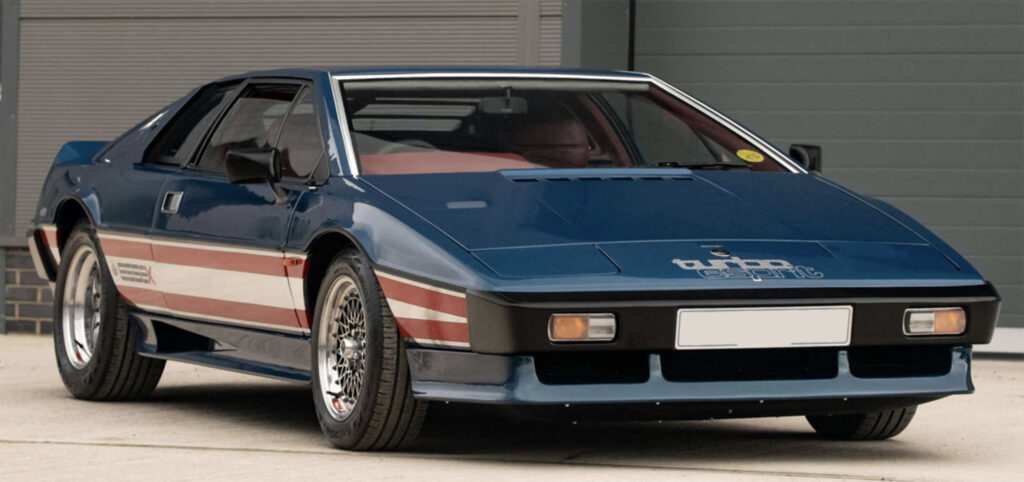
February 1980 to April 1981. Limited-edition Turbo was designated the Essex Commemorative Lotus Esprit Turbo, also known as the Type 82, and was only available in its sponsor’s livery of blue, red, and silver. The intro of this model elevated the Esprit into the supercar league.
Lotus joined the fashionable turbo brigade, with a new Esprit Turbo which was unveiled under bright lights and expected extravagance of a party hosted by Essex Petroleum in London’s Royal Albert Hall. The new car’s birth certificate shows it to be the Essex Commemorative Lotus Esprit Turbo, production of which started in the spring of 1980 at the rate of ten a week. Only available finished in the Monte Carlo enterprise’s colours of blue, red and silver.
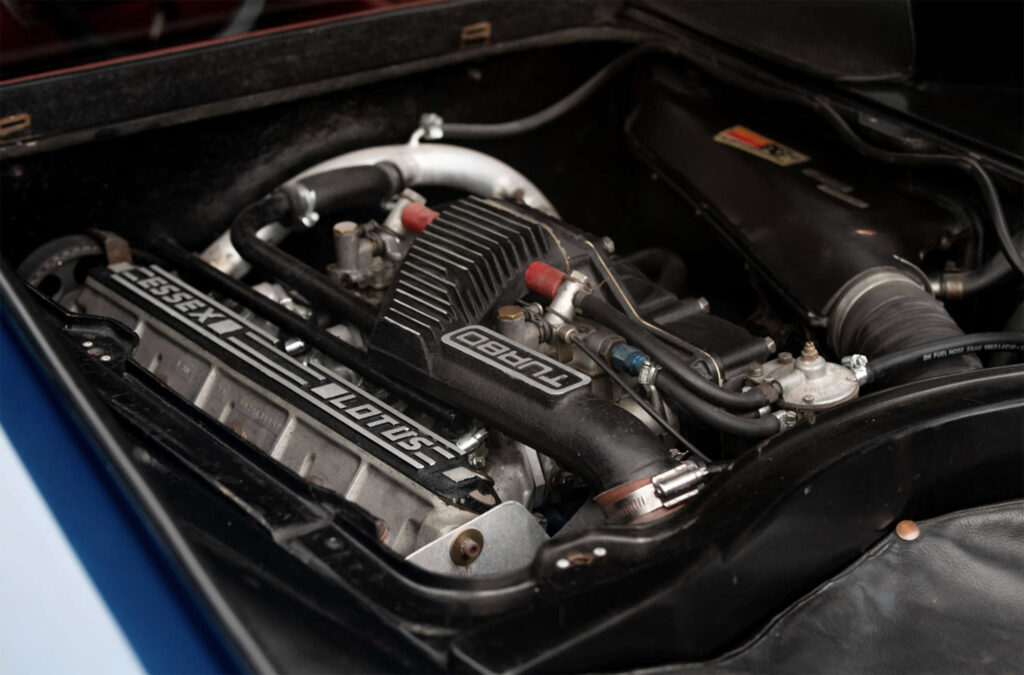
Though the car still carries the Esprit tag, its is effectively a new car and, apart from the competition oriented external changes, the real reason for the car’s birth comes from inside the multi-coloured exterior where the 16-valve engine has been punched out to 2,174cc, as in the Talbot Sunbeam Lotus, using a bore of 95.25mm, and stroke of 76.20mm. The four-cylinder aluminium engine provides a manufacturer’s claimed 210bhp at 6250 rpm and 200 lb ft of torque at 4,500 rpm.
A Garrett T3 turbocharger which is mounted downstream of the twin Dellorto carburettor supplies boost up to 8psi and the engine operates on a 7.5:1 compression ratio. The downstream carburetion was chosen because Lotus believed it offered the advantages of improve throttle response, better air/fuel distribution and better wet fuel handling during starting. Lotus says the engine was designed to minimise the traditional problems of throttle lag and poor low speed torque that often trouble turbo engines – the problems being overcome by reducing the volumes of both the pre-turbine exhaust system and the induction system between the compressor and inlet valve. The turbocharger lubrication is direct from the main oil gallery, with rain to the dry sump, while the peak turbine speed is a cool 110,000rpm. The current Esprit five-speed gearbox has been retained and is attached to the engine block by a new alloy bell housing, while power is transmitted via a new clutch with increased capacity to the wheels via plunging constant velocity joint drive shaft.
Maximum speeds in the various gears are 41.2 mph for first 62mph for second 91.1mph for third, 123.5mph for fourth and an inviting 152mph for fifth. Acceleration figures – supplied by Lotus – are 0-30 in 2.05secs, 0-40 in 2.85sec, 0-50 in 4.2secs, 0-60 in 5.55secs, 0-70 in 7.35 secs, 0-80 in 9.25 secs 0-90 in 11.185secs and 0-100 in 14.65 secs while a standing quarter-mile is offered in 14.4secs (98mph) and a standing kilometre in 26.1 secs (124mph).These are speeds comparable to cars in video arcade games of the time.
The Esprit Turbo’s backbone chassis is completely new – zinc galvanised and with a five year guarantee subject to normal use – incorporating a wider front box section and suspension mounting points. A new space frame engine and transmission section is included, giving a four point wide-based mounting system and increased houses a new full-width radiator and oil cooler with increased capacity.
The new front suspension has been adopted from the Elite, with the track increased by an inch, while the rear suspension is also revised, with unequal length transverse links with radius arms. Plunging driveshafts are used with new aluminium hub carriers, the track increased by 0.7″. Ventilated brake discs were abandoned – the reason being they were found to be lacking “in feel and longevity” – in favour of a larger solid front disc than used on the Esprit S2, though the rear disc brake assembly from the S2 has been kept, but both brake master cylinder and servo have been made bigger
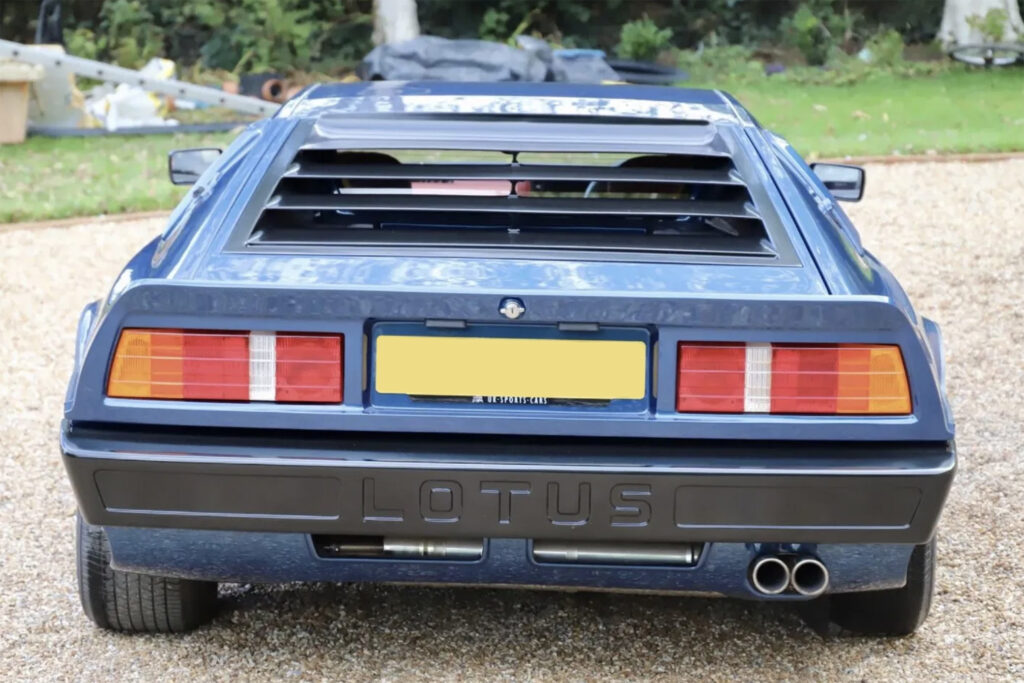
The Esprit Turbo’s appealing exterior is, like the plush interior, the work to Giorgio Giugiaro at Ital Design – Giugiaro being, of course, the stylist of the Esprit S2. Bodyshell changes include large wrap-around front and rear bumpers, a full-width fronts spoiler for better air flow to the larger radiator/oil cooler and improved aerodynamics and a redesigned tailgate area to provide direct cooling airflow. NACA ducts have been moulded into the sills to provide cooling air into the engine compartment – which because of the redesigned chassis offers better access – because of the lack of turbulence beneath the car.
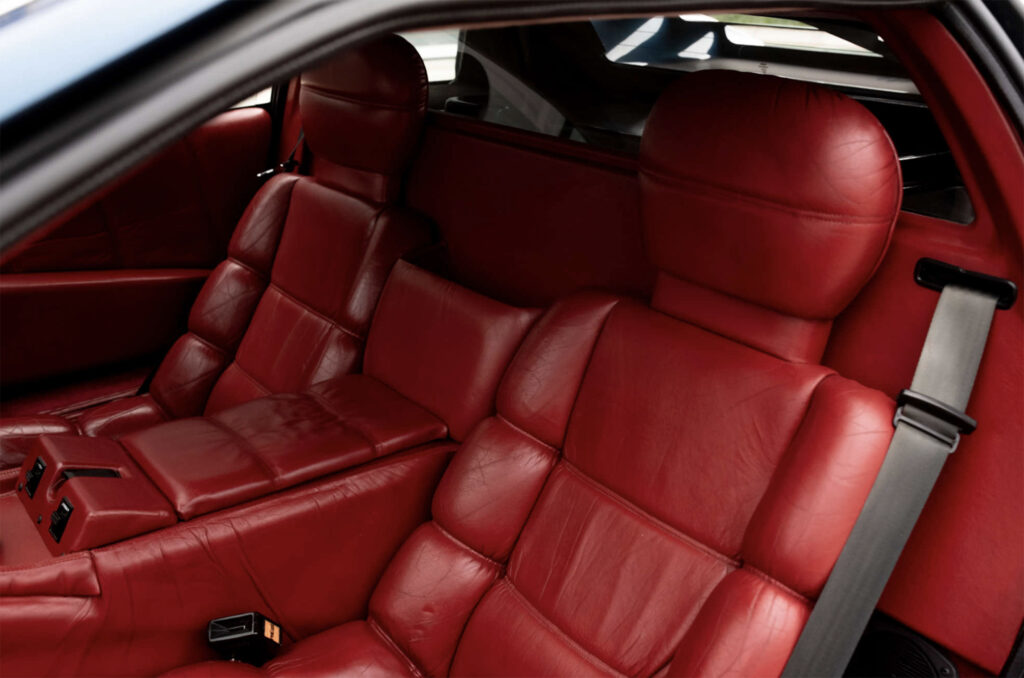
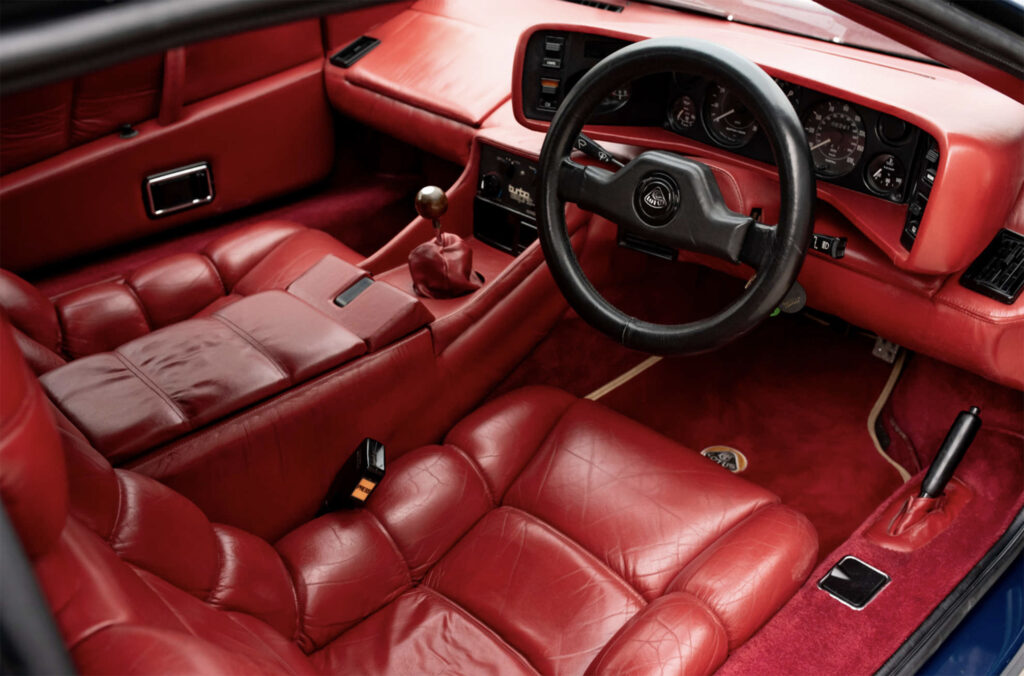
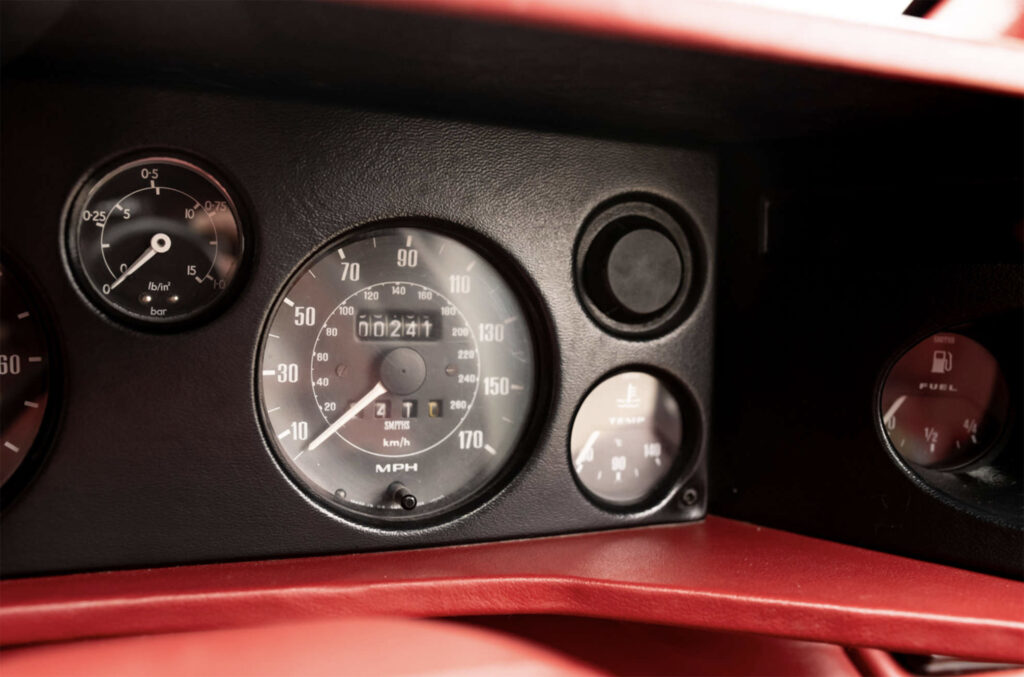
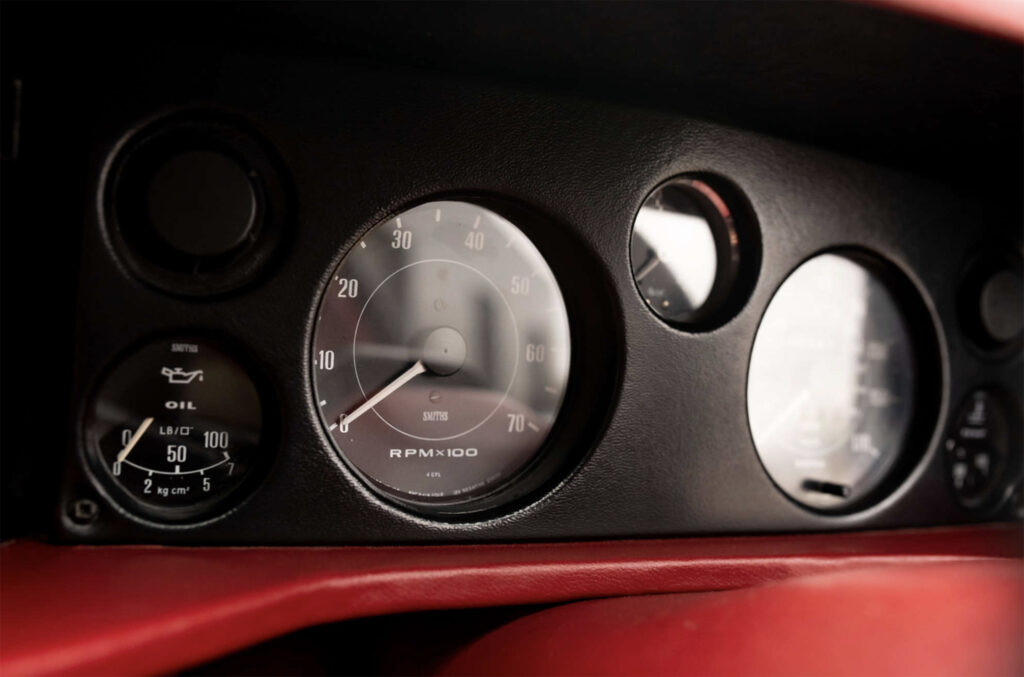
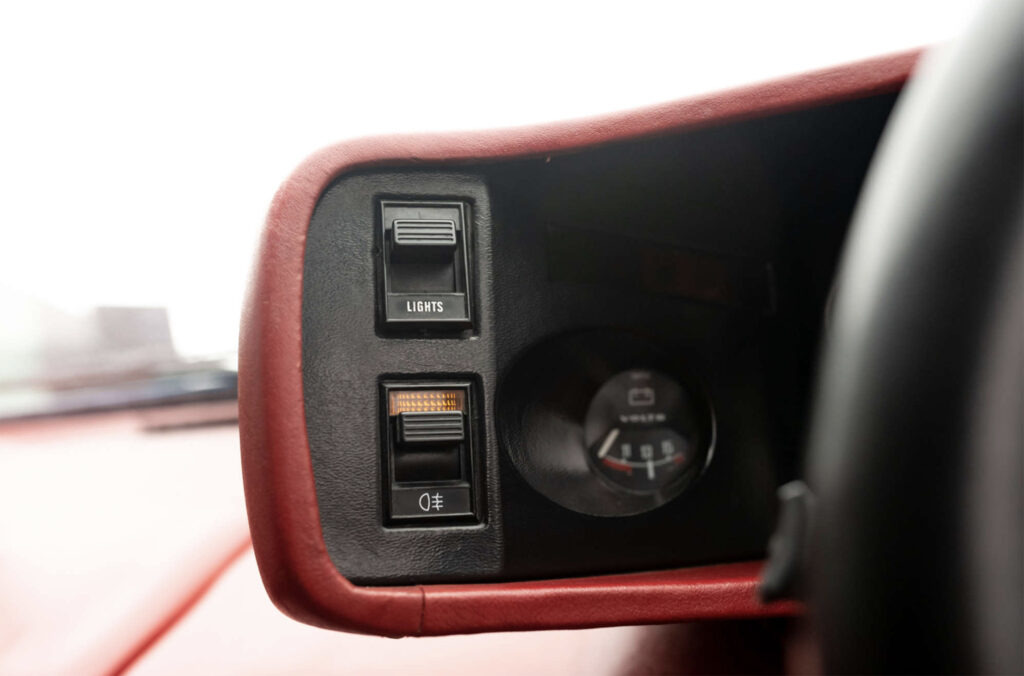
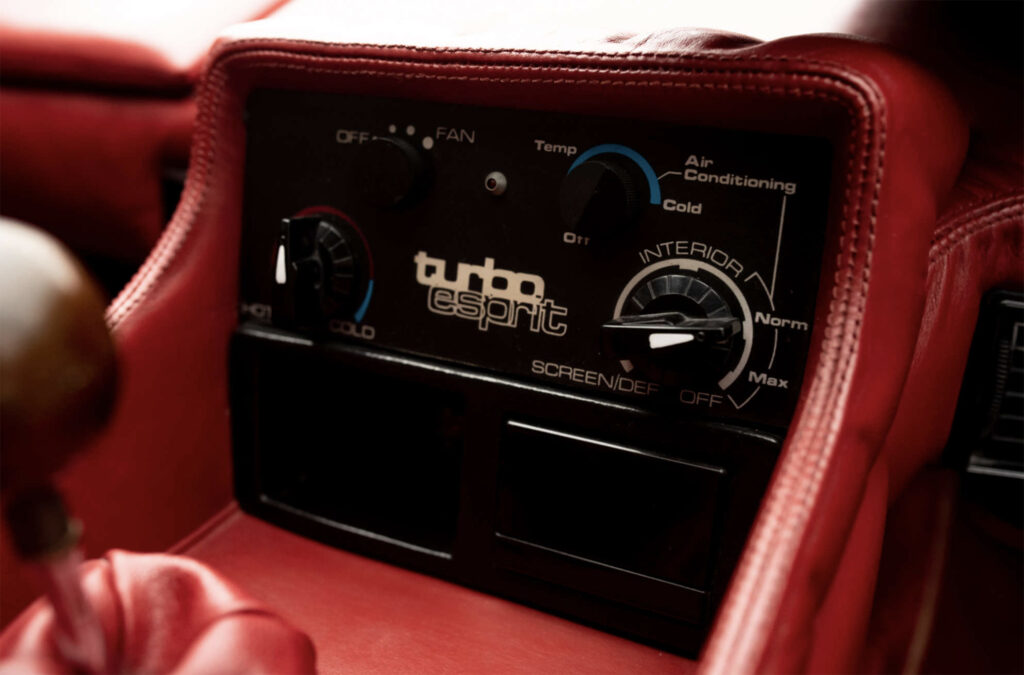
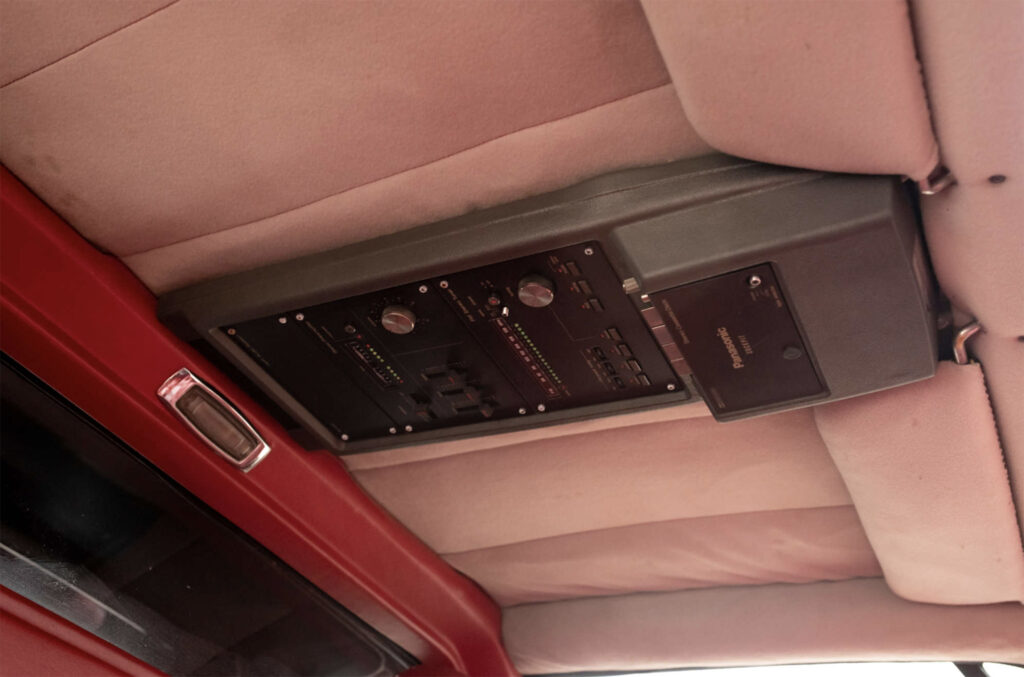
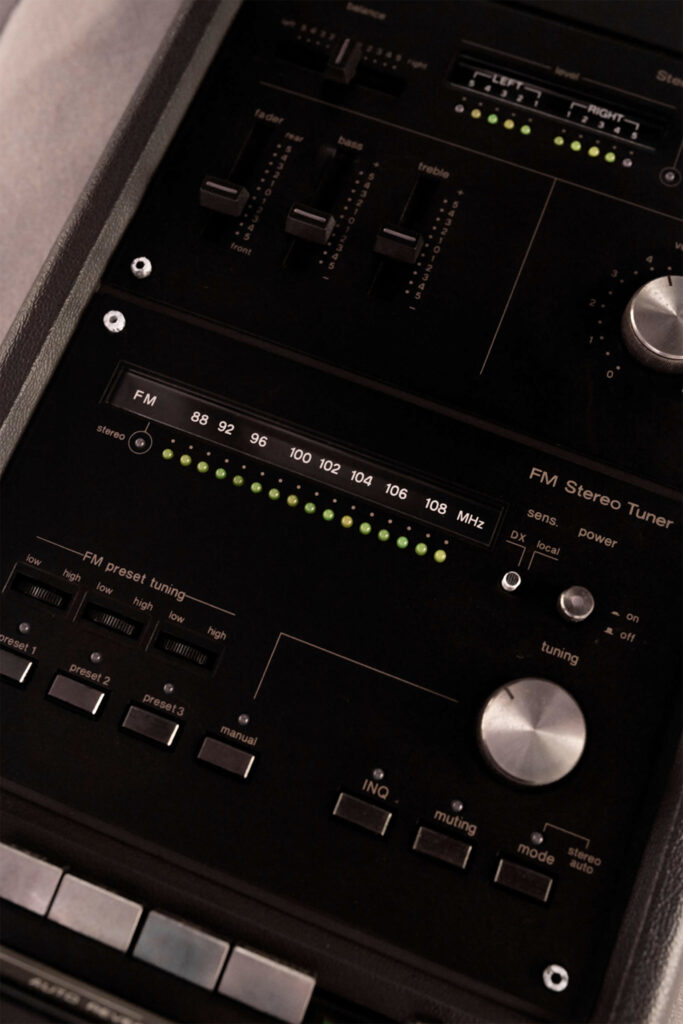
A distinctive rear spoiler which incorporates tail lamp and registration plate housings is used to balance the car and give high speed stability. Giugiaro has retained the Esprit’s basic cockpit configuration though several detailed changes have been make including an instrument panel which now boasts a turbo boost gauge and speedometer running up to 170mph. Air conditioning controls are now situated in a centre console panel and all switchgear is backlit when main and side lights are illuminated. A National Panasonic stereo cassette radio unit is a standard feature of the Esprit Turbo and built into the roof of the car – two speakers being in the bulkhead behind the driver and passenger and two in the facia below the windscreen pillars. The seats have revised foam foundations and new head restraints while the standard interior trim is “fine tone” ruche stitched leather.
Road wheels are three-piece composite alloy and fitted with Goodyear’s new performance ultra low profile NCT tyre – a steel belted VR performance tyre with elliptical sidewalls, straight circumferential grooved tread pattern and open radial shoulder channels.
BODYWORK
BODY TYPE 2 seater fixed-head coupé
NUMBER OF DOORS 2
DESIGNER Giugiaro
DIMENSIONS & WEIGHTS
WHEELBASE 2438 mm 96 inches
TRACK/TREAD (FRONT) 1511 mm 59.5 inches
TRACK/TREAD (REAR) 1511 mm 59.5 inches
LENGTH 4191 mm 165 inches
WIDTH 1852 mm 72.9 inches
HEIGHT 1118 mm 44 inches
GROUND CLEARANCE
LENGTH:WHEELBASE RATIO 1.72
KERB WEIGHT 1219 kg 2687 lb
WEIGHT DISTRIBUTION
FUEL TANK CAPACITY
AERODYNAMICS
DRAG COEFFICIENT 0.35
FRONTAL AREA
CDA
POWERTRAIN
ENGINE TYPE turbocharged petrol
ENGINE MANUFACTURER Lotus
ENGINE CODE
CYLINDERS Straight 4
CAPACITY 2.2 litre
2174 cc
(132.666 cu in)
BORE × STROKE
95.3 × 76.2 mm
3.75 × 3 in
BORE/STROKE RATIO 1.25
VALVE GEAR double overhead camshaft (DOHC)
4 valves per cylinder
16 valves in total
MAXIMUM POWER OUTPUT
(DIN) 213 PS (210 bhp) (157 kW)
at 6500 rpm
MAXIMUM TORQUE
(DIN) 271 Nm (200 ft·lb) (27.6 kgm)
at 4500 rpm
SPECIFIC OUTPUT
(DIN) 72 kW/litre
97.9 ps/litre
96.6 bhp/litre
1.58 bhp/cu in
SPECIFIC TORQUE
(DIN) 124.66 Nm/litre
1.51 ft·lb/cu3
ENGINE CONSTRUCTION
SUMP
COMPRESSION RATIO 7.5:1
FUEL SYSTEM 2 Dell’Orto carburettors
BMEP (BRAKE MEAN EFFECTIVE PRESSURE) 1566.5 kPa (227.2 psi)
MAXIMUM RPM
CRANKSHAFT BEARINGS 5
ENGINE COOLANT Water
UNITARY CAPACITY 543.5 cc
ASPIRATION Turbo
COMPRESSOR 1 Garrett T3 turbo
INTERCOOLER No
CATALYTIC CONVERTER N
PERFORMANCE
ACCELERATION 0-80KM/H (50MPH) 4.3 s
ACCELERATION 0-60MPH 5.6 s
ACCELERATION 0-100KM/H 6 s
ACCELERATION 0-160KM/H (100MPH) 15.9 s
STANDING QUARTER-MILE 14.4 s
STANDING KILOMETRE 26.7 s
MAXIMUM SPEED 245 km/h (152 mph)
POWER-TO-WEIGHT RATIO Higher is better
174.67 PS/tonne (1000 kg)
0.17 PS/kg
128.46 kW/tonne (1000 kg)
0.13 kW/kg
172.27 bhp/tonne (1000 kg)
0.17 bhp/kg
0.08 bhp/lb
WEIGHT-TO-POWER RATIO Lower is better
7.78 kg/kW
13 lb/bhp
FUEL CONSUMPTION
FUEL CONSUMPTION
UNIVERSAL FUEL CONSUMPTION (CALCULATED FROM THE ABOVE)
LITRES/100KM
KM/LITRE
UK MPG
US MPG
CARBON DIOXIDE EMISSIONS
CARFOLIO CALCULATED CO2 ?
VED BAND (UK)
CO2 EFFIZIENZ (DE)
CHASSIS
ENGINE POSITION mid
ENGINE LAYOUT longitudinal
DRIVE WHEELS rear wheel drive
TORQUE SPLIT N/A
STEERING rack & pinion
TURNS LOCK-TO-LOCK 3.100
TURNING CIRCLE
FRONT SUSPENSION I.DW.CS.
REAR SUSPENSION I.CS.LW.UpperLi.
WHEEL SIZE FRONT
WHEEL SIZE REAR
TYRES FRONT
TYRES REAR
BRAKES F/R Di/Di
FRONT BRAKE DIAMETER
REAR BRAKE DIAMETER
BRAKED AREA
GEARBOX 5 speed manual