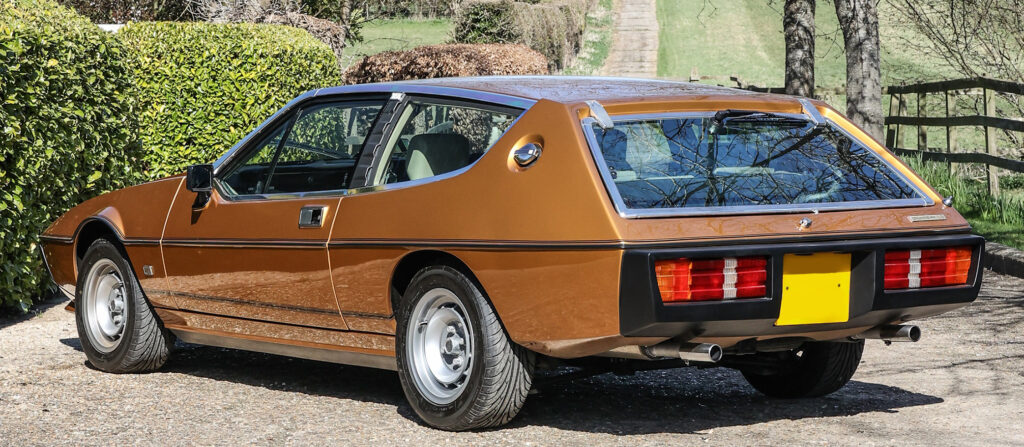
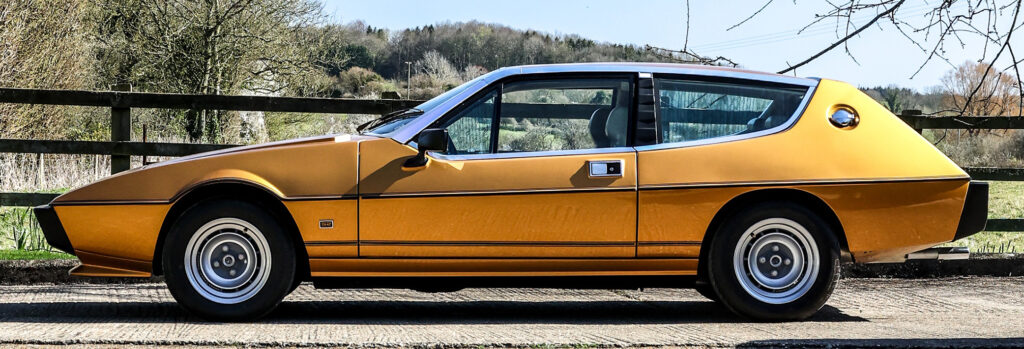
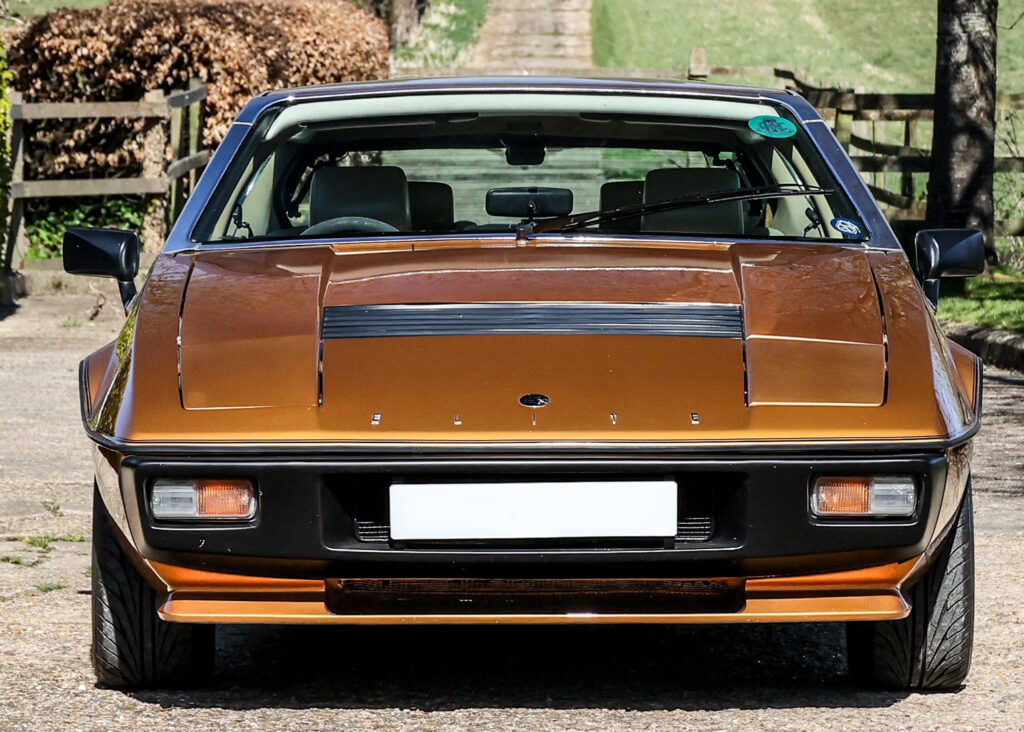
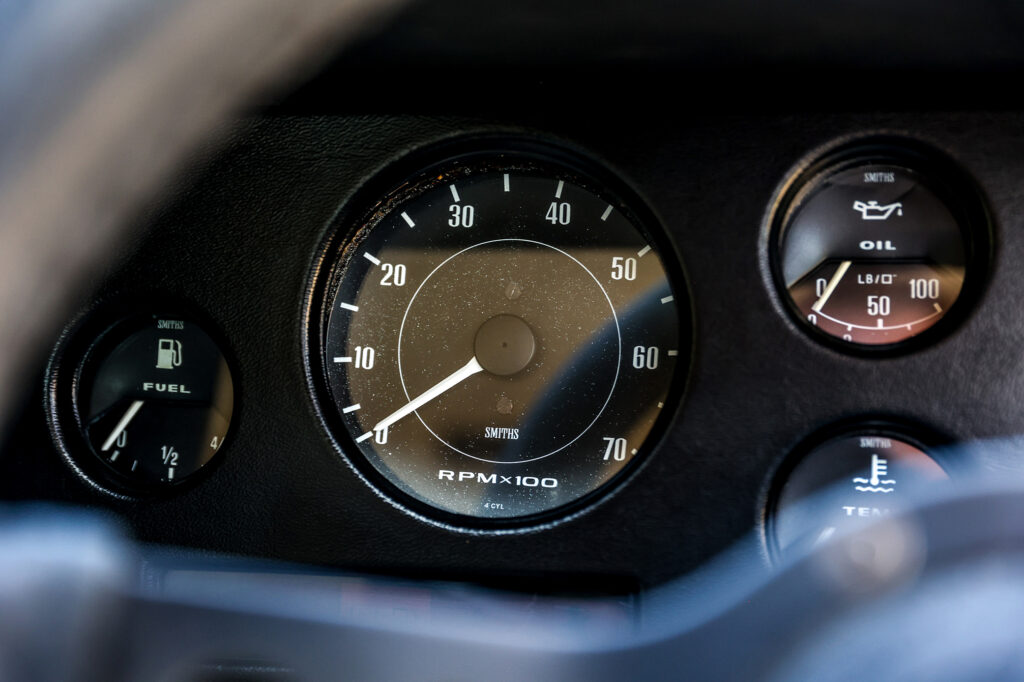
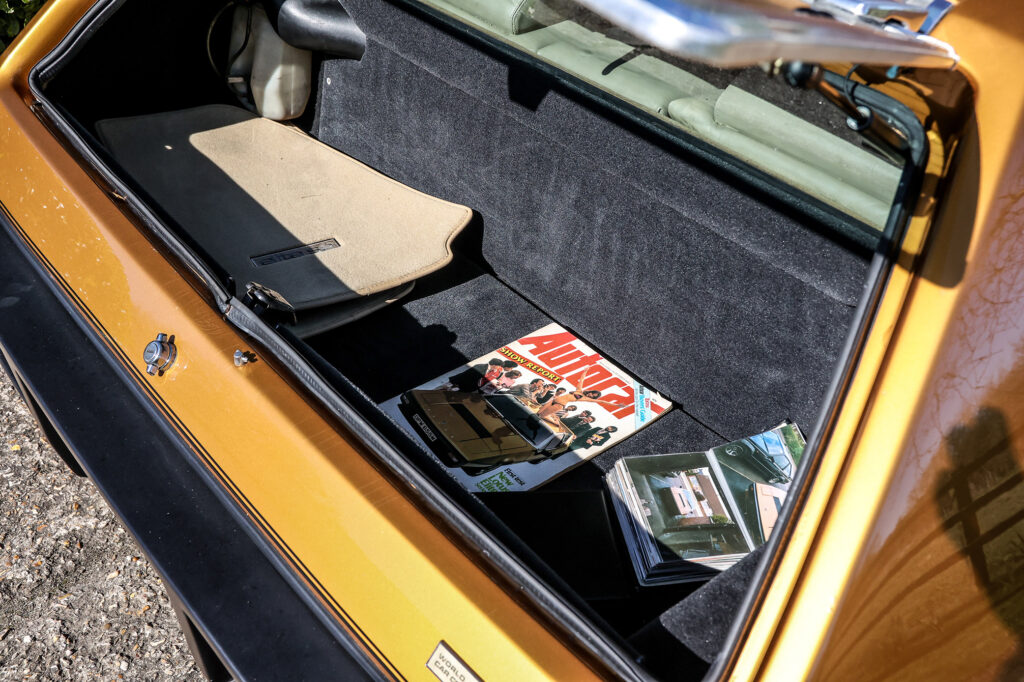
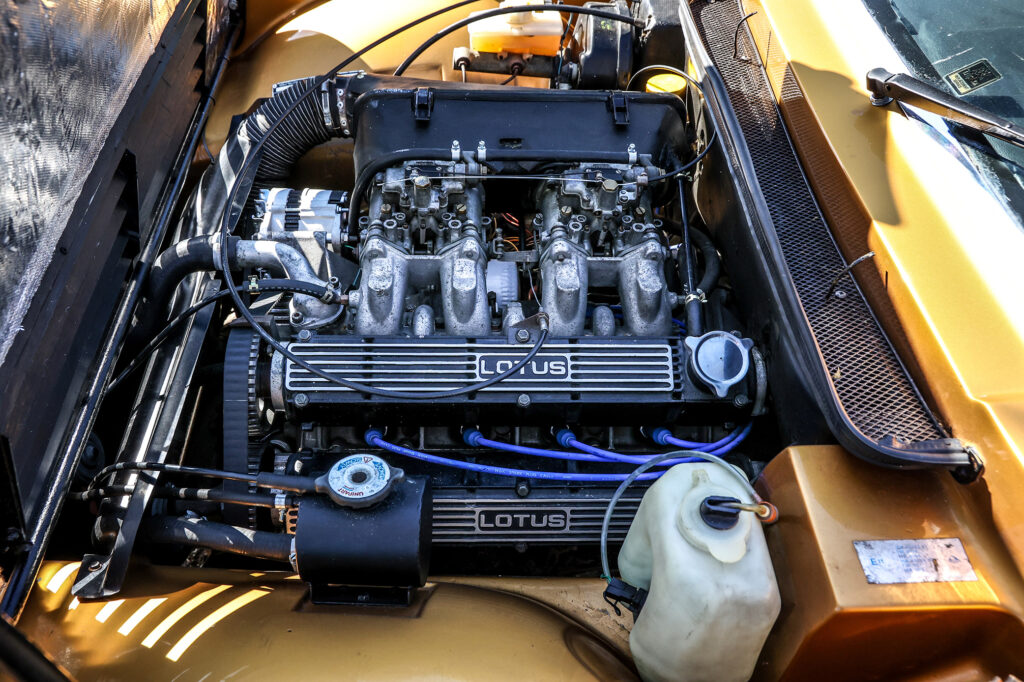
The Type 75 Elite, powered by the new 907 engine, marked a significant shift for Lotus Cars. It aimed to be more sophisticated, stylish, and luxurious than previous Lotus models. Designer Oliver Winterbottom crafted a distinct aerodynamic wedge-shaped exterior that, combined with a spacious interior, developed with Giugiaro’s Ital Design studio, fitted four adults comfortably.
Designer Oliver Winterbottom’s fashionable and aerodynamic wedge-shaped lines, a complex confection of curves and straights, squared edges and smooth panels, gave the Elite an excellent coefficient of drag and a highly distinctive and modern appearance. An Elite bodyshell was built in two halves, top and bottom. Hence its distinctive and practical lateral rubbing strip which also serves to hide the join between the two halves. Using this efficient system for both his boats and cars, Colin Chapman saw an opportunity to secure great savings in time and labour.
The 1974 Lotus Elite was the first Lotus to use the all-new, 1,973cc Lotus 907 engine, which was mated to the five-speed gearbox which had been developed for the Elan +2S 130/5. Running on 7×14-inch alloy wheels, Autocar found the car to have “typical Lotus excellence of handling combined with a good ride.” Aside from being a highly aerodynamic shape, the Elite build process showed the concept could be made to work and before long the same new and innovative technology would be used to build the new Éclat and Esprit.
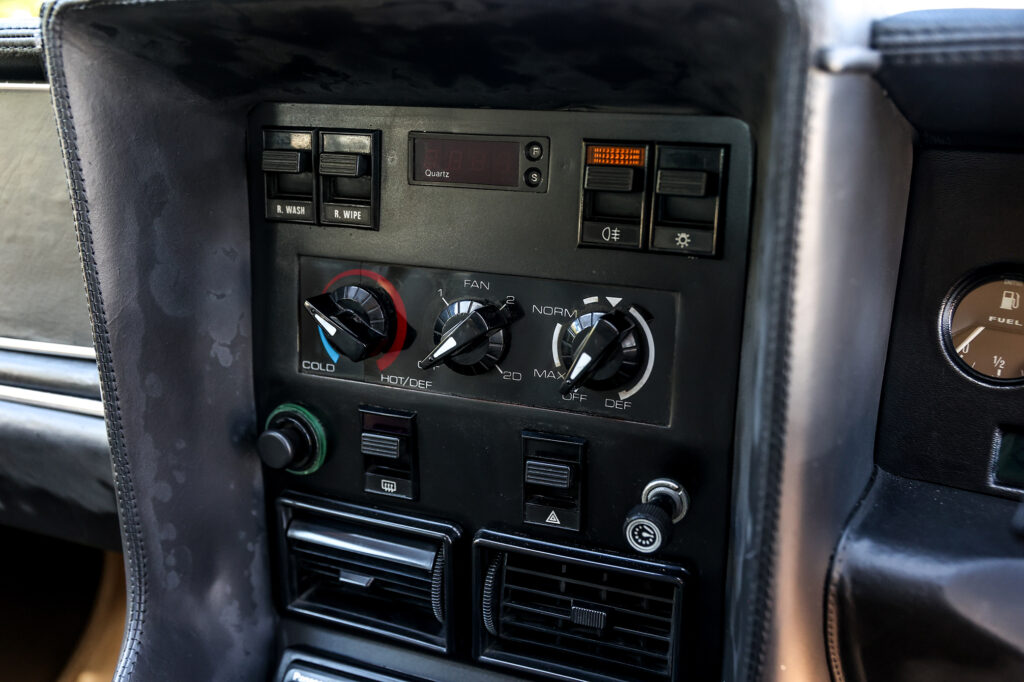
The Elite Series 2 and Series 2.2 announced in 1980 was given a new Lotus Type number of Type 83. A development of the Type 75, with a larger 2.2-litre version of the 907 engine, now called the 912, the revised power-unit provided improved torque across a wider range. Chassis revisions, a new gearbox, and exterior enhancements like a blended front spoiler and new sills were implemented. Inside, the cabin retained its layout but featured different trim details, new seats, and seat belts.
Steel beams in the doors complied with United States safety regulations – and helped the car win Lotus its first ever award for safety, the 1975 International Don Safety Trophy. US specification cars were fitted with extended front and rear bumpers that were required to pass Federal crash regulations.
BODYWORK
BODY TYPE 2+2 seater fixed-head coupé
NUMBER OF DOORS 2
DESIGNER
DIMENSIONS & WEIGHTS
WHEELBASE 2483 mm 97.8 inches
TRACK/TREAD (FRONT) 1486 mm 58.5 inches
TRACK/TREAD (REAR) 1499 mm 59 inches
LENGTH 4445 mm 175 inches
WIDTH 1816 mm 71.5 inches
HEIGHT 1207 mm 47.5 inches
GROUND CLEARANCE 122 mm 4.8 inches
LENGTH:WHEELBASE RATIO 1.79
KERB WEIGHT 1120 kg 2469 lb
WEIGHT DISTRIBUTION 53% front
FUEL TANK CAPACITY 67 litres 14.7 [17.7] UK [US] gal.
AERODYNAMICS
DRAG COEFFICIENT
FRONTAL AREA
CDA
POWERTRAIN
ENGINE TYPE naturally aspirated petrol
ENGINE MANUFACTURER Lotus
ENGINE CODE
CYLINDERS Straight 4
CAPACITY 2.2 litre
2174 cc
(132.666 cu in)
BORE × STROKE
95.3 × 76.2 mm
3.75 × 3 in
BORE/STROKE RATIO 1.25
VALVE GEAR double overhead camshaft (DOHC)
4 valves per cylinder
16 valves in total
MAXIMUM POWER OUTPUT
(DIN) 160 PS (158 bhp) (118 kW)
at 6500 rpm
MAXIMUM TORQUE
(DIN) 217 Nm (160 ft·lb) (22.1 kgm)
at 5000 rpm
SPECIFIC OUTPUT
(DIN) 54.2 kW/litre
73.7 ps/litre
72.7 bhp/litre
1.19 bhp/cu in
SPECIFIC TORQUE
(DIN) 99.82 Nm/litre
1.21 ft·lb/cu3
ENGINE CONSTRUCTION
SUMP wet sumped
COMPRESSION RATIO 9.44:1
FUEL SYSTEM 2 Dell’Orto DHLA 45 carburettors
BMEP (BRAKE MEAN EFFECTIVE PRESSURE) 1254.3 kPa (181.9 psi)
MAXIMUM RPM
CRANKSHAFT BEARINGS 5
ENGINE COOLANT Water
UNITARY CAPACITY 543.5 cc
ASPIRATION Normal
COMPRESSOR N/A
INTERCOOLER None
CATALYTIC CONVERTER N
PERFORMANCE
ACCELERATION 0-80KM/H (50MPH) 5.2 s
ACCELERATION 0-60MPH
ACCELERATION 0-100KM/H
ACCELERATION 0-160KM/H (100MPH)
STANDING QUARTER-MILE 15.6 s
STANDING KILOMETRE
MAXIMUM SPEED 213 km/h (132 mph)
POWER-TO-WEIGHT RATIO Higher is better
143.03 PS/tonne (1000 kg)
0.14 PS/kg
105.2 kW/tonne (1000 kg)
0.11 kW/kg
141.07 bhp/tonne (1000 kg)
0.14 bhp/kg
0.06 bhp/lb
WEIGHT-TO-POWER RATIO Lower is better
9.51 kg/kW
15.88 lb/bhp
FUEL CONSUMPTION
FUEL CONSUMPTION
UNIVERSAL FUEL CONSUMPTION (CALCULATED FROM THE ABOVE)
LITRES/100KM
KM/LITRE
UK MPG
US MPG
CARBON DIOXIDE EMISSIONS
CARFOLIO CALCULATED CO2 ?
VED BAND (UK)
CO2 EFFIZIENZ (DE)
CHASSIS
ENGINE POSITION front
ENGINE LAYOUT longitudinal
DRIVE WHEELS rear wheel drive
TORQUE SPLIT N/A
STEERING rack & pinion
TURNS LOCK-TO-LOCK 3.500
TURNING CIRCLE
FRONT SUSPENSION
REAR SUSPENSION
WHEEL SIZE FRONT 7.0 x 14
WHEEL SIZE REAR 7.0 x 14
TYRES FRONT 205/60 VR 14
TYRES REAR 205/60 VR 14
BRAKES F/R Di/Dr-S
FRONT BRAKE DIAMETER 265 mm
REAR BRAKE DIAMETER
BRAKED AREA
GEARBOX 5 speed manual