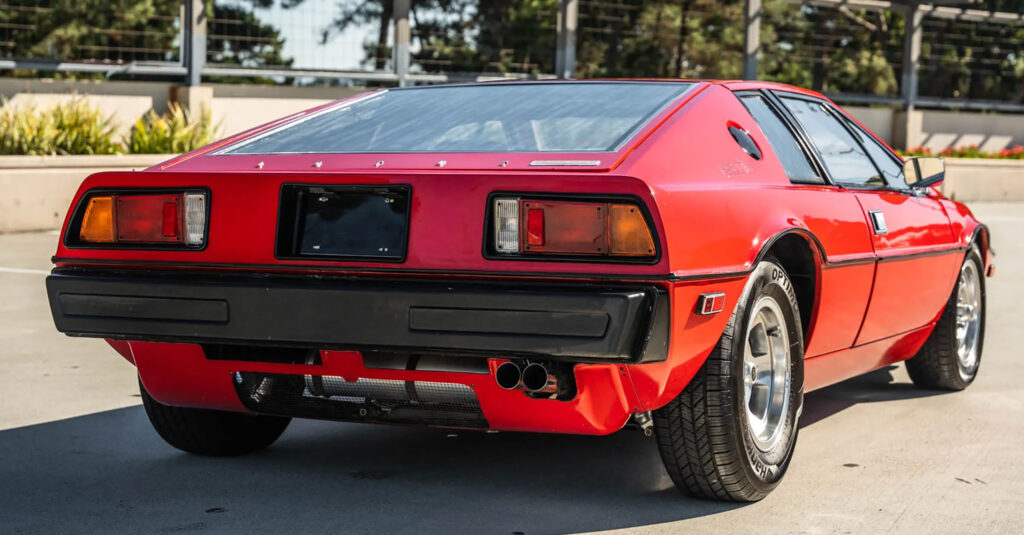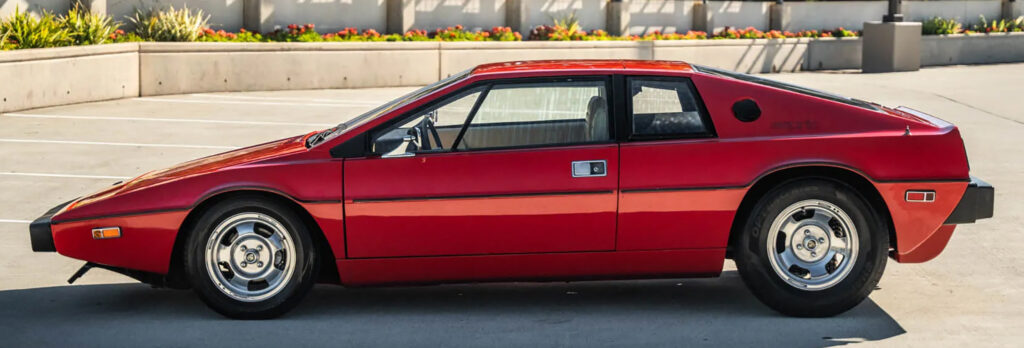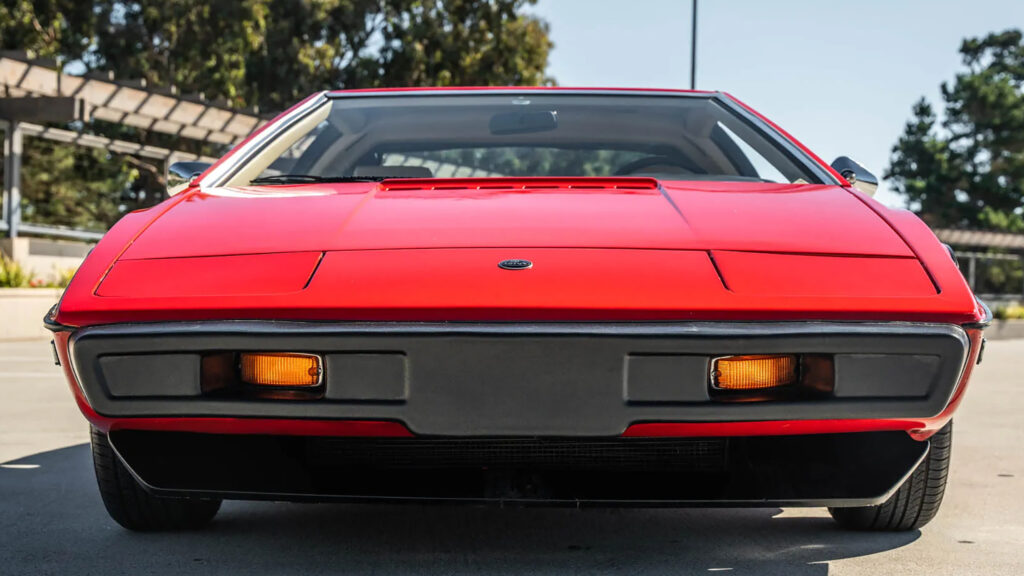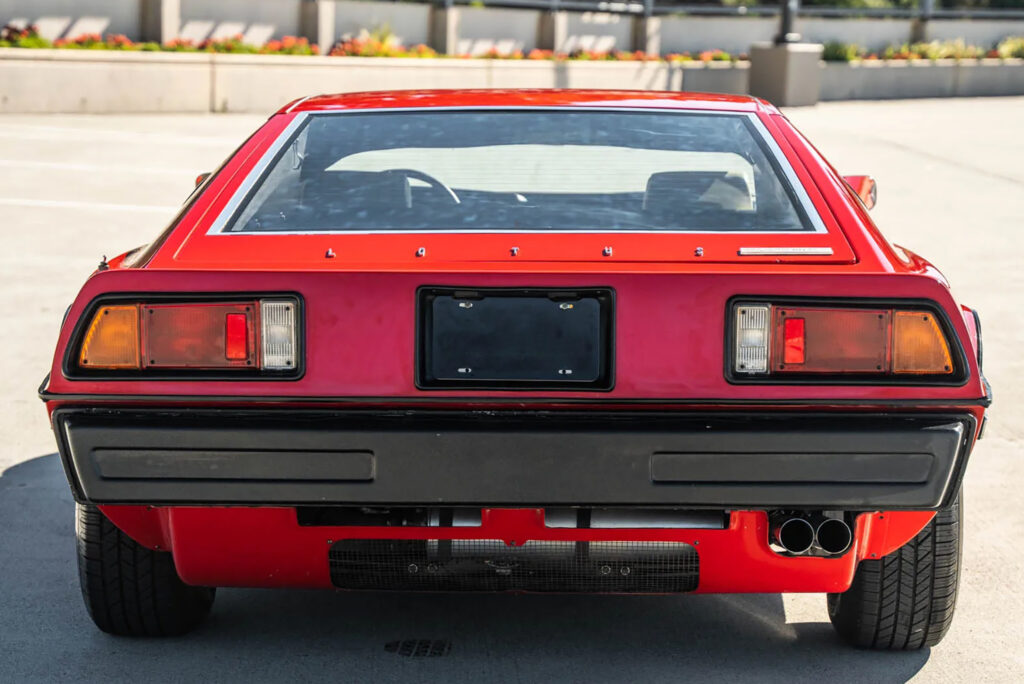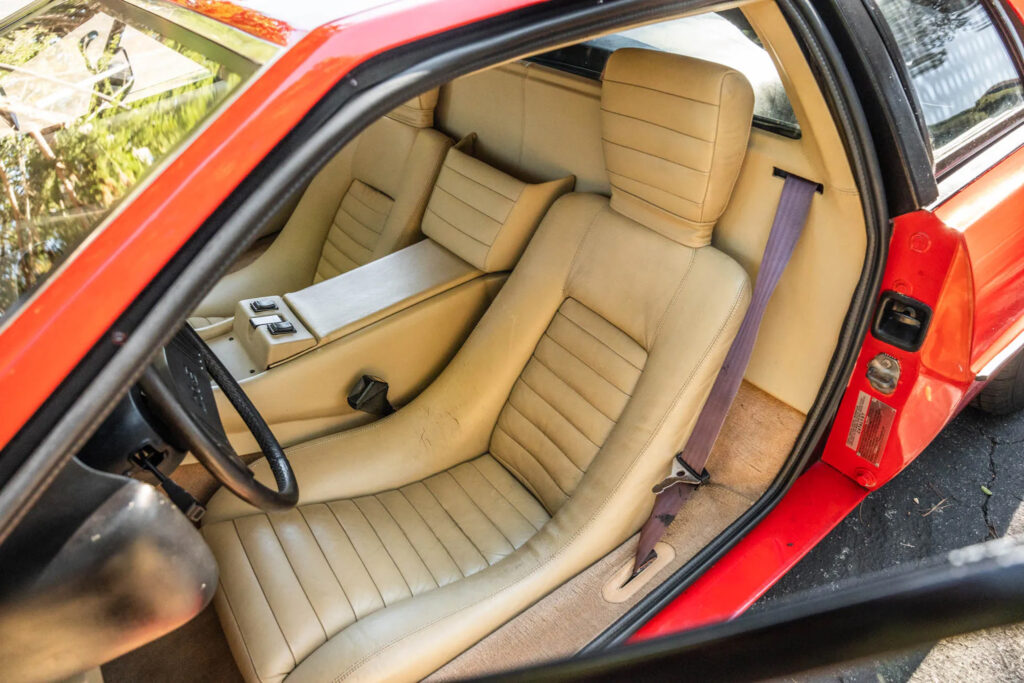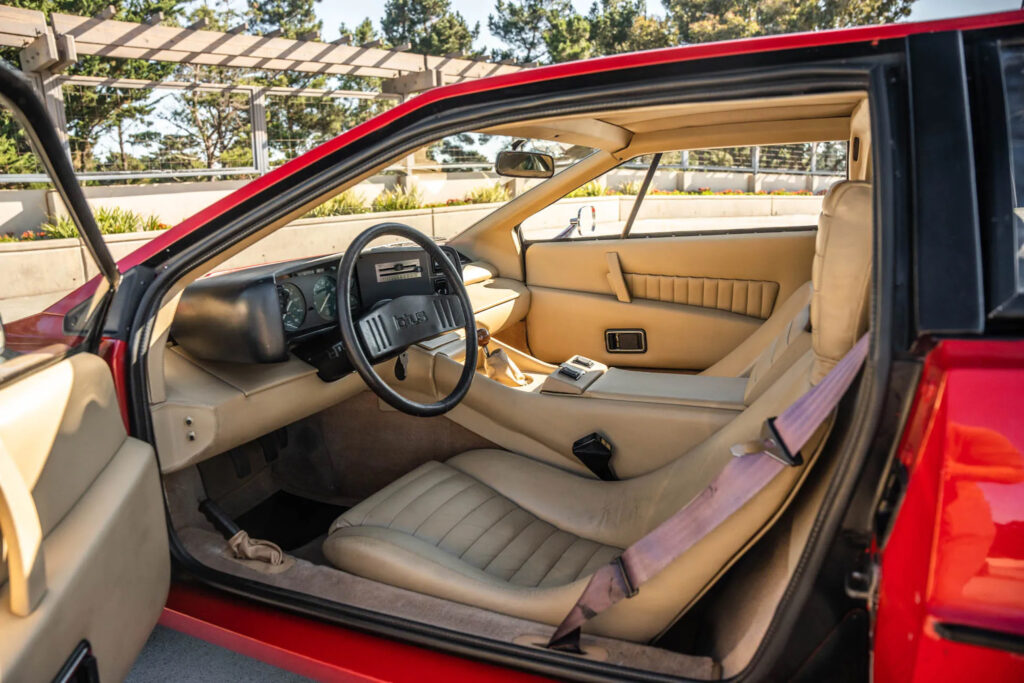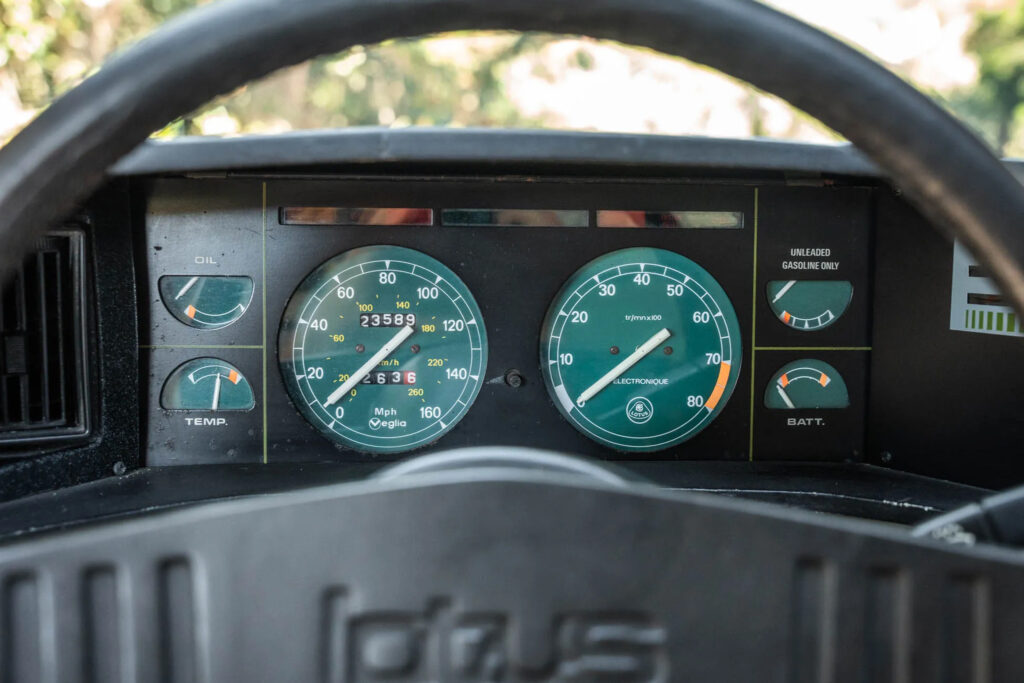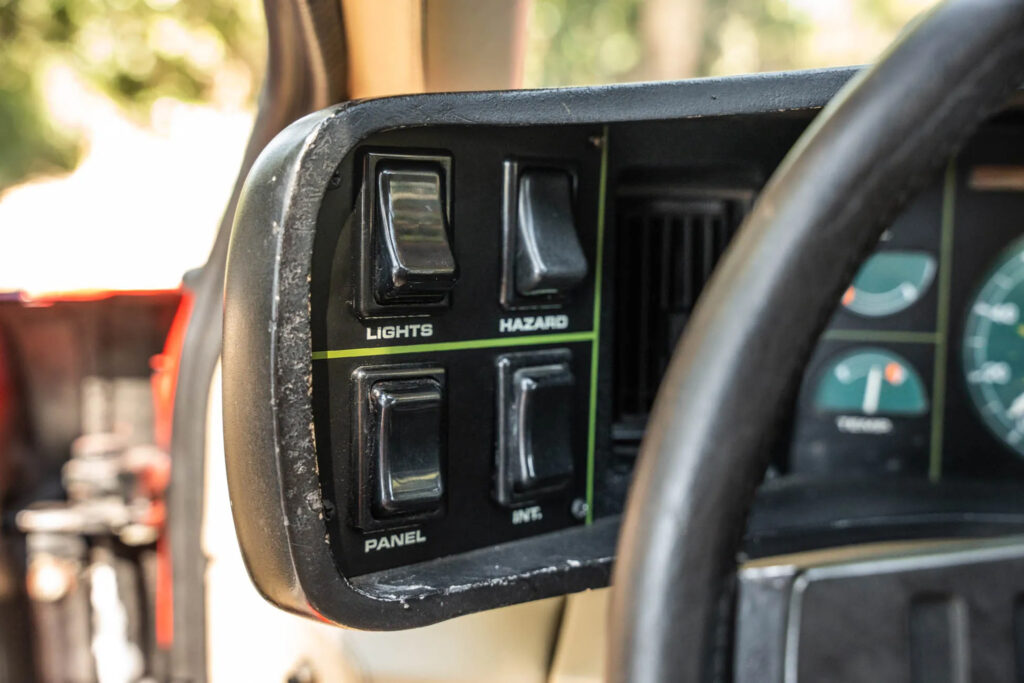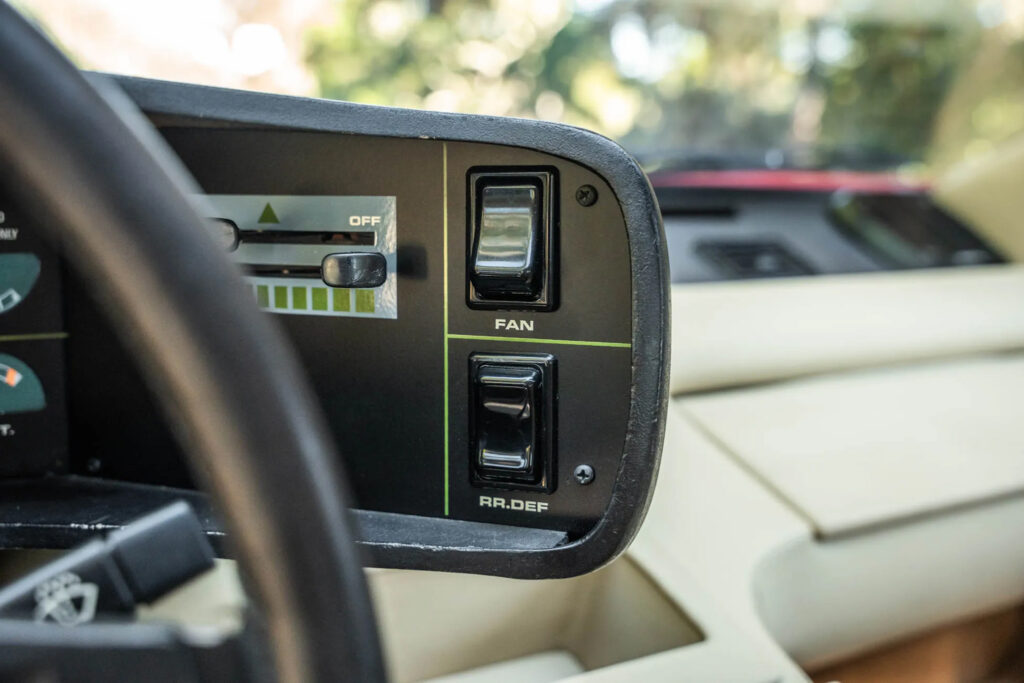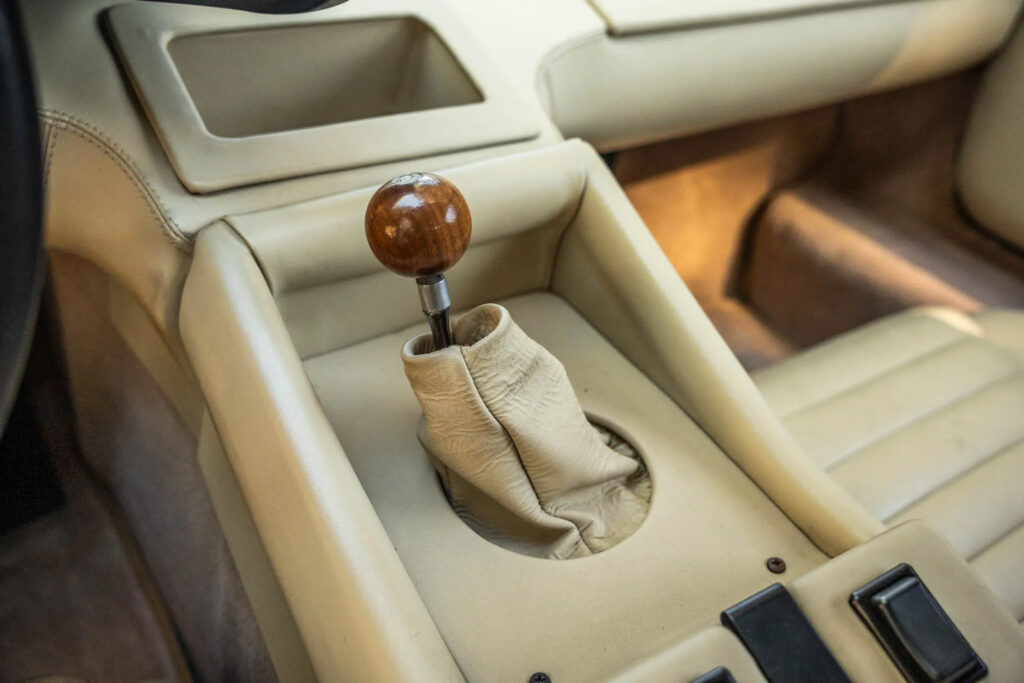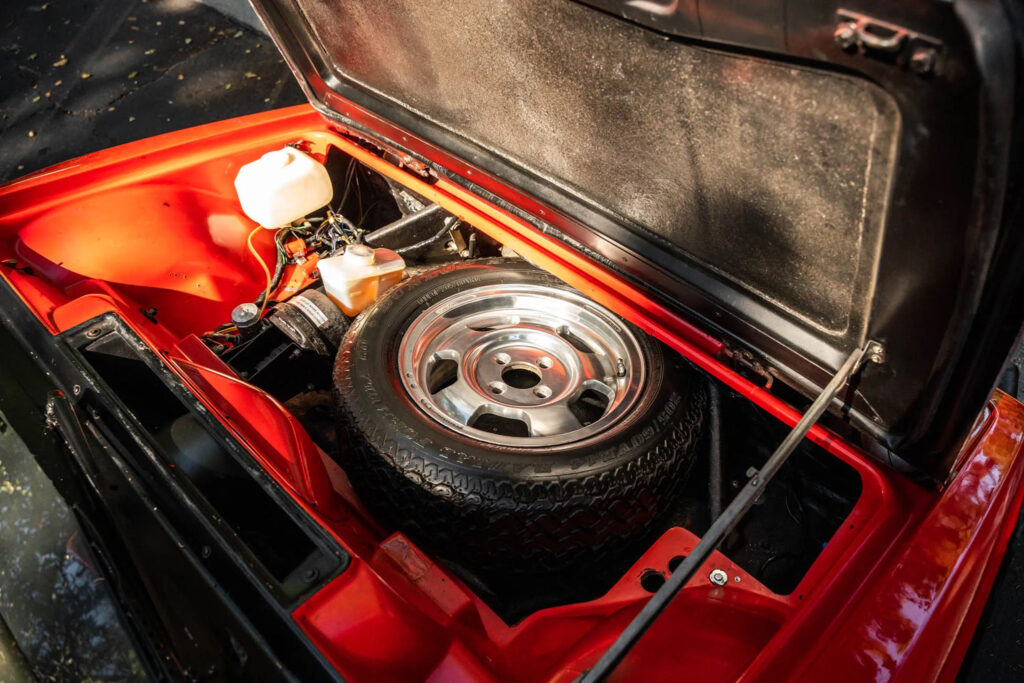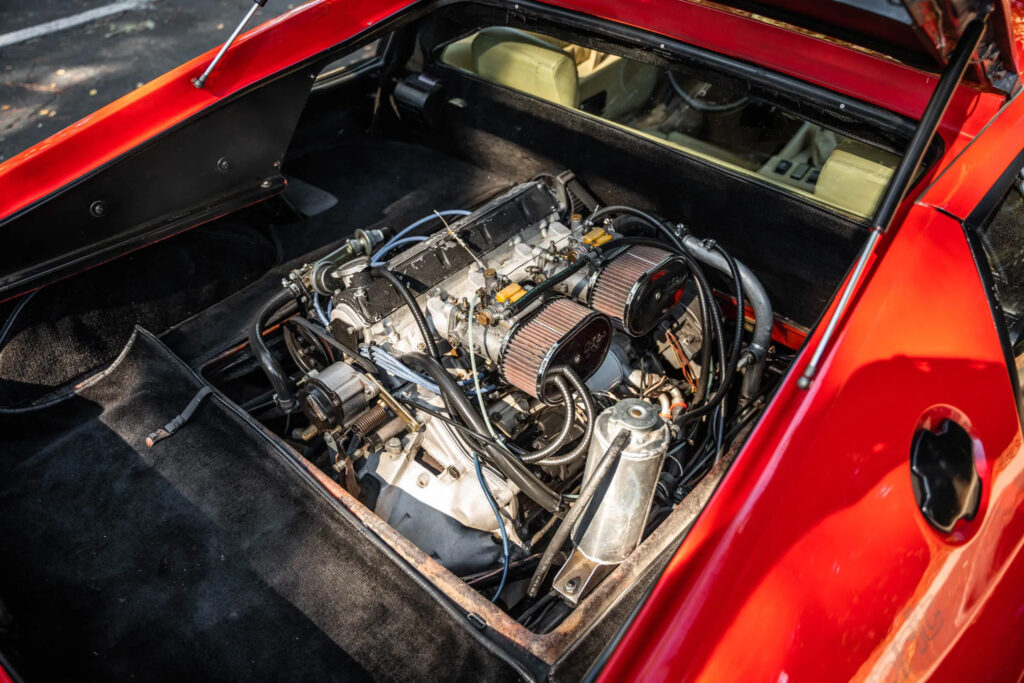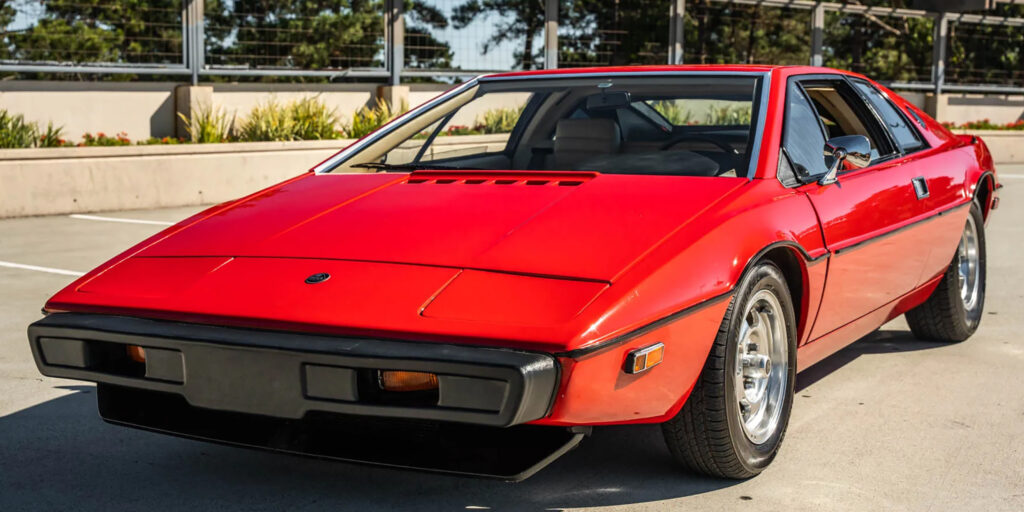
The first Esprit had a Type 907 inline-4 which produced 160 bhp in European markets and 140 bhp in America. The engine was supported by a steel chassis and covered in a sleek fiberglass body. Despite modest power, the styling and handling of the car kept it selling.
With the Esprit, Lotus entered the modern supercar market for the first time. It’s exotic shape was good enough to extend production from 1976 all the way to 2004.
Featured in the 1977 James Bond film The Spy Who Loved Me, Roger Moore showcased the Esprit’s performance by eluding a chasing helicopter. Unlike the Astons of Bond’s past, the Lotus transformed into a submarine and jumped into the sea.
The Esprit story started much earlier when Giorgetto Giugiaro debuted the ItalDesign M70 concept at the 1972 Turin Motor Show. This car’s ‘folded paper’ front end was radical, yet production worthy. Four years later,a production version debuted at the 1975 Paris Motor Show.
At the center of the new Esprit was a Type 907 inline-4 which produced 160 bhp in European markets and 140 bhp in America. This was mounted at 45 degrees in relation to the chassis to keep a low center of gravity. The engine was supported by a steel chassis and covered in a sleek fiberglass body.
Despite modest power of its initial specification, the styling and handling of the car kept it selling. By 1980, the Esprit was upgraded Series Two specification including a new front spoiler and rear valance.
The styling of the new car, if not its engineering, began in 1971 following a chance meeting between Giorgetto Giugiaro and Colin Chapman at a motor show. Even in the early Seventies, Giugiaro had a formidable reputation as a stylist/designer, having started his career at Fiat, before moving on to Bertone, then Ghia, prior to setting up his own business, Ital Design, in 1968. Chapman knew all about Ital Design, and everyone knew about Lotus, so there was never any lack of understanding between the two. Quite simply, it seems, Giugiaro wanted to know if he could work up a special body style on a Lotus, and Chapman, with the M70 in mind, agreed to let him work on the basis of the mid-engined Europa.
Giugiaro had already produced the attractive mid-engined Bora for Maserati, and was working on the very angular, but startling advanced Boomerang project on the same chassis, so he was familiar with the challenges inherent in mid-engined layouts. To put it baldly, the very first Giugiaro style for Lotus was on the basis of a much-modified Europa Twin-Cam chassis, but since the Type 907 engine was soon to be installed, and the track and wheelbase dimensions were also altered, it is easy to see how Colin Chapman’s mind was working.
The Europa’s wheelbase was 7ft 7in, and its widest track was 4ft 5.5in. Equivalent dimensions planned for the M70 – which did not have a name at this stage – were 8ft and 4ft 11.5in, respectively, so it was not surprising that the chassis supplied to Italy, thus lengthened and widened, was not Lotus’ final word on the subject. Work began on the style in mid-1971, and was completed before the end of the year, not as a running car, but as a full-size mock-up in display trim.
A second car, not only with doors which opened, but with a more advanced and integrated design of chassis, followed in 1972. It was the original silver painted car – now remembered at Lotus, logically enough, as ‘the Silver Car’! – which made its public debut on the Italdesign stand at the Turin Motor show of November 1972. Even at this stage, Giugiaro had dubbed it ‘Esprit’, defined by the Concise Oxford Dictionary as: ‘sprightliness, wit’, and students of styling evolution will want to be reminded that it stood alongside the Maserati Boomerang at the show. The first Lotus-chassis Esprit, actually being on a much-modified Europa Twin-Cam chassis, which Giorgetto Giugiaro showed on this Italdesign stand at Turin in November 1972. The screen on this first car was even more sharply raked than the production cars were ever to be. The Maserati Boomerang alongside the Esprit shows signs of the same style thinking by the talented Italians.
Something, for sure, was already on the move, and it was not long before motoring enthusiasts began to put two and two together. Mike Kimberley recalls that Lotus’ reaction to the completed prototype Esprit was so favourable that a design and development team was immediately set up to work with Giugiaro, and they stayed in Italy for a least 18 months. Chapman and Kimberley flew to Turin at least twice a week, during which the body style was refined and turned into a producible proposition. After the tremendously favourable public showing of 1972 there was a considerable lull while mechanical design commenced, though in the Group Lotus company report published in mid-1973 one of the three pictures published under the heading ‘The Coming Generation?’ was of the Giugiaro prototype, which had already been adopted by the company.
The first true production prototype was nearly completed by Christmas 1974, and was actually driven to London’s Heathrow Airport to meet Colin Chapman when he returned from the Argentine Grand Prix in January 1975. Indeed, by this time, Lotus had confirmed that the Esprit would be launched during 1975.
The design and evolution of the new Type 907 engine was always intended also to be used in Lotus’ new mid-engined car. It was, of course, an ideal package for the Esprit, compact in length, wide but not high, and – considering the power output – a very light unit. Both the cylinder block and the cylinder head were cast in aluminium, which was ideal for the Esprit, where there was bound to be a weight bias towards the tail. For the original Esprit, therefore, Lotus specified a 2-litre version of the new 16-valve, twin-overhead-camshaft engine.
As fitted in the Esprit’s engine bay, behind the cabin, its installation and tune was exactly like that adopted for the front-engined cars. Complete with two twin-choke Dellorto DHLA carburettors, it was rated at 160bhp (DIN), and was installed with the cylinder block leaning over at 45deg towards the left side of the chassis. Unavoidably this meant that there was a slight weight bias towards the left side of the car, but not even the most experienced testers could pick up any effect on the handling so this detail was speedily forgotten. To provide more interior passenger space and to allow for the use of the more bulky Type 907 engine, the wheelbase of the M70 was to be 8ft, or 5in longer than that of the Europa which it would replace.
It was also destined to be a much wider car than the Europa, though it was always intended to feature a steel backbone chassis-frame. Right from the start, Lotus’ biggest problem was to find a suitable gearbox, and this was critical to the entire project. Since the Type 907 engine pushed out 140lb.ft of torque, even in 2-litre form – and the highest figure reached by the ‘Big-Valve’ Lotus-Ford twin-cams had been 113lb.ft – it was clear that the five-speed transmission from Renault, as used in the Europa Special, would not be strong enough for the job.
With the general layout of backbone frame chosen, the engine and transmission design finalized and the front suspension basically being the same as that fitted to the Opel Ascona/Vauxhall Cavalier, the rest of the mechanical design soon slotted into place. The independent rear suspension was as simple as possible; the fixed-length driveshafts doubled as upper transverse suspension links, combined coil spring/damper units were chosen, and large box-section semi-trailing radius arms helped to locate the wheels along with lower transverse links.
Steering was by rack and pinion – but without power-assistance, no Esprit, not even the Turbo, ever having needed this – and the dual-circuit Girling brakes had front and rear discs, solid but not ventilated, with rear discs mounted inboard. There was no servo assistance. Wheels were cast-alloy 14in diameter Wolfrace items, with 7in rims at the rear and 6in at the front. Much work went into productionizing the startling Giugiaro shape, not only to make it easier and cheaper to build in quanity, but to make it meet all the regulations likely to face such a car in the mid-seventies. The most significant change was to the angle of the windscreen. On the original ‘Silver’ prototype the screen had been angled at a mere 19deg from horizontal, and to meet the regulations this had to be lifted to 24deg 5min. Colin Chapman, however, did not give in without a fight, and the production Esprit still kept the same dramatically swept screen pillars, a feature achieved by making the screen profile much less curved in plan than had originally been intended.
| type | Series Production Car |
| production years | 1976 – 1980 |
| released at | 1975 Paris Motor Show |
| built at | England |
| body stylist | Giorgetto Giugiaro |
| engine | Type 907 Inline-4 |
| position | Midship |
| aspiration | Natural |
| valvetrain | DOHC, 4 Valves per Cyl |
| displacement | 1973 cc / 120.4 in³ |
| power | 119.3 kw / 160 bhp @ 6200 rpm |
| specific output | 81.09 bhp per litre |
| bhp/weight | 167.89 bhp per tonne |
| torque | 189.81 nm / 140.0 ft lbs @ 4900 rpm |
| body / frame | Glass-Fibre Reinforced Plastic over Steel Backbone |
| front tires | 205-16×14 |
| rear tires | 205-70×14 |
| front brakes | Unassisted Discs |
| rear brakes | Inboard Discs |
| front wheels | F 35.6 x 15.2 cm / 14.0 x 6.0 in |
| rear wheels | R 35.6 x 17.8 cm / 14.0 x 7.0 in |
| steering | Rack & Pinion |
| f suspension | Double Wishbones w/Coils over Dampers, Anti-Roll Bar |
| r suspension | Trailing Arms w/Lower Links, Coil Springs over Dampers |
| curb weight | 953 kg / 2101 lbs |
| wheelbase | 2438 mm / 96.0 in |
| front track | 1511 mm / 59.5 in |
| rear track | 1511 mm / 59.5 in |
| length | 4191 mm / 165.0 in |
| width | 1867 mm / 73.5 in |
| height | 1105 mm / 43.5 in |
| transmission | 5-Speed Manual |
| top speed | ~199.6 kph / 124.0 mph |
| 0 – 60 mph | ~8.1 second |