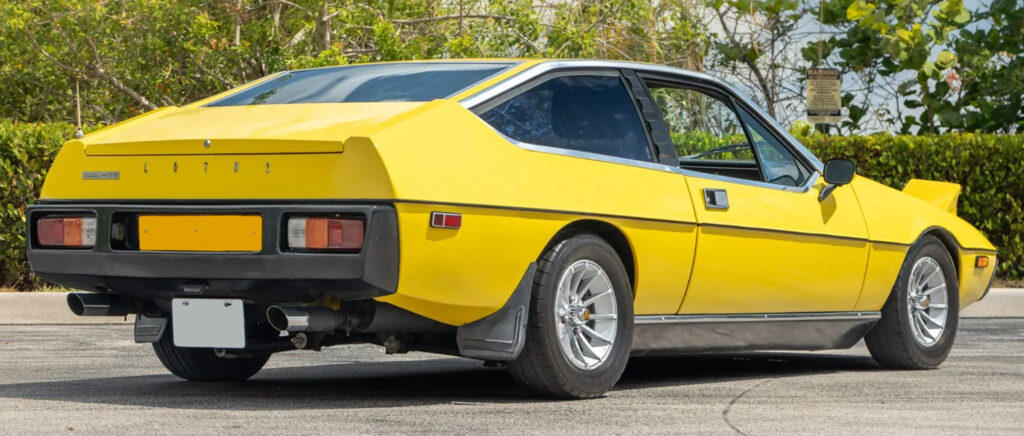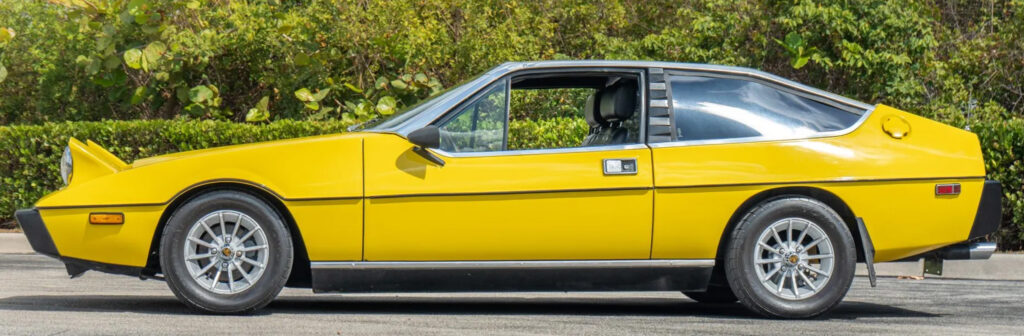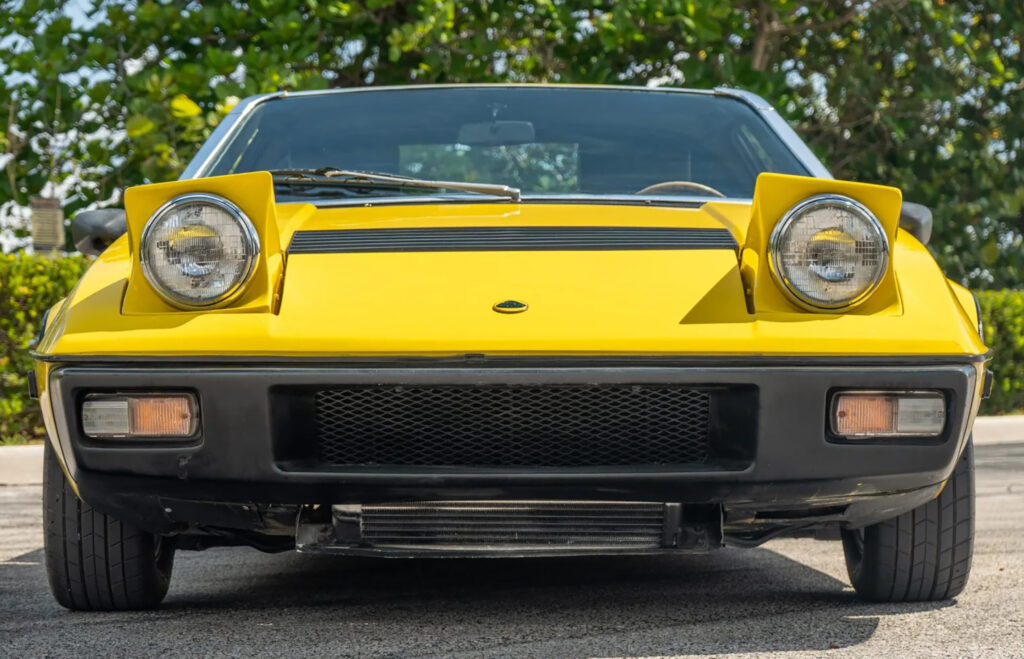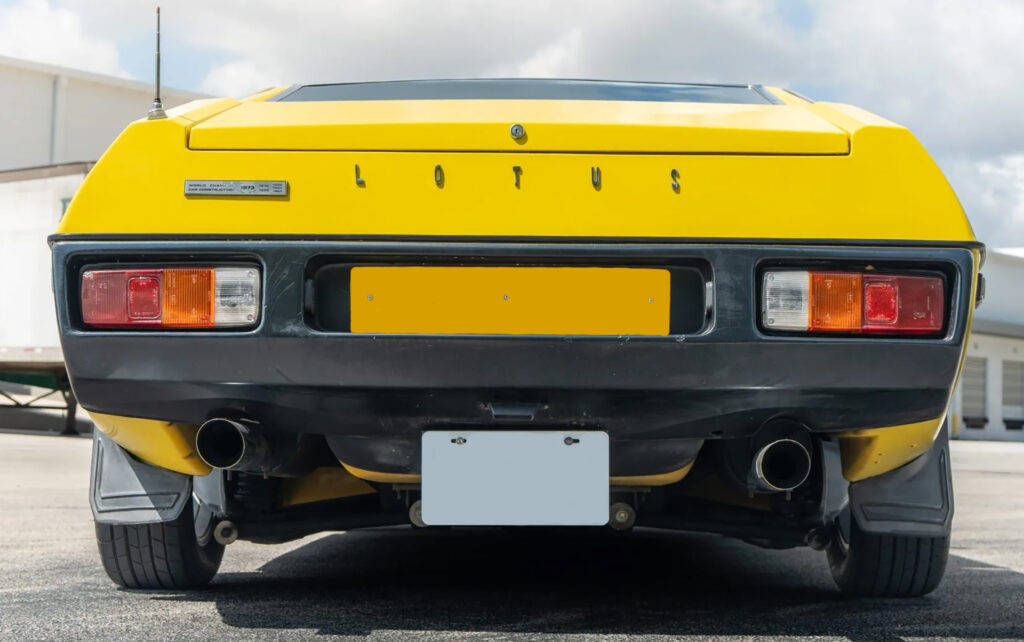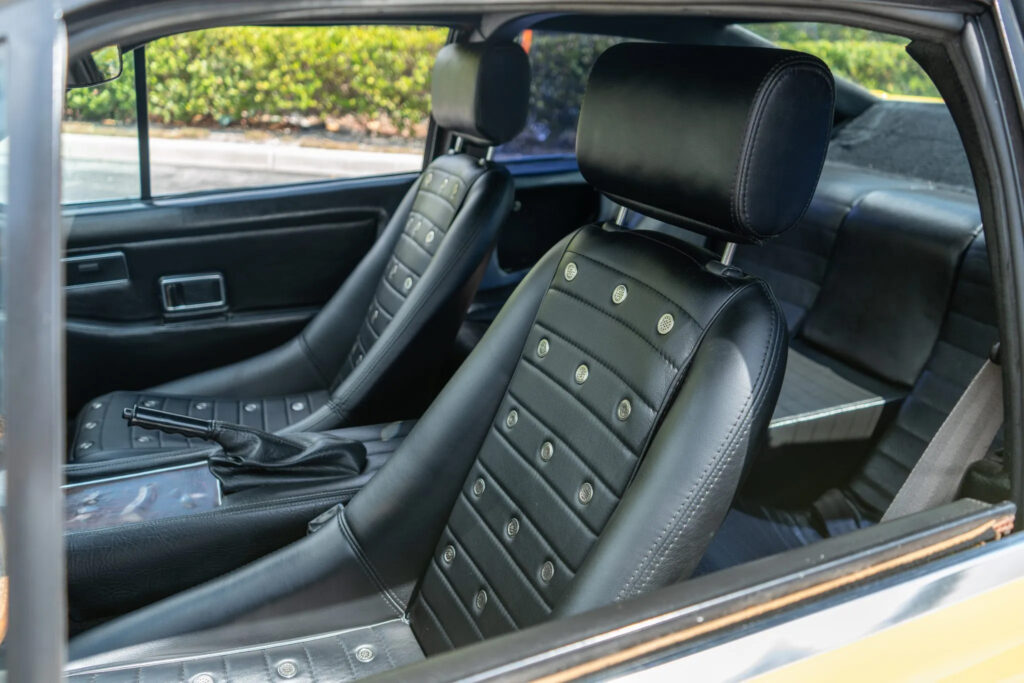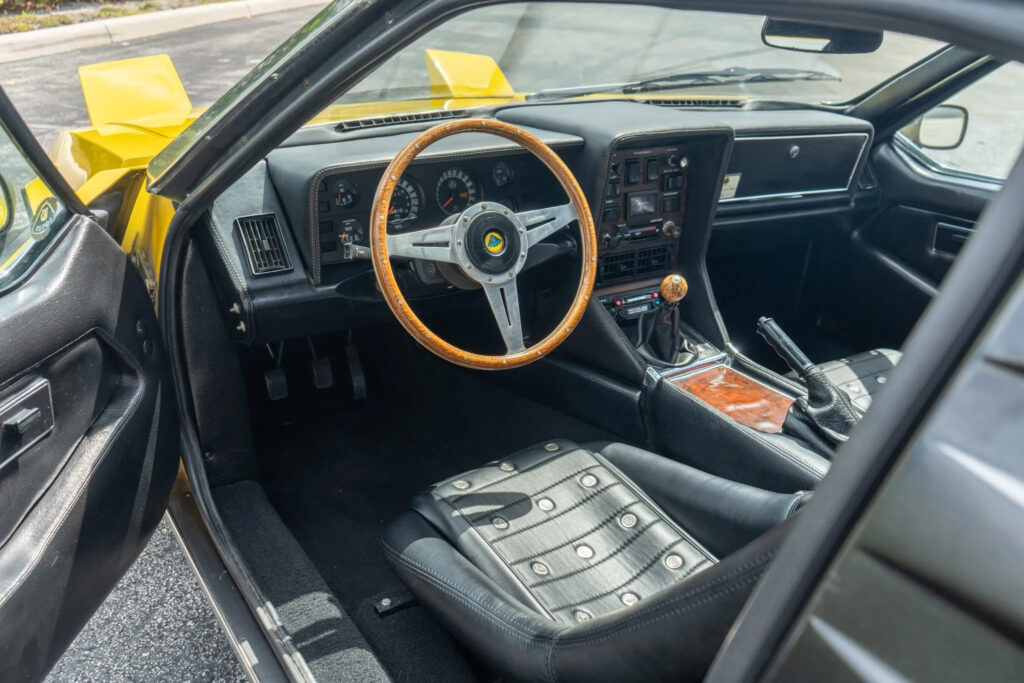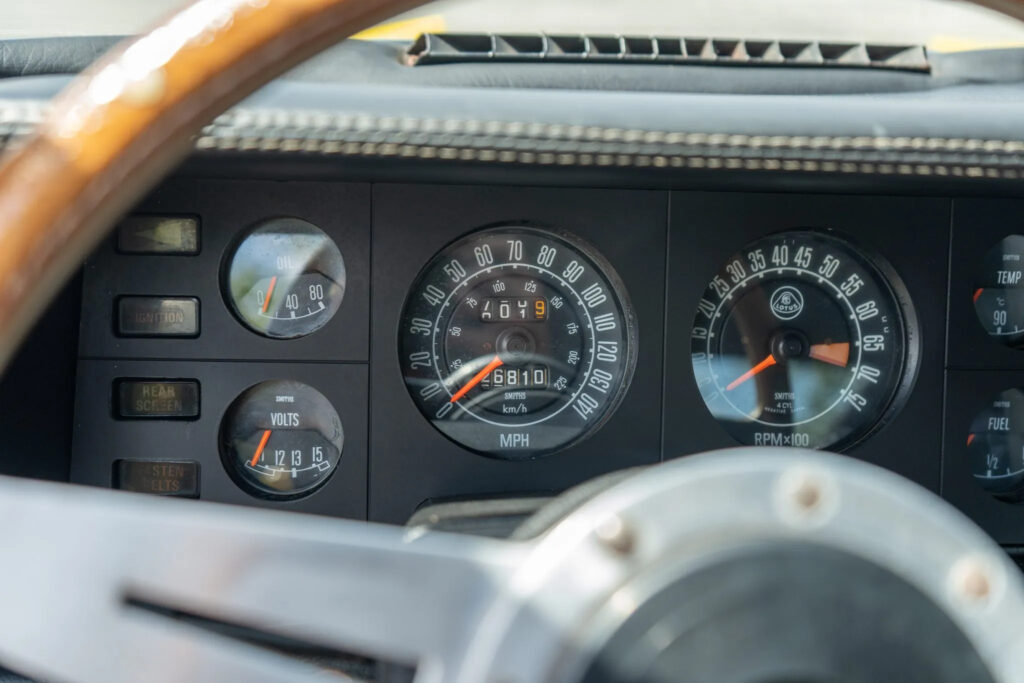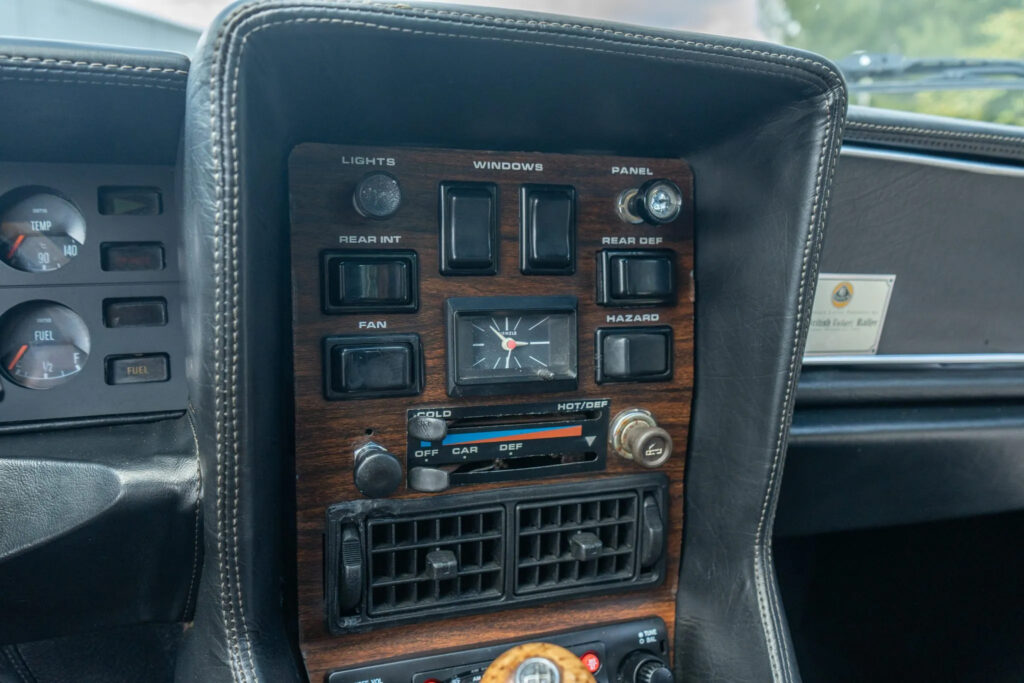
The 1970s was a period of reinvention for Lotus and the daring Éclat and Elite represented a bold new vision for the future for the brand. Lotus founder Colin Chapman was keen to develop a new range of more practical sports cars that would take Lotus into the mainstream and in essence, these new cars would be more adapted to grand touring and everyday driving rather outright track performance.
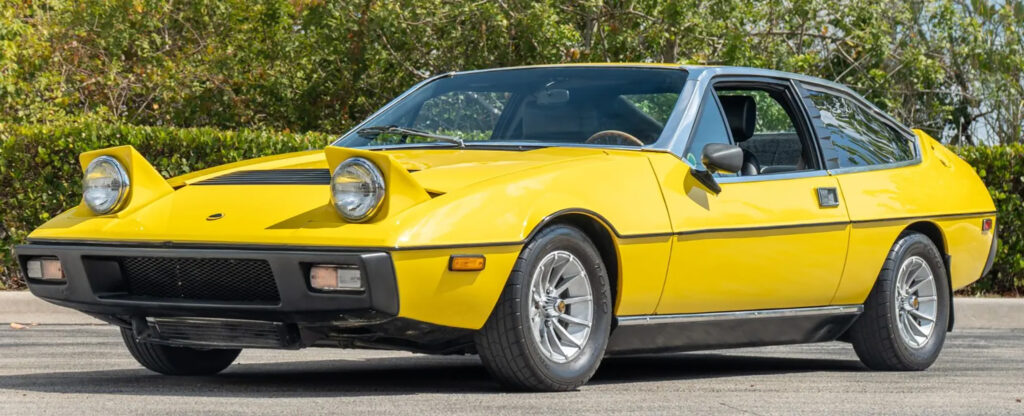
Released in 1975, the Éclat utilised the now familiar steel backbone chassis with a glass reinforced composite bodywork. In-house designer Oliver Winterbottom sketched a brand-new shape for the Éclat, extending the Elite Type 75’s angular profile that he had previously penned into a novel fastback coupe.
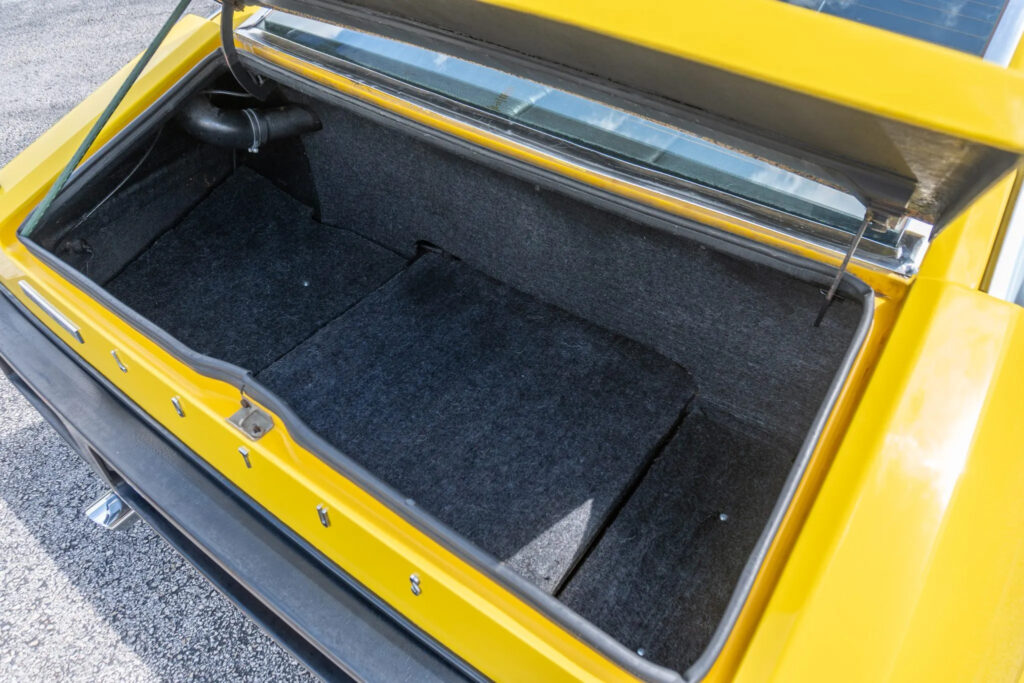
Externally, the most obvious modification for the Series 2 Éclat was to the front spoiler, which now blended in more smoothly with the bodywork as well as the new sills beneath the doors. The vacuum mechanism on its pop-up assemblies were replaced with a new electrically operated system and at the other end of the car, there were many small detail changes including a new external locking catch for the tailgate.
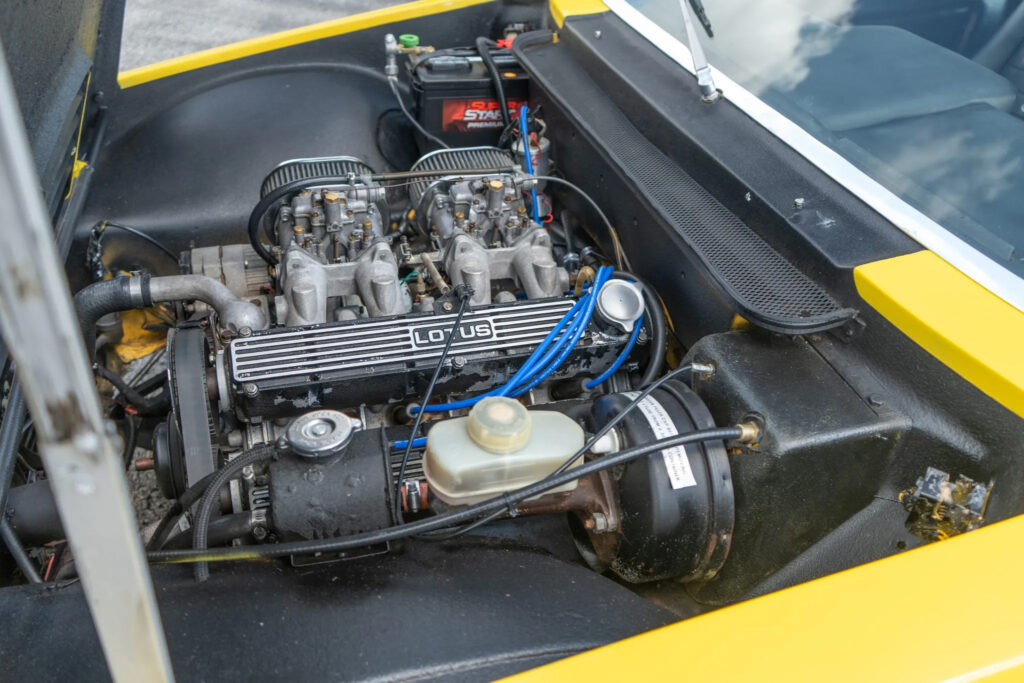
As on the Elite S2, the new Lotus 912 engine in the Éclat S2 gave the same 160bhp power output as its predecessor the 907, but gaining the additional torque it needed across more of the engine’s range also improved the car’s overall fuel consumption at a time when the cost of petrol was an increasing concern.
BODYWORK
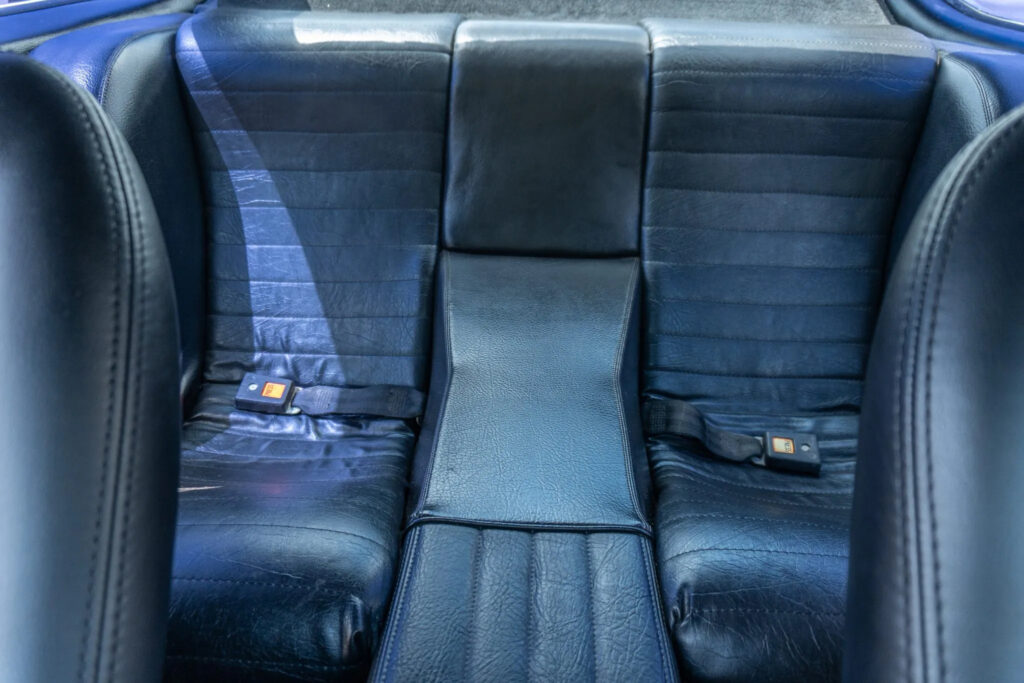
BODY TYPE 2+2 seater fixed-head coupé
NUMBER OF DOORS 2
DESIGNER
DIMENSIONS & WEIGHTS
WHEELBASE 2438 mm 96 inches
TRACK/TREAD (FRONT) 1486 mm 58.5 inches
TRACK/TREAD (REAR) 1499 mm 59 inches
LENGTH 4458 mm 175.5 inches
WIDTH 1816 mm 71.5 inches
HEIGHT 1194 mm 47 inches
GROUND CLEARANCE
LENGTH:WHEELBASE RATIO 1.83
KERB WEIGHT 980 kg 2161 lb
WEIGHT DISTRIBUTION
FUEL TANK CAPACITY 67.3 litres 14.8 [17.8] UK [US] gal.
AERODYNAMICS
DRAG COEFFICIENT
FRONTAL AREA
CDA
POWERTRAIN
ENGINE TYPE naturally aspirated petrol
ENGINE MANUFACTURER Lotus
ENGINE CODE Lotus 907
CYLINDERS Straight 4
CAPACITY 2 litre
1973 cc
(120.4 cu in)
BORE × STROKE
95.2 × 69.3 mm
3.75 × 2.73 in
BORE/STROKE RATIO 1.37
VALVE GEAR double overhead camshaft (DOHC)
4 valves per cylinder
16 valves in total
MAXIMUM POWER OUTPUT 162 PS (160 bhp) (119 kW)
at 6200 rpm
MAXIMUM TORQUE 190 Nm (140 ft·lb) (19.4 kgm)
at 4900 rpm
SPECIFIC OUTPUT 60.5 kW/litre
82.2 ps/litre
81.1 bhp/litre
1.33 bhp/cu in
SPECIFIC TORQUE 96.3 Nm/litre
1.16 ft·lb/cu3
ENGINE CONSTRUCTION
SUMP
COMPRESSION RATIO 9.5:1
FUEL SYSTEM 2 Dell’Orto DHLA 45 carburettors
BMEP (BRAKE MEAN EFFECTIVE PRESSURE) 1210.1 kPa (175.5 psi)
MAXIMUM RPM
CRANKSHAFT BEARINGS 5
ENGINE COOLANT Water
UNITARY CAPACITY 493.25 cc
ASPIRATION Normal
COMPRESSOR N/A
INTERCOOLER None
CATALYTIC CONVERTER N
PERFORMANCE
ACCELERATION 0-80KM/H (50MPH)
ACCELERATION 0-60MPH
ACCELERATION 0-100KM/H
ACCELERATION 0-160KM/H (100MPH)
STANDING QUARTER-MILE
STANDING KILOMETRE
MAXIMUM SPEED
POWER-TO-WEIGHT RATIO Higher is better
165.53 PS/tonne (1000 kg)
0.17 PS/kg
121.75 kW/tonne (1000 kg)
0.12 kW/kg
163.27 bhp/tonne (1000 kg)
0.16 bhp/kg
0.07 bhp/lb
WEIGHT-TO-POWER RATIO Lower is better
8.21 kg/kW
13.72 lb/bhp
FUEL CONSUMPTION
FUEL CONSUMPTION
UNIVERSAL FUEL CONSUMPTION (CALCULATED FROM THE ABOVE)
LITRES/100KM
KM/LITRE
UK MPG
US MPG
CARBON DIOXIDE EMISSIONS
CARFOLIO CALCULATED CO2 ?
VED BAND (UK)
CO2 EFFIZIENZ (DE)
CHASSIS
ENGINE POSITION front
ENGINE LAYOUT longitudinal
DRIVE WHEELS rear wheel drive
TORQUE SPLIT N/A
STEERING rack & pinion
TURNS LOCK-TO-LOCK
TURNING CIRCLE
FRONT SUSPENSION I.W.CS.
REAR SUSPENSION I.W.CS.
WHEEL SIZE FRONT
WHEEL SIZE REAR
TYRES FRONT
TYRES REAR
BRAKES F/R Di/Dr
FRONT BRAKE DIAMETER
REAR BRAKE DIAMETER
BRAKED AREA
GEARBOX 4 speed manual