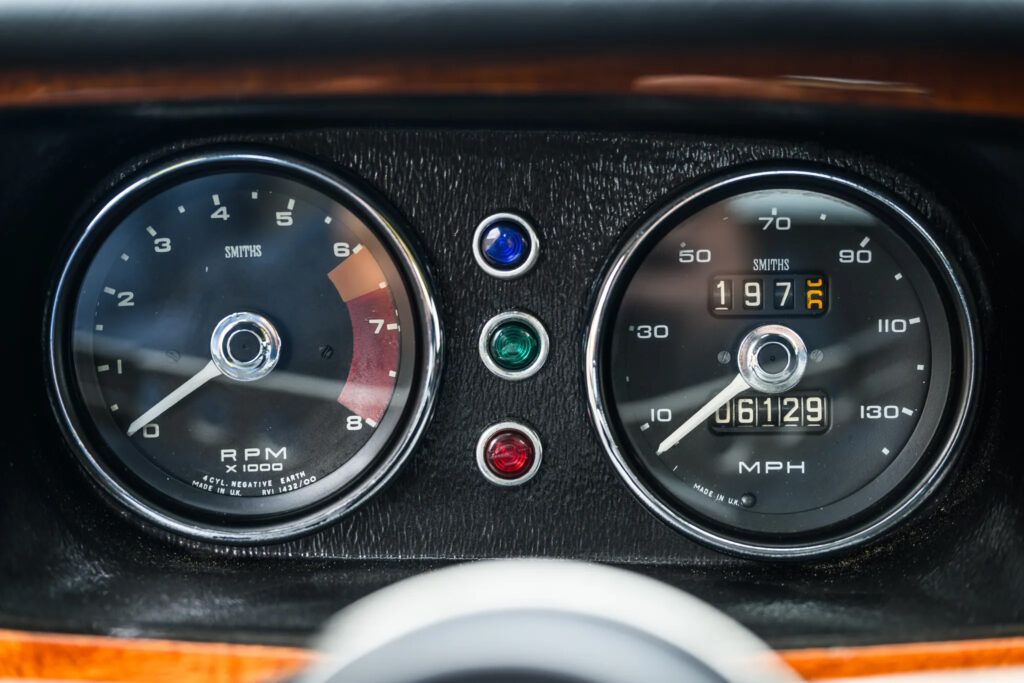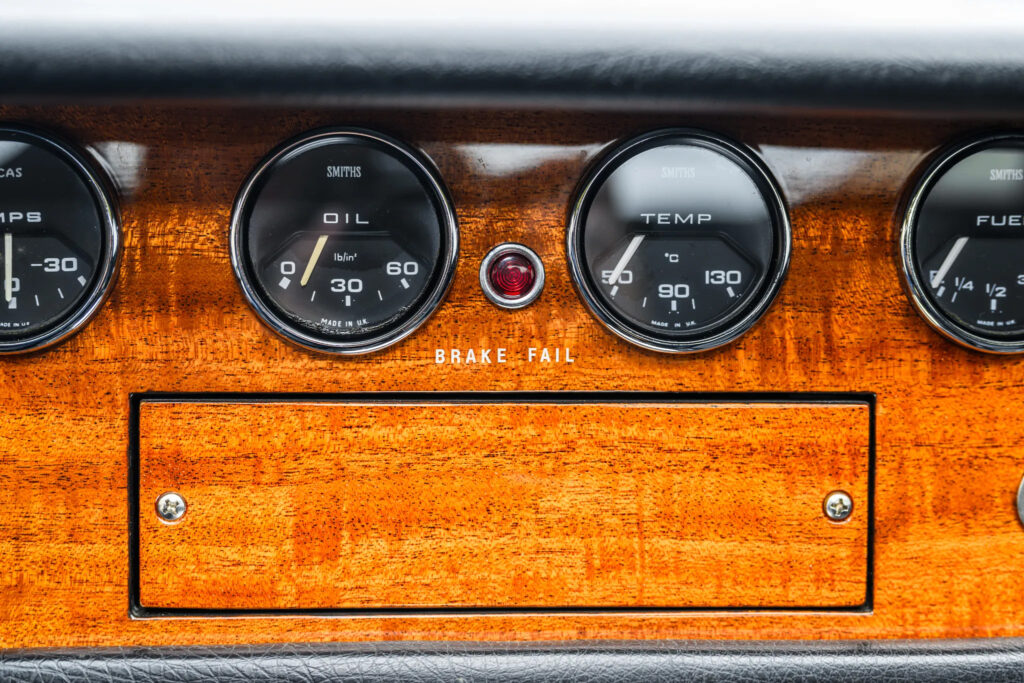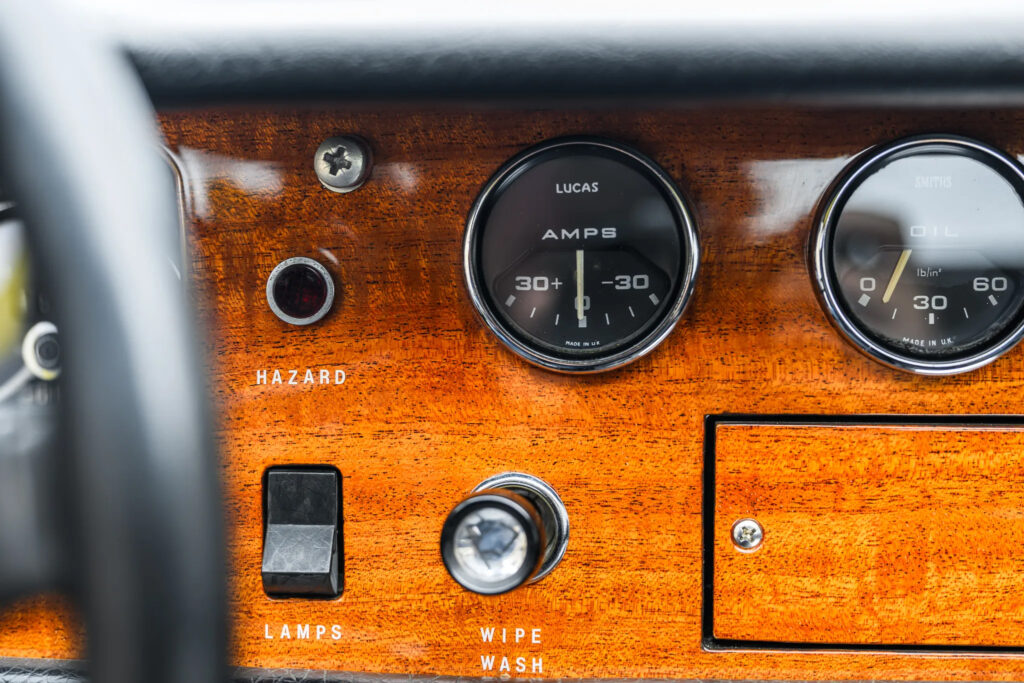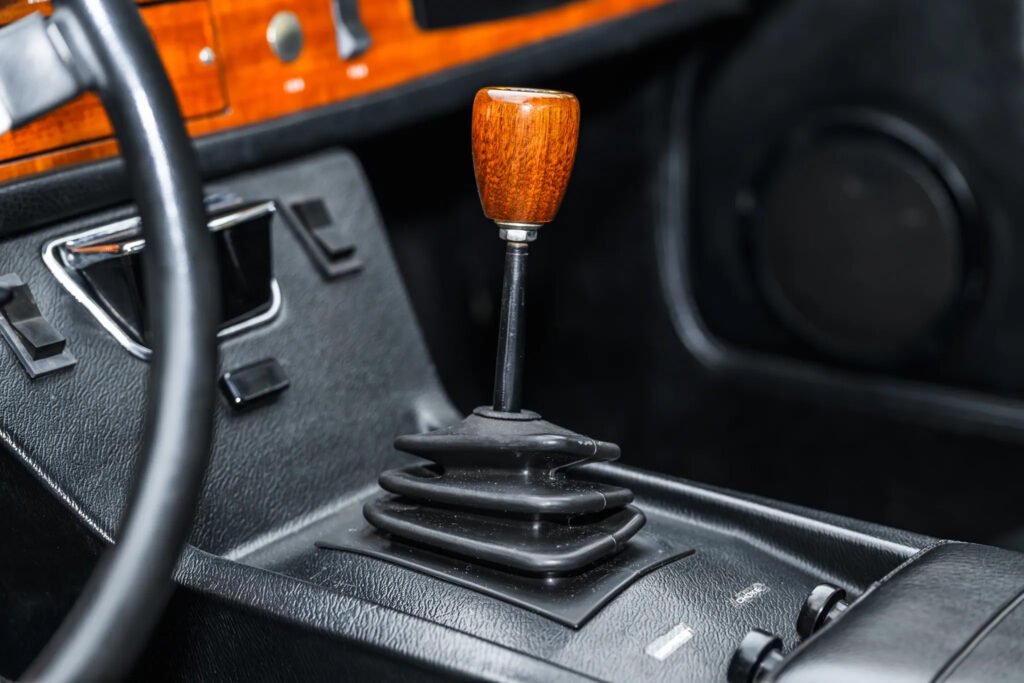
The late 1950s found Lotus Engineering Company Limited with a class win at Le Mans under its belt, but with Colin Chapman fast coming to the conclusion that he needed funds from a road car to maintain his racing program.
The answer was the Lotus MkVI, a forerunner to the clubman style car powered by a Ford 10, side-valve engine. The Lotus Seven was next, which proved so popular that clones are still being made in many corners of the world. The all fiberglass Elite, with Coventry Climax power, followed, which to many is the prettiest car ever built. The Lotus Elan first saw the light of day in 1962, and with its DOHC version of Ford’s 1500-cc engine is still exciting many enthusiasts.
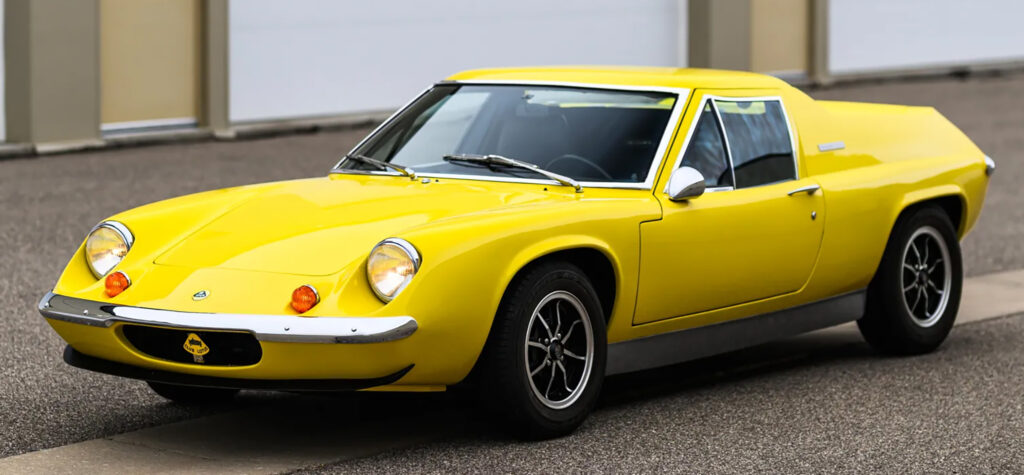
Four years later, in 1966, Chapman surprised the motoring world again with the introduction of the Europa S1.
While all Lotus cars beforehand were conventional front engine/rear drive configurations, the Europa was a complete departure from whatever had been produced by the company before.
That it was mid-engined surely showed the influence on Chapman by the Grand Prix cars of the day. While the Elan was powered by a DOHC Ford engine, many enthusiasts wondered about the choice of the 1,470-cc four-cylinder engine and four-speed transaxle gearbox from the less than sporting Renault 16, which produced all of 82 bhp. Especially so as the Renault 16 was front-wheel drive with its engine out front, but behind the differential and the gearbox.
We all know that Colin Chapman was a very shrewd gentleman who realized that turning the Renault engine/gearbox around 180-degrees would make it perfect for a mid-engine car. Even the position of the water pump and drive belts suited such an arrangement, as they were at the flywheel end of the engine.
Now, of course, with everything turned around, this presented a car with four reverse gears and a single forward, but that was easily resolved by mounting the differential crownwheel on the other side of the pinion gear.
It was Chapman’s idea that the Europa (or Lotus 46) was to be an economical road-going sports car that would eventually replace the Lotus Seven. As with many Lotus cars, the components were designed to perform more than one function. For example at the rear, the driveshafts formed the fixed-length upper links with Hooke’s joints, while the straight tube lower links pivoted on the rear hub housing and bellhousing. Radius arms provided the fore and aft positioning.
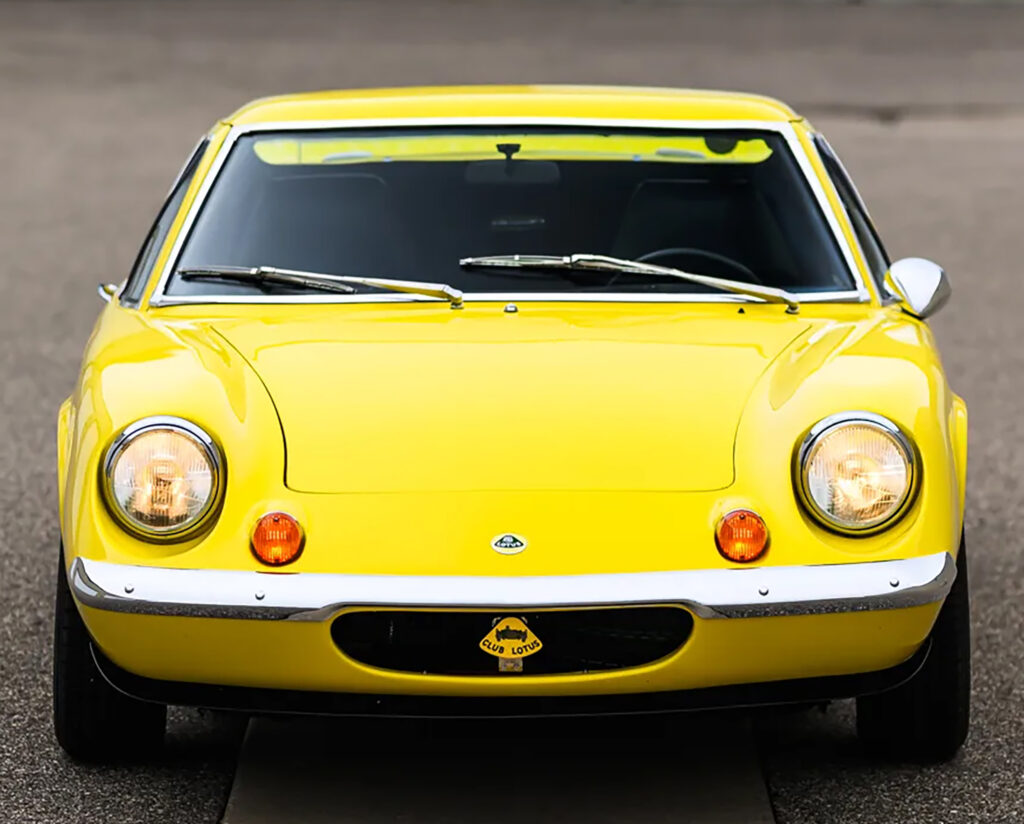
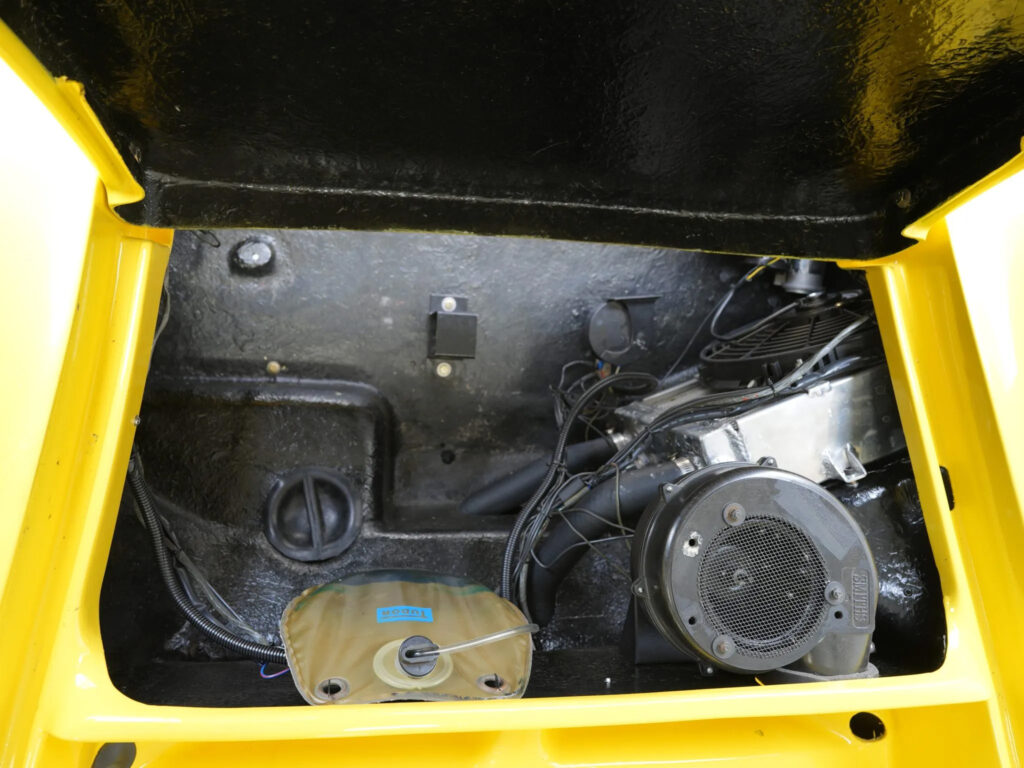
Economy was the name of the game with the chassis/body initially bonded together, which was great from an engineering and financial point, but presented a slight problem with accident repairs. The windows and seats were also fixed, which may have been fine in the cooler months, but not so when it’s warmer or in other parts of the world. Again, Chapman’s solution was inspired, with the front luggage compartment also serving as a plenum chamber which forced great quantities of air into the cockpit. This was great when the vehicle was moving, but being stuck in traffic in warmer weather was to be avoided. Also out in front was the thermo fan-assisted radiator exhausting into the right front fender.
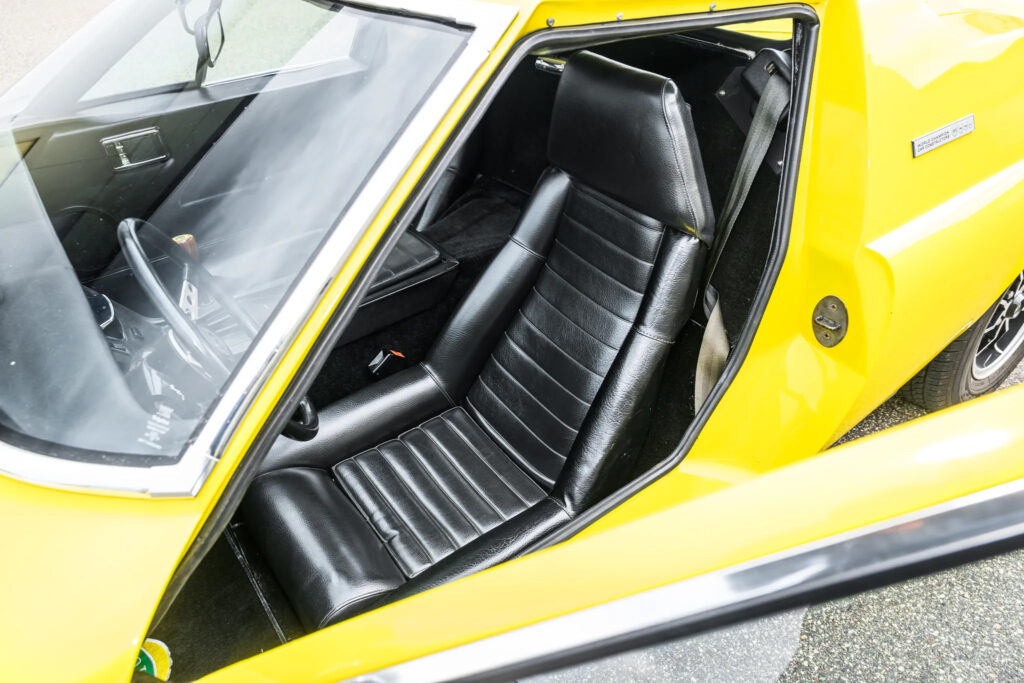
The idiosyncrasies of the Europa were put right with the introduction of the S2 (Lotus 54) in 1967. Not only was the body now fully detachable, but the occupants had the luxury of window glass that could be raised and lowered electrically, along with adjustable seats. While still fitted with the Renault engine/gearbox (albeit now 1,565-cc) the top speed of the Europa S2 was 115 mph.
Contemporary press reports ran both hot and cold about the Europa. Everyone loved the idea of a mid-engined sports car for the road, but cried out for more performance. While most lauded the forward and side vision, it was not the same toward the rear through the letterbox style rear window. On top of that, everyone commented that a certain amount of physical dexterity was needed to get in and out of the Europa. However, once inside, many commentators praised the driving position.
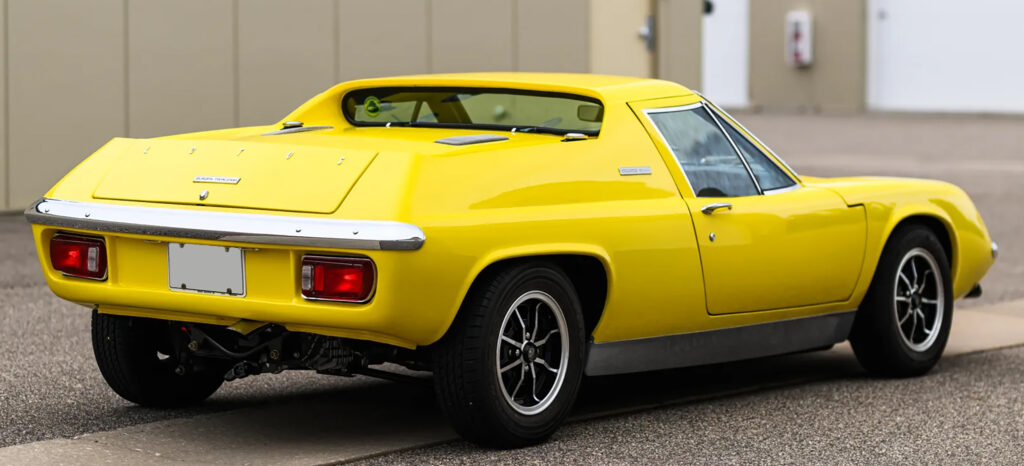
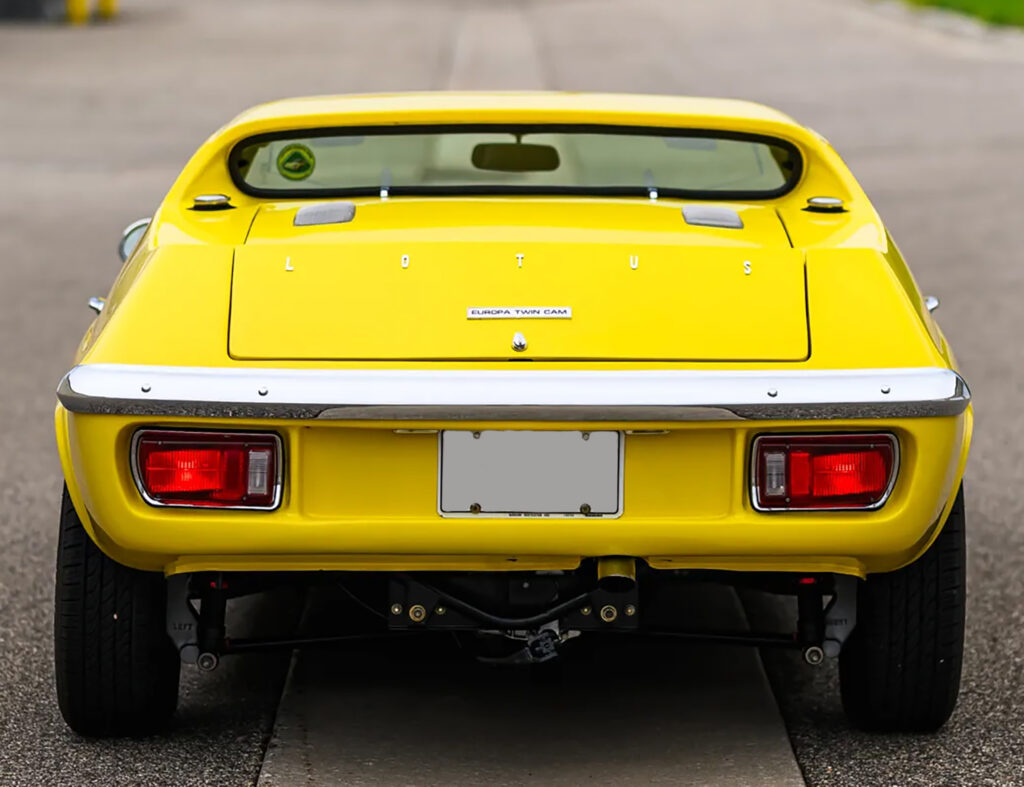
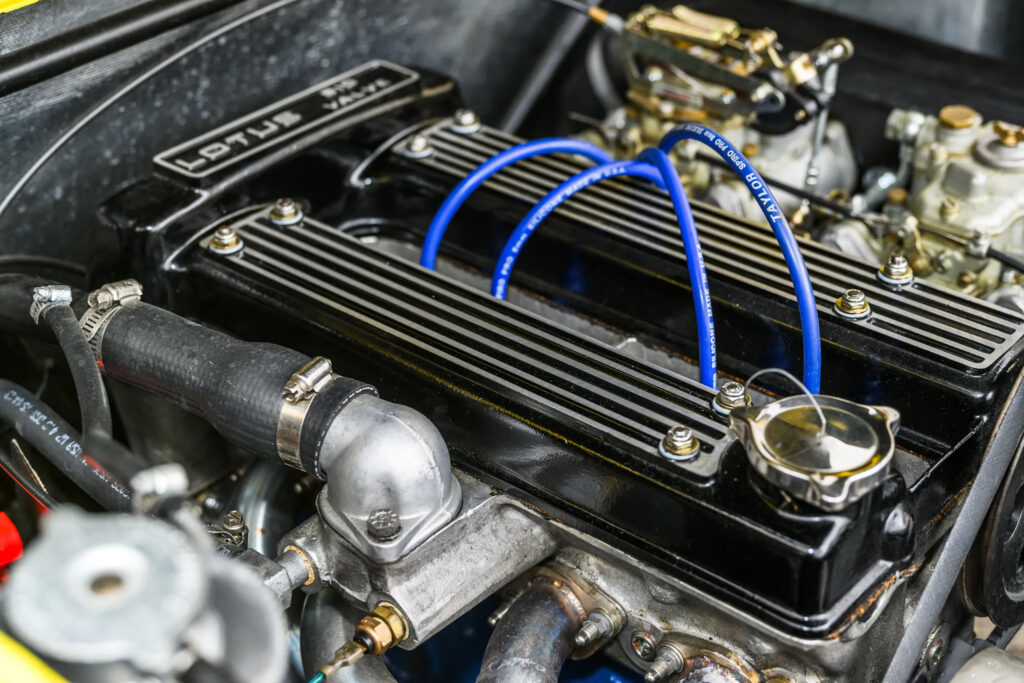
In 1971 Lotus introduced the twin-cam version of the Europa. Gone was the Renault engine, replaced with the Lotus DOHC modified Ford 1,558-cc four-cylinder. However, despite the new power plant, connections remained with the French manufacturer as the gearbox became the five-speed fitted to the Renault 16TS.
The Europa Twin-Cam also provided additional rear vision by lowering the rear buttresses. While this was appreciated, it didn’t provide a huge improvement, and the addition of external side mirrors failed to assist in any great degree, especially around town and among traffic where the roof came up to the door handles of most other cars.
However, once over those eccentricities, the press continued to be positive about the new model and said how enjoyable it was to drive, especially when given its head on the open road.
Driving a Lotus Europa Twin-Cam today is akin to very little else on the road, except perhaps a Lotus Seven or its many derivatives. You are literally knee high to a grasshopper and the rear vision does leave a lot to be desired. Getting in and out is probably something of a challenge, especially for anyone carrying a few extra pounds.
However, like the contemporary testers of the day, if you are prepared to look past all that, it is an immensely enjoyable car to drive for anyone who takes their motoring seriously. Almost akin to driving a purpose-built racing car on the road. Weighing in at just over 1,500 pounds with 126-bhp under your right foot certainly makes for a spirited performer.
BODYWORK
BODY TYPE 2 seater fixed-head coupé
NUMBER OF DOORS 2
DESIGNER
DIMENSIONS & WEIGHTS
WHEELBASE 2311 mm 91 inches
TRACK/TREAD (FRONT) 1346 mm 53 inches
TRACK/TREAD (REAR) 1346 mm 53 inches
LENGTH 3994 mm 157.2 inches
WIDTH 1638 mm 64.5 inches
HEIGHT 1067 mm 42 inches
GROUND CLEARANCE
LENGTH:WHEELBASE RATIO 1.73
KERB WEIGHT 772 kg 1625 lb
WEIGHT DISTRIBUTION
FUEL TANK CAPACITY 57 litres 12.5 [15.1] UK [US] gal.
AERODYNAMICS
DRAG COEFFICIENT 0.29
FRONTAL AREA
CDA
POWERTRAIN
ENGINE TYPE naturally aspirated petrol
ENGINE MANUFACTURER Lotus
ENGINE CODE
CYLINDERS Straight 4
CAPACITY 1.6 litre
1558 cc
(95.075 cu in)
BORE × STROKE
82.57 × 72.75 mm
3.25 × 2.86 in
BORE/STROKE RATIO 1.13
VALVE GEAR double overhead camshaft (DOHC)
2 valves per cylinder
8 valves in total
MAXIMUM POWER OUTPUT
(SAE) 106 PS (105 bhp) (78 kW)
at 5500 rpm
MAXIMUM TORQUE
(SAE) 146 Nm (108 ft·lb) (14.9 kgm)
at 4000 rpm
SPECIFIC OUTPUT
(SAE) 50.3 kW/litre
68.3 ps/litre
67.4 bhp/litre
1.1 bhp/cu in
SPECIFIC TORQUE
(SAE) 93.71 Nm/litre
1.13 ft·lb/cu3
ENGINE CONSTRUCTION
SUMP
COMPRESSION RATIO 9.5:1
FUEL SYSTEM 2 De carbs
BMEP (BRAKE MEAN EFFECTIVE PRESSURE) 1177.6 kPa (170.8 psi)
MAXIMUM RPM
CRANKSHAFT BEARINGS
ENGINE COOLANT Water
UNITARY CAPACITY 389.5 cc
ASPIRATION Normal
COMPRESSOR N/A
INTERCOOLER None
CATALYTIC CONVERTER N
PERFORMANCE
ACCELERATION 0-80KM/H (50MPH) 5.3 s
ACCELERATION 0-60MPH 7.7 s
ACCELERATION 0-100KM/H
ACCELERATION 0-160KM/H (100MPH) 23.3 s
STANDING QUARTER-MILE 15.7 s
STANDING KILOMETRE 29.9 s
MAXIMUM SPEED 195 km/h (121 mph)
POWER-TO-WEIGHT RATIO Higher is better
144.45 PS/tonne (1000 kg)
0.14 PS/kg
106.24 kW/tonne (1000 kg)
0.11 kW/kg
142.47 bhp/tonne (1000 kg)
0.14 bhp/kg
0.06 bhp/lb
WEIGHT-TO-POWER RATIO Lower is better
9.41 kg/kW
15.72 lb/bhp
FUEL CONSUMPTION
FUEL CONSUMPTION
UNIVERSAL FUEL CONSUMPTION (CALCULATED FROM THE ABOVE)
LITRES/100KM
KM/LITRE
UK MPG
US MPG
CARBON DIOXIDE EMISSIONS
CARFOLIO CALCULATED CO2 ?
VED BAND (UK)
CO2 EFFIZIENZ (DE)
CHASSIS
ENGINE POSITION mid
ENGINE LAYOUT longitudinal
DRIVE WHEELS rear wheel drive
TORQUE SPLIT N/A
STEERING rack & pinion
TURNS LOCK-TO-LOCK
TURNING CIRCLE
FRONT SUSPENSION I.W.CS.ARB.
REAR SUSPENSION I.FLDS.LLi.TRA.CS.
WHEEL SIZE FRONT
WHEEL SIZE REAR
TYRES FRONT
TYRES REAR
BRAKES F/R Di/Dr-S
FRONT BRAKE DIAMETER
REAR BRAKE DIAMETER
BRAKED AREA
GEARBOX 4 speed manual
1973 Twin Cam Lotus Europa
Production: 1971 – 1975
Chassis: Welded sheet steel backbone chassis with welded sub-assemblies
Body: Fiberglass
Wheelbase: 91 inches/2,311mm
Length: 157.25 inches/3,994mm
Width: 64.9 inches/1,648.5mm
Front & Rear Track: 53.50inches /1,359mm
Weight: 1,568 pounds/772kg
Suspension: (F) Independent with coilover shocks, unequal length wishbones and anti-roll bar. (R) Independent with coilover shocks, unequal length wishbones, forward trailing arms and anti-roll bar.
Engine: Cast Iron and Alloy, inline dohc 4
Displacement: 1,558cc
Bore x Stroke : 82.55 x 72.75mm
Compression Ratio: 9.5:1
Induction: Twin Dellorto Carburetors
Power: 126bhp @ 6,550rpm
Transmission: 5-speed all-synchro manual
Brakes: Front discs and rear drums
PERFORMANCE
Top Speed: 125 mph
0-60 mph: 9.6 secs