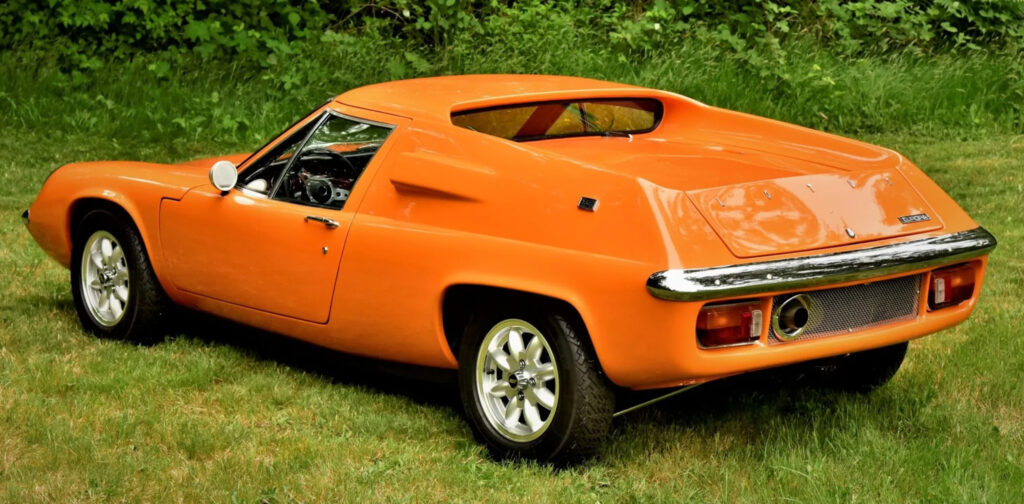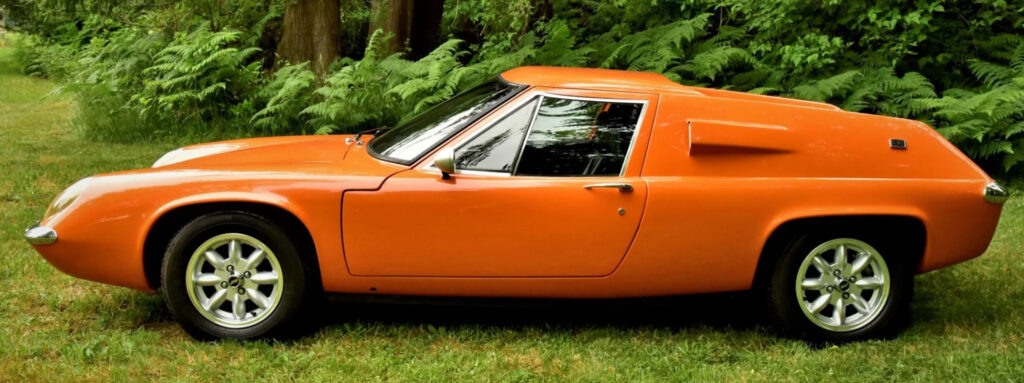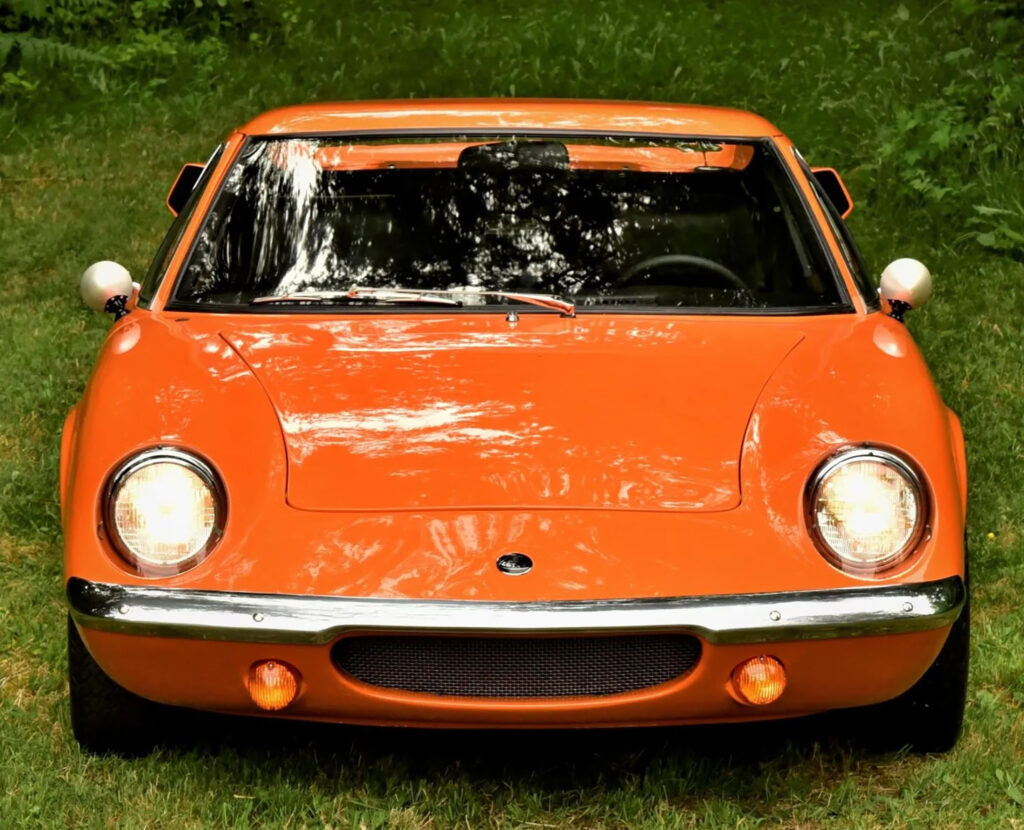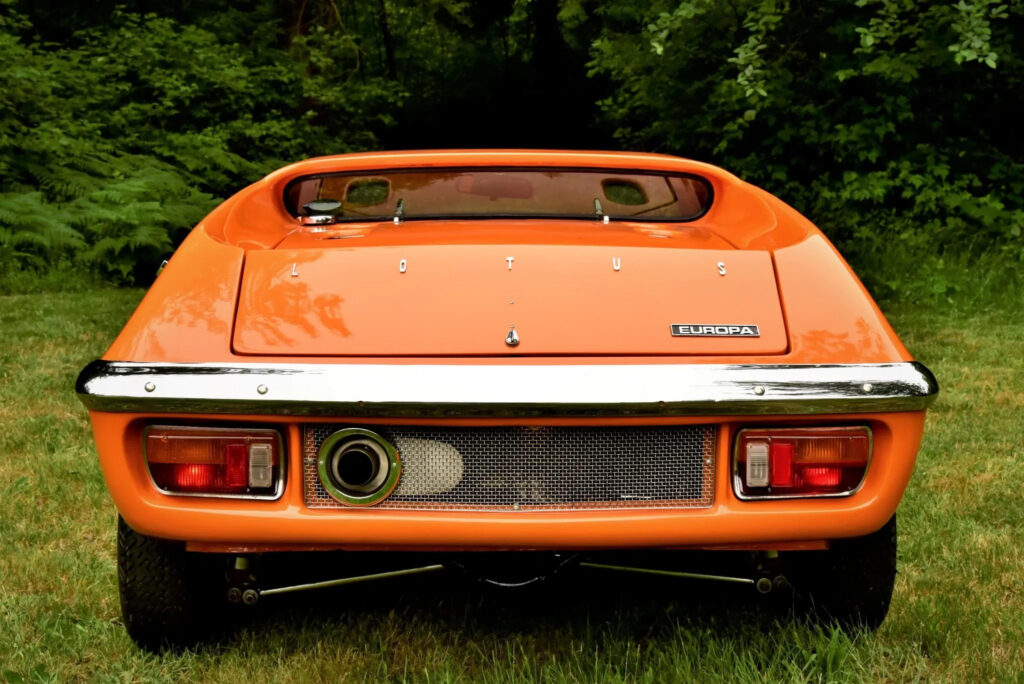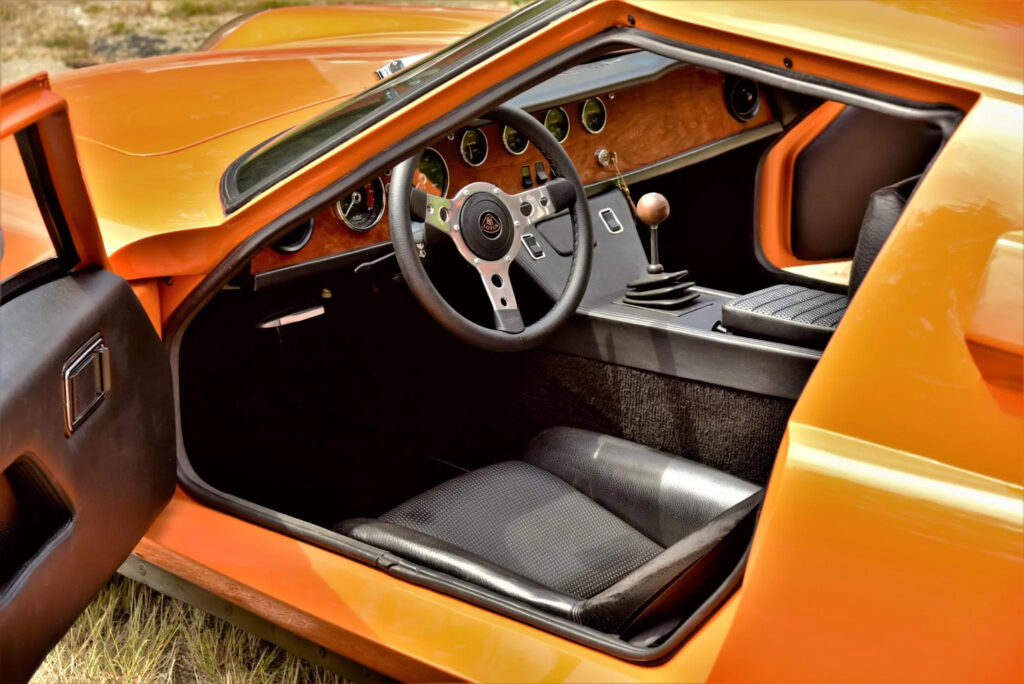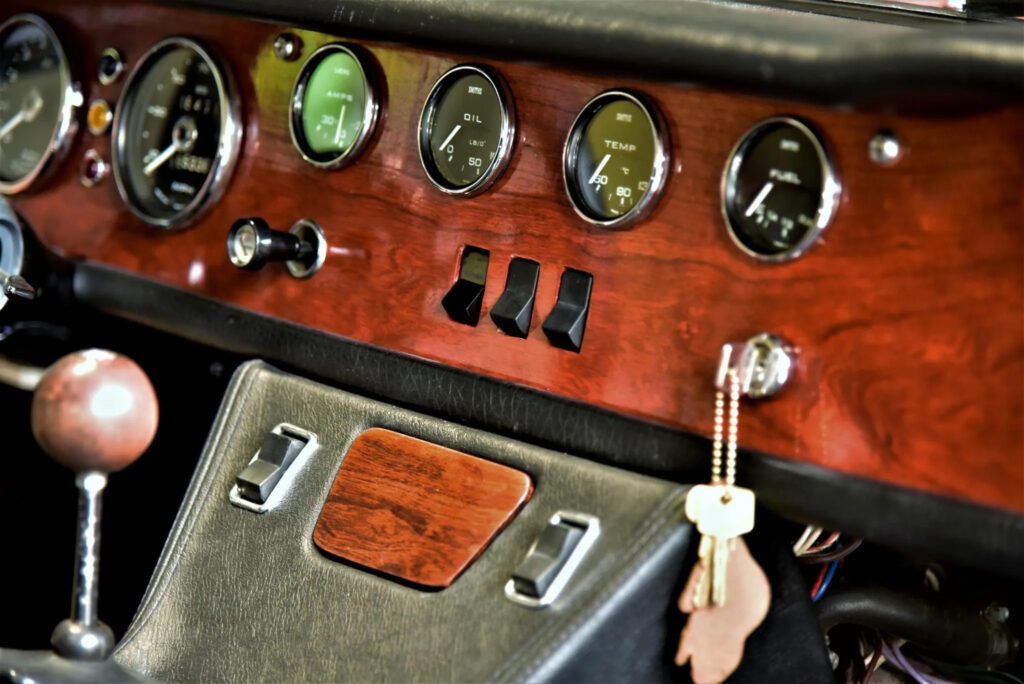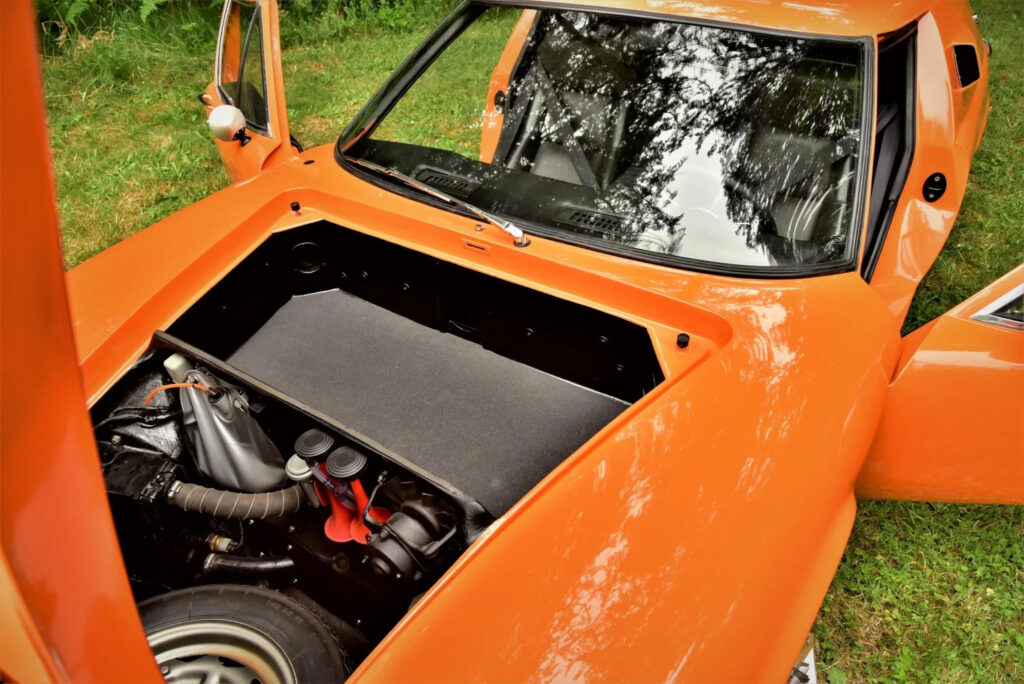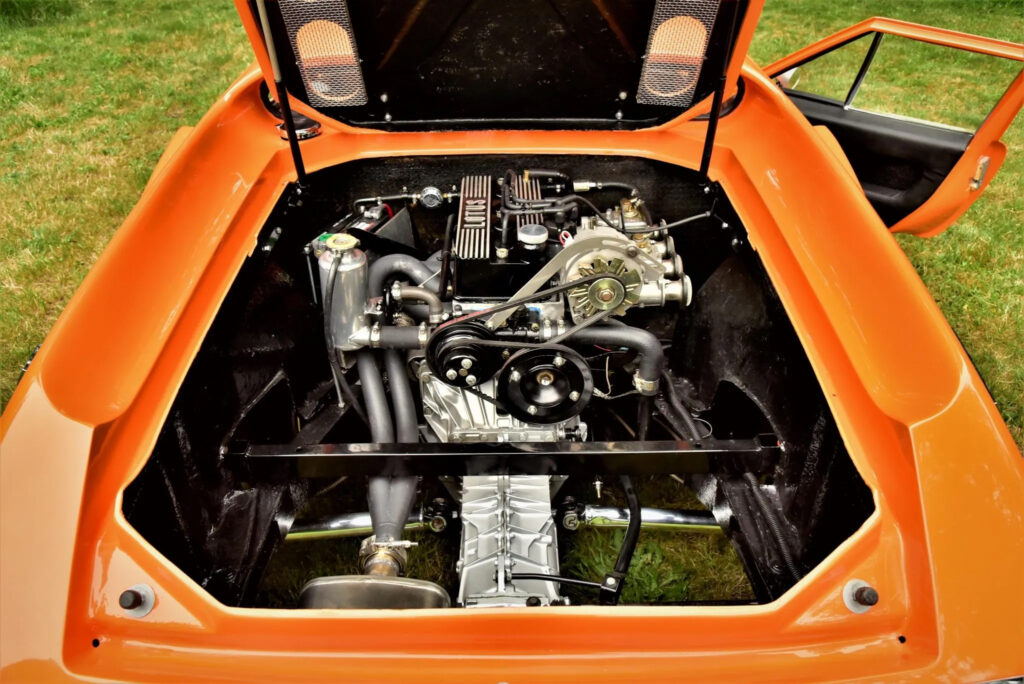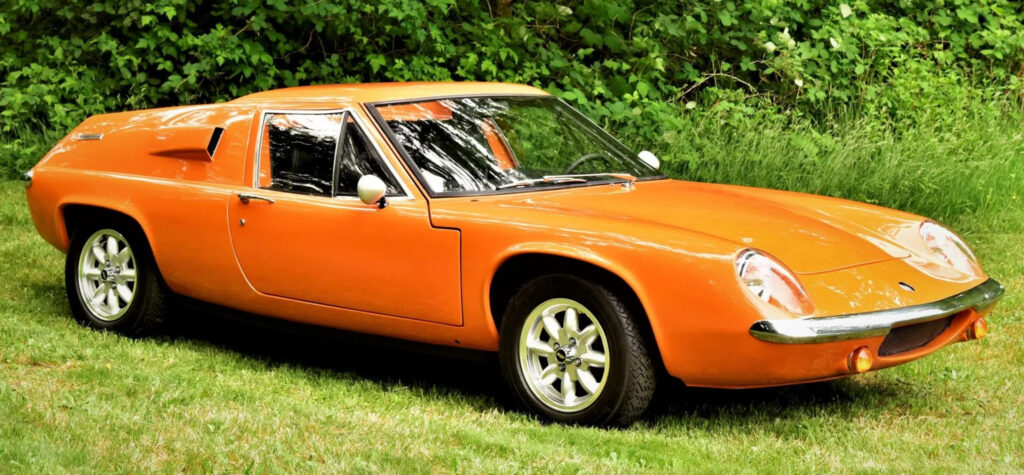
Introduced in 1966, the Lotus Europa was a truly forward-thinking car. It was a car capable of both track performance and everyday road use, with its mid-mounted engine, the Europa took established Lotus design principles for Britain’s first mid-engined sports car.
The intention was that the first 500 cars would all be left-hand-drive and sold in France but demand for the Europa from within the UK saw right-hand-drive cars being delivered to UK customers eager to buy into the bold new style of Lotus in early 1967.
The Lotus Europa translated the design and engineering breakthroughs of Grand Prix cars into an enticing roadcar package. At the time of its conception in the mid-1960s, almost no road vehicles had adopted the track-proven mid-engine configuration. Colin Chapman believed this engine layout would elevate the Europa’s performance while improving structural integrity and reducing costs for the driver.
The Lotus Europa used a backbone chassis which cradled the engine behind the driver compartment. This provided a lightweight yet rigid structure. All major components could be attached to this structure so keeping mass low. As a result, the Europa was very light – tipping the scales at just 612kg.
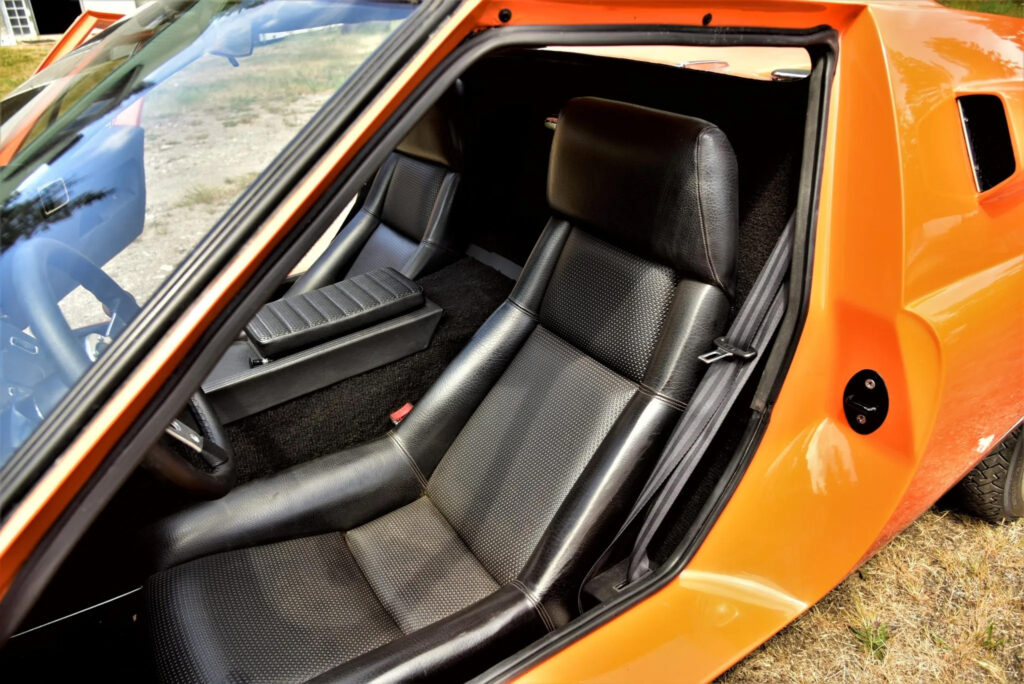
To save weight, the Type 46 Europa S1 was fitted with non-adjustable seats – drivers could move the pedals nearer or further away with special tools. By mid-mounting the engine and gearbox, weight distribution was much improved.
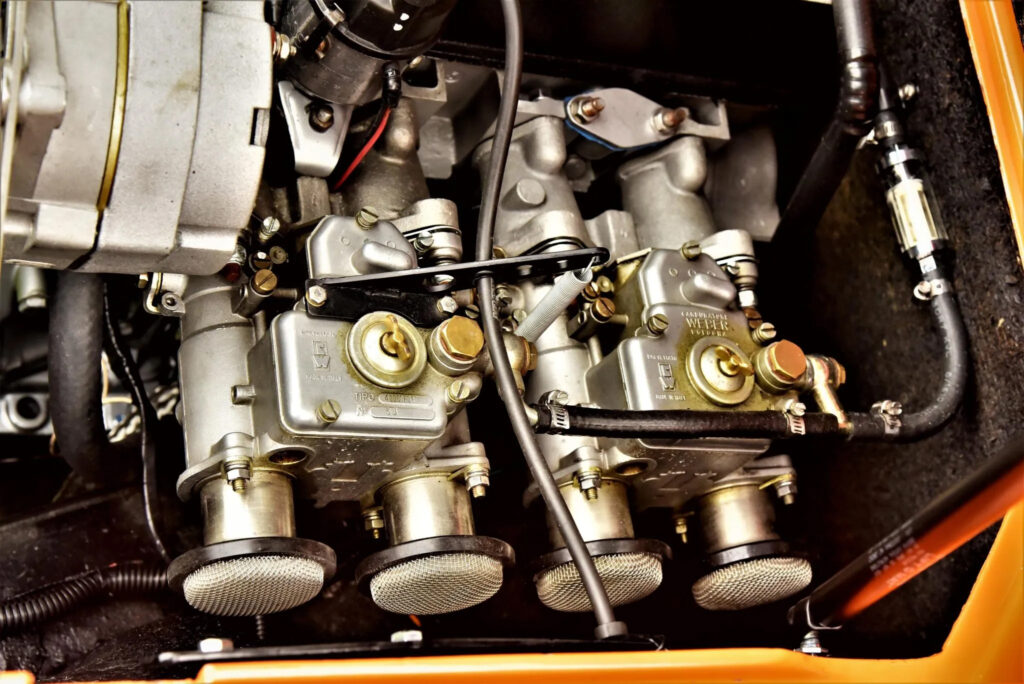
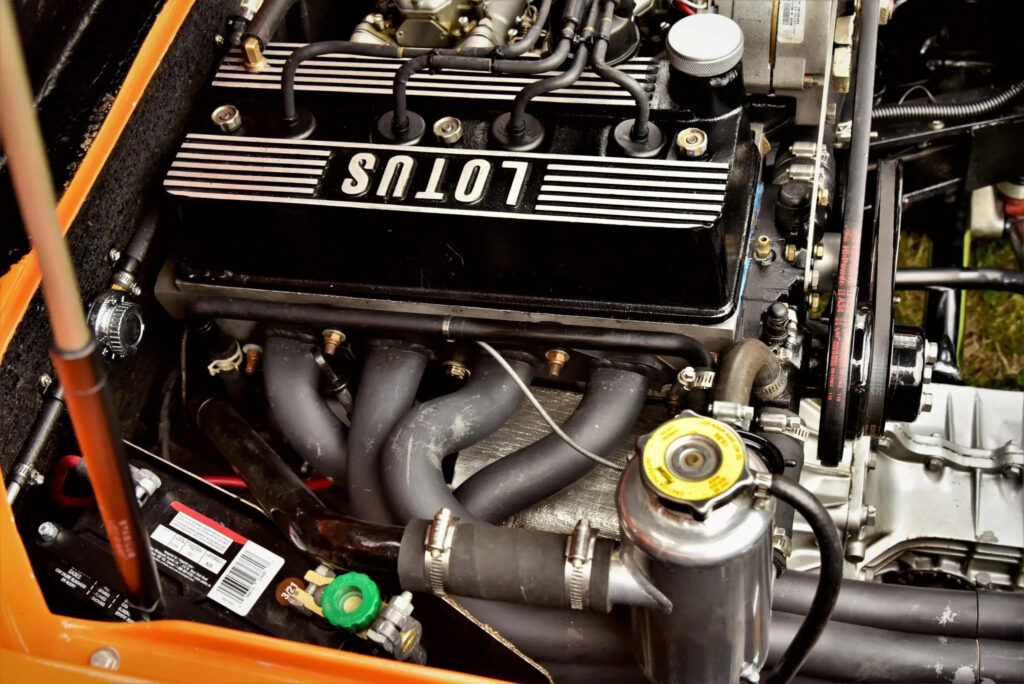
Later Europa models would be powered by the same Lotus-Ford Twin-cam used in the Lotus Elan. Available in 4 or 5 speed transmission variants, this engine topped out at 126 horsepower, significantly improving the Europa’s speed and acceleration. The Lotus Europa was made available as a ‘John Player Special’ special edition – featuring the iconic black and gold livery of the Lotus Formula One teams.
BODYWORK
BODY TYPE 2 seater fixed-head coupé
NUMBER OF DOORS 2
DESIGNER
DIMENSIONS & WEIGHTS
WHEELBASE 2311 mm 91 inches
TRACK/TREAD (FRONT) 1346 mm 53 inches
TRACK/TREAD (REAR) 1353 mm 53.3 inches
LENGTH 3975 mm 156.5 inches
WIDTH 1638 mm 64.5 inches
HEIGHT 1067 mm 42 inches
GROUND CLEARANCE
LENGTH:WHEELBASE RATIO 1.72
KERB WEIGHT 703 kg 1455 lb
WEIGHT DISTRIBUTION
FUEL TANK CAPACITY
AERODYNAMICS
DRAG COEFFICIENT 0.29
FRONTAL AREA
CDA
POWERTRAIN
ENGINE TYPE naturally aspirated petrol
ENGINE MANUFACTURER Renault
ENGINE CODE
CYLINDERS Straight 4
CAPACITY 1.5 litre
1470 cc
(89.705 cu in)
BORE × STROKE
76 × 81 mm
2.99 × 3.19 in
BORE/STROKE RATIO 0.94
VALVE GEAR overhead valve (OHV)
2 valves per cylinder
8 valves in total
MAXIMUM POWER OUTPUT 79 PS (82 bhp) (58 kW)
at 6000 rpm
MAXIMUM TORQUE 103 Nm (76 ft·lb) (10.5 kgm)
at 4000 rpm
SPECIFIC OUTPUT 39.6 kW/litre
53.8 ps/litre
53.1 bhp/litre
0.87 bhp/cu in
SPECIFIC TORQUE 70.07 Nm/litre
0.85 ft·lb/cu3
ENGINE CONSTRUCTION
SUMP
COMPRESSION RATIO 10.25:1
FUEL SYSTEM 1 So carb
BMEP (BRAKE MEAN EFFECTIVE PRESSURE) 880.5 kPa (127.7 psi)
MAXIMUM RPM
CRANKSHAFT BEARINGS
ENGINE COOLANT Water
UNITARY CAPACITY 367.5 cc
ASPIRATION Normal
COMPRESSOR N/A
INTERCOOLER None
CATALYTIC CONVERTER N
PERFORMANCE
ACCELERATION 0-80KM/H (50MPH) 6.9 s
ACCELERATION 0-60MPH 9.3 s
ACCELERATION 0-100KM/H
ACCELERATION 0-160KM/H (100MPH)
STANDING QUARTER-MILE 16.7 s
STANDING KILOMETRE
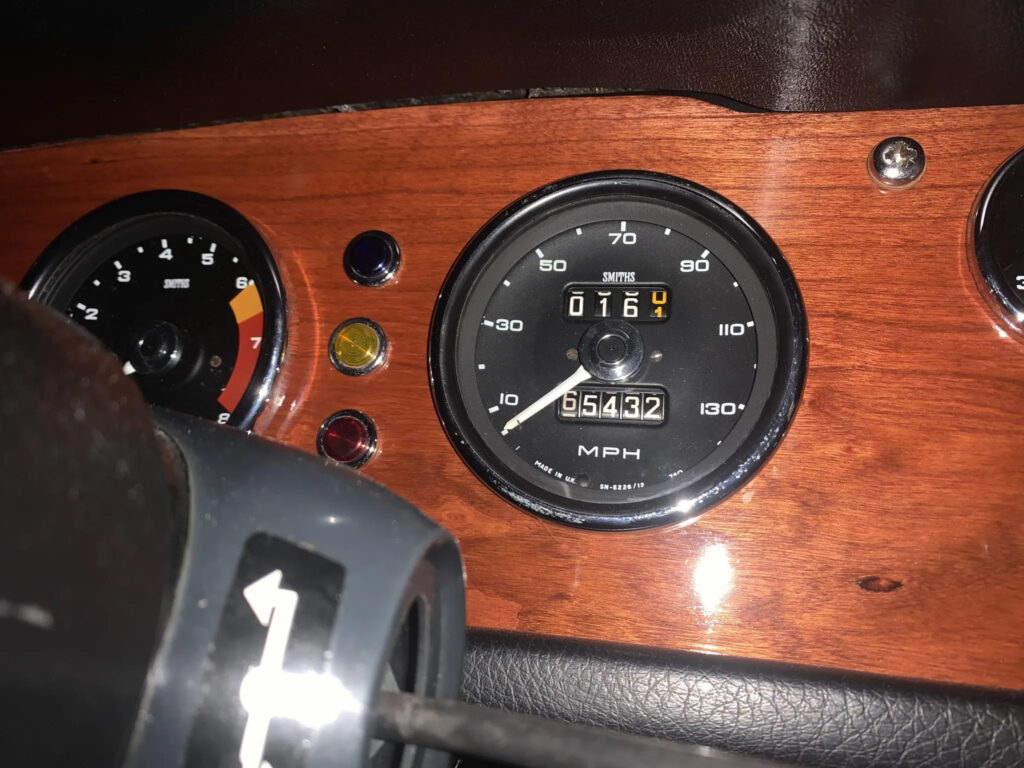
MAXIMUM SPEED 185 km/h (115 mph)
POWER-TO-WEIGHT RATIO Higher is better
119.82 PS/tonne (1000 kg)
0.12 PS/kg
88.13 kW/tonne (1000 kg)
0.09 kW/kg
118.18 bhp/tonne (1000 kg)
0.12 bhp/kg
0.05 bhp/lb
WEIGHT-TO-POWER RATIO Lower is better
11.35 kg/kW
18.95 lb/bhp
FUEL CONSUMPTION
FUEL CONSUMPTION
UNIVERSAL FUEL CONSUMPTION (CALCULATED FROM THE ABOVE)
LITRES/100KM
KM/LITRE
UK MPG
US MPG
CARBON DIOXIDE EMISSIONS
CARFOLIO CALCULATED CO2 ?
VED BAND (UK)
CO2 EFFIZIENZ (DE)
CHASSIS
ENGINE POSITION mid
ENGINE LAYOUT unknown
DRIVE WHEELS rear wheel drive
TORQUE SPLIT N/A
STEERING
TURNS LOCK-TO-LOCK
TURNING CIRCLE
FRONT SUSPENSION
REAR SUSPENSION
WHEEL SIZE FRONT
WHEEL SIZE REAR
TYRES FRONT
TYRES REAR
BRAKES F/R
FRONT BRAKE DIAMETER
REAR BRAKE DIAMETER
BRAKED AREA
GEARBOX 4 speed manual