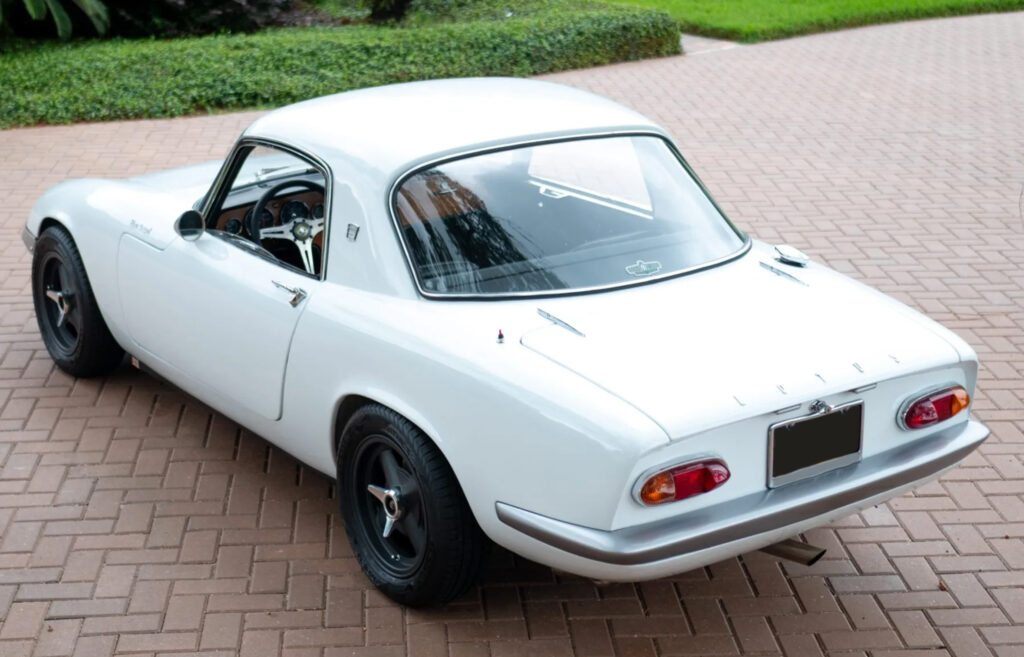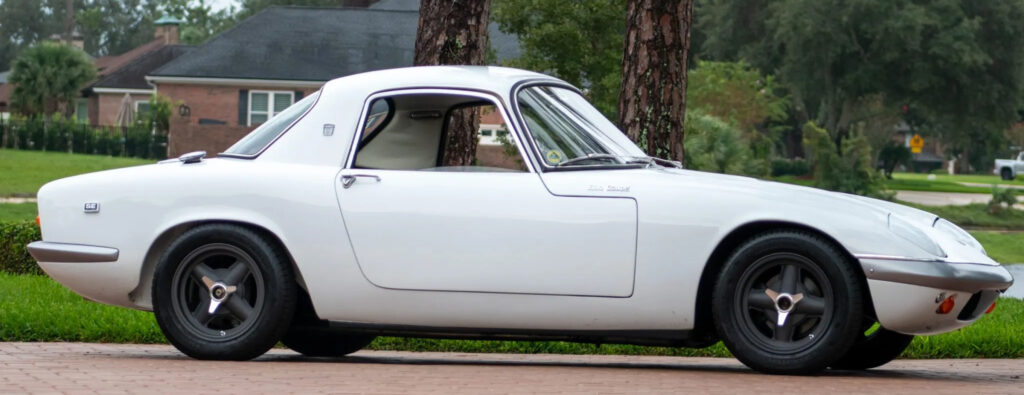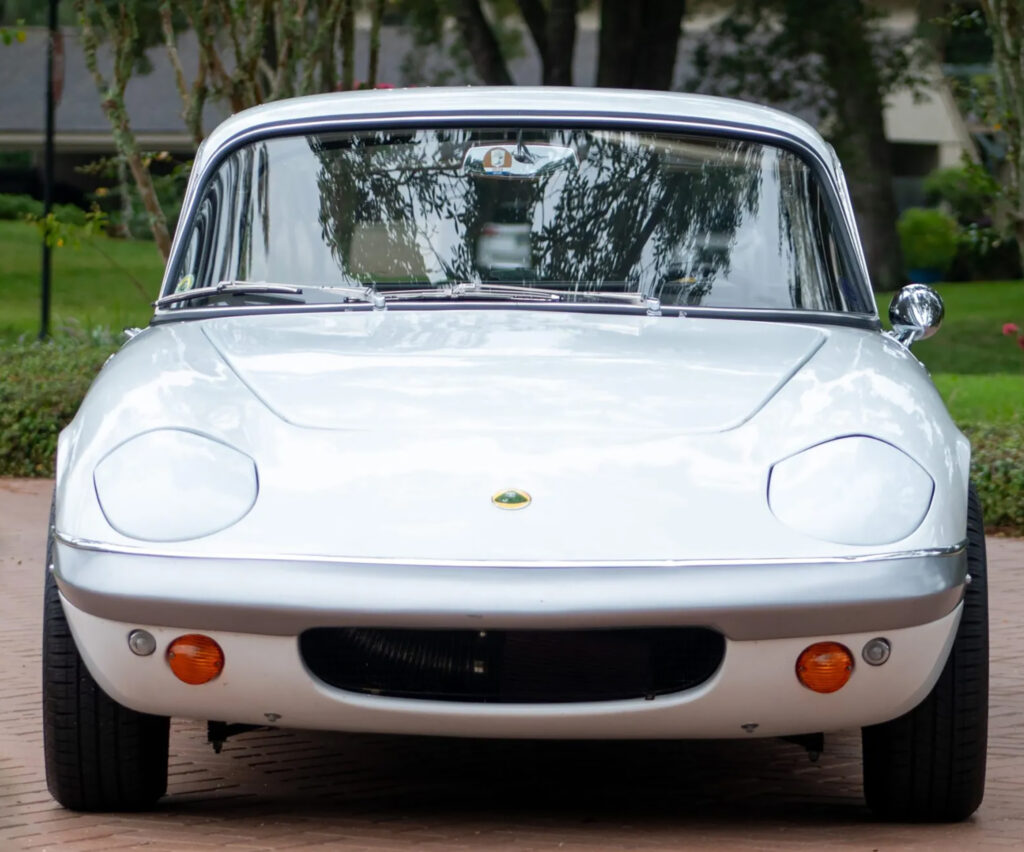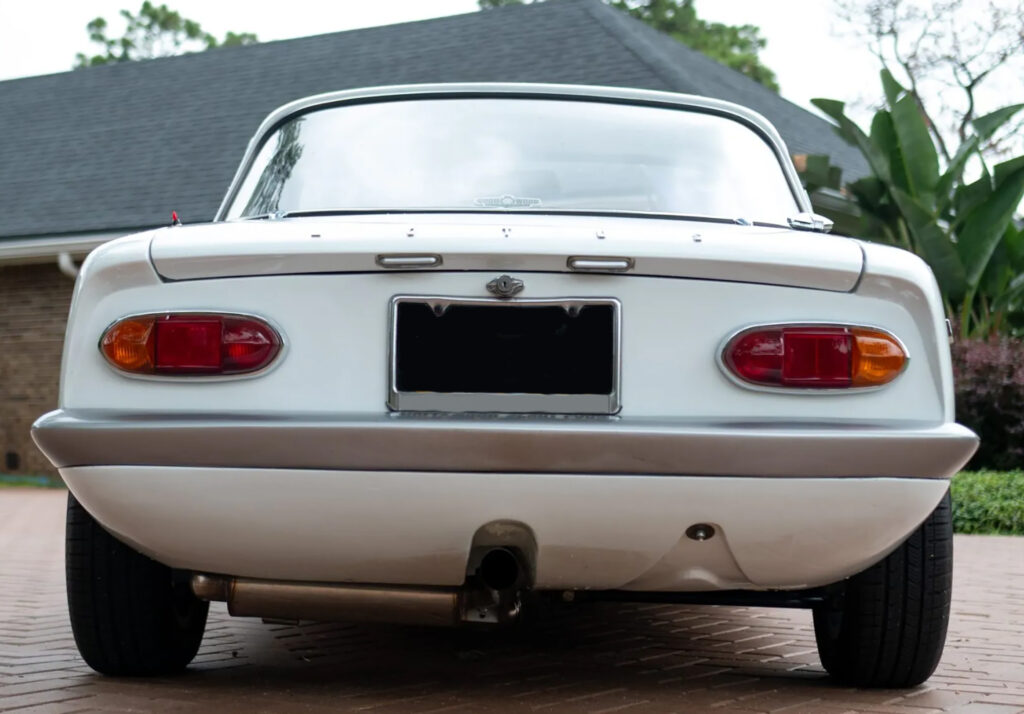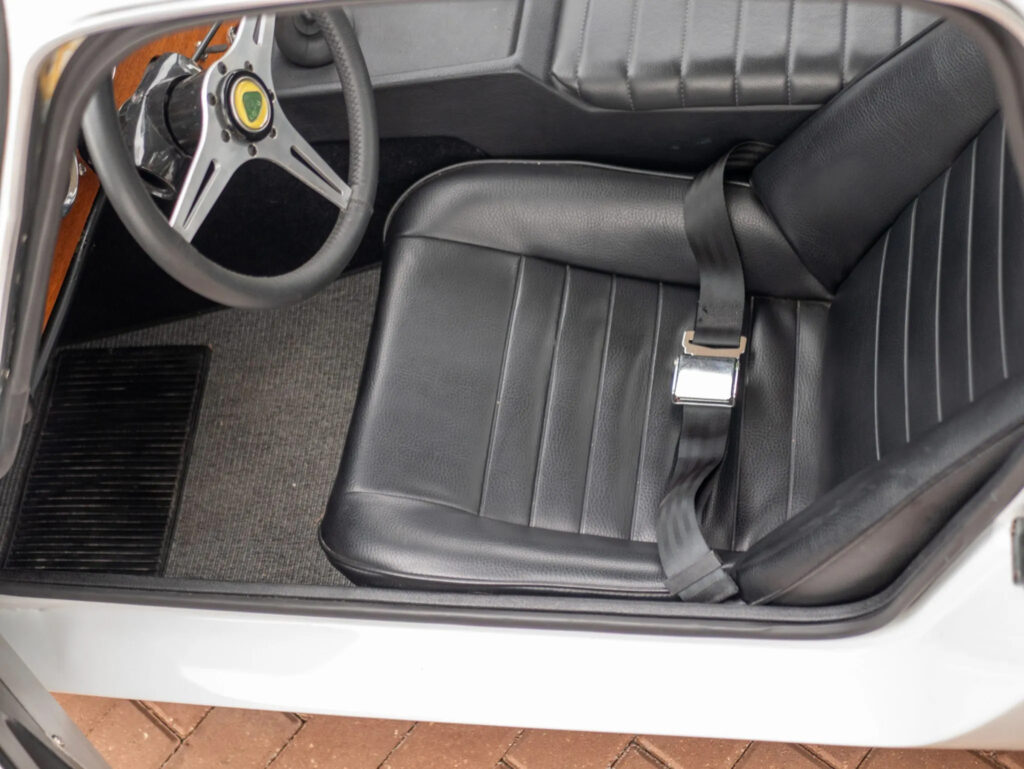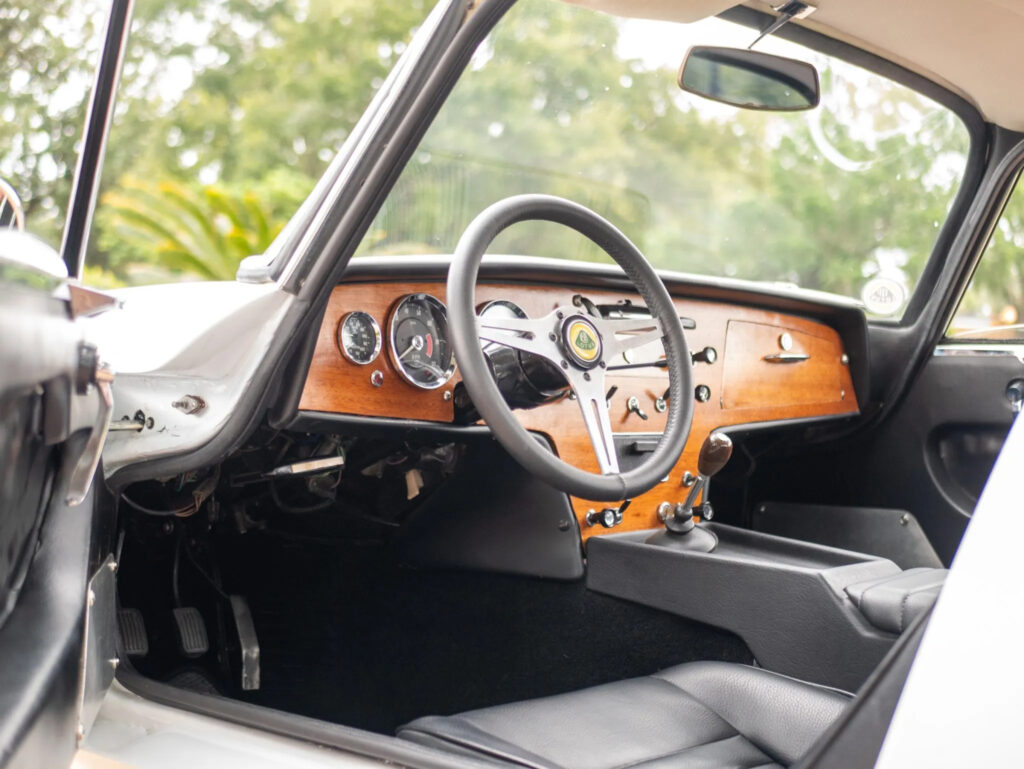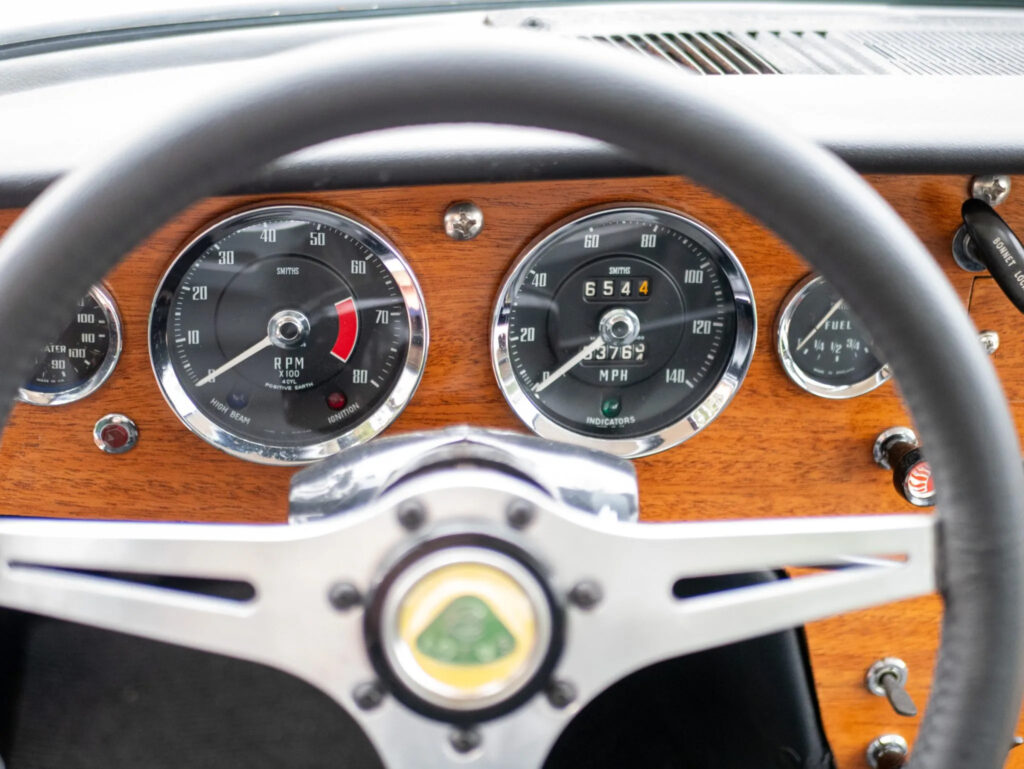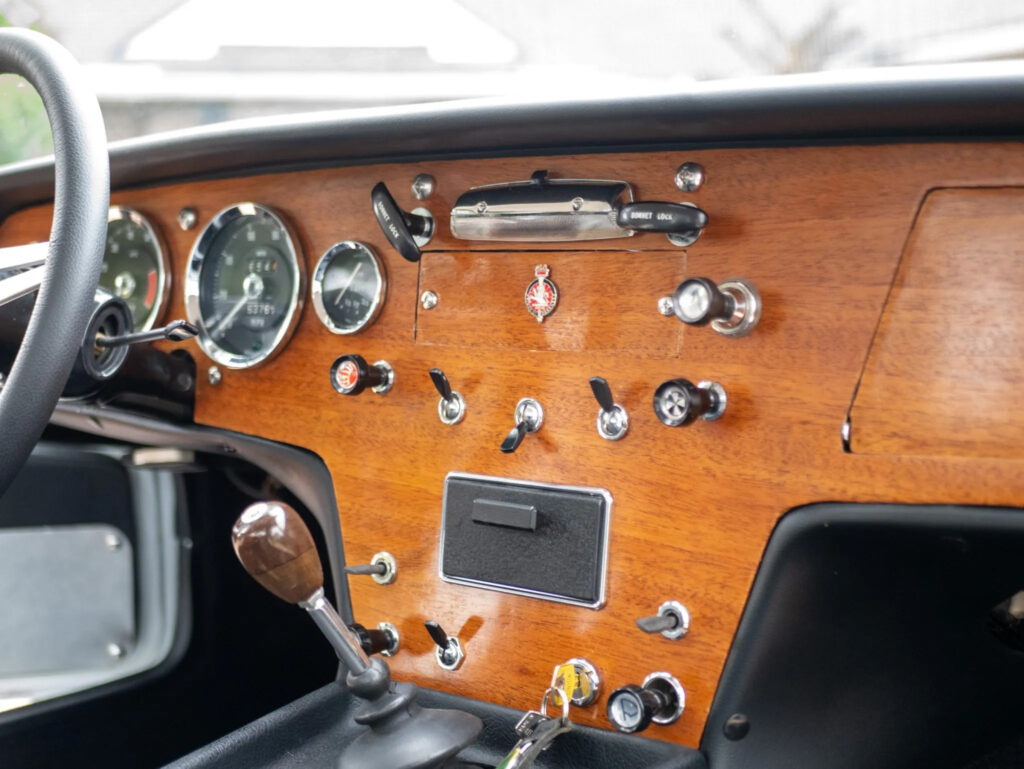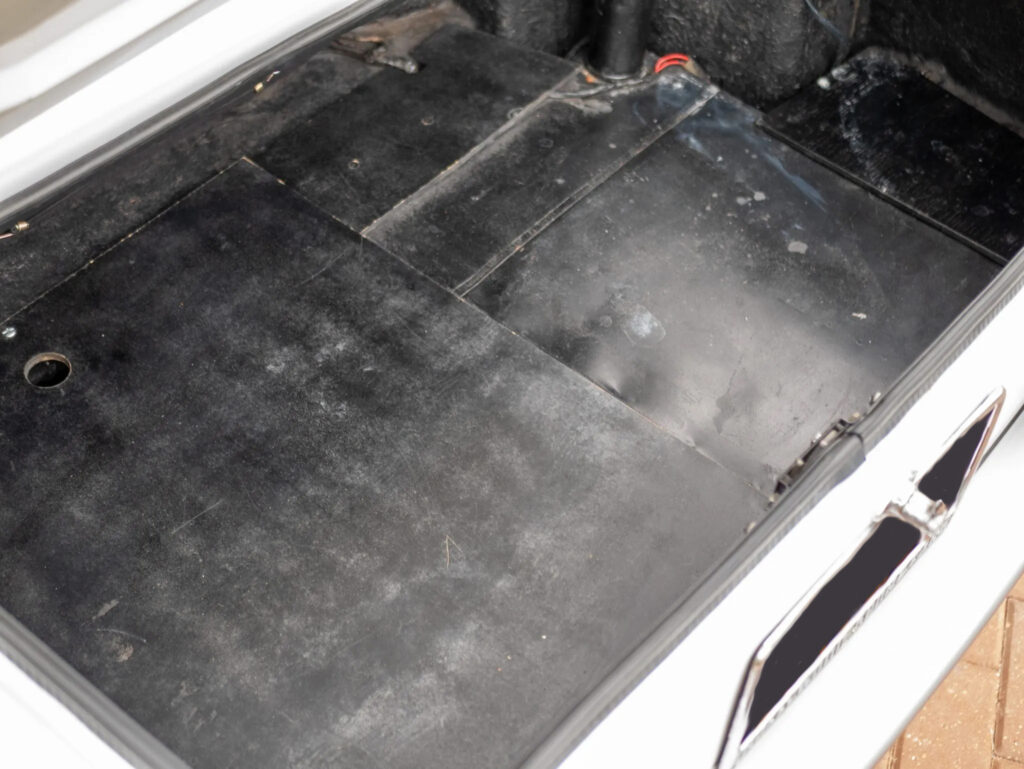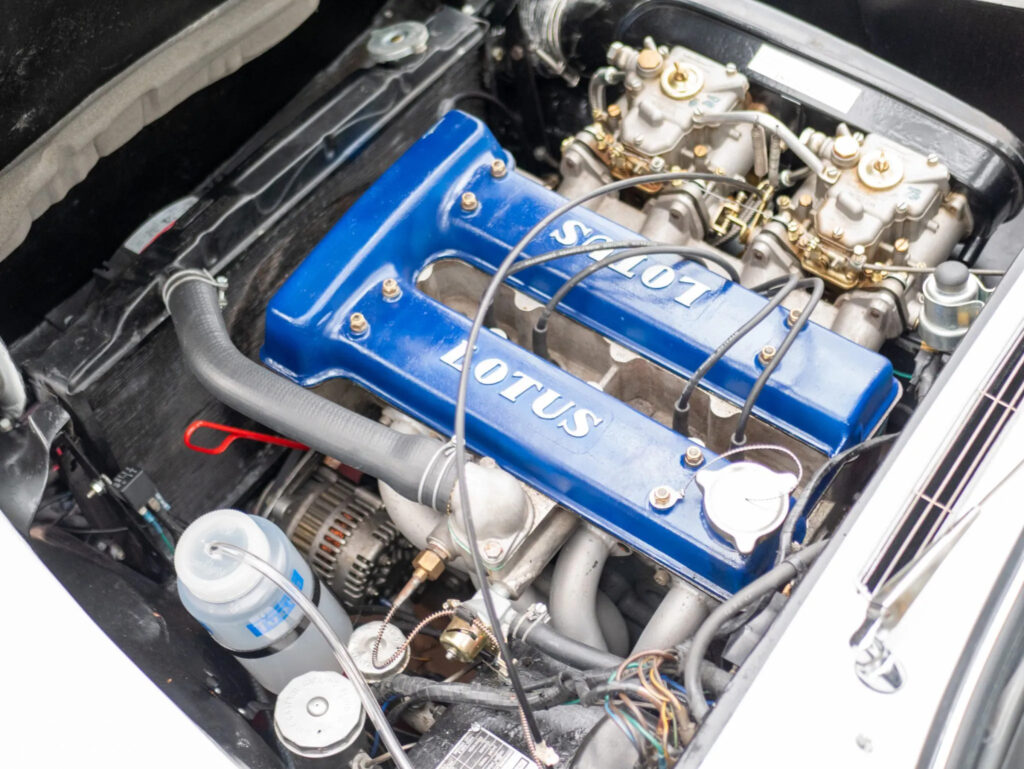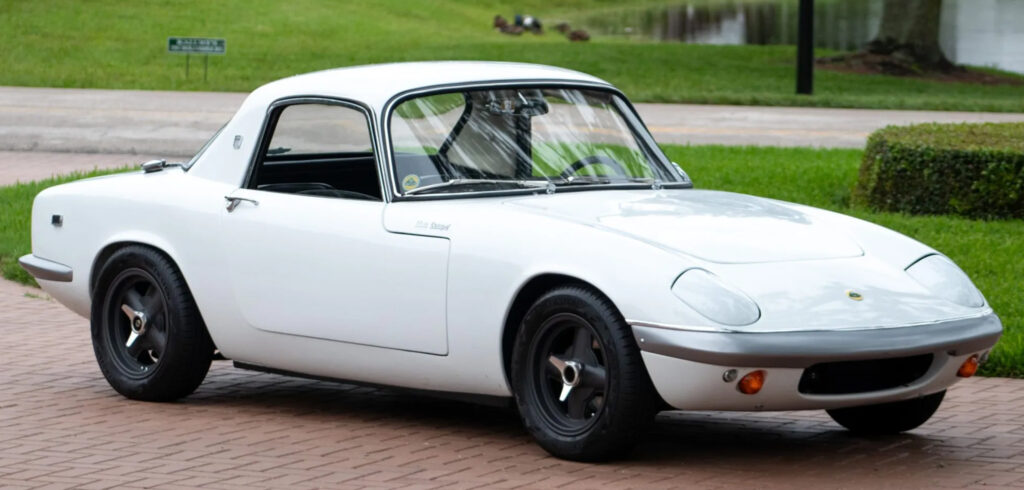
Development was a continuous process for the Elan from the word go. Originating as a convertible, the Elan 1500 was originally offered with a 1.5-liter engine comprised of a Ford block and a special Coventry Climax dual-overhead-cam cylinder head. The earliest 1.5-liter cars are quite rare, as the decision was quickly made to enlarge capacity to 1.6-liters with a name change to Elan 1600. Launched in Spring 1963, only 22 examples were made with this 1.5 liter engine before being replaced with the now famous 1558cc twin cam unit as seen in the Lotus Cortina.
In late 1964 came the Elan S2 with a raft of small but significant improvements. They were a mix of technical and styling upgrades, creating a more refined product that brought new customers into the Lotus brand. There was now even the option of a 115bhp SE model. Elan SE variants were available through most of Elan production after that point, and offered additional power.
The Elan S3 and S4 came in quick succession, entering production in 1966 and 1968, respectively. In 1966 with production being shifted to Hethel, the new S3 model had even more refinement. It even came complete with a new type number, Type 36 – with more design changes, the most significant of which was the fixed glass fibre roof. The interior was also much-improved with enhanced door trims which incorporated armrests and proper carpeting. A convertible version, the Type 45, was launched in June 1966. In 1967 a new four-seater Elan +2 joined the range. Looking like a longer and wider Elan, it was really a different car in its own right but still similar to the Elan particularly in its build.
The S4 came out in 1968, spotted by more new taillights and also flared wheelarches. It was in 1970 that the famous and now highly desirable Sprint model came out, with what’s known as the ‘big-valve’ 126bhp engine. The Elan Sprint was the final development of the car. The Elan +2 was also available with this engine from 1971. In 1973 a five-speed gearbox was made an option for the Sprint models before production wound to an end.
The Elan wasn’t about raw numbers; it was a symphony of perfectly balanced ingredients. Low weight met eager power from the Ford-Lotus Twin Cam, transforming it into a David amongst automotive Goliaths. This wasn’t just a sports car; it was the essence of sports car distilled, delivering an experience unlike any other. The suspension was a masterpiece, striking a harmonious note between razor-sharp handling and a surprisingly comfortable ride, a benchmark that continues to inspire.
Steering feel was its own concerto, with the thin-rimmed wood wheel acting as a conduit, faithfully translating every whisper of the road surface to your fingertips. Remarkably, even by modern standards, the Elan possesses a satisfying turn of speed. The twin-cam four-cylinder thrums with a lively spirit, perfectly matched to the most delightful four-speed shifter you’ll ever find. Get behind the wheel of a well-preserved example, and you’ll understand why the Elan continues to be revered as a legend.
| BODYWORK | ||
| BODY TYPE | 2 seater coupe | |
| NUMBER OF DOORS | 2 | |
| DESIGNER | ||
| DIMENSIONS & WEIGHTS | ||
| WHEELBASE | 2134 mm | 84 inches |
| TRACK/TREAD (FRONT) | 1194 mm | 47 inches |
| TRACK/TREAD (REAR) | 1194 mm | 47 inches |
| LENGTH | 3689 mm | 145.2 inches |
| WIDTH | 1422 mm | 56 inches |
| HEIGHT | 1175 mm | 46.3 inches |
| GROUND CLEARANCE | 152 mm | 6 inches |
| LENGTH:WHEELBASE RATIO | 1.73 | |
| KERB WEIGHT | 696 kg | 1534 lb |
| WEIGHT DISTRIBUTION | ||
| FUEL TANK CAPACITY | 45.5 litres | 10 [12] UK [US] gal. |
| AERODYNAMICS | ||
| DRAG COEFFICIENT | ||
| FRONTAL AREA | ||
| CDA | ||
| POWERTRAIN | ||
| ENGINE TYPE | naturally aspirated petrol | |
| ENGINE MANUFACTURER | Lotus | |
| ENGINE CODE | ||
| CYLINDERS | Straight 4 | |
| CAPACITY | 1.6 litre 1558 cc (95.075 cu in) | |
| BORE × STROKE | 82.57 × 72.75 mm 3.25 × 2.86 in | |
| BORE/STROKE RATIO | 1.13 | |
| VALVE GEAR | double overhead camshaft (DOHC) 2 valves per cylinder 8 valves in total | |
| MAXIMUM POWER OUTPUT (NET) | 117 PS (115 bhp) (86 kW) at 6000 rpm | |
| MAXIMUM TORQUE (NET) | 147 Nm (108 ft·lb) (15 kgm) at 4000 rpm | |
| SPECIFIC OUTPUT (NET) | 55 kW/litre 74.8 ps/litre 73.8 bhp/litre 1.21 bhp/cu in | |
| SPECIFIC TORQUE (NET) | 94.35 Nm/litre 1.14 ft·lb/cu3 | |
| ENGINE CONSTRUCTION | ||
| SUMP | wet sumped | |
| COMPRESSION RATIO | 9.5:1 | |
| FUEL SYSTEM | 2 We 40 DCOE 18 carbs | |
| BMEP (BRAKE MEAN EFFECTIVE PRESSURE) | 1185.7 kPa (172 psi) | |
| MAXIMUM RPM | ||
| CRANKSHAFT BEARINGS | ||
| ENGINE COOLANT | Water | |
| UNITARY CAPACITY | 389.5 cc | |
| ASPIRATION | Normal | |
| COMPRESSOR | N/A | |
| INTERCOOLER | None | |
| CATALYTIC CONVERTER | N | |
| PERFORMANCE | ||
| ACCELERATION 0-80KM/H (50MPH) | ||
| ACCELERATION 0-60MPH | 7.6 s | |
| ACCELERATION 0-100KM/H | ||
| ACCELERATION 0-160KM/H (100MPH) | 26.5 s | |
| STANDING QUARTER-MILE | 15.7 s | |
| STANDING KILOMETRE | ||
| MAXIMUM SPEED | 190 km/h (118 mph) | |
| POWER-TO-WEIGHT RATIO | Higher is better 167.53 PS/tonne (1000 kg) 0.17 PS/kg 123.21 kW/tonne (1000 kg) 0.12 kW/kg 165.23 bhp/tonne (1000 kg) 0.17 bhp/kg 0.07 bhp/lb | |
| WEIGHT-TO-POWER RATIO | Lower is better 8.12 kg/kW 13.56 lb/bhp | |
| FUEL CONSUMPTION | ||
| FUEL CONSUMPTION | ||
| UNIVERSAL FUEL CONSUMPTION (CALCULATED FROM THE ABOVE) | ||
| LITRES/100KM | ||
| KM/LITRE | ||
| UK MPG | ||
| US MPG | ||
| CARBON DIOXIDE EMISSIONS | ||
| CARFOLIO CALCULATED CO2 ? | ||
| VED BAND (UK) | ||
| CO2 EFFIZIENZ (DE) | ||
| CHASSIS | ||
| ENGINE POSITION | front | |
| ENGINE LAYOUT | longitudinal | |
| DRIVE WHEELS | rear wheel drive | |
| TORQUE SPLIT | N/A | |
| STEERING | rack & pinion | |
| TURNS LOCK-TO-LOCK | 2.500 | |
| TURNING CIRCLE | 9.80 m | |
| FRONT SUSPENSION | I.W.CS.ARB. | |
| REAR SUSPENSION | I.LW. | |
| WHEEL SIZE FRONT | ||
| WHEEL SIZE REAR | ||
| TYRES FRONT | 145 x 13 | |
| TYRES REAR | 145 x 13 | |
| BRAKES F/R | Di/Di-S | |
| FRONT BRAKE DIAMETER | ||
| REAR BRAKE DIAMETER | ||
| BRAKED AREA | 1923 cm2 | |
| GEARBOX | 4 speed manual | |