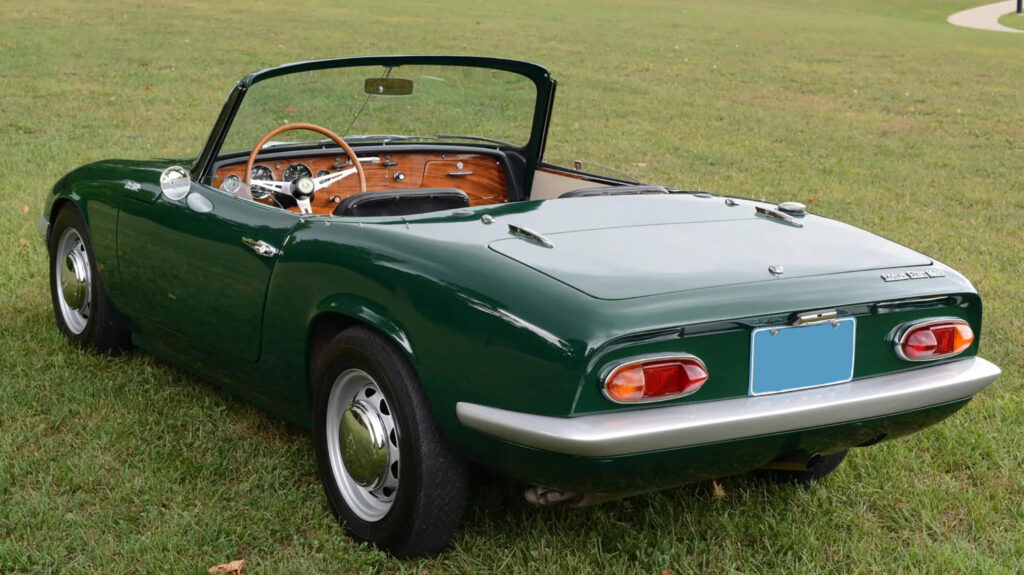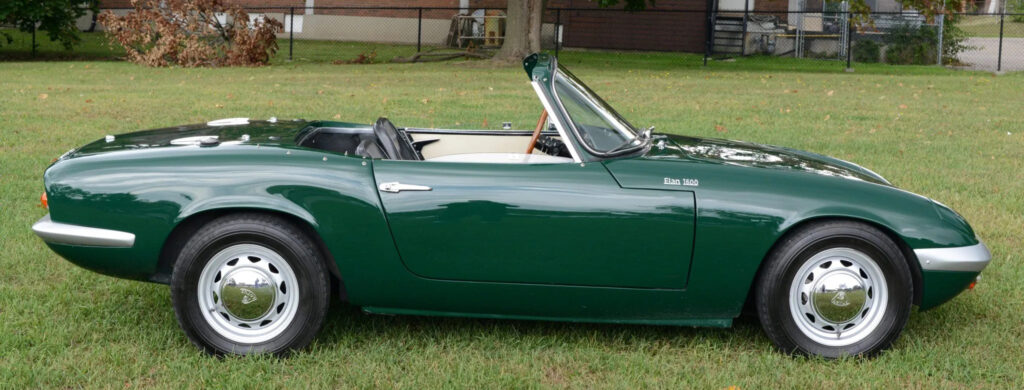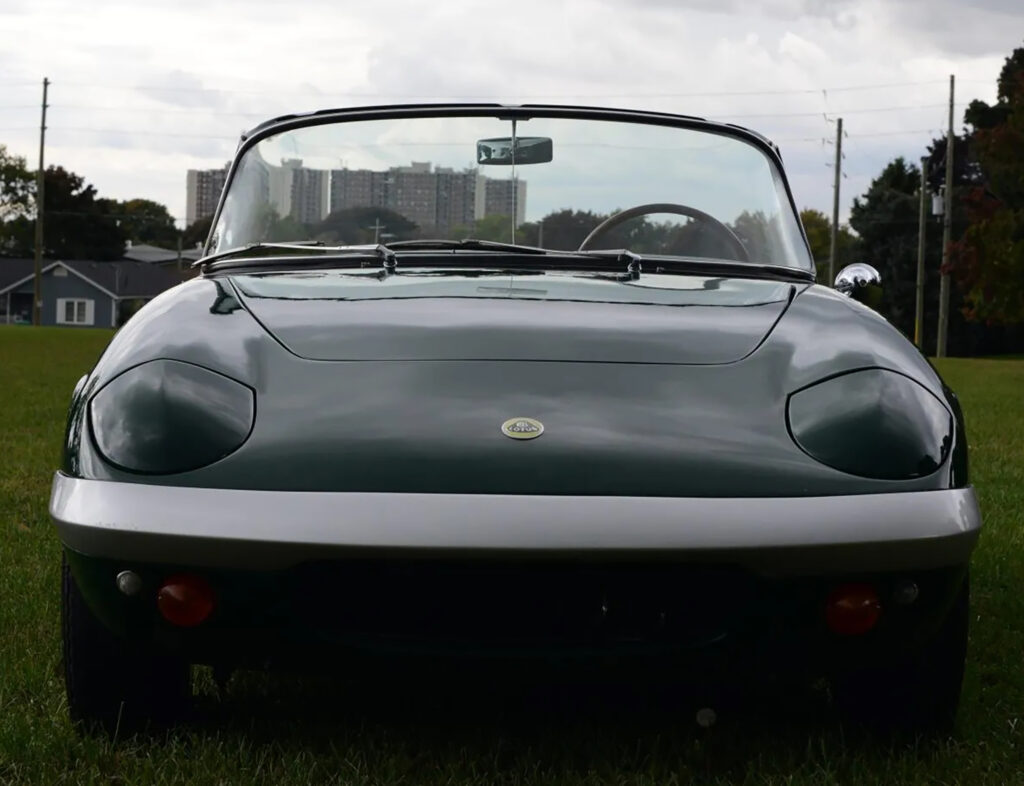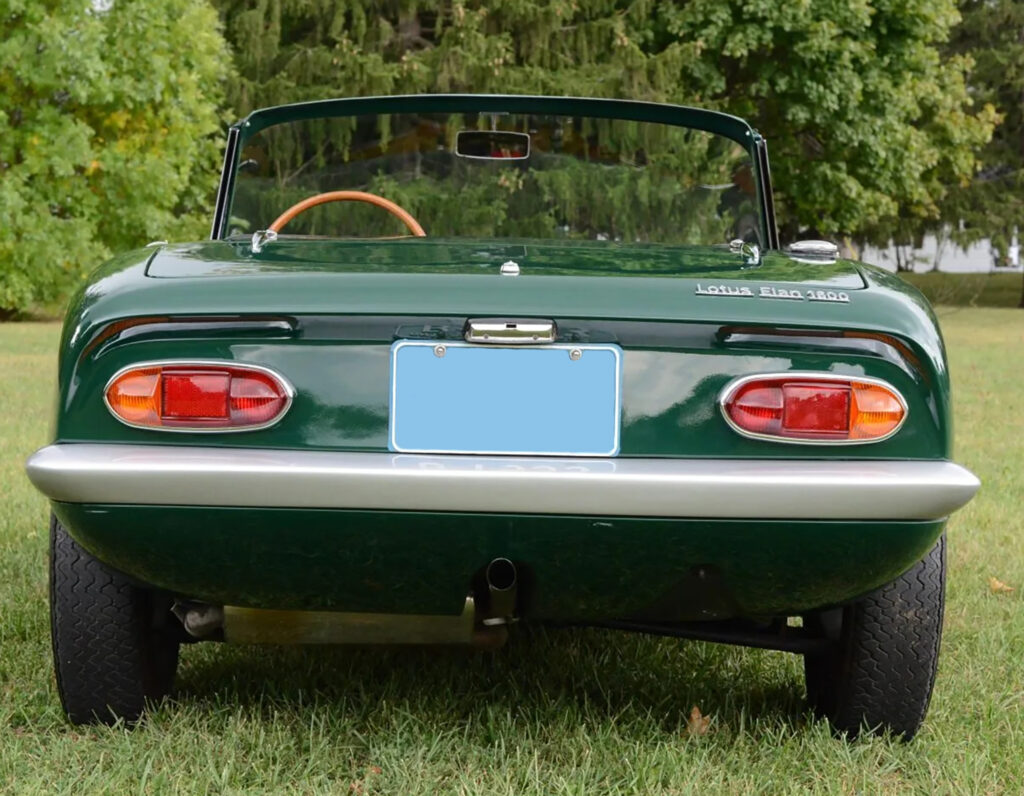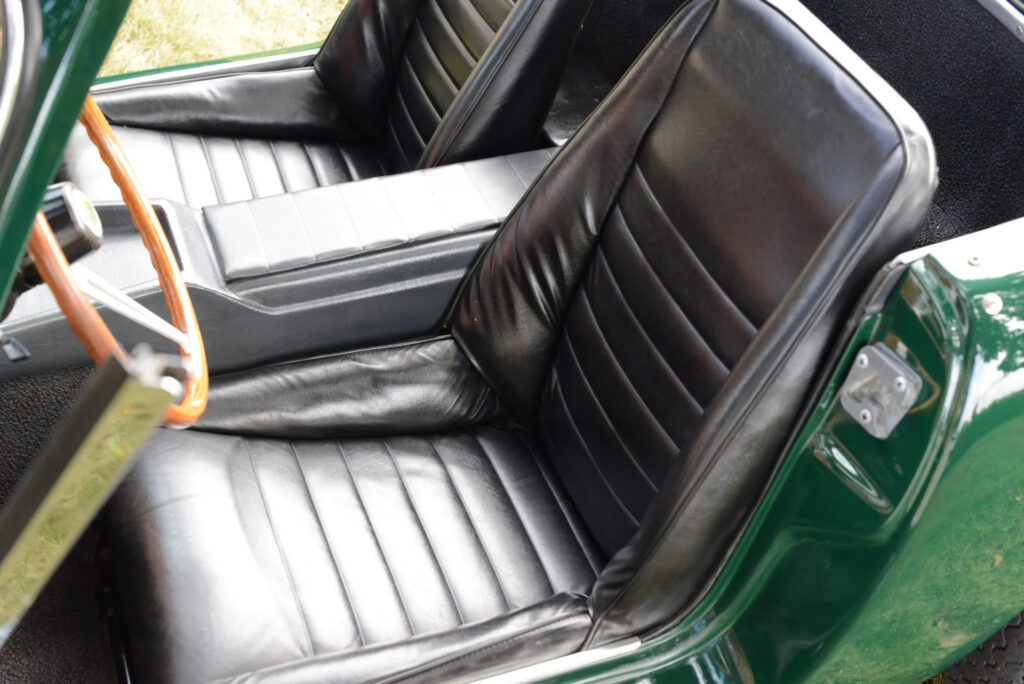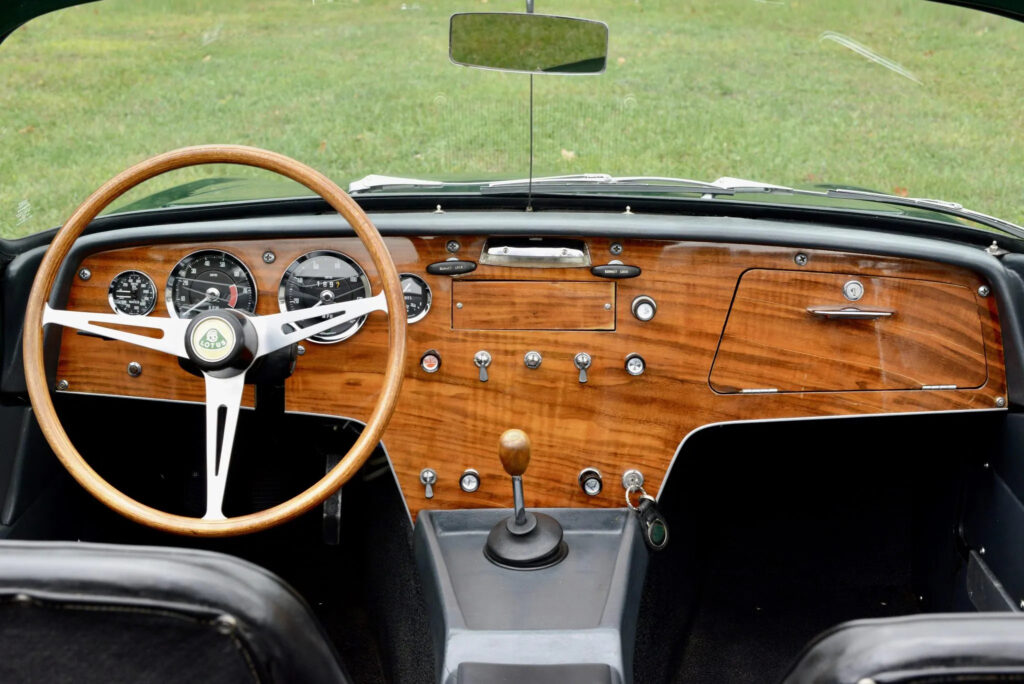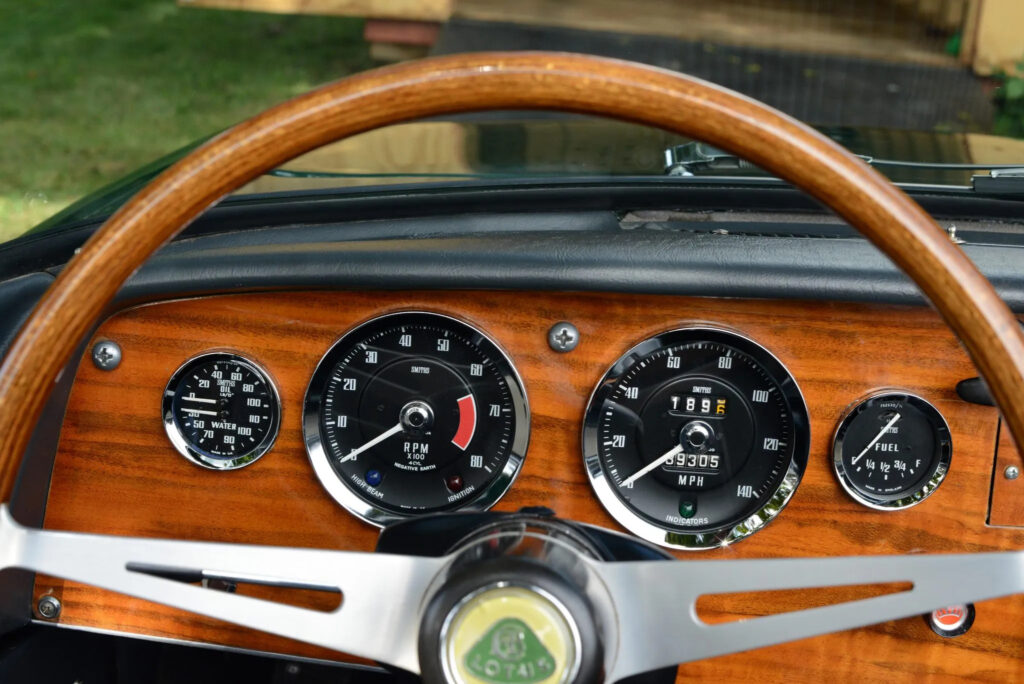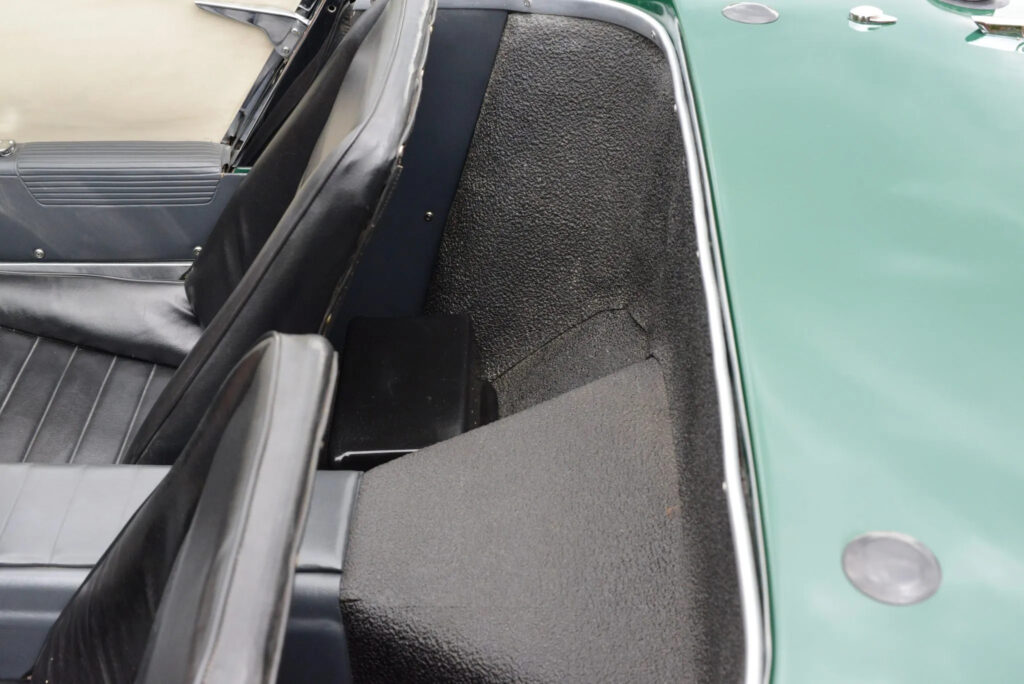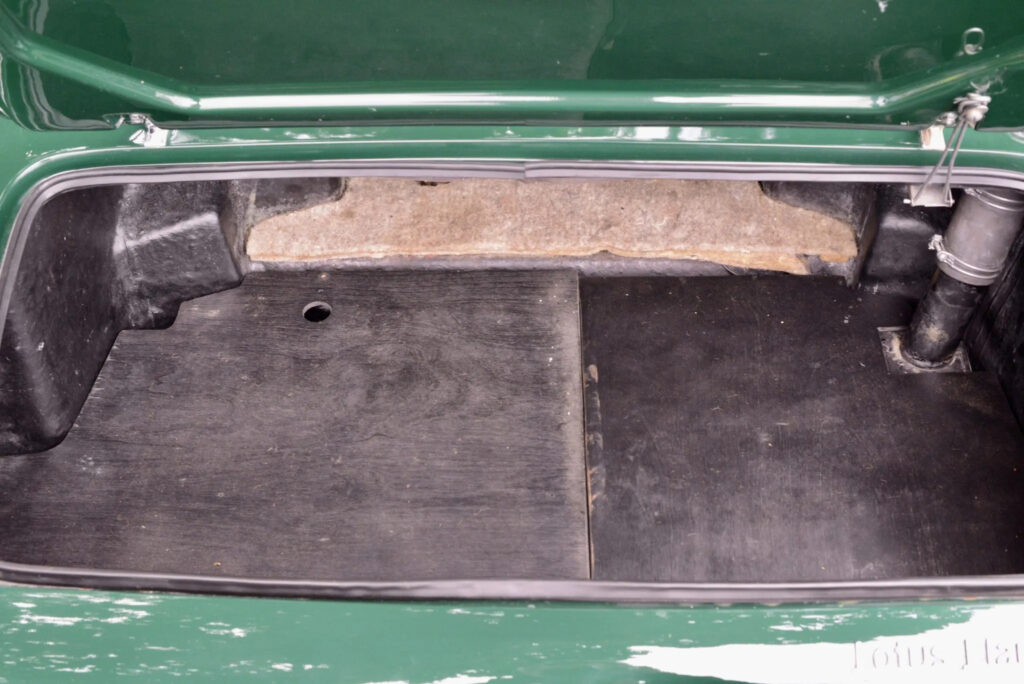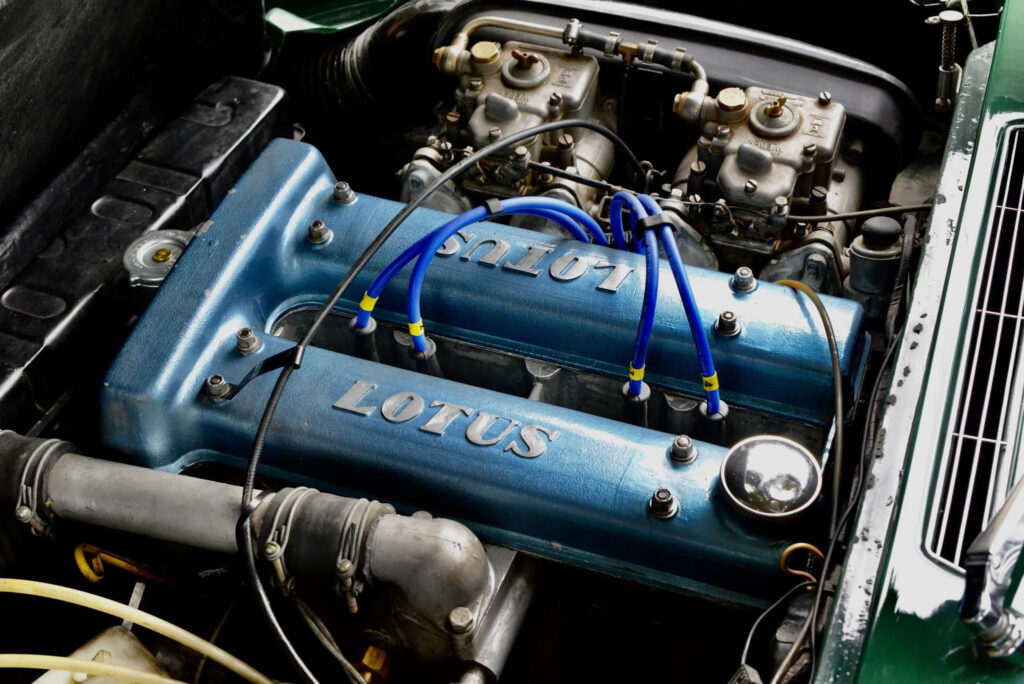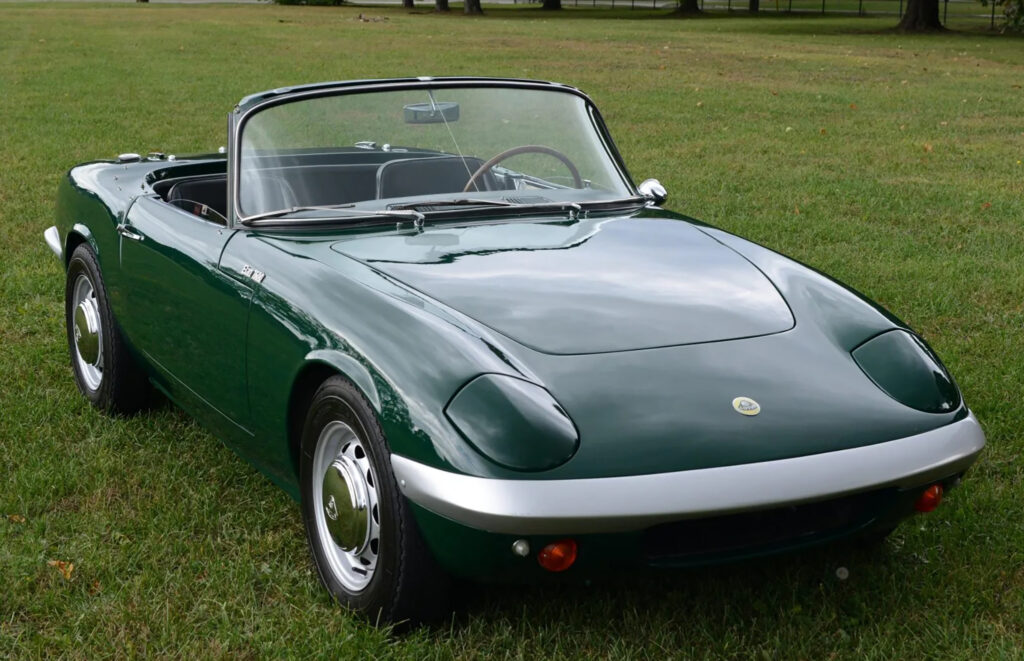
The Lotus Elan was the first Lotus road car to use a steel backbone chassis with a fibreglass body. This style of construction was to be repeated in subsequent Lotus models for nearly three decades. At approximately 680 kg, the Elan embodied Colin Chapman’s minimum weight design philosophy. The Elan was technologically advanced with a DOHC 1,558 cc engine, four-wheel disc brakes, rack and pinion steering, and 4-wheel independent suspension. Gordon Murray, designer of the McLaren F1 supercar, reportedly said that his only disappointment with the McLaren F1 was that he could not give it the perfect steering of the Lotus Elan.
In 2004, Sports Car International named the Elan number six on the list of Top Sports Cars of the 1960s. The original version of the car was designed by Ron Hickman who also designed the first Lotus Europa as part of Lotus’ GT40 project bid and made his fortune having designed the Black & Decker Workmate.
Because of its successful design and rigorous attention to cost control on the body, chassis, engine and transmission, the Elan become Lotus’ first commercial success and contributed to the funding of its achievements in racing over the next ten years. It revived a company stretched thin by the more exotic, expensive to build, and rather unreliable Lotus Elite, which used a fiberglass monocoque body/chassis and all aluminium Coventry Climax engine.
| BODYWORK | ||
| BODY TYPE | 2 seater convertible/cabriolet | |
| NUMBER OF DOORS | 2 | |
| DESIGNER | ||
| DIMENSIONS & WEIGHTS | ||
| WHEELBASE | 2134 mm | 84 inches |
| TRACK/TREAD (FRONT) | 1194 mm | 47 inches |
| TRACK/TREAD (REAR) | 1194 mm | 47 inches |
| LENGTH | 3689 mm | 145.2 inches |
| WIDTH | 1422 mm | 56 inches |
| HEIGHT | 1105 mm | 43.5 inches |
| GROUND CLEARANCE | 152 mm | 6 inches |
| LENGTH:WHEELBASE RATIO | 1.73 | |
| KERB WEIGHT | 585 kg | 1290 lb |
| WEIGHT DISTRIBUTION | ||
| FUEL TANK CAPACITY | 45.5 litres | 10 [12] UK [US] gal. |
| AERODYNAMICS | ||
| DRAG COEFFICIENT | ||
| FRONTAL AREA | ||
| CDA | ||
| POWERTRAIN | ||
| ENGINE TYPE | naturally aspirated petrol | |
| ENGINE MANUFACTURER | Ford | |
| ENGINE CODE | 116-E | |
| CYLINDERS | Straight 4 | |
| CAPACITY | 1.5 litre 1499 cc (91.475 cu in) | |
| BORE × STROKE | 81 × 72.7 mm 3.19 × 2.86 in | |
| BORE/STROKE RATIO | 1.11 | |
| VALVE GEAR | double overhead camshaft(DOHC) 2 valves per cylinder 8 valves in total | |
| MAXIMUM POWER OUTPUT (NET) | 101 PS (100 bhp) (75 kW) at 5700 rpm | |
| MAXIMUM TORQUE (NET) | 138 Nm (102 ft·lb) (14.1 kgm) at 4500 rpm | |
| SPECIFIC OUTPUT (NET) | 49.7 kW/litre 67.6 ps/litre 66.7 bhp/litre 1.09 bhp/cu in | |
| SPECIFIC TORQUE (NET) | 92.06 Nm/litre 1.11 ft·lb/cu3 | |
| ENGINE CONSTRUCTION | ||
| SUMP | wet sumped | |
| COMPRESSION RATIO | 9.5:1 | |
| FUEL SYSTEM | 2 We 40 DCOE carbs | |
| BMEP (BRAKE MEAN EFFECTIVE PRESSURE) | 1156.9 kPa (167.8 psi) | |
| MAXIMUM RPM | ||
| CRANKSHAFT BEARINGS | 5 | |
| ENGINE COOLANT | Water | |
| UNITARY CAPACITY | 374.75 cc | |
| ASPIRATION | Normal | |
| COMPRESSOR | N/A | |
| INTERCOOLER | None | |
| CATALYTIC CONVERTER | N | |
| PERFORMANCE | ||
| ACCELERATION 0-80KM/H (50MPH) | ||
| ACCELERATION 0-60MPH | ||
| ACCELERATION 0-100KM/H | ||
| ACCELERATION 0-160KM/H (100MPH) | ||
| STANDING QUARTER-MILE | ||
| STANDING KILOMETRE | ||
| MAXIMUM SPEED | ||
| POWER-TO-WEIGHT RATIO | Higher is better 173.32 PS/tonne (1000 kg) 0.17 PS/kg 127.47 kW/tonne (1000 kg) 0.13 kW/kg 170.94 bhp/tonne (1000 kg) 0.17 bhp/kg 0.08 bhp/lb | |
| WEIGHT-TO-POWER RATIO | Lower is better 7.84 kg/kW 13.1 lb/bhp | |
| FUEL CONSUMPTION | ||
| FUEL CONSUMPTION | ||
| UNIVERSAL FUEL CONSUMPTION (CALCULATED FROM THE ABOVE) | ||
| LITRES/100KM | ||
| KM/LITRE | ||
| UK MPG | ||
| US MPG | ||
| CARBON DIOXIDE EMISSIONS | ||
| CARFOLIO CALCULATED CO2? | ||
| VED BAND (UK) | ||
| CO2 EFFIZIENZ (DE) | ||
| CHASSIS | ||
| ENGINE POSITION | front | |
| ENGINE LAYOUT | longitudinal | |
| DRIVE WHEELS | rear wheel drive | |
| TORQUE SPLIT | N/A | |
| STEERING | rack & pinion | |
| TURNS LOCK-TO-LOCK | 2.500 | |
| TURNING CIRCLE | 8.90 m | |
| FRONT SUSPENSION | I.W.CS. | |
| REAR SUSPENSION | I.LW. | |
| WHEEL SIZE FRONT | ||
| WHEEL SIZE REAR | ||
| TYRES FRONT | 5.20-13 | |
| TYRES REAR | 5.20-13 | |
| BRAKES F/R | Di/Di | |
| FRONT BRAKE DIAMETER | ||
| REAR BRAKE DIAMETER | ||
| BRAKED AREA | 2310 cm2 | |
| GEARBOX | 4 speed manual | |