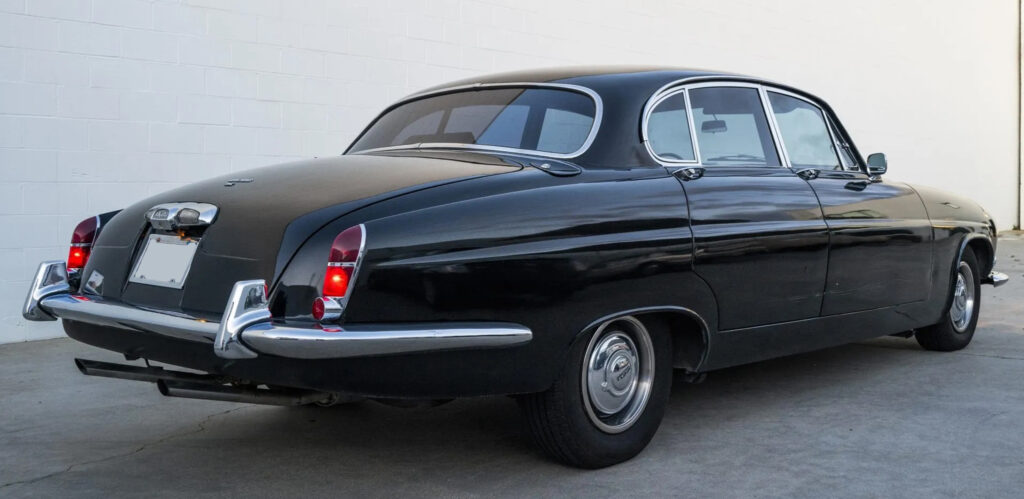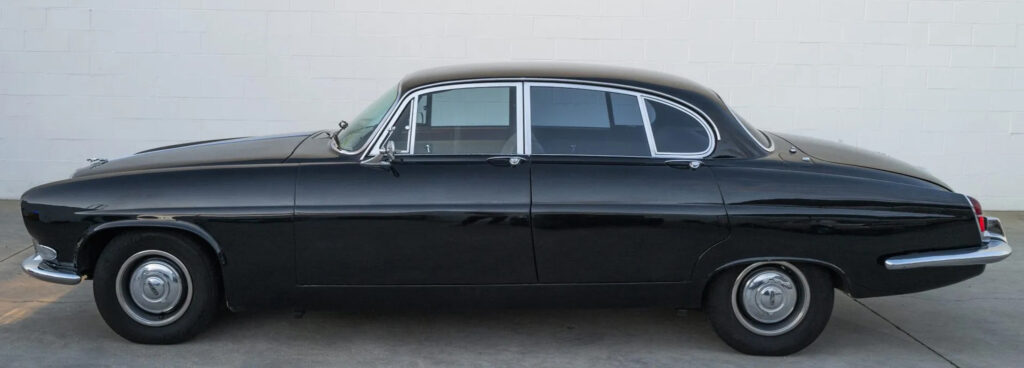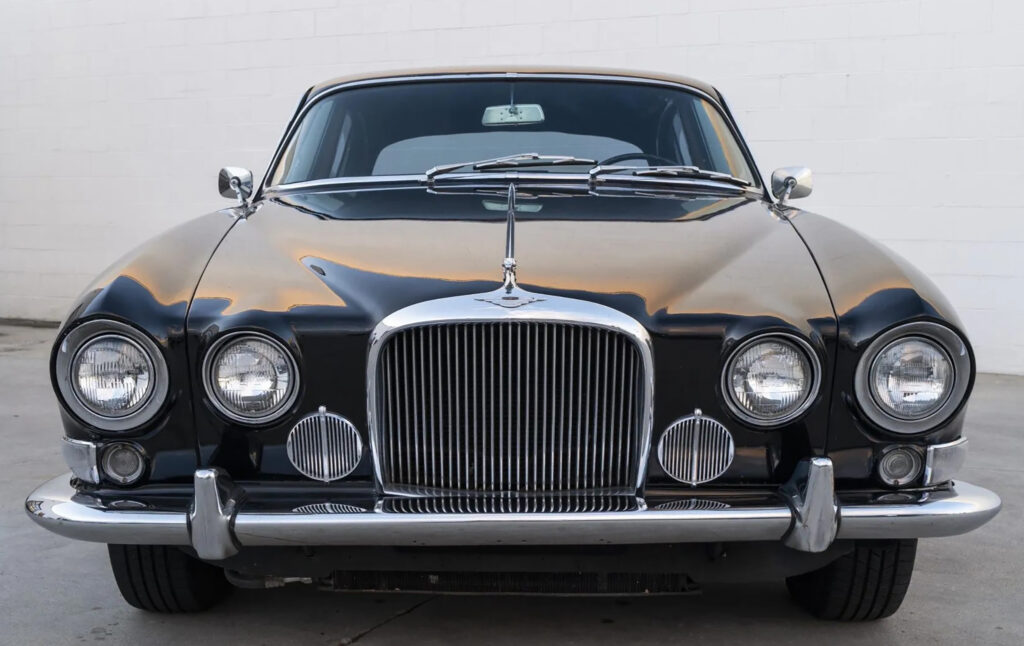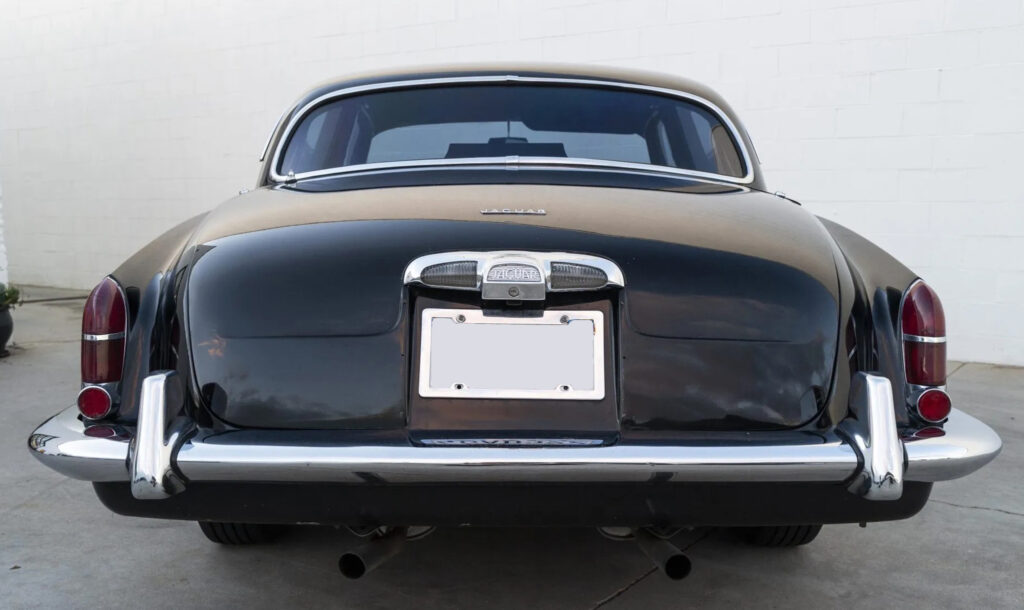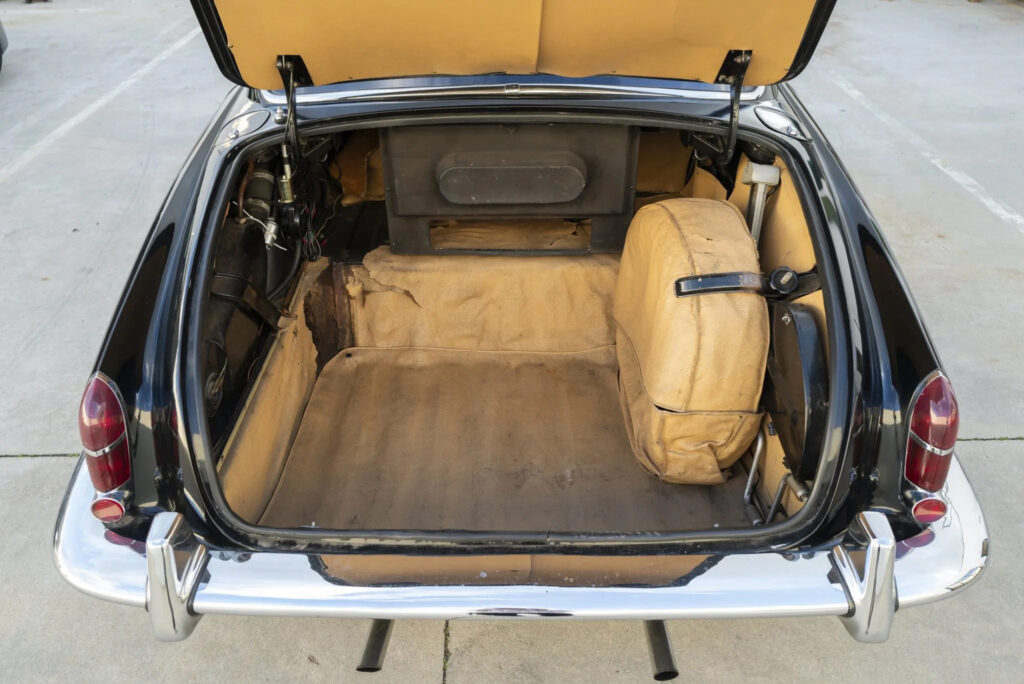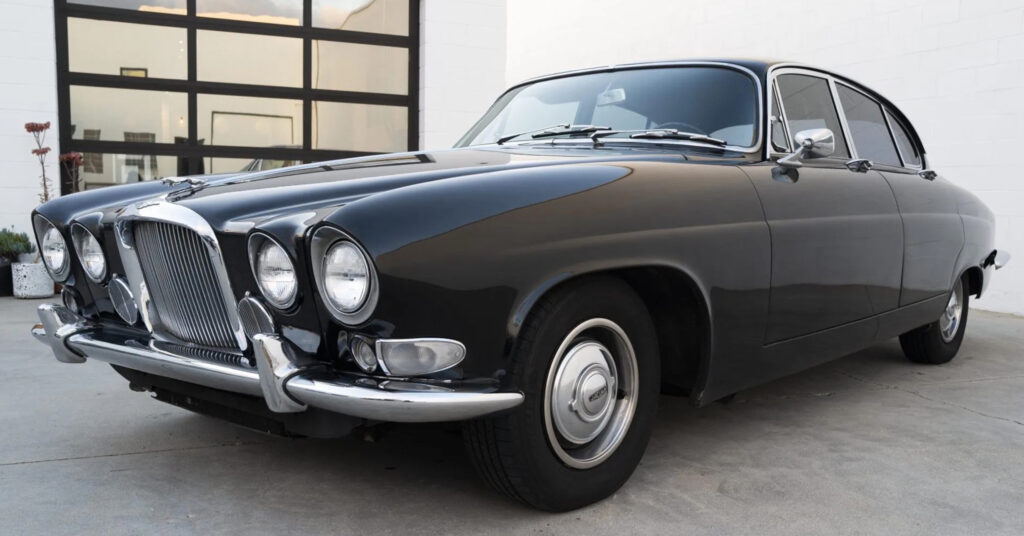
The Jaguar Mark X (Mark ten) was the top-of-the-range saloon car built by the British manufacturer Jaguar, primarily aimed at the United States market. The Mark X succeeded the Mark IX as the company’s largest saloon model.
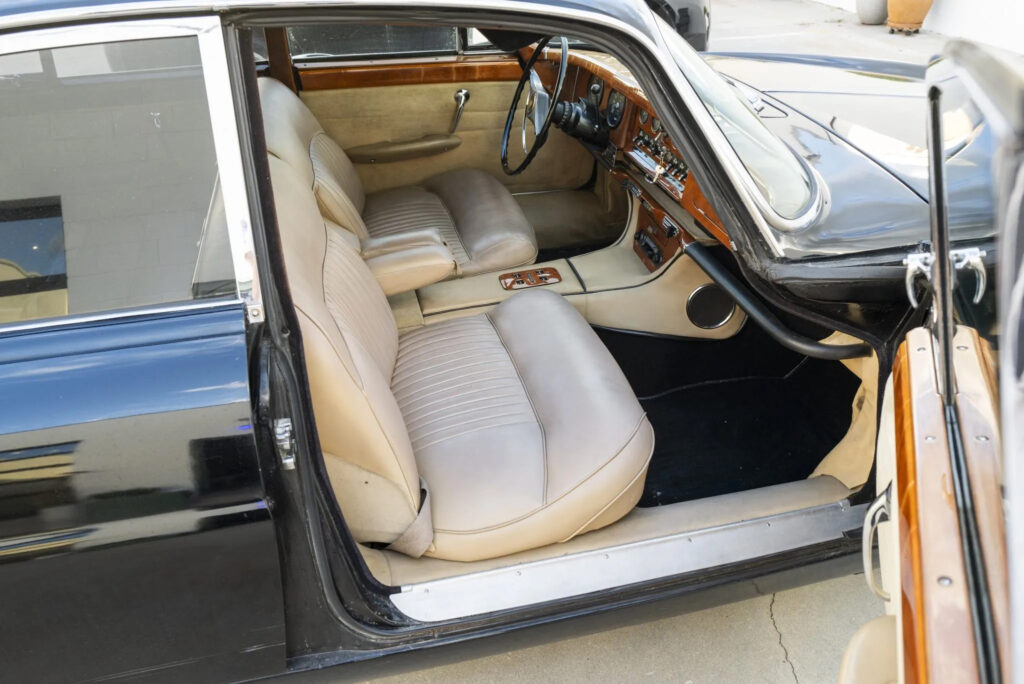
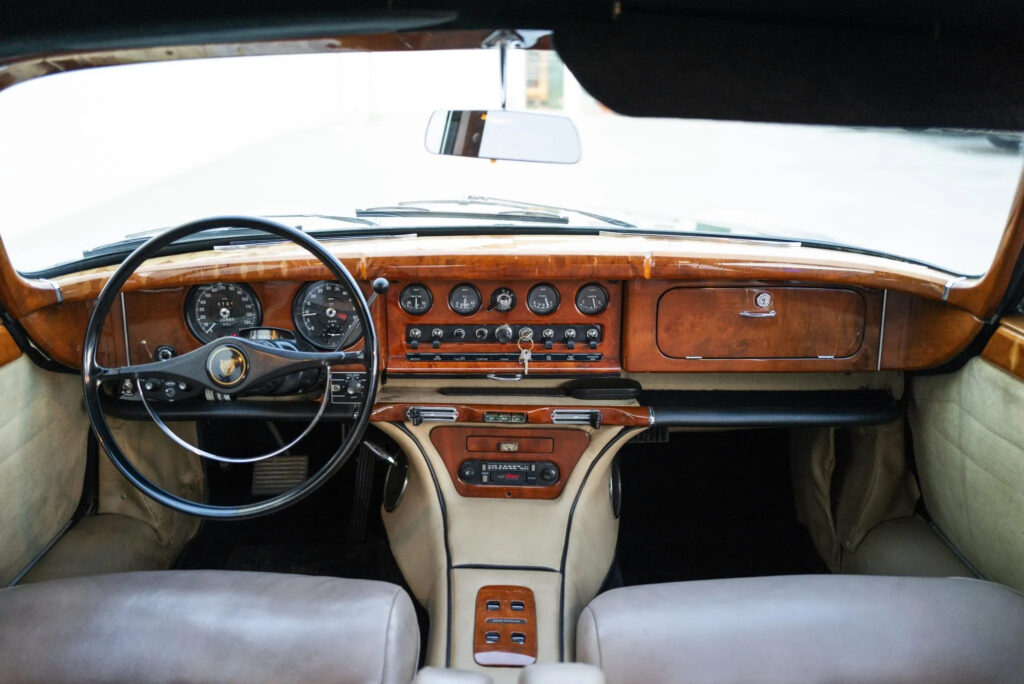
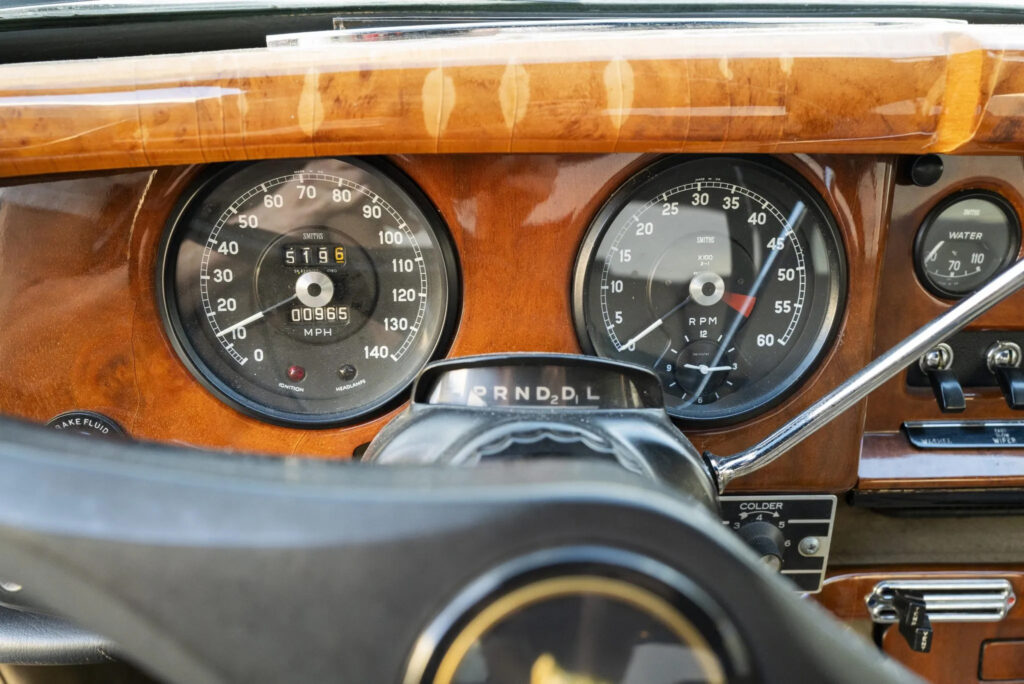
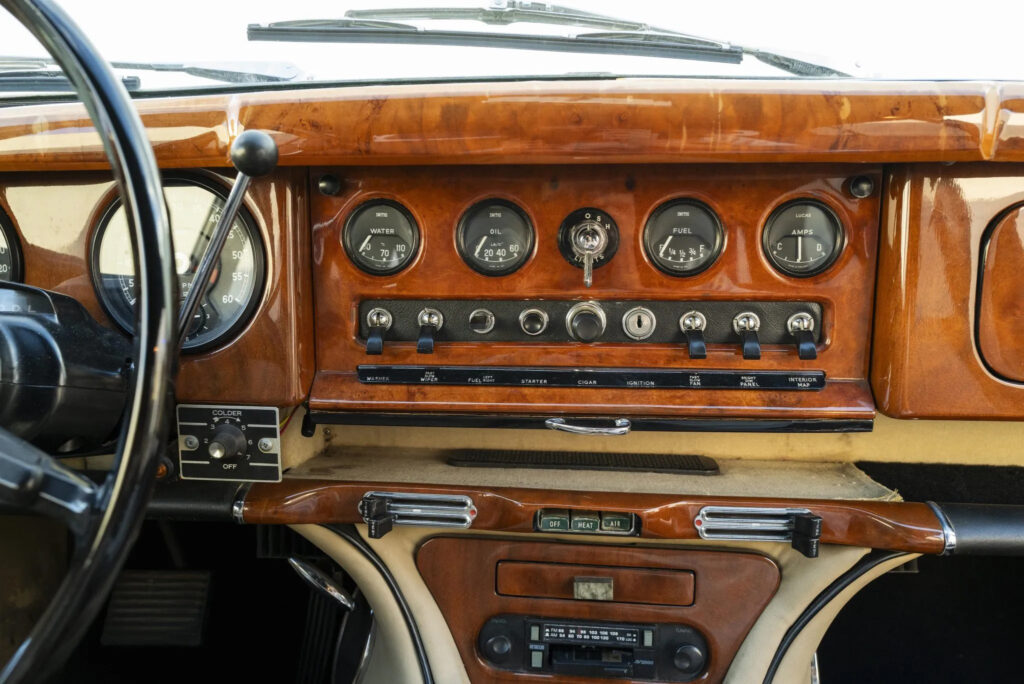
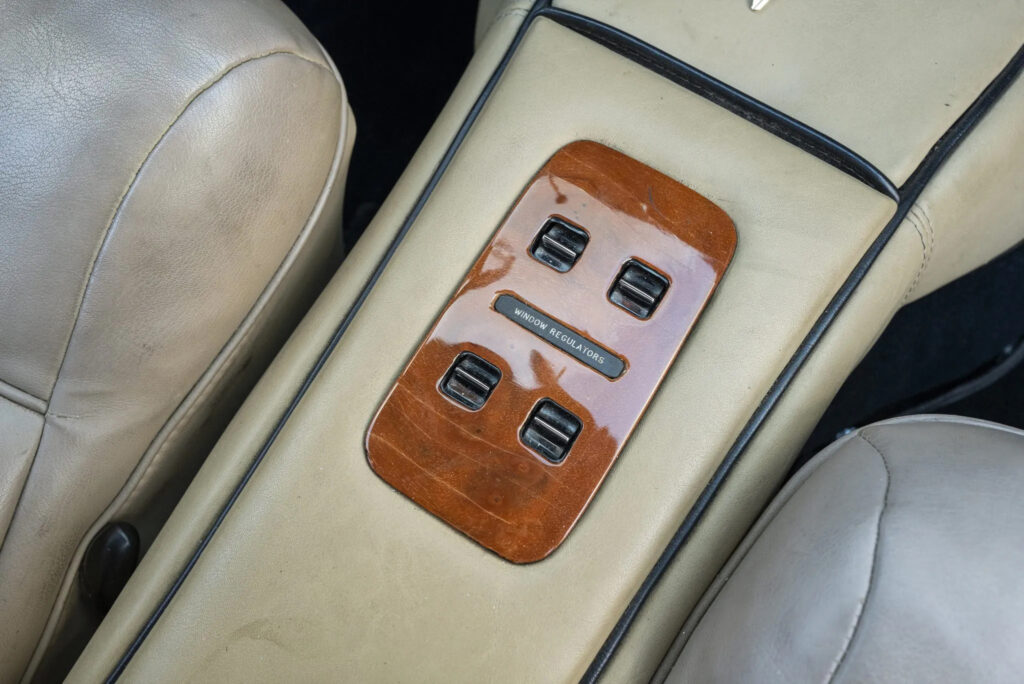
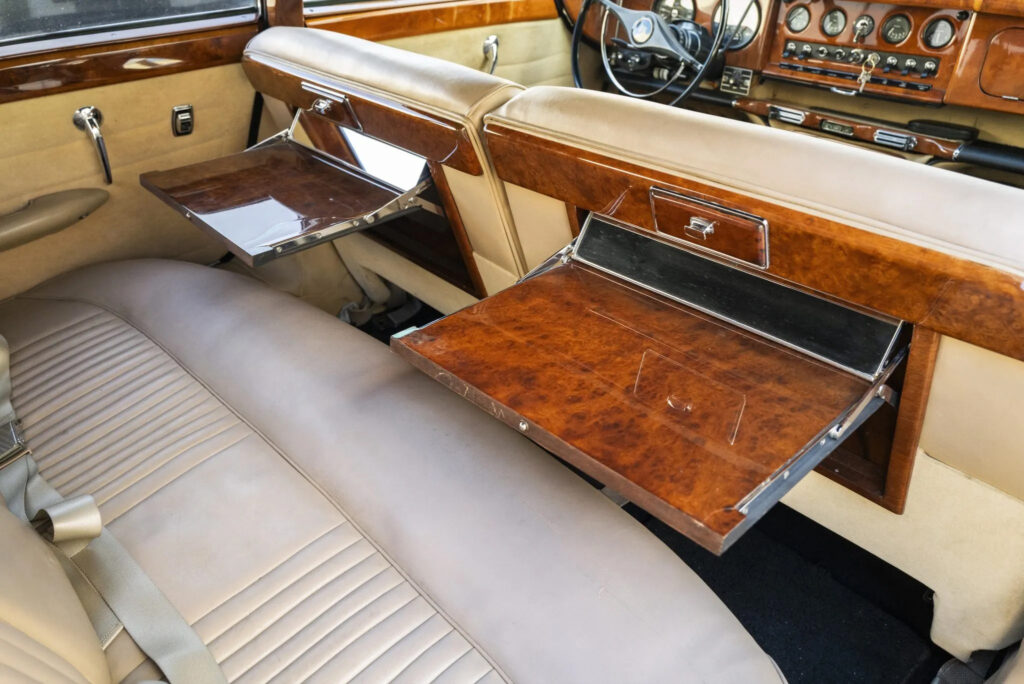
The unitary construction body-shell was codenamed “Zenith” during development and this floor pan continued in production long after Mark X production ended, as the DS 420 Limousine. The new style, four headlamps set into rounded front fenders with a vaned grill, first appeared on the Mark X. The interior was the last Jaguar with abundant standard woodwork, including the dashboard, escutcheons, window trim, a pair of large bookmatched fold out rear picnic tables, and a front seat pull-out picnic table stowed beneath the instrument cluster. Later, air conditioning and a sound-proof glass division between the front and rear seats were added as options.
From its introduction until the arrival in 1962 of the low-slung XJ220, the Mark X stood as one of the widest production Jaguars ever built. Asked in 1972 if he thought the Mark X had grown rather too large, Jaguar chairman William Lyons, agreed that it “definitely” had: he opined that the then recently introduced and notably more compact Jaguar XJ6 was, by contrast an “ideal size”.
The substantial doors required helical torsion springs inside the door pillars to enable them to be opened from the inside with an acceptably low level of effort.
| type | Series Production Car |
| production years | 1961 – 1970 |
| built at | Coventry, England |
| production | 18500 |
| engine | Inline-6 |
| position | Front Longitudinal |
| driven wheels | RWD |
| BODYWORK | ||
| BODY TYPE | 4/5 seater sedan/saloon | |
| NUMBER OF DOORS | 4 | |
| DESIGNER | ||
| DIMENSIONS & WEIGHTS | ||
| WHEELBASE | 3048 mm | 120 inches |
| TRACK/TREAD (FRONT) | 1473 mm | 58 inches |
| TRACK/TREAD (REAR) | 1473 mm | 58 inches |
| LENGTH | 5131 mm | 202 inches |
| WIDTH | 1930 mm | 76 inches |
| HEIGHT | 1391 mm | 54.8 inches |
| GROUND CLEARANCE | 137 mm | 5.4 inches |
| LENGTH:WHEELBASE RATIO | 1.68 | |
| KERB WEIGHT | 1883 kg | 4151 lb |
| WEIGHT DISTRIBUTION | 54.1% front | |
| FUEL TANK CAPACITY | 90.9 litres | 20 [24] UK [US] gal. |
| AERODYNAMICS | ||
| DRAG COEFFICIENT | ||
| FRONTAL AREA | ||
| CDA | ||
| POWERTRAIN | ||
| ENGINE TYPE | naturally aspirated petrol | |
| ENGINE MANUFACTURER | Jaguar | |
| ENGINE CODE | ||
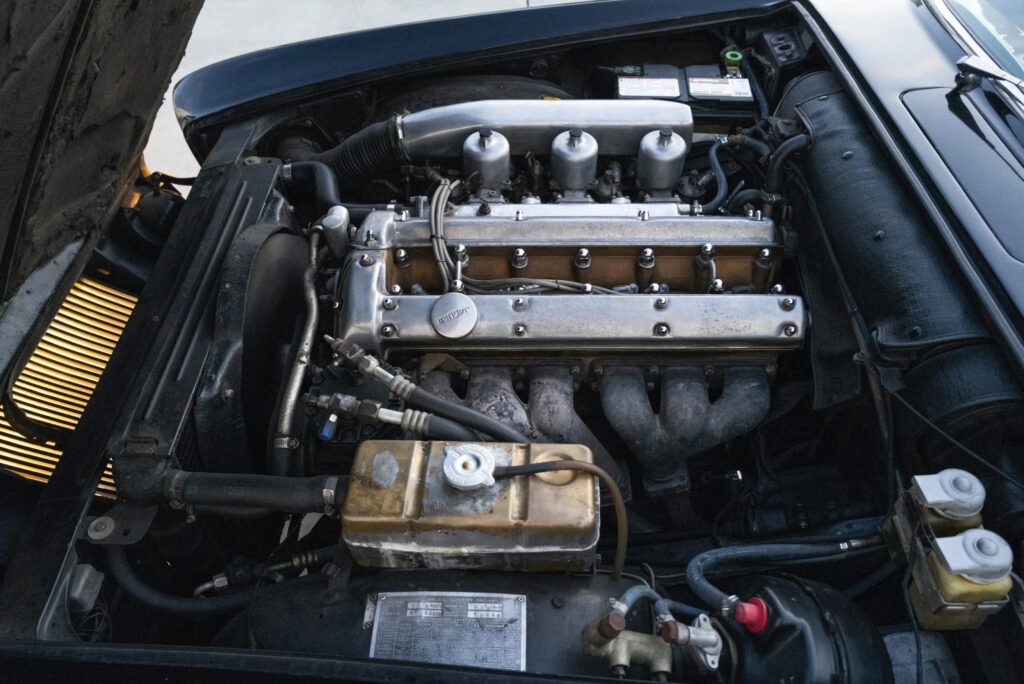
| CYLINDERS | Straight 6 | |
| CAPACITY | 4.2 litre 4235 cc (258.436 cu in) | |
| BORE × STROKE | 92.08 × 106 mm 3.63 × 4.17 in | |
| BORE/STROKE RATIO | 0.87 | |
| VALVE GEAR | double overhead camshaft(DOHC) 2 valves per cylinder 12 valves in total | |
| MAXIMUM POWER OUTPUT (GROSS) | 269 PS (265 bhp) (198 kW) at 5400 rpm | |
| MAXIMUM TORQUE (GROSS) | 385 Nm (284 ft·lb) (39.3 kgm) at 4000 rpm | |
| SPECIFIC OUTPUT (GROSS) | 46.7 kW/litre 63.4 ps/litre 62.6 bhp/litre 1.03 bhp/cu in | |
| SPECIFIC TORQUE (GROSS) | 90.91 Nm/litre 1.1 ft·lb/cu3 | |
| ENGINE CONSTRUCTION | ||
| SUMP | wet sumped | |
| COMPRESSION RATIO | 9:1 | |
| FUEL SYSTEM | 3 SU HD8 carbs | |
| BMEP (BRAKE MEAN EFFECTIVE PRESSURE) | 1142.4 kPa (165.7 psi) | |
| MAXIMUM RPM | ||
| CRANKSHAFT BEARINGS | 7 | |
| ENGINE COOLANT | Water | |
| UNITARY CAPACITY | 705.83 cc | |
| ASPIRATION | Normal | |
| COMPRESSOR | N/A | |
| INTERCOOLER | None | |
| CATALYTIC CONVERTER | N | |
| PERFORMANCE | ||
| ACCELERATION 0-80KM/H (50MPH) | 7.2 s | |
| ACCELERATION 0-60MPH | 9.9 s | |
| ACCELERATION 0-100KM/H | ||
| ACCELERATION 0-160KM/H (100MPH) | 27.4 s | |
| STANDING QUARTER-MILE | 17 s | |
| STANDING KILOMETRE | ||
| MAXIMUM SPEED | 196 km/h (122 mph) | |
| POWER-TO-WEIGHT RATIO | Higher is better 142.69 PS/tonne (1000 kg) 0.14 PS/kg 104.94 kW/tonne (1000 kg) 0.1 kW/kg 140.73 bhp/tonne (1000 kg) 0.14 bhp/kg 0.06 bhp/lb | |
| WEIGHT-TO-POWER RATIO | Lower is better 9.53 kg/kW 15.92 lb/bhp | |
| FUEL CONSUMPTION | ||
| FUEL CONSUMPTION | ||
| UNIVERSAL FUEL CONSUMPTION (CALCULATED FROM THE ABOVE) | ||
| LITRES/100KM | ||
| KM/LITRE | ||
| UK MPG | ||
| US MPG | ||
| CARBON DIOXIDE EMISSIONS | ||
| CARFOLIO CALCULATED CO2 ? | ||
| VED BAND (UK) | ||
| CO2 EFFIZIENZ (DE) | ||
| CHASSIS | ||
| ENGINE POSITION | front | |
| ENGINE LAYOUT | longitudinal | |
| DRIVE WHEELS | rear wheel drive | |
| TORQUE SPLIT | N/A | |
| STEERING | ||
| TURNS LOCK-TO-LOCK | 3.000 | |
| TURNING CIRCLE | 12.50 m | |
| FRONT SUSPENSION | I.STW.CS. | |
| REAR SUSPENSION | I.CS.RA. | |
| WHEEL SIZE FRONT | ||
| WHEEL SIZE REAR | ||
| TYRES FRONT | Dunlop SP41 205-14 | |
| TYRES REAR | Dunlop SP41 205-14 | |
| BRAKES F/R | Di/Di-S | |
| FRONT BRAKE DIAMETER | 277 mm | |
| REAR BRAKE DIAMETER | 264 mm | |
| BRAKED AREA | 2877 cm2 | |
| GEARBOX | 3 speed automatic | |
| TOP GEAR RATIO | 1 | |
| FINAL DRIVE RATIO | 3.54 | |