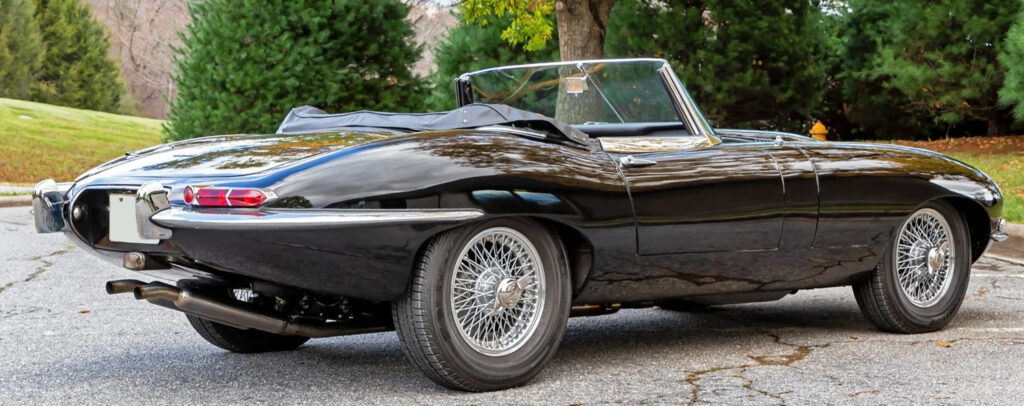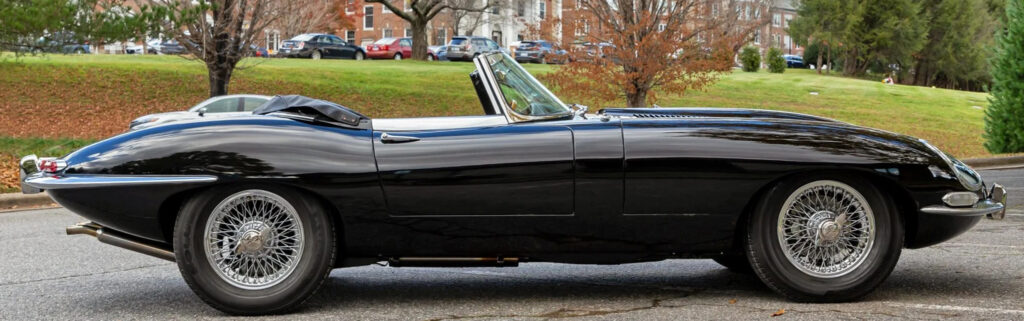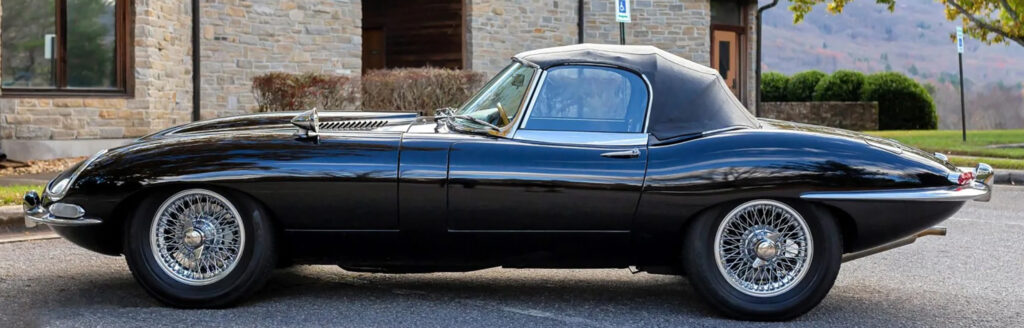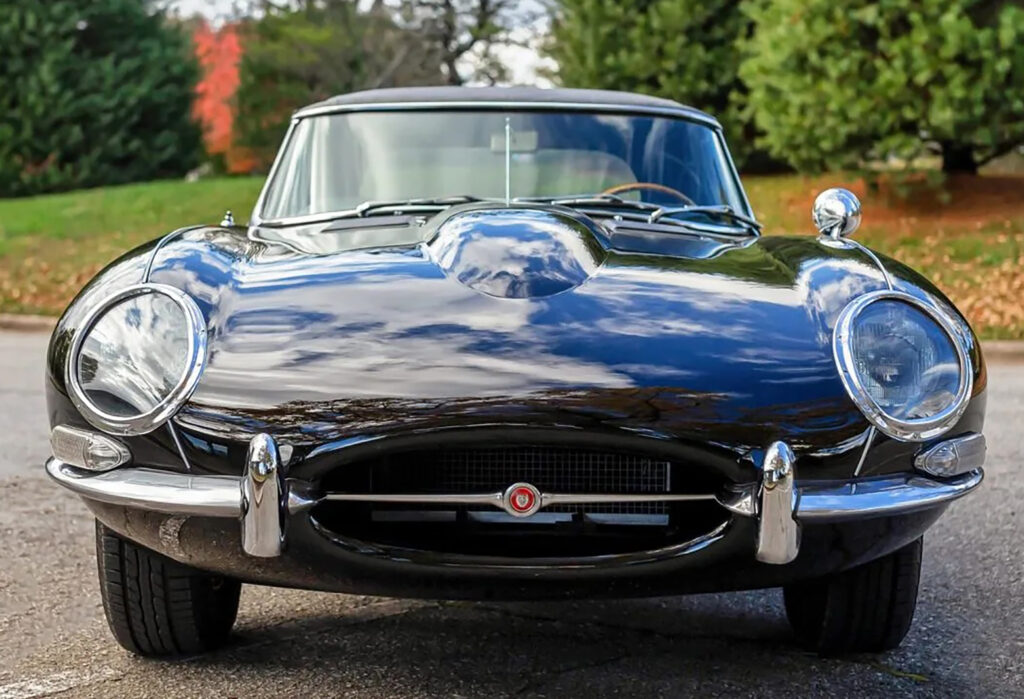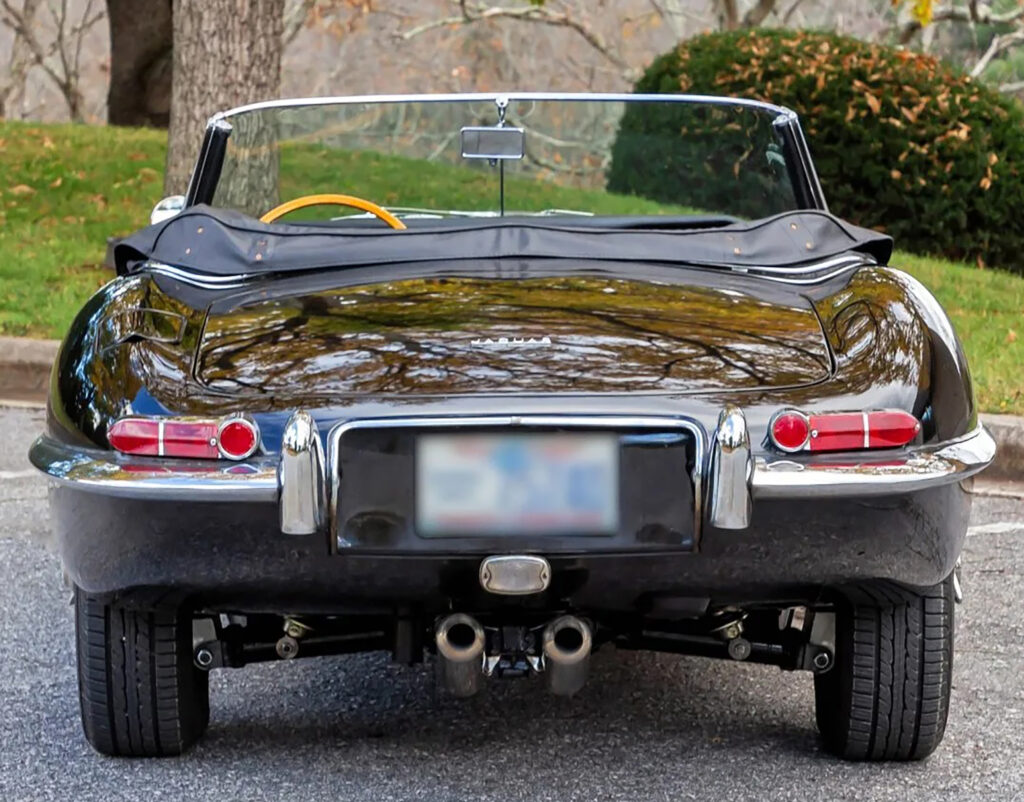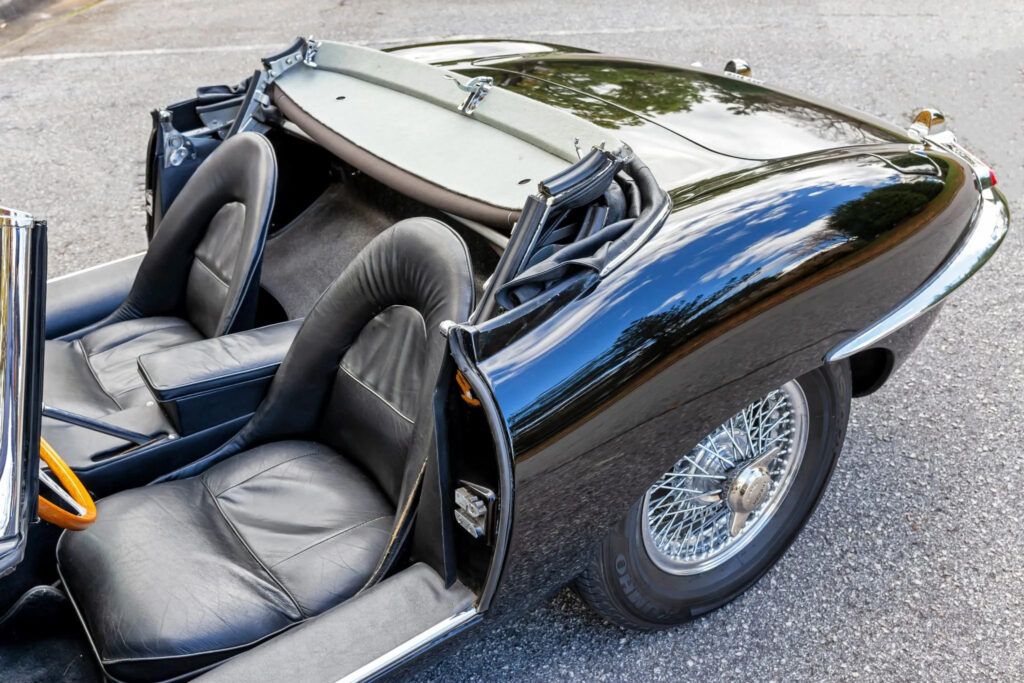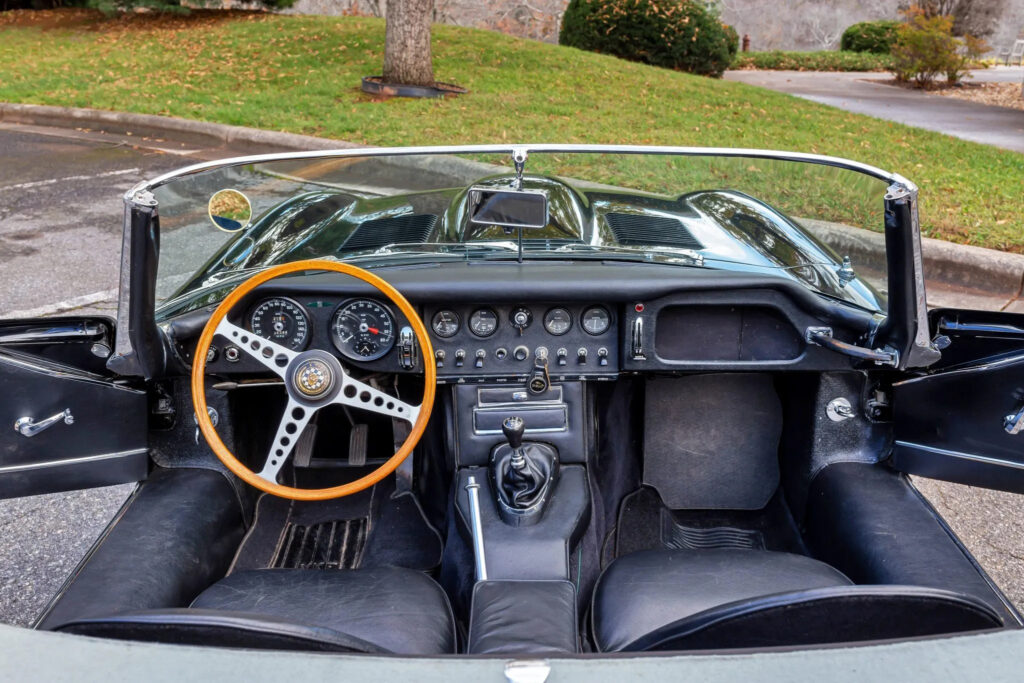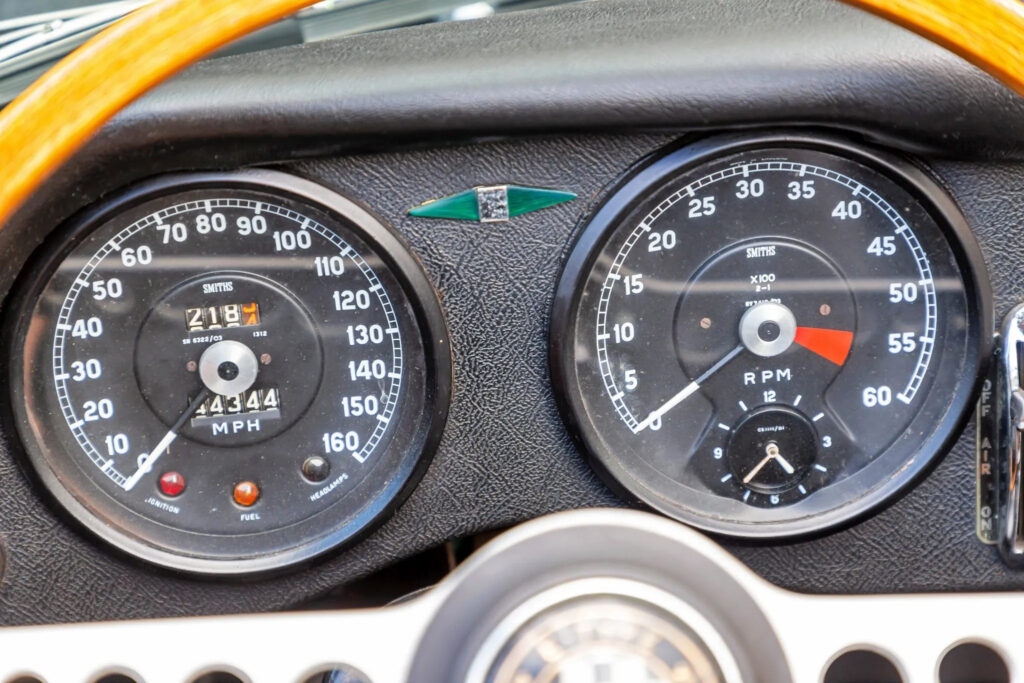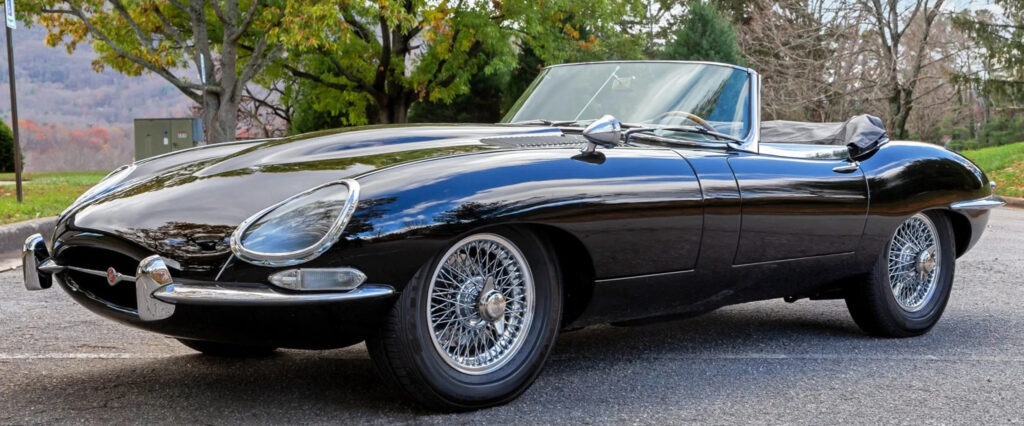
Initially launched in 1961 as the “E” Type Open Two Seater, the E-Type (XKE) is Jaguar’s most iconic car. Jaguar described it as being “developed from the famous “C” and “D” Type Sports-Racing cars” because it had a monocoque chassis similar to the D-Type. They called it “an entirely new concept of high speed motoring.” The result was a 150 mph cruiser that had companies like Ferrari scrambling to make sure there next generation supercar could match the E.
The first E-Type to be shown in public was driven to the Geneva Motor Show and introduced to the world. It was the product of five years of development and borrowed much from the preceding race cars coming from Coventry. In fact, the Competition Department in 1956 became the Prototype Shop to specifically develop the D-Type as a road car. In it, Malcom Sayer and Bob Knight created the shape for E1A, the very first E-Type prototype.
Because saloon production was Jaguar’s primary concern, only a small team was devoted to E-Type development. Test driver Norman Dewis worked primary with Bob Knight while Bill Heynes oversaw the entire project for Sir William Lyons.
From the first aluminum prototypes, Cyril Crouch had to design the E-Type from the bottom-up in steel. The process took an exceptionally long time to sort out, especially the new independent rear suspension. Bob Knight developed the new system which used a lower wishbones and half-shafts. Attached to the body by an enclosed sub-frame, the suspension was completely contained with the onboard brakes, twin spring/damper units and all the pickup points.
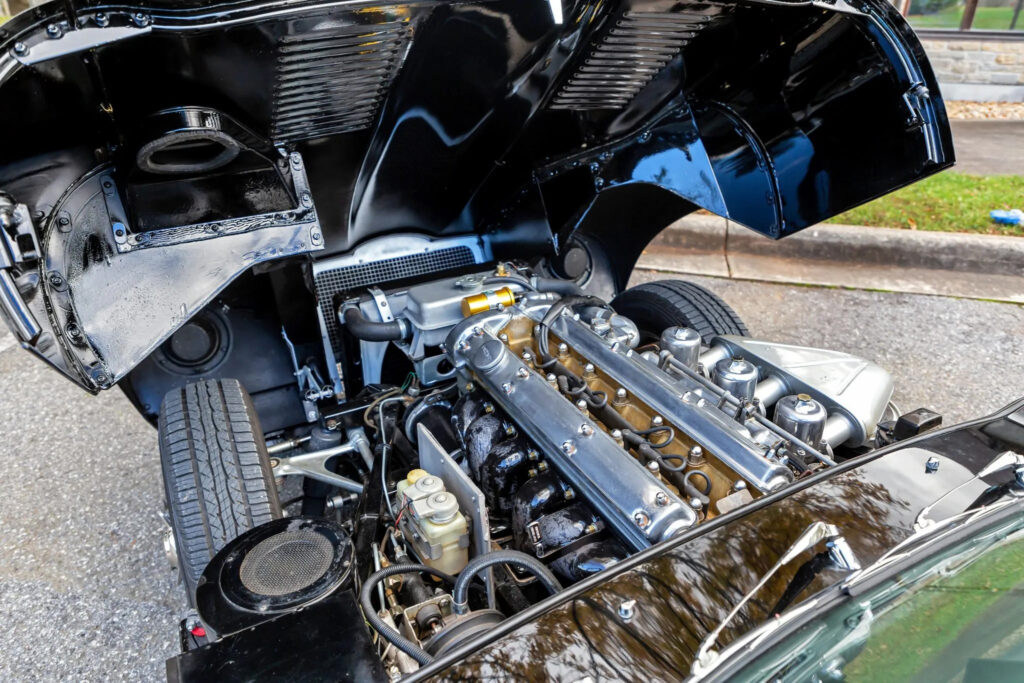
Like the D-Type, the E used a specialized front sub-frame made of Reynolds 531 alloy that attached to front bulkhead of the monocoque body. It supported the 3.8-litre engine first developed for the large Mark IX saloon.
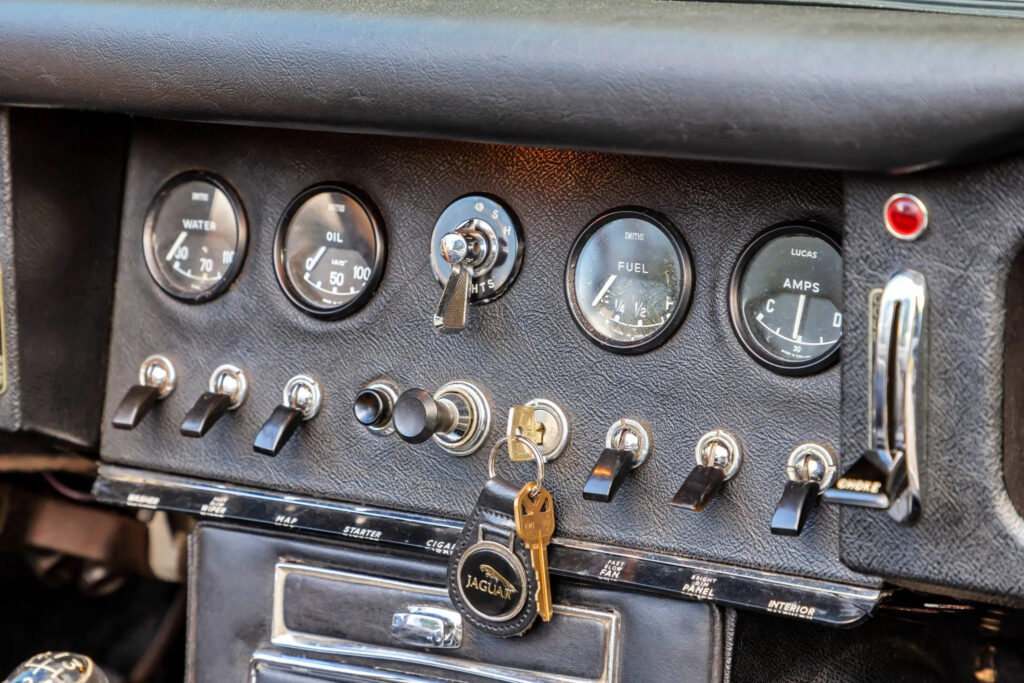
Production began in March of 1961. In 1964 Jaguar updated the engine to 4.2 liters which had noticeably more torque but retained the 150 mph top speed. With its all synchomesh gearbox, improved brake servo, clutch and electrical cooling system, the 4.2 became the preferred driver’s car. Additional refinements included better seats, revised dashboard, armrests and a storage compartment on the transmission tunnel.
The first 500 cars made in 1961 and 1962 are different from later production cars by having early details such has outside hood latches and a fully spot-welded hood with a separate louvre panel. These cars were only sold to Jaguar dealer’s top customers and are highly sought after for this reason.
| type | Series Production Car |
| production years | 1961 – 1964 |
| built at | England |
| body stylist | Malcom Sayer, Bob Knight |
| engineers | Bob Knight, Norman Dewis, Cyril Crouch |
| production | 7827 |
| price $ | $ 5,595 |
| engine | Inline-6 |
| position | Front, Longitudinal |
| aspiration | Natural |
| ignition | Lucas Distributor & Coil |
| block material | Cast Iron w/Aluminum Cylinder Head |
| valvetrain | Chain-Driven DOHC |
| fuel feed | Tripple SU Carburetors, HD8 2 |
| displacement | 3781 cc / 230.73 in³ |
| bore | 87.0 mm / 3.425 in |
| stroke | 106.0 mm / 4.1732 in |
| compression | 9.0:1 |
| power | 197.6 kw / 265.0 bhp @ 5500 rpm |
| specific output | 70.09 bhp per litre |
| bhp/weight | 216.15 bhp per tonne |
| torque | 352.5 nm / 260.0 ft lbs @ 4000 rpm |
| body / frame | Unitary Steel Monocoque w/Reynolds 531 Front Frame and Rear Steel Subframe |
| driven wheels | RWD |
| wheel type | 72-Spoke Knock-Off Wire Wheels |
| front tires | 6.40×15 Dunlop RS5 |
| front brakes | Dunlop Discs w/Servo Assist |
| f brake size | 9.5 x 279 mm / 0.375 x 11.0 in |
| rear brakes | Dunlop Discs w/Servo Assist |
| r brake size | 9.5 x 254 mm / 0.375 x 10.0 in |
| front wheels | F 38.1 x 15.2 cm / 15.0 x 6.0 in |
| rear wheels | R 38.1 x 16.5 cm / 15.0 x 6.5 in |
| steering | Rack & Pinion |
| f suspension | Adjustable Control Arms w/Torsion Bars, Hydrualic Telescopic Dampers |
| r suspension | Lower Wishbones & Half-Shafts w/Transverse Links, Twin Coil Springs, Hydrualic Telescopic Dampers |
| curb weight | 1226 kg / 2700 lbs |
| wheelbase | 2440 mm / 96.1 in |
| front track | 1270 mm / 50.0 in |
| rear track | 1270 mm / 50.0 in |
| length | 4450 mm / 175.2 in |
| width | 1660 mm / 65.4 in |
| height | 1220 mm / 48.0 in |
| transmission | 4-Speed Manual |
| tran clutch | Borg & Beck 10 |
| gear ratios | 3.377:1, 1.860:1, 1.283:1, 1.00:1 |
| final drive | 3.31:1 |
| top speed | ~241.4 kph / 150.0 mph |
| 0 – 60 mph | ~7.0 seconds |
| 0 – 100 mph | ~16.0 seconds |
| 0 – 1/4 mile | ~14.8 seconds |
| fuel capacity | 63.5 litres |