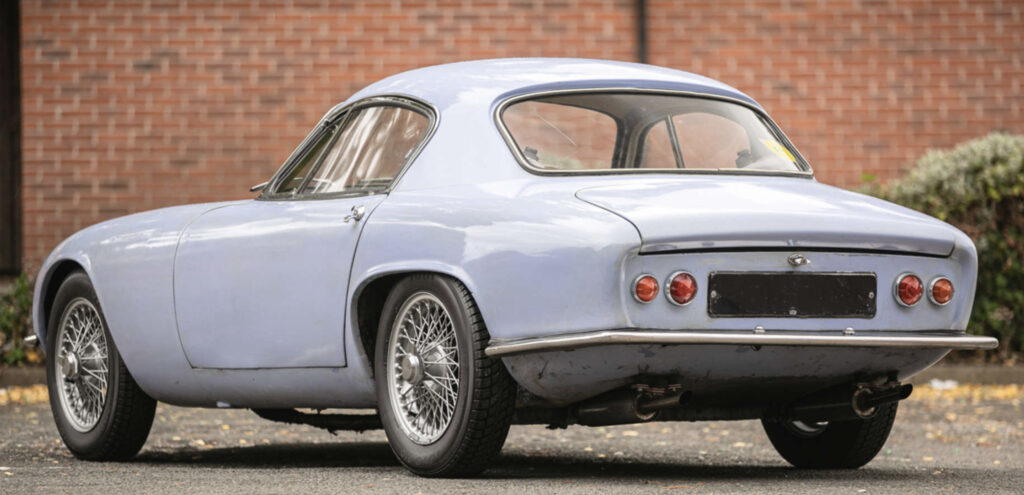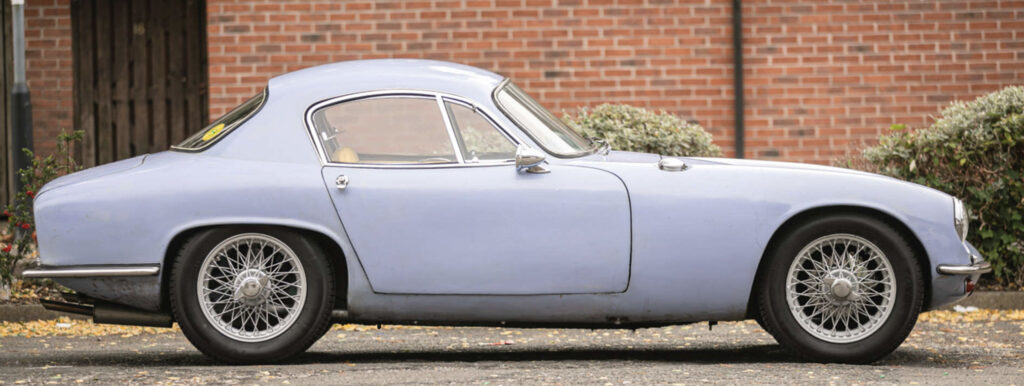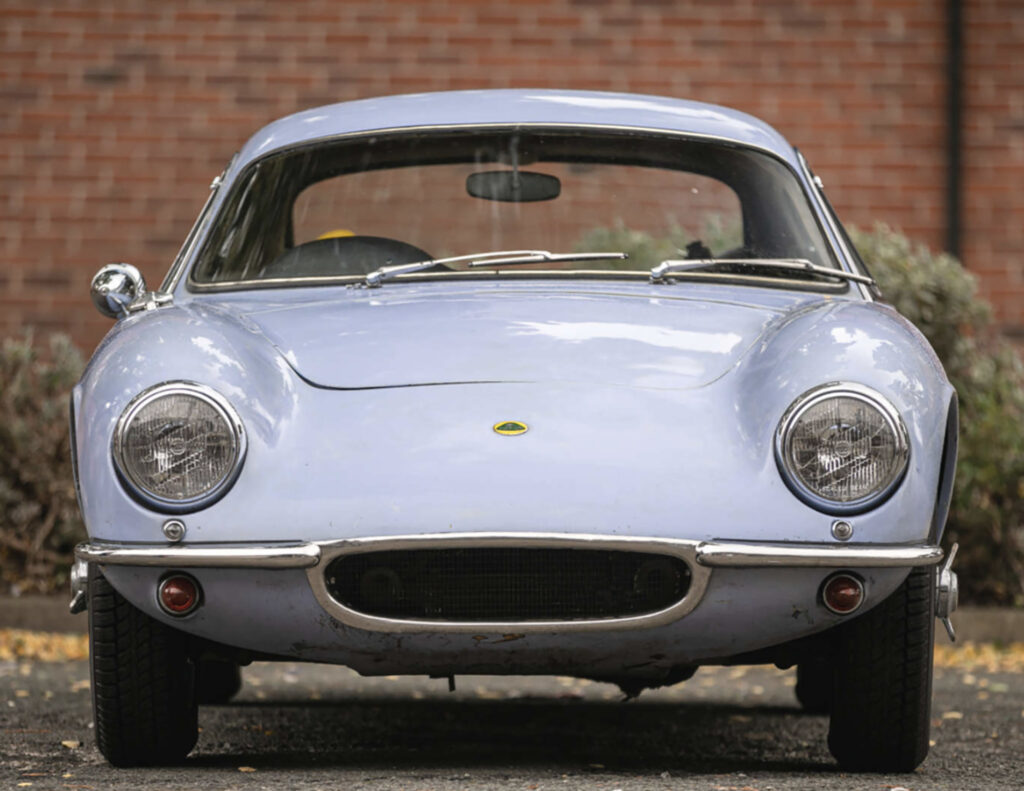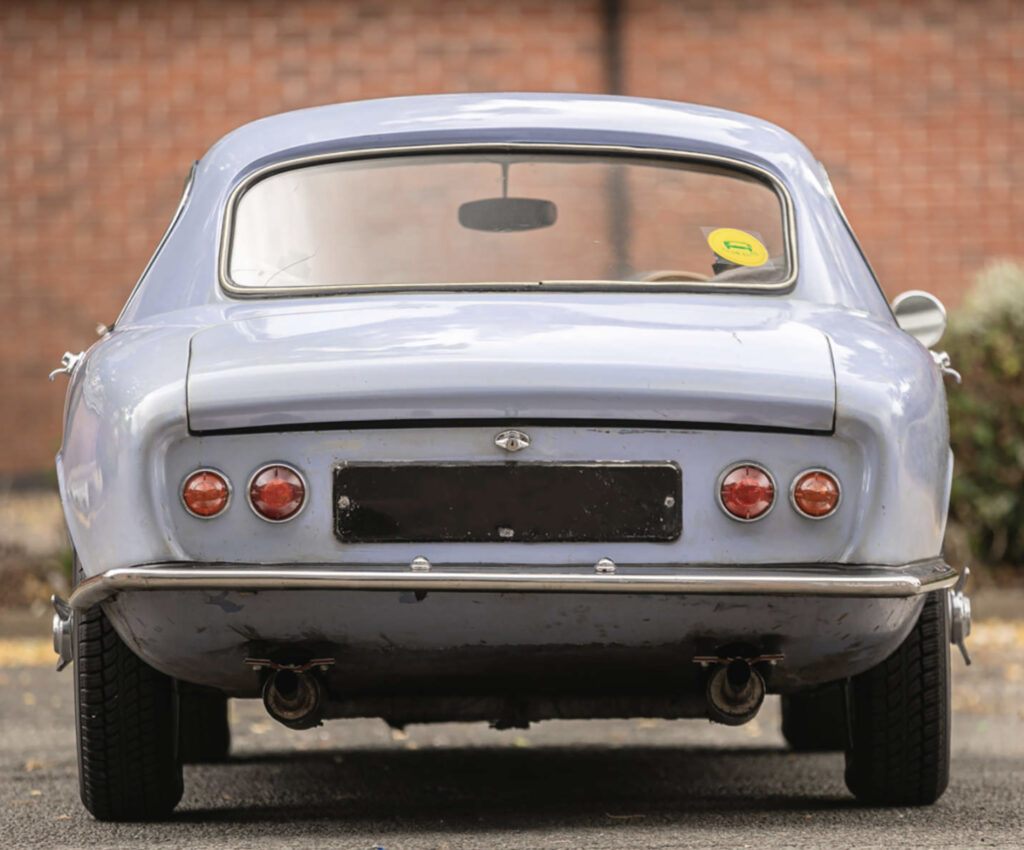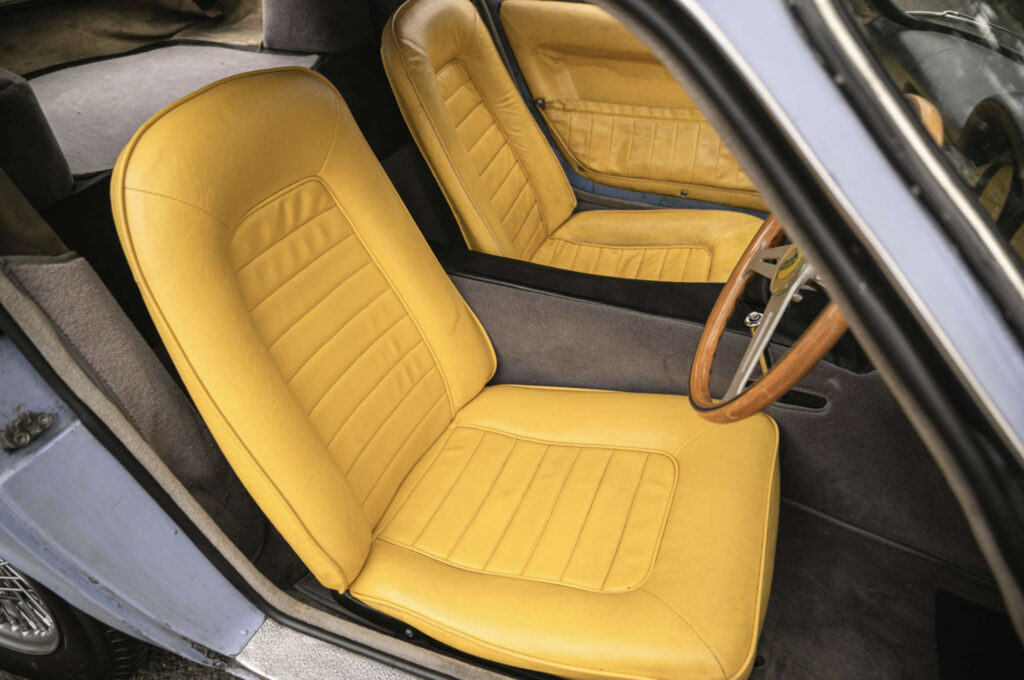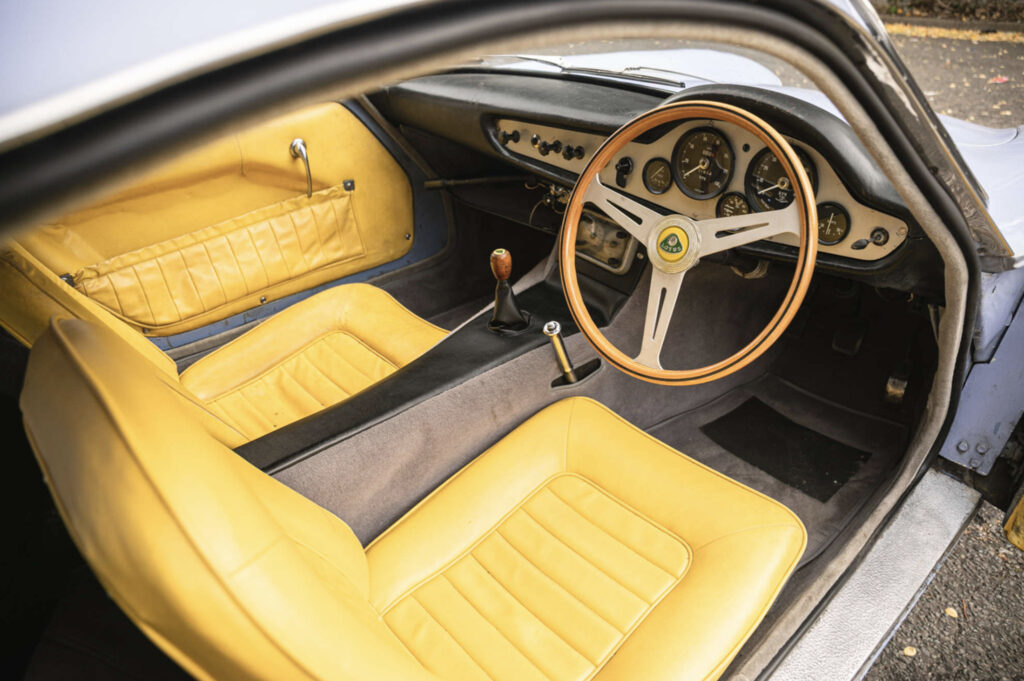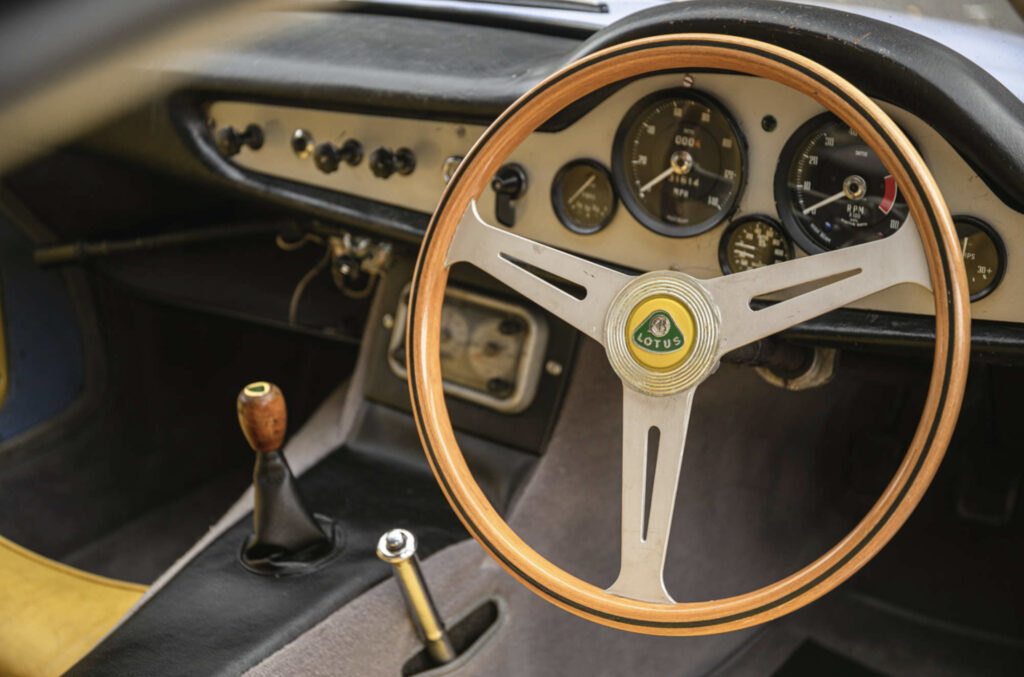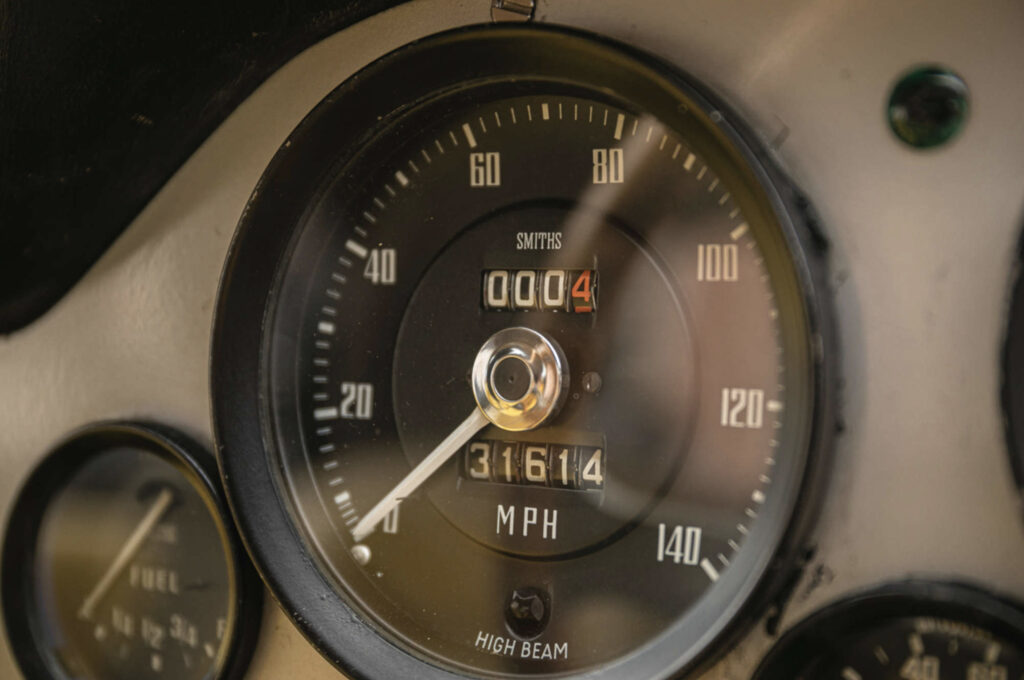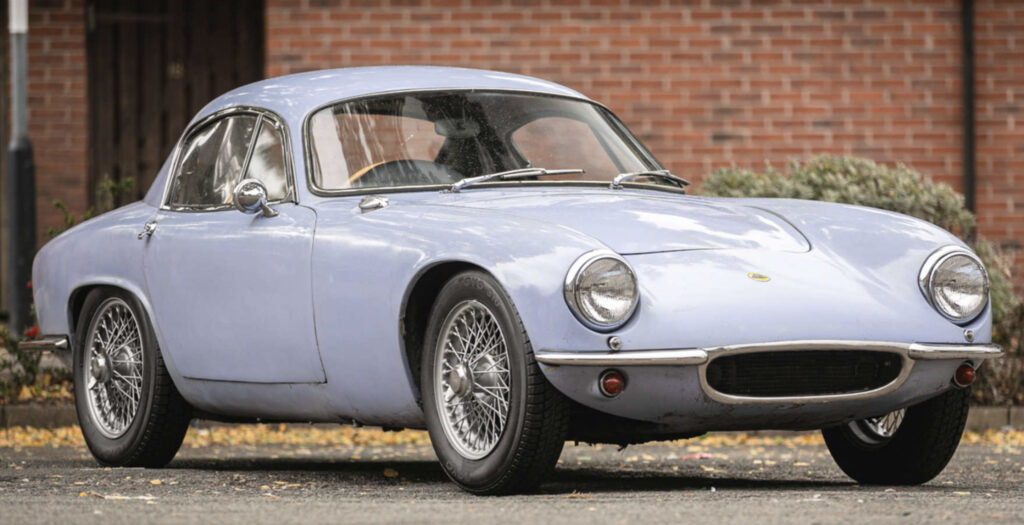
The original Type 14 (1957-1963) was a groundbreaking sports car. Its aerodynamic fiberglass body, lightweight construction, and nimble handling made it a force to be reckoned with on the track and a darling of enthusiasts. Think: sleek, low-slung, and impossibly agile. A decade later, the Elite name returned (Types 75 & 83) in the form of a luxurious shooting brake. While controversial in its looks, this Elite sought to blend practicality with Lotus’s performance pedigree.
Launched in 1957, the Lotus Elite Type 14 was the first car to bear the Elite moniker. It was a groundbreaking model for Lotus, embodying the company’s philosophy of “performance through lightweight” to an unprecedented degree. The Elite Type 14 was notable for being the world’s first car with a fully fiberglass monocoque construction, a pioneering approach that significantly reduced weight while increasing chassis rigidity.
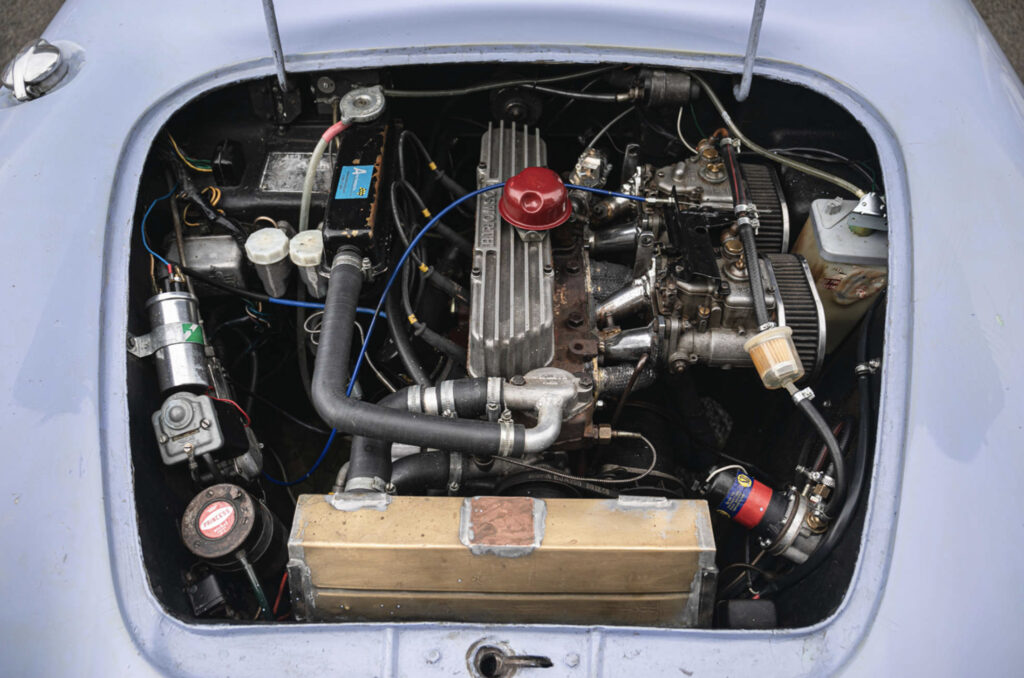
Designed by Peter Kirwan-Taylor with aerodynamics by Frank Costin, the Elite’s body was sleek and purposeful, boasting an incredibly low drag coefficient for its time. Under the hood, it featured a Coventry Climax FWE engine, a 1.2-liter inline-4, which was later expanded to 1.5 liters in subsequent models. Despite its modest engine size, the Elite’s lightweight construction allowed it to punch well above its weight class, offering nimble handling and brisk acceleration.
The Type 14 was also successful in motorsport, clinching class wins at the 24 Hours of Le Mans and achieving numerous victories in other sports car races, further cementing Lotus’s reputation in competitive racing.
The Lotus Elite name was revived in 1974 with the introduction of the Type 75. This model marked a significant departure from the ethos of the original Type 14. The Type 75 was envisioned as a more luxurious and comfortable grand tourer, a response to market demands for higher-end amenities without sacrificing the Lotus trademark of engaging driving dynamics.
The Type 75 featured a fiberglass body over a steel backbone chassis, a common Lotus engineering practice. It was powered by a 2.0-liter 907 DOHC inline-4 engine, which was the first engine designed and built in-house by Lotus. The Elite Type 75 boasted a more spacious and well-appointed interior than its predecessor, with an emphasis on comfort and practicality, including a back seat area that could accommodate small passengers or additional luggage.
While the Type 75 did not enjoy the same level of motorsport success as the Type 14, it was well-received for its blend of performance, comfort, and style. It laid the groundwork for future Lotus models that would continue to balance sportiness with luxury, influencing the design and development of subsequent Lotus vehicles.
The Lotus Elite Type 83, often considered a variant of the Type 75, was essentially the North American market version of the car, equipped with emissions equipment and other modifications required to meet US regulations. It shared much of its architecture and design with the Type 75 but was distinguished by its compliance with stricter safety and emissions standards.
The Lotus Elite models—Type 14, Type 75, and Type 83—each represent a distinct interpretation of the Lotus philosophy, from the pioneering lightweight construction of the Type 14 to the grand touring aspirations of the Type 75 and Type 83. Together, they encapsulate a rich history of innovation, performance, and adaptation to changing automotive landscapes. The Elite name, through these models, has left a legacy of engineering excellence and driving pleasure that continues to resonate in the automotive world.
- Manufacturer: Lotus Cars, Bristol Aeroplane Co.
- Production: 1957–1963
- Designer: Peter Kirwan-Taylor, Frank Costin
- Body style: 2-door coupé
- Layout: Front-engine, rear-wheel-drive
- Engine: 1.2 L Coventry Climax FWE Inline 4
- Transmission: 4-speed manual
- Wheelbase: 2,242 mm (88.3 in)
- Length: 3,759 mm (148.0 in)
- Width: 1,506 mm (59.3 in)
- Height: 1,181 mm (46.5 in)
- Kerb weight: 503.5 kg (1,110 lb)
| BODYWORK | ||
| BODY TYPE | 2 seater fixed-head coupé | |
| NUMBER OF DOORS | 2 | |
| DESIGNER | Peter Kirwan-Taylor | |
| DIMENSIONS & WEIGHTS | ||
| WHEELBASE | 2235 mm | 88 inches |
| TRACK/TREAD (FRONT) | 1194 mm | 47 inches |
| TRACK/TREAD (REAR) | 1321 mm | 52 inches |
| LENGTH | 3708 mm | 146 inches |
| WIDTH | 1505 mm | 59.3 inches |
| HEIGHT | 1181 mm | 46.5 inches |
| GROUND CLEARANCE | 165 mm | 6.5 inches |
| LENGTH:WHEELBASE RATIO | 1.66 | |
| KERB WEIGHT | 506 kg | 1116 lb |
| WEIGHT DISTRIBUTION | ||
| FUEL TANK CAPACITY | 29.5 litres | 6.5 [7.8] UK [US] gal. |
| AERODYNAMICS | ||
| DRAG COEFFICIENT | 0.29 | |
| FRONTAL AREA | ||
| CDA | ||
| POWERTRAIN | ||
| ENGINE TYPE | naturally aspirated petrol | |
| ENGINE MANUFACTURER | Coventry-Climax | |
| ENGINE CODE | ||
| CYLINDERS | Straight 4 | |
| CAPACITY | 1.2 litre 1216 cc (74.205 cu in) | |
| BORE × STROKE | 76.2 × 66.65 mm 3 × 2.62 in | |
| BORE/STROKE RATIO | 1.14 | |
| VALVE GEAR | single overhead camshaft(SOHC) 2 valves per cylinder 8 valves in total | |
| MAXIMUM POWER OUTPUT | 72 PS (71 bhp) (53 kW) at 6100 rpm | |
| MAXIMUM TORQUE | 104 Nm (77 ft·lb) (10.6 kgm) at 3750 rpm | |
| SPECIFIC OUTPUT | 43.5 kW/litre 59.2 ps/litre 58.4 bhp/litre 0.96 bhp/cu in | |
| SPECIFIC TORQUE | 85.53 Nm/litre 1.03 ft·lb/cu3 | |
| ENGINE CONSTRUCTION | ||
| SUMP | ||
| COMPRESSION RATIO | 10:1 | |
| FUEL SYSTEM | 1 SU carb | |
| BMEP (BRAKE MEAN EFFECTIVE PRESSURE) | 1074.8 kPa (155.9 psi) | |
| MAXIMUM RPM | ||
| CRANKSHAFT BEARINGS | ||
| ENGINE COOLANT | Water | |
| UNITARY CAPACITY | 304 cc | |
| ASPIRATION | Normal | |
| COMPRESSOR | N/A | |
| INTERCOOLER | None | |
| CATALYTIC CONVERTER | N | |
| PERFORMANCE | ||
| ACCELERATION 0-80KM/H (50MPH) | 8 s | |
| ACCELERATION 0-60MPH | 11.4 s | |
| ACCELERATION 0-100KM/H | ||
| ACCELERATION 0-160KM/H (100MPH) | ||
| STANDING QUARTER-MILE | 18.4 s | |
| STANDING KILOMETRE | ||
| MAXIMUM SPEED | 180 km/h (112 mph) | |
| POWER-TO-WEIGHT RATIO | Higher is better 142.27 PS/tonne (1000 kg) 0.14 PS/kg 104.63 kW/tonne (1000 kg) 0.1 kW/kg 140.32 bhp/tonne (1000 kg) 0.14 bhp/kg 0.06 bhp/lb | |
| WEIGHT-TO-POWER RATIO | Lower is better 9.56 kg/kW 15.96 lb/bhp | |
| FUEL CONSUMPTION | ||
| FUEL CONSUMPTION | ||
| UNIVERSAL FUEL CONSUMPTION (CALCULATED FROM THE ABOVE) | ||
| LITRES/100KM | ||
| KM/LITRE | ||
| UK MPG | ||
| US MPG | ||
| CARBON DIOXIDE EMISSIONS | ||
| CARFOLIO CALCULATED CO2? | ||
| VED BAND (UK) | ||
| CO2 EFFIZIENZ (DE) | ||
| CHASSIS | ||
| ENGINE POSITION | front | |
| ENGINE LAYOUT | longitudinal | |
| DRIVE WHEELS | rear wheel drive | |
| TORQUE SPLIT | N/A | |
| STEERING | ||
| TURNS LOCK-TO-LOCK | ||
| TURNING CIRCLE | ||
| FRONT SUSPENSION | I.CS.W. | |
| REAR SUSPENSION | I.ChapmanStrut.CS. | |
| WHEEL SIZE FRONT | ||
| WHEEL SIZE REAR | ||
| TYRES FRONT | ||
| TYRES REAR | ||
| BRAKES F/R | ||
| FRONT BRAKE DIAMETER | ||
| REAR BRAKE DIAMETER | ||
| BRAKED AREA | ||
| GEARBOX | 4 speed manual | |