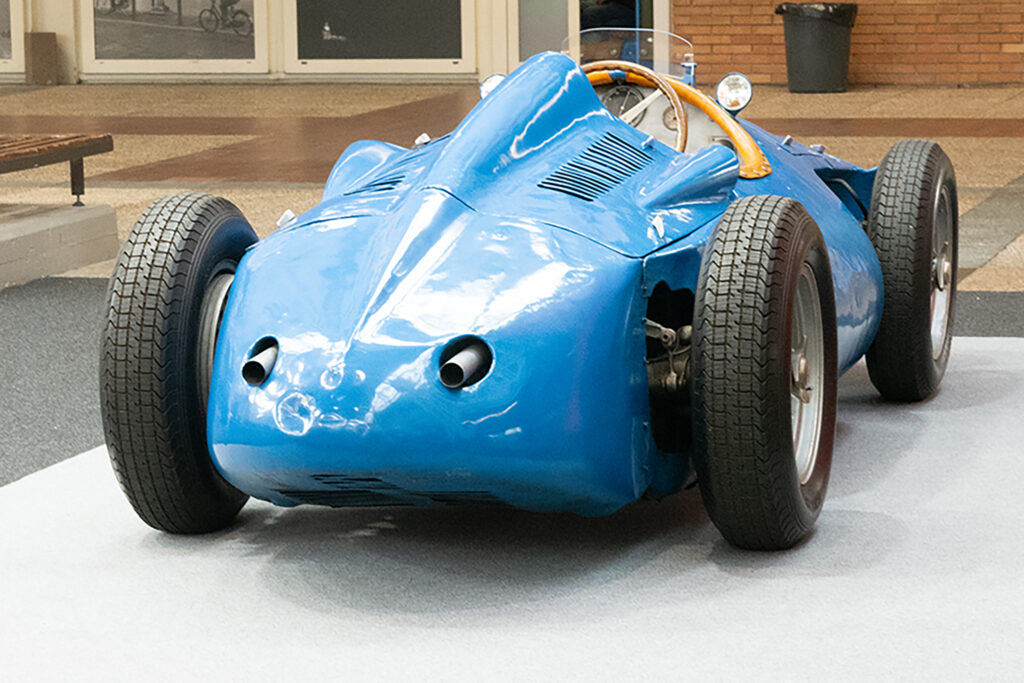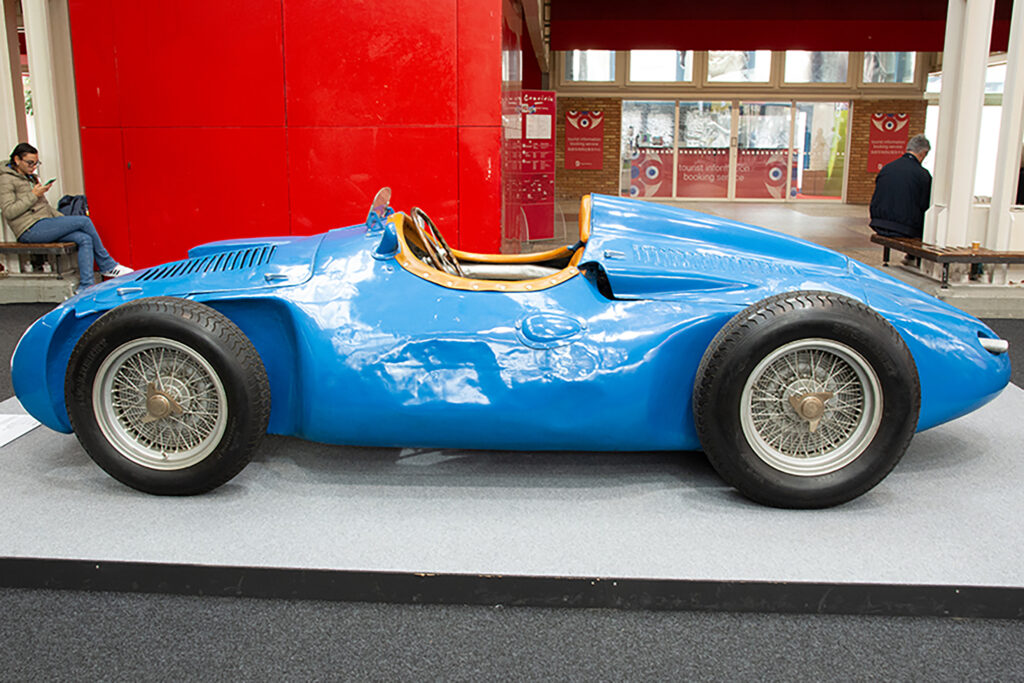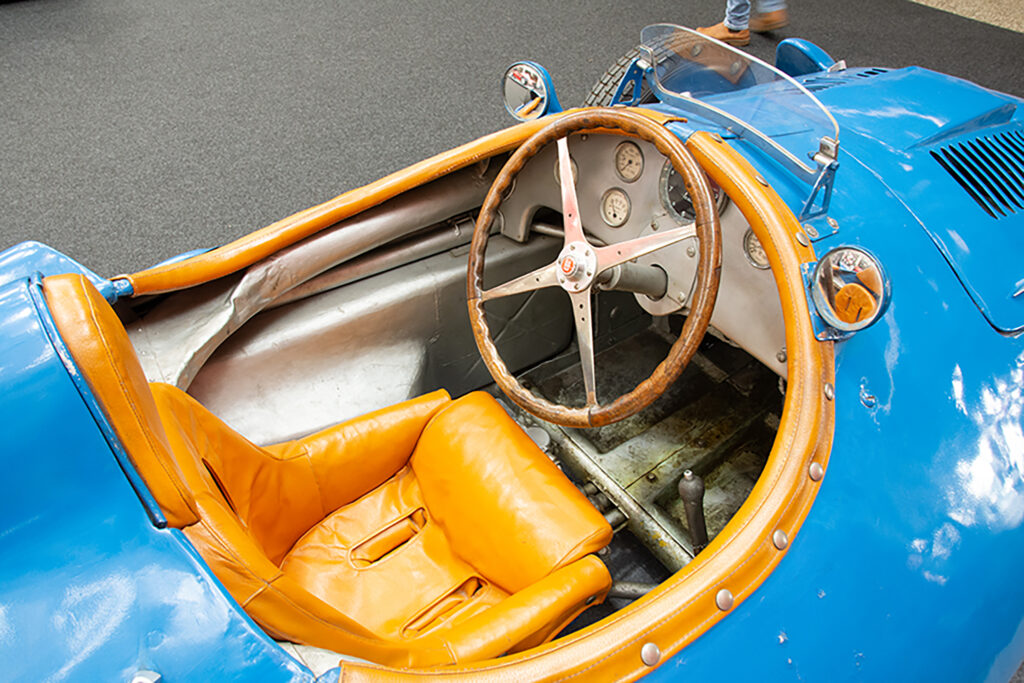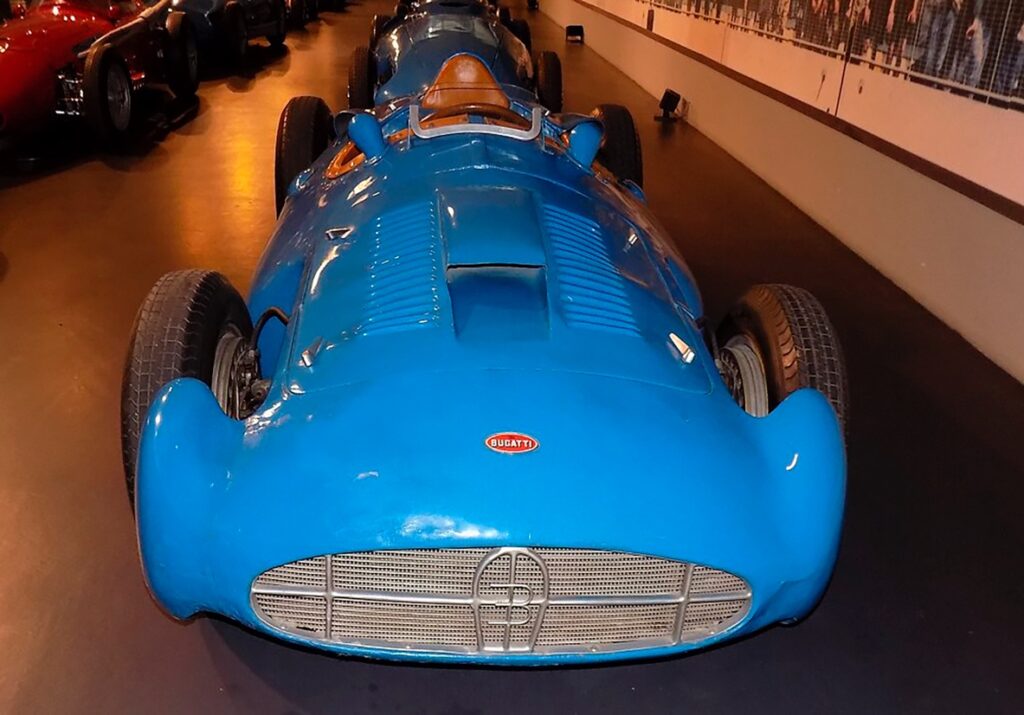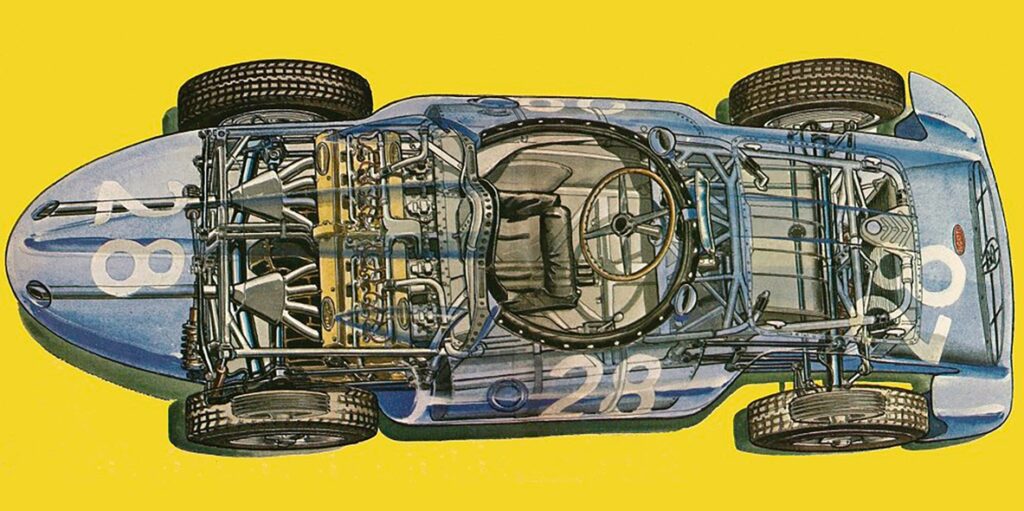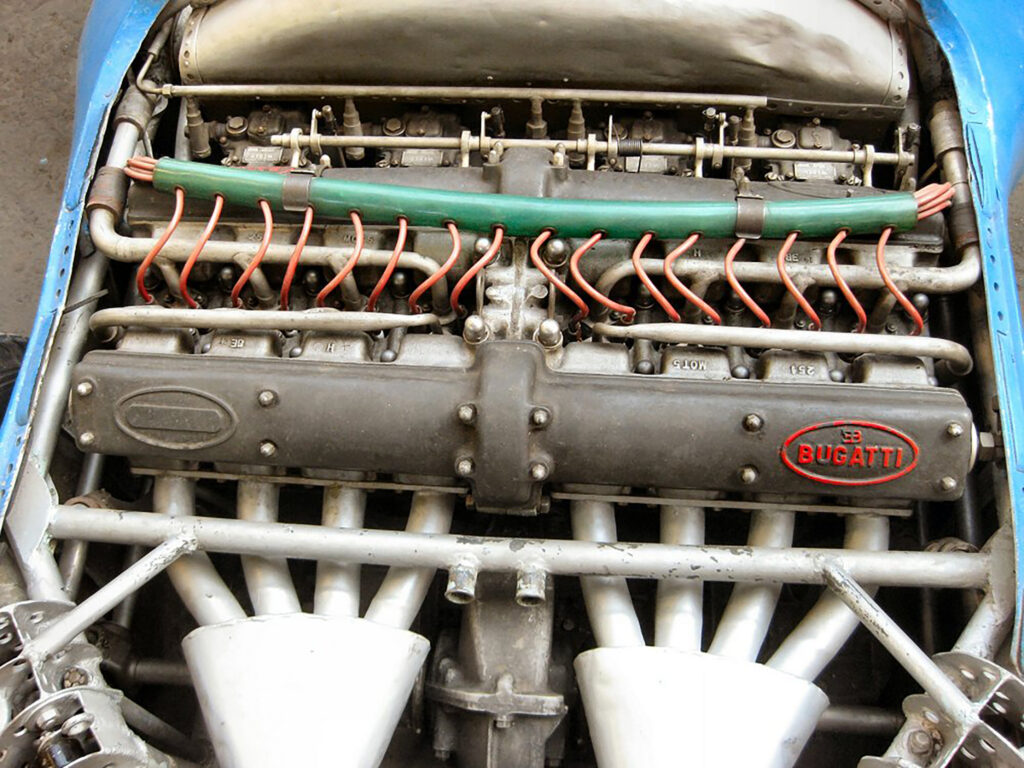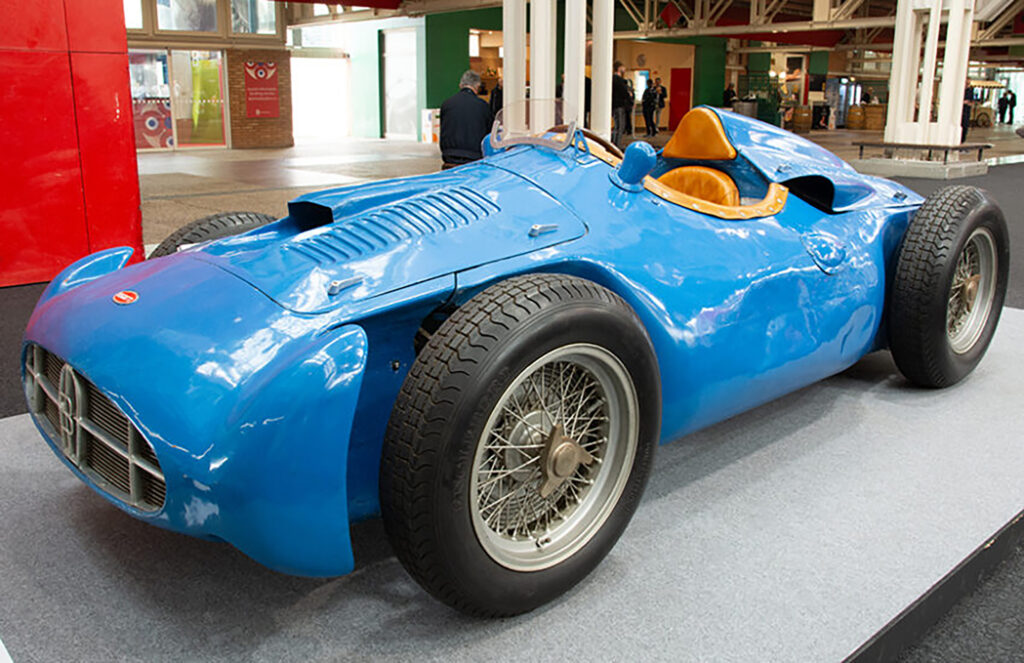
The final resurgence of the original Bugatti was the Type 251, completed in 1955. Designed by Gioacchino Colombo of Ferrari fame, it was powered by a new 2.5 L (2486 cc/151 in³) straight-8. Uniquely, this engine was mounted transversely, behind the driver. For the first time in a Bugatti, an oversquare engine was used with a 76 mm bore and 68.5 mm stroke. A de Dion tube rear suspension was also a novelty for the company, though it was in vogue at the time. The Type 251 was entered in the 1956 French Grand Prix, driven by Maurice Trintignant, but was not competitive and retired after 18 laps.
Production: 1956
Number: 2
Engine: Monoblock.
Cylinders: 8 in line, cross.
Bore x stroke: 75 x 70 mm
Displacement: 2430 cc
Main bearings: 10 Plain bearings
Connection rod bearings: Plain bearings
Valve mechanism: 2 overhead camshafts, 2 valves per cylinder.
Power: 230 hp/8000 rpm.
Distribution:
Lubrication: Dry sump.
Petrol supply: 4 double Weber’s.
Ignition: Magneto Ignition (twin Magneti Marelli)
Cooling: Honeycomb radiator, water pump, fan.
Transmission: Rear-wheel drive.
Clutch: Single plate clutch.
Gearbox: Integral engine, 4 gears and reverse, shaft drive.
Gear lever: Central.
Gear ratios:
Final ratio: 1:4.18
Chassis: Tube chassis.
Front suspension: Rigid axle with semi-elliptical leaf springs running through the shaft.
Rear suspension: The Dion axle.
Brakes Hydraulic joint brakes.
Steering: Worm and nut.
General dates:
Wheelbase: 2184 mm
Front/rear track: 1300/1300 mm
Weight: 750 kg
Wheels: Rudge wire spoke.
Tires: 17 x 5.50