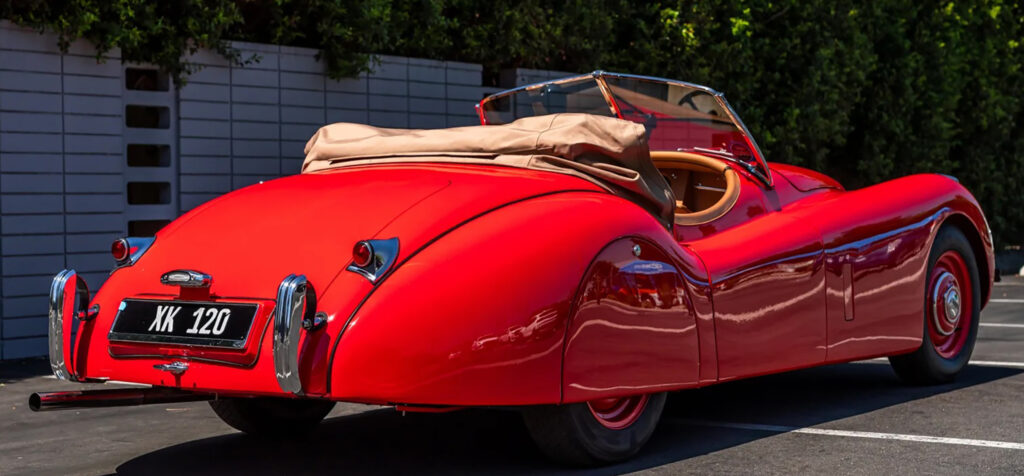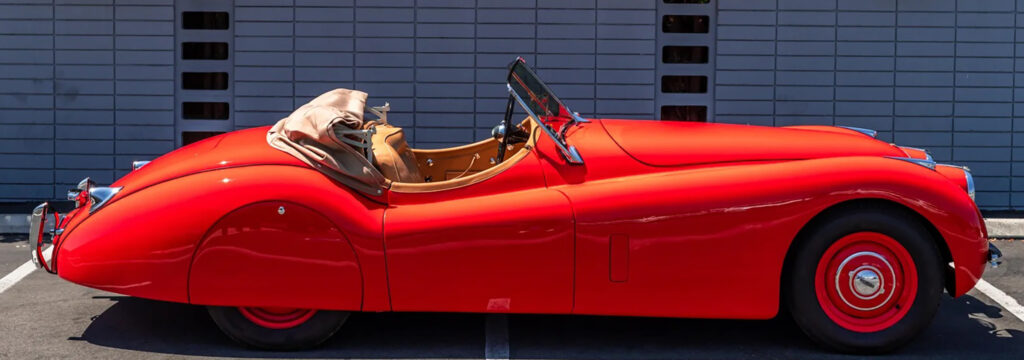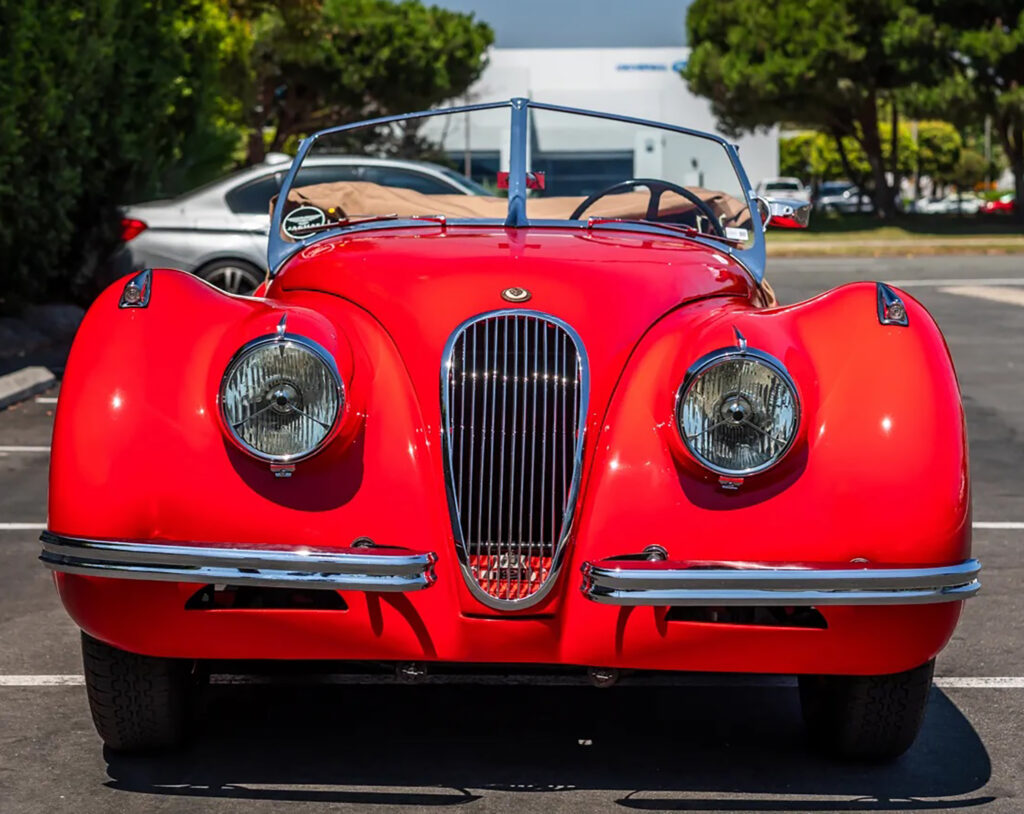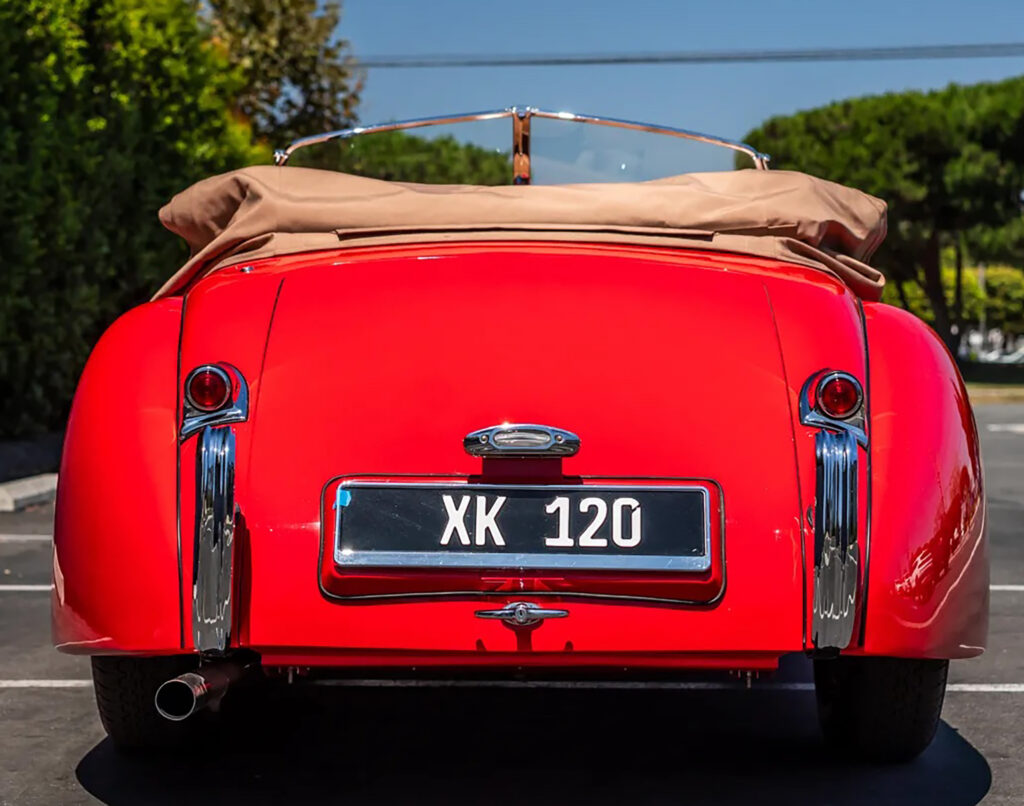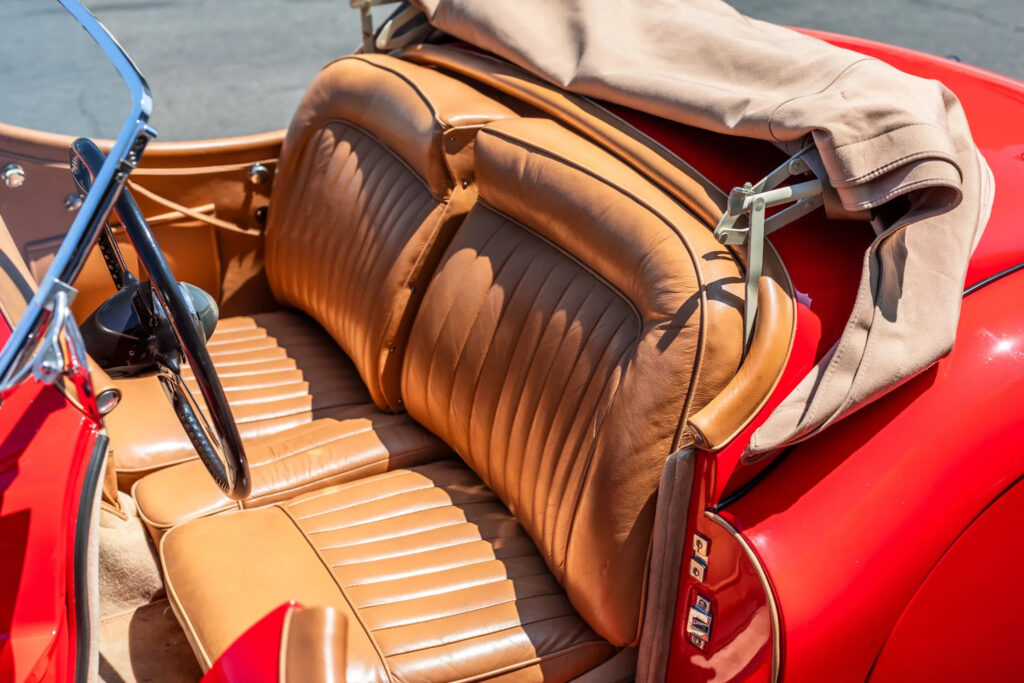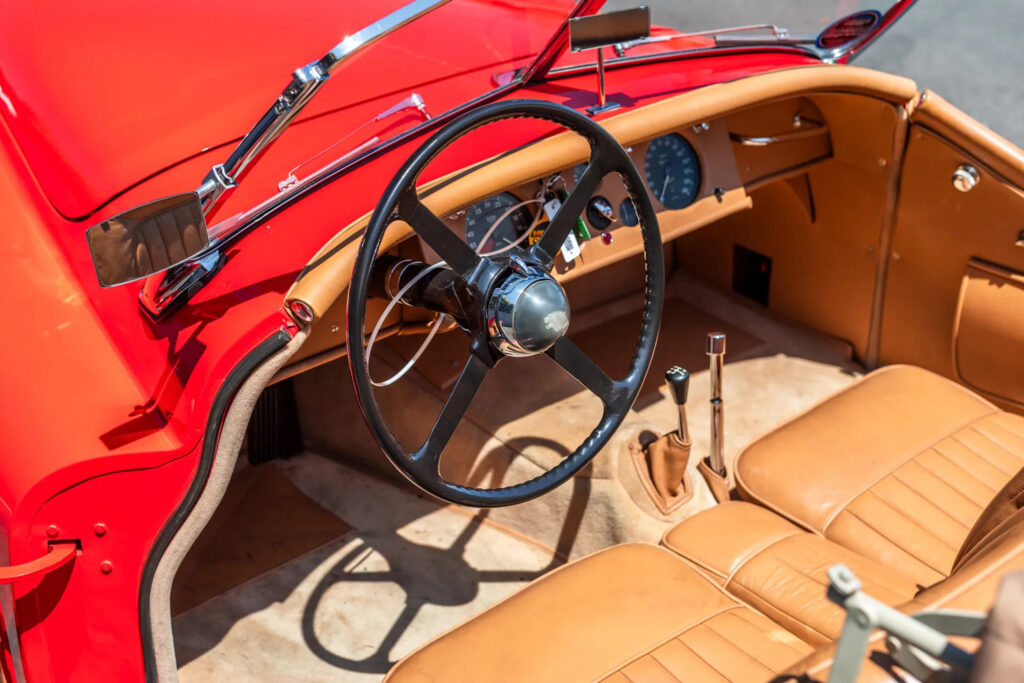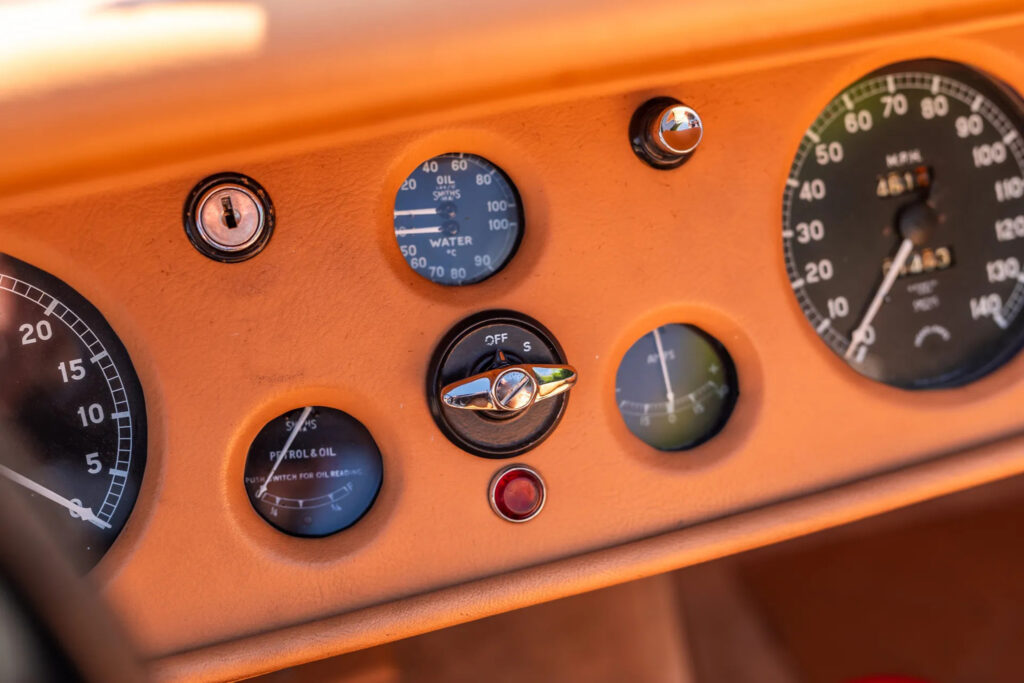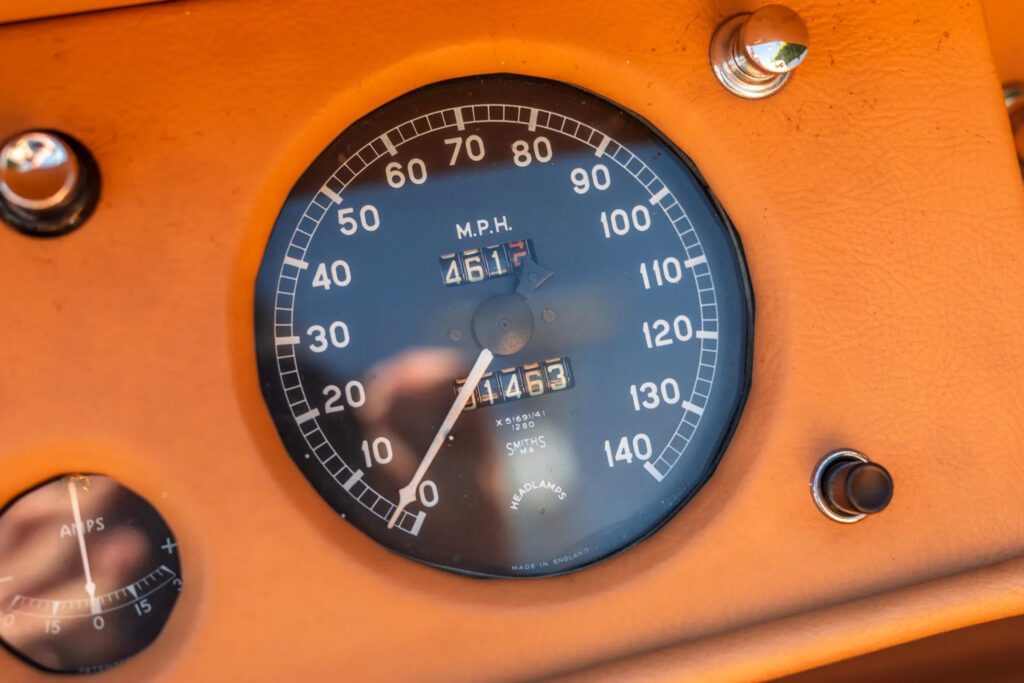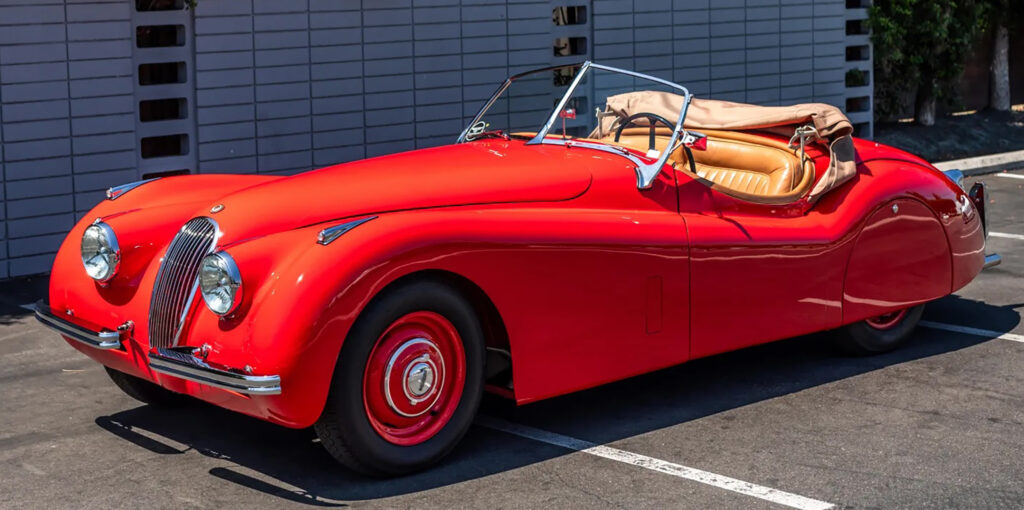
After making a lasting impression in the automotive world, Jaguar was forced to reconsider their XK120 in 1950 for larger scale production. To meet demands, Sir William Lyons had the car tooled for a steel body which would save costs and improve delivery times. Like the aluminum-bodied cars which were very hard to purchase, the production versions had had French curves, 120 mph performance and an easy price tag of £988.
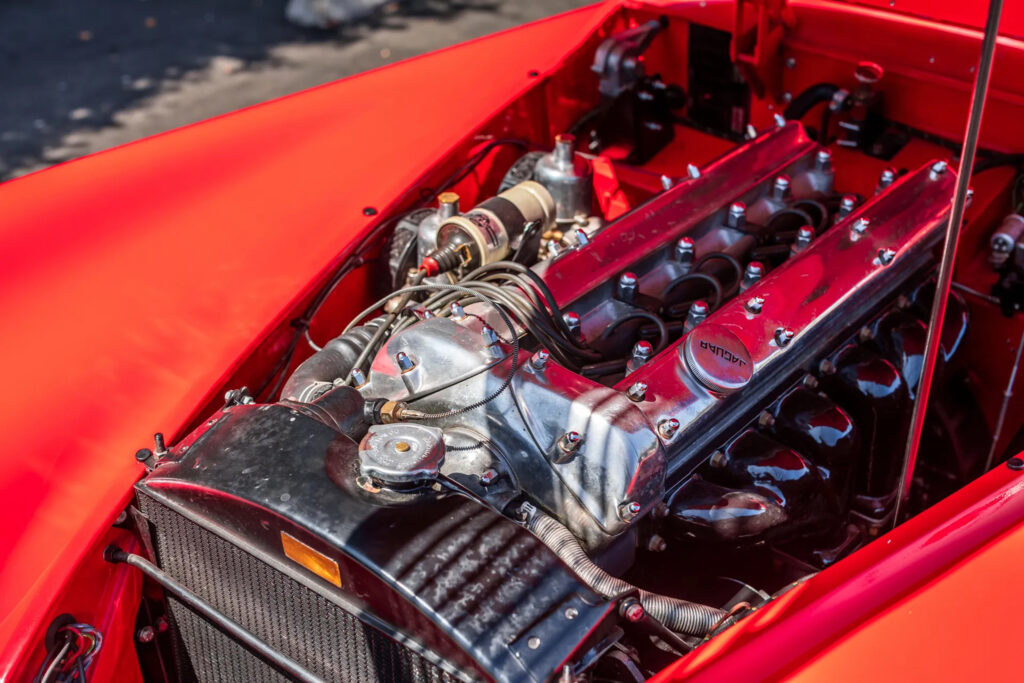
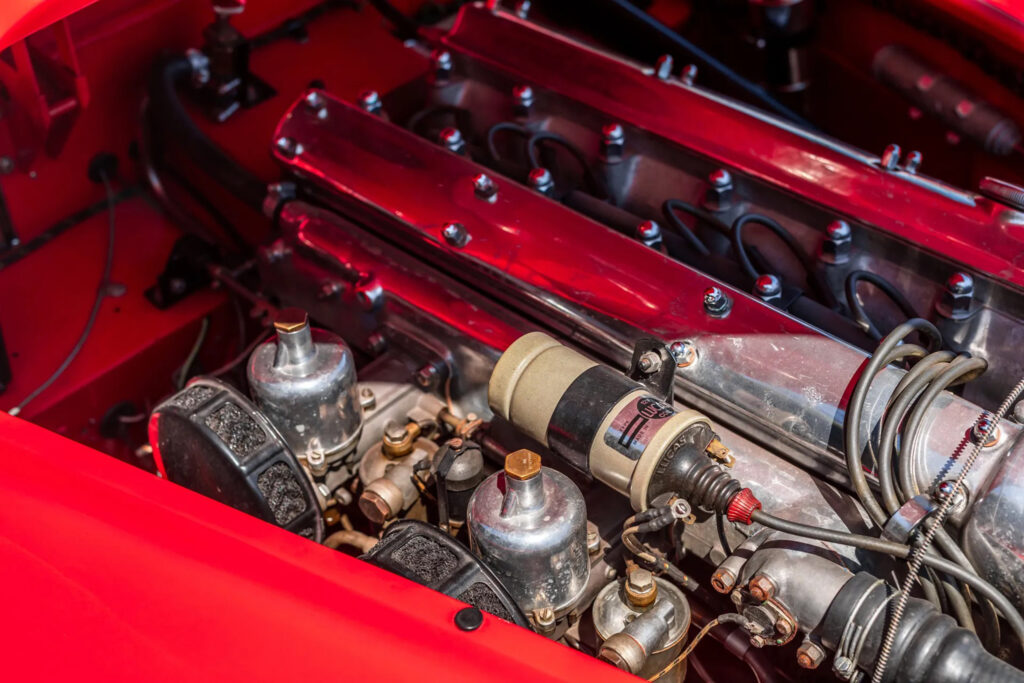
Despite being made in steel, the XK120 lost none of its appeal or charm. It still used the same XK engine, which was the world’s first affordable and mass-produced twin-cam unit, and had the sweeping body which was inspired by Italian sports cars and the streamlined styling of the French design houses.
In 1950, Jaguar took necessary steps to move towards large-scale production enabling Jaguar to produce over 12 000 examples. In 1951, the range was extended with a Fixed Head Coupe which was followed up by a Drophead Coupe in 1953. The later had luxuriously crafted soft tops with burled wood veneer trim and rollup windows inside. Around 1,800 XK 120 Drophead Coupes were produced.
Before 1949, Jaguar only played a small role in motor sports, but after the debut of the XK120, everyone was interested to see how the cars would perform on the track. Jaguar was no doubt interested as well and some of the very first cars were prepared for Silverstone where they took both first and second place. The following year, three privately entered XK120s raced LeMans with impressive competitiveness.
Success at Lemans encouraged Jaguar to build a specially designed XK120 which would lead the company into its most successful year. The XK120C (or C-Type) endurance racer used a tube frame chassis and streamlined body with the familiar XK120 drive train. This combination was quite successful and claimed Jaguar’s first outright victory at Le Mans.
After Jaguar had won LeMans, and the XK120 debuted at the New York Auto show, Americans seriously started to consider British roadsters, propelling an entire industry of British sports cars made for export. Throughout the years, Jaguar nurtured this relationship with the updated XK140 and XK150.
| type | Series Production Car |
| built at | Coventry, England |
| engine | Cast Iron, Inline-6 |
| position | Front Longitudinal |
| aspiration | Natural |
| valvetrain | DOHC, 2 Valves per Cyl |
| fuel feed | Twin SU H6 Carburettors |
| displacement | 3442 cc / 210.0 in³ |
| bore | 83 mm / 3.27 in |
| stroke | 106 mm / 4.17 in |
| compression | 7.0:1 |
| power | 119.3 kw / 160.0 bhp @ 5000 rpm |
| specific output | 46.48 bhp per litre |
| torque | 264.38 nm / 195 ft lbs @ 2500 rpm |
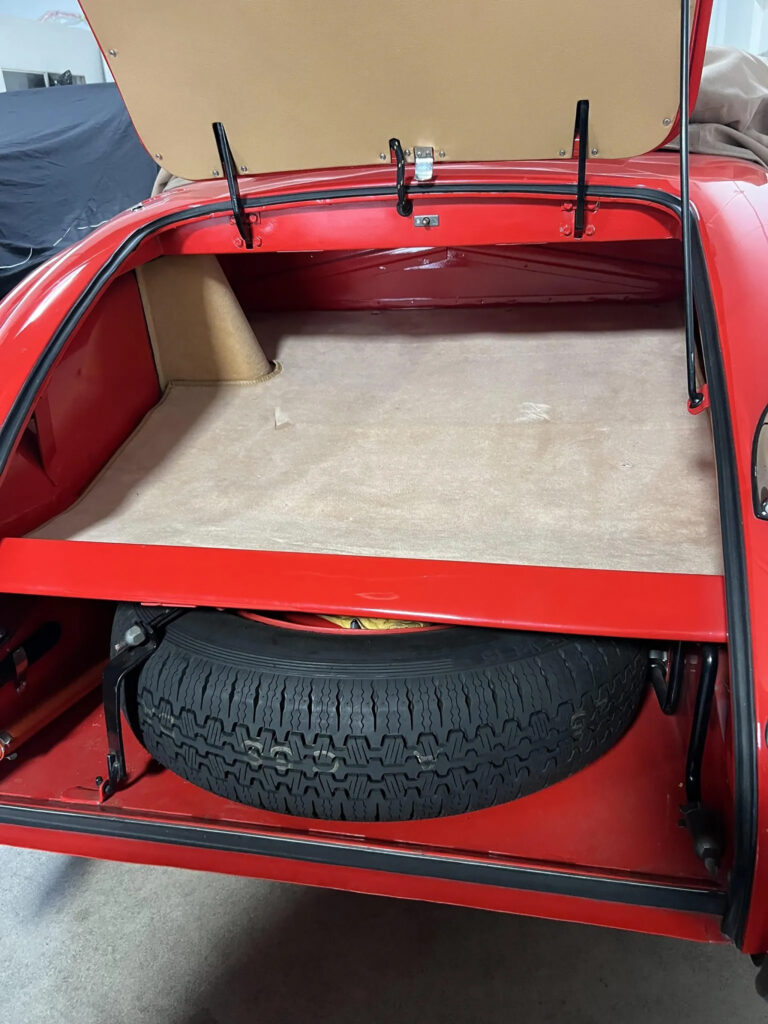
| body / frame | Steel Body over Steel Frame |
| front tires | 6.00×16 |
| rear tires | 6.00×16 |
| front brakes | Girling Hydraulic Drums |
| rear brakes | Girling Hydraulic Drums |
| steering | Re-circulating Ball |
| f suspension | Double Wishbones w/Torsion Bar, Telescopic Shock Absorbers |
| r suspension | Live Axle w/Half Elliptic Springs, Girling Hydrualic Shock Absorbers |
| wheelbase | 2591 mm / 102 in |
| front track | 1295 mm / 51 in |
| rear track | 1270 mm / 50 in |
| length | 4394 mm / 173.0 in |
| width | 1562 mm / 61.5 in |
| height | 1245 mm / 49 in |
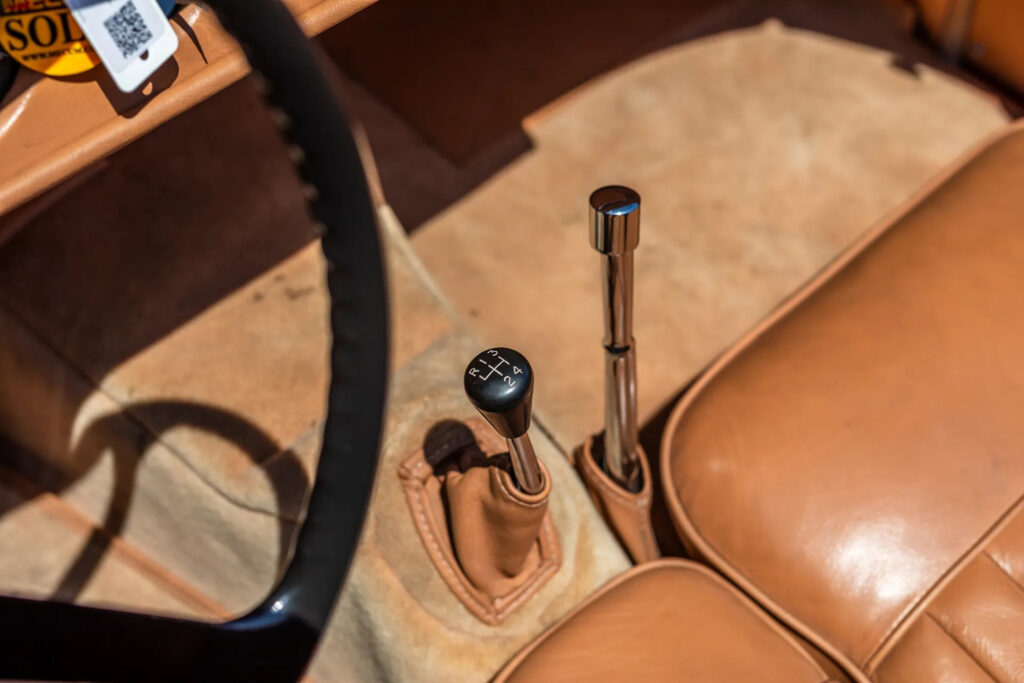
| transmission | 4-Speed Manual |
| top speed | ~214.0 kph / 133.0 mph |
| 0 – 60 mph | ~9.8 seconds |
| 0 – 100 mph | ~30.0 second |