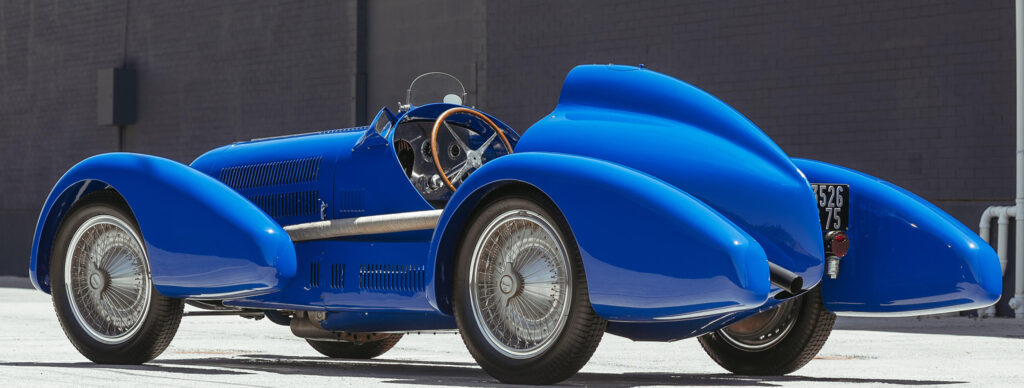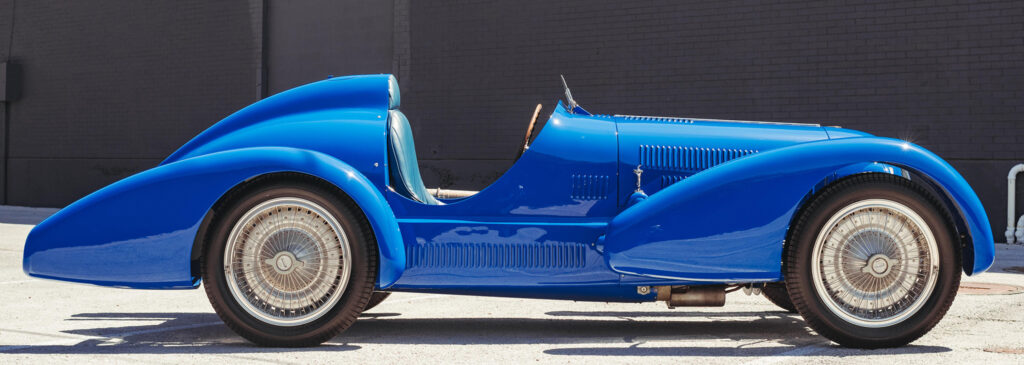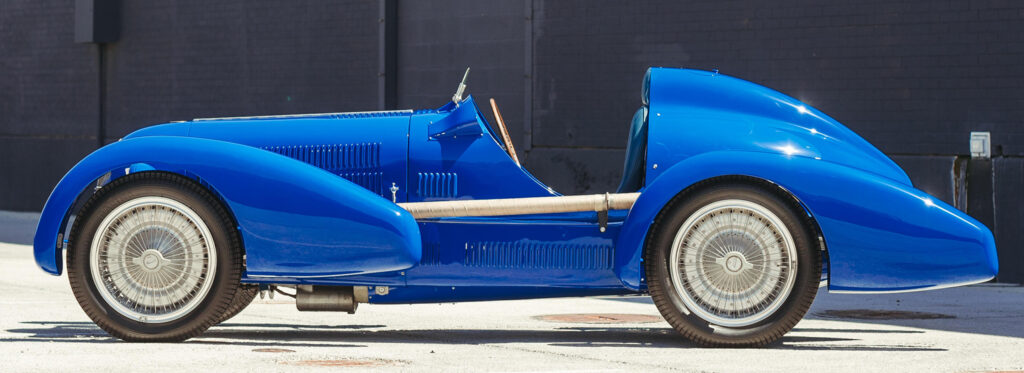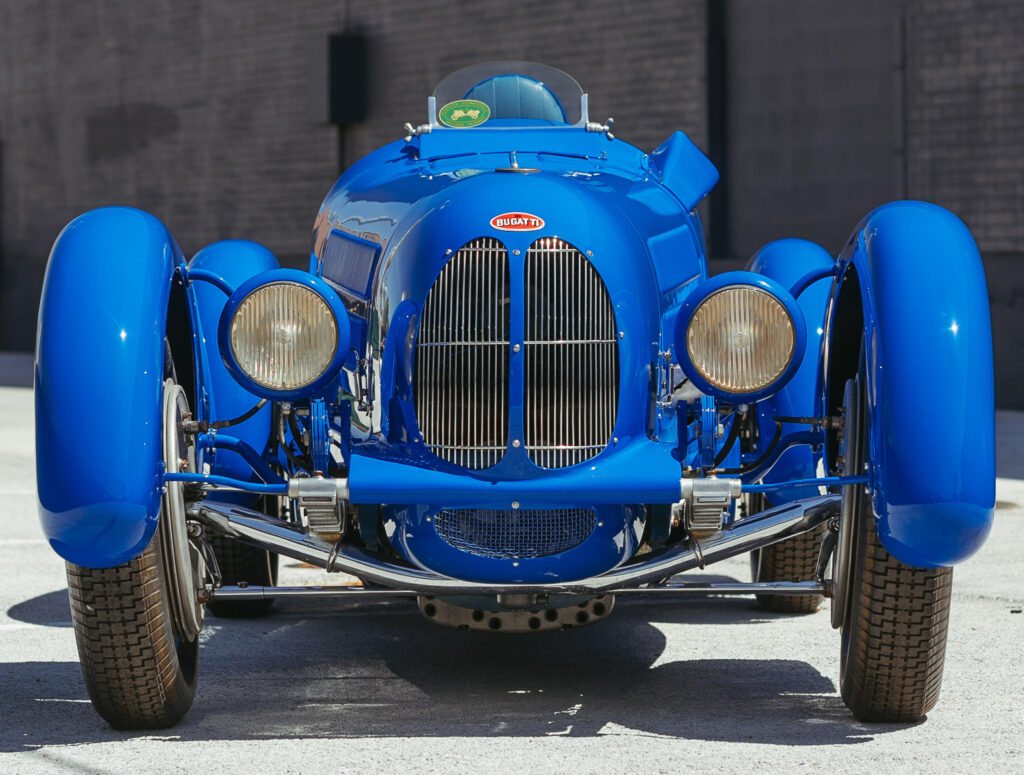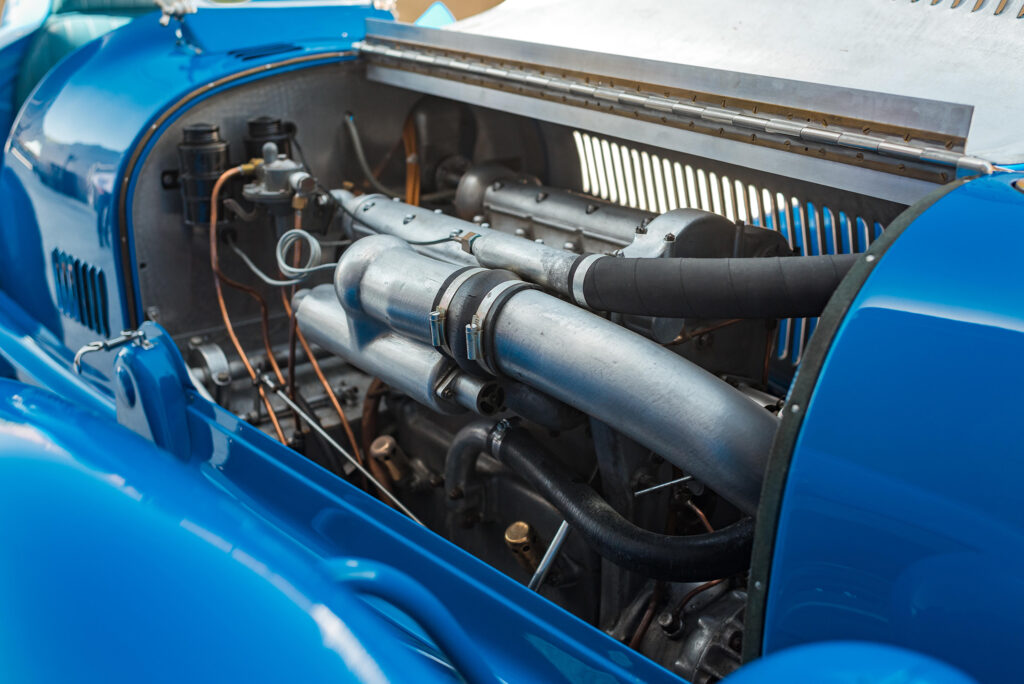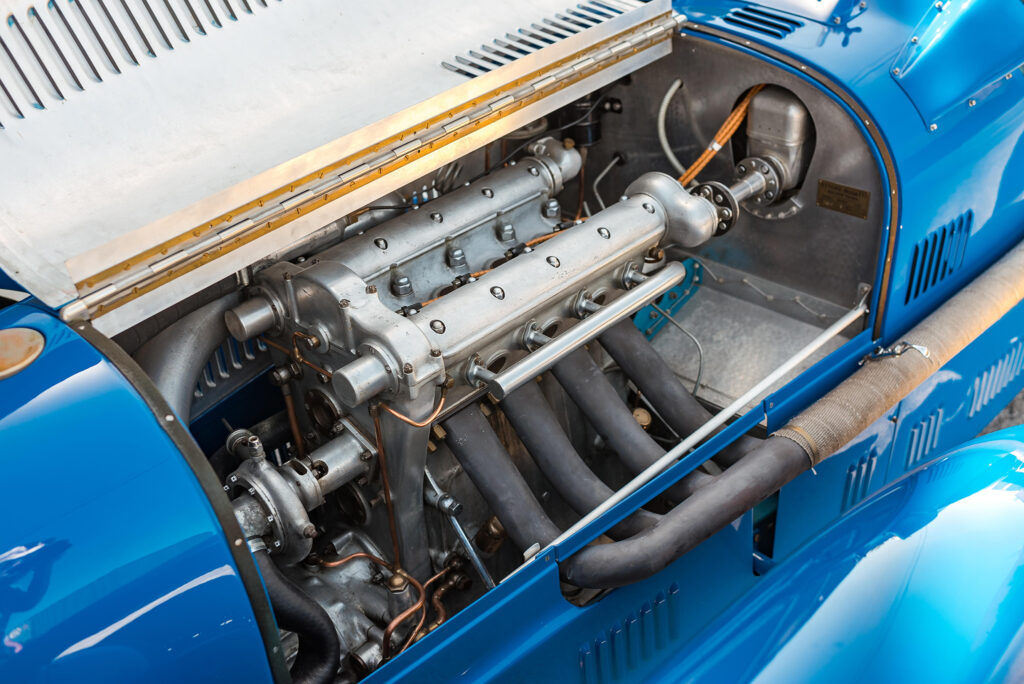
Bugatti, assisted by his designers Noel Domboy and Antoine Pichetto, spent the war years planning a new four cylinder racing car. By 1944, his plans for production were well advanced and the newest Bugatti was to have a supercharged 1500cc 16-valve engine with twin camshafts.
Further details were released once the war had ended. The racing chassis was to be of ultra-low build, being derived from that of the pre-war 4.7 liter Type 59/50 B racing car, whilst its engine was to feature all-alloy construction with detachable wet cylinder liners, a detachable head (a first for Bugatti) and a five-bearing crankshaft. Transmission was to be by a four speed all synchromesh gearbox, and the car’s total weight was not to exceed 600kg.
No more than twenty examples were to be built in the old La Licorne factory in the Paris suburb of Levallois at a price of 500,000 French francs each. Five were to be delivered in April 1946, with five more during each of the next three months. Already fifteen French racing drivers had each lodged deposits of 25,000 francs, and English readers of The Motor were invited to order the remaining five planned. Inevitably this ambitious timetable floundered against the troubled post-war economic background when materials required for motor car construction were all in extremely short supply, and several orders were cancelled.
Eventually a batch of five complete sets of parts for the racing model was produced, whilst an artist’s impression of a planned aerodynamic sports saloon appeared in several Continental motor magazines and at least two of their chassis were produced. However Ettore Bugatti died in August 1947 before a single example of either type had been fully assembled. 1947 Paris Motor Show was held at the Grand Palais in early October and Bugatti displayed on their stand an engineless example of their Type 73 sports chassis together with a standard single-cam Type 73 and a racing twin-cam Type 73C engine. However, without Ettore’s impetus the whole project slowly ground to a halt, the unfinished cars were dismantled, all their parts were stored at Molsheim and deposits were returned.
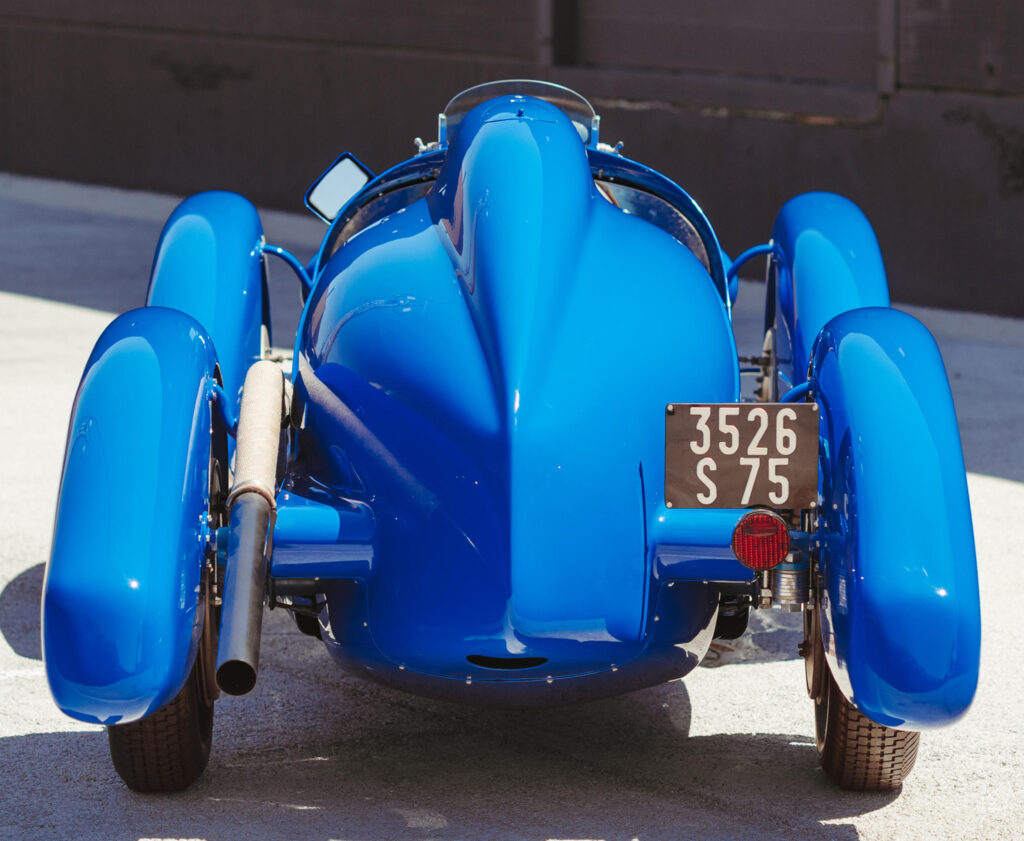
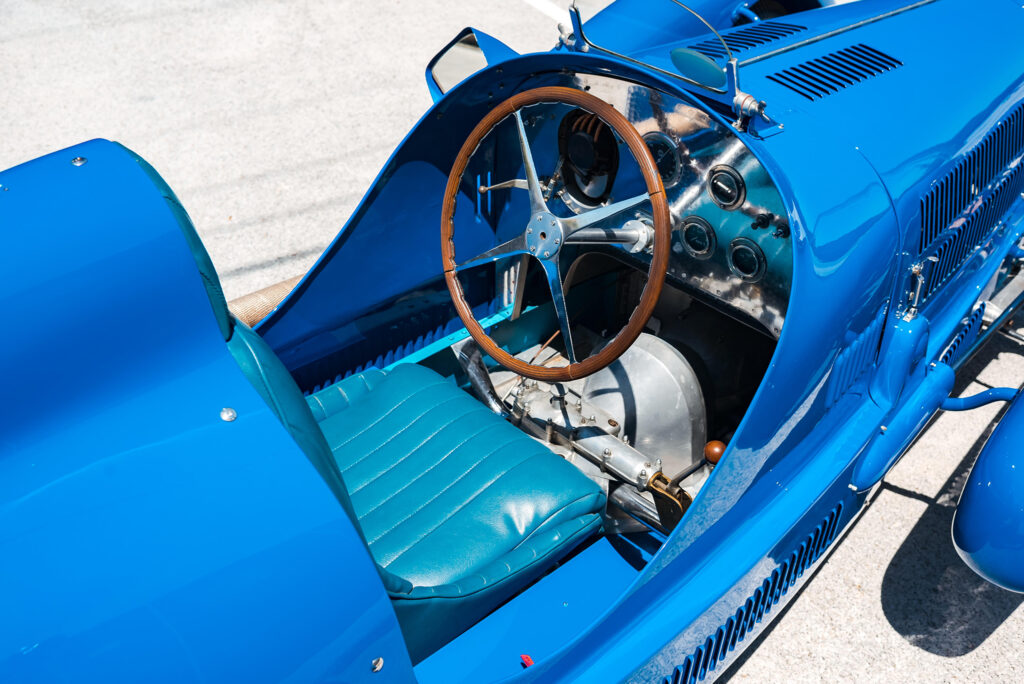
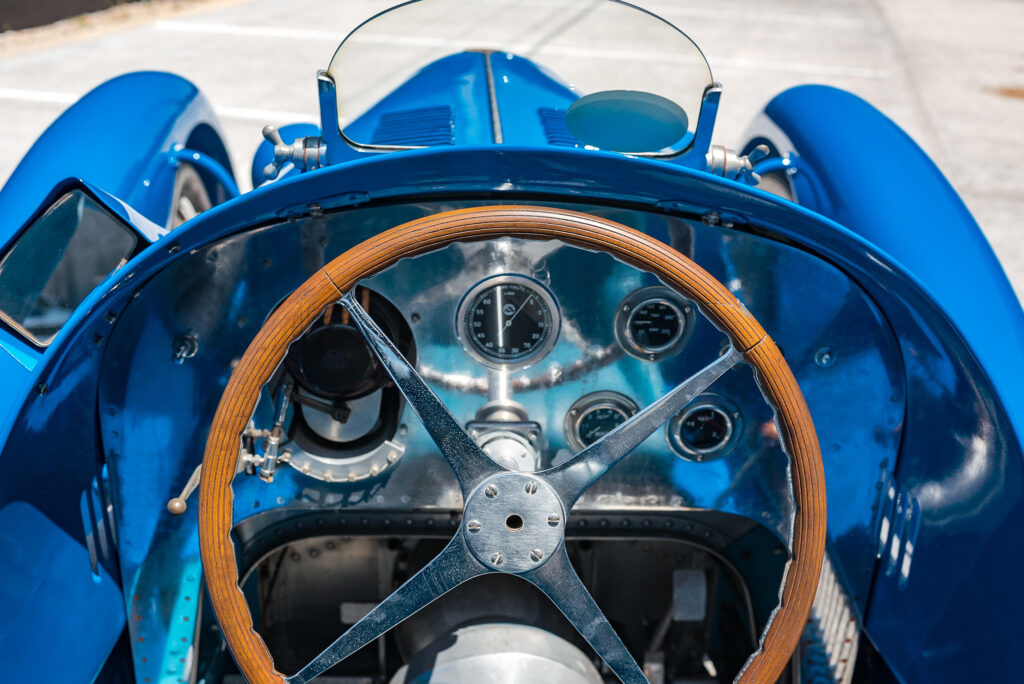
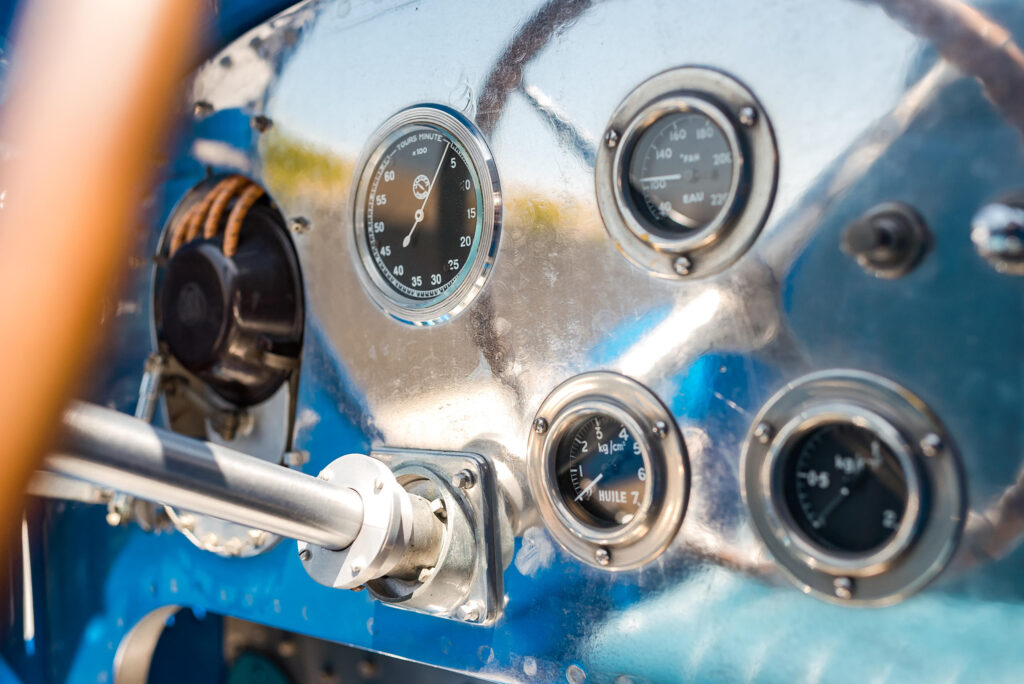
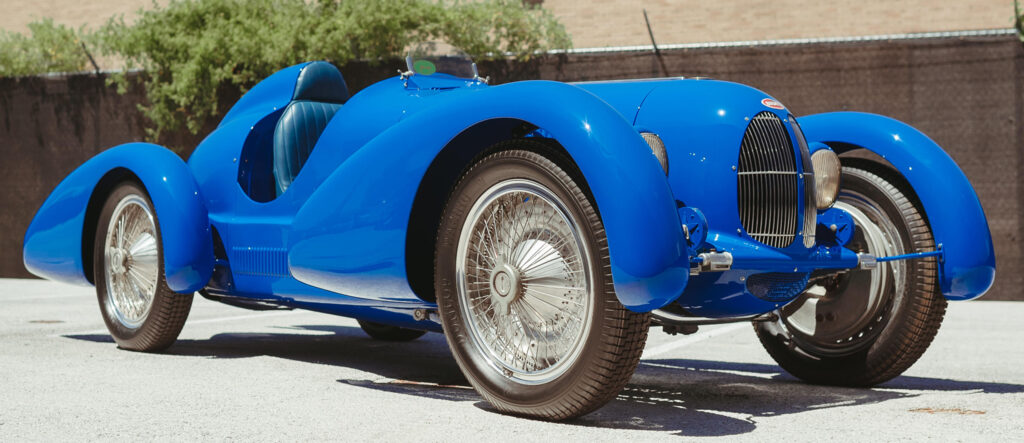
All these parts and many others remained in storage at Molsheim for several years until one set of Type 73C parts was acquired in late 1960 by Belgian Bugatti dealer Jean de Dobbeleer of Brussels. There he assembled and fitted with a monoposto body featuring a typical Bugatti radiator shell based on one of a pair of 1945 Type 73C body drawings by Pichetto. After selling the finished car to a Frenchman, de Dobbeleer returned to Molsheim in 1961 and acquired the parts for another Type 73C, Chassis No 73002, which he proceeded to assemble, after which he sold its body-less chassis to the US via his American agent Gene Cesari.
Whilst the Type 73C Bugatti was in truth no more than an undeveloped factory prototype which fortune dictated was never to show its true potential, or even indeed ever to have the opportunity of competing in period motor racing, it does have one claim to fame which it will retain for all time. It was the very last racing car designed by perhaps the greatest and certainly the most successful racing car designer of all time.
Production: 1946-1947
Number: 5
Engine: Monoblock.
Cylinders: 4 in line.
Bore x stroke: 76 x 82 mm
Displacement: 1488 cc
Main bearings: 5 Plain bearings
Connection rod bearings: Plain bearings.
Valve mechanism: 2 overhead camshafts, 4 valves per cylinder.
Power:
Distribution:
Lubrication: Pressure lubrication.
Petrol supply: 1 Weber 36, Rootscompressor
Ignition: Magneto ignition, 1 spark plug per cylinder. 1-2-4-3
Cooling: Honeycomb radiator, water pump, fan.
Transmission: Rear-wheel drive.
Clutch: Dry multiple clutch.
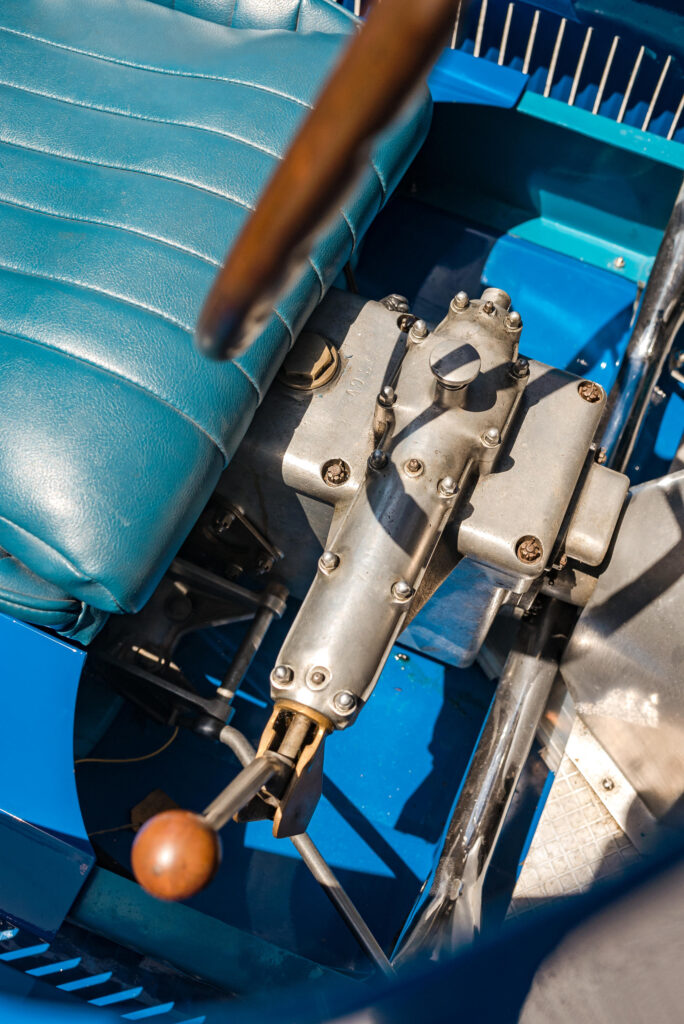
Gearbox: Separate, 4 synchronized gears and reverse, shaft drive.
Gear lever: Central.
Gear ratios:
Final ratio:
Chassis: Pressed steel ladder chassis.
Front suspension: Rigid axle with semi-elliptical leaf springs running through the shaft.
Rear suspension: Rigid axle with inverted quarter-elliptical leaf springs.
Brakes Hydraulic brakes front and rear.
Steering: Worm and nut.
General dates:
Wheelbase: 2400 mm
Front/rear track: 1250/1250 mm
Weight: 700 kg
Wheels: Plate steel.
Tires: 18 x 5.00