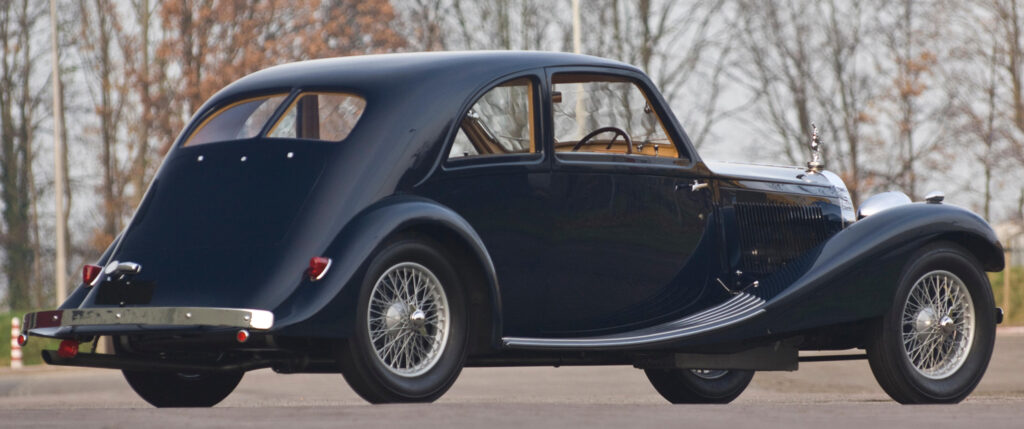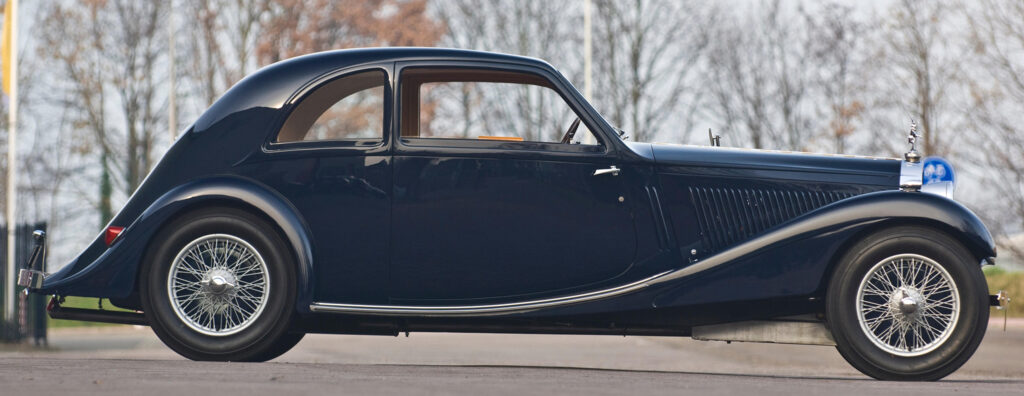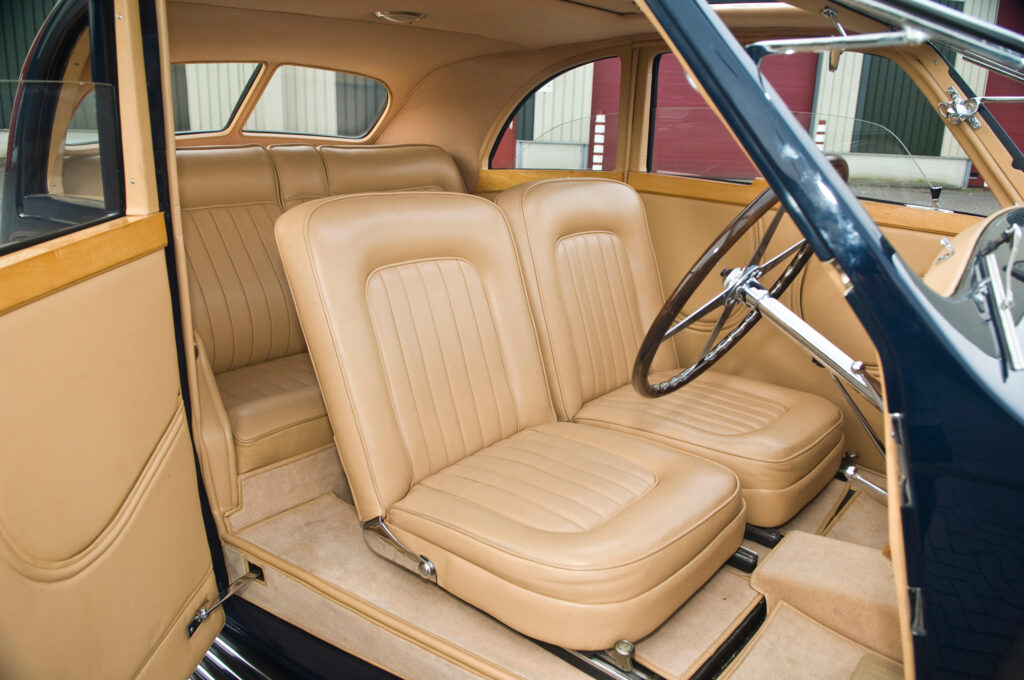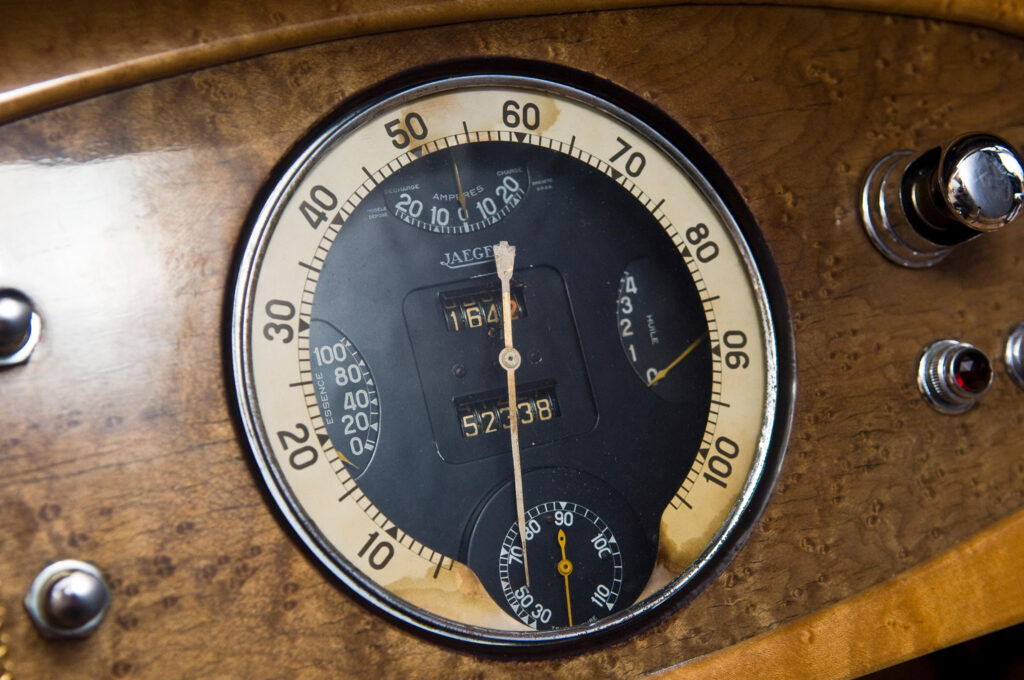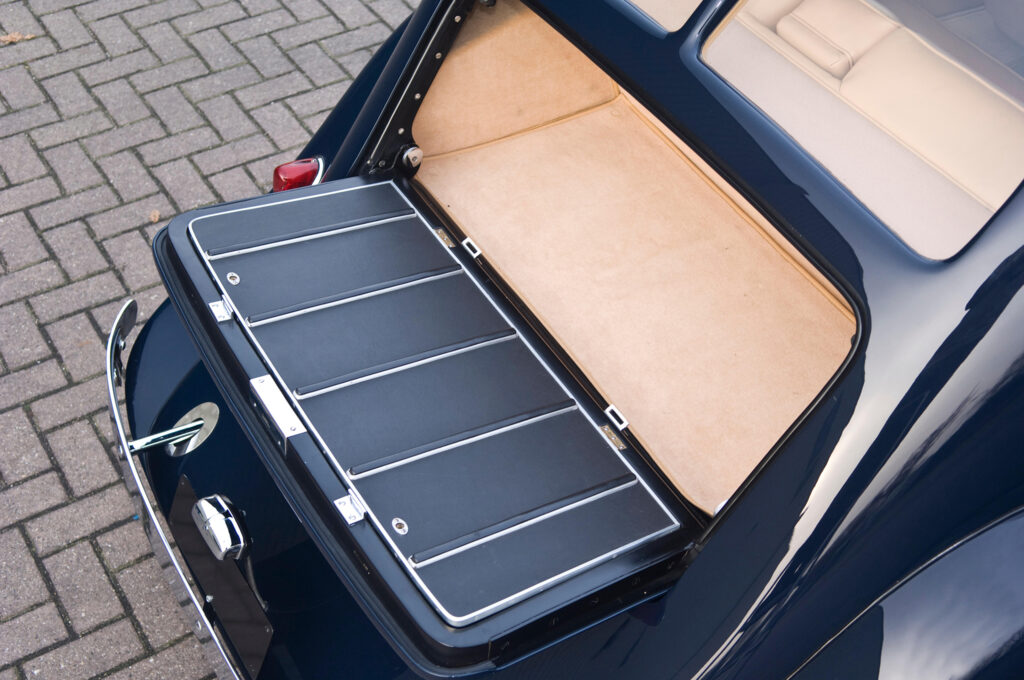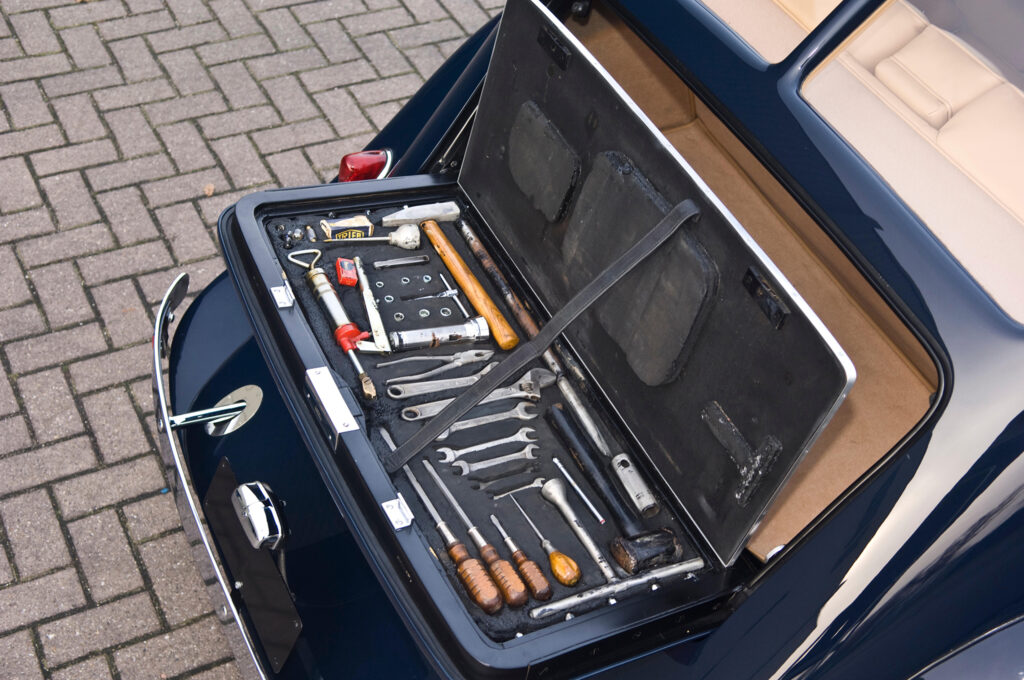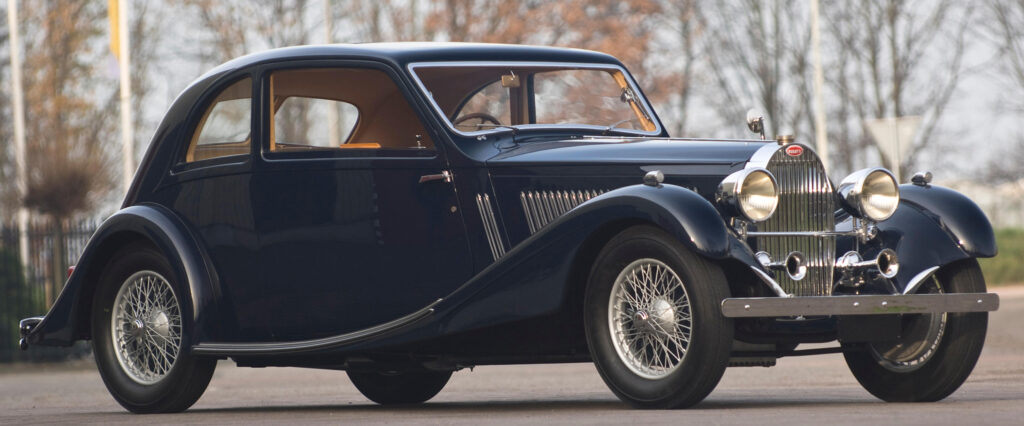
After decades of building separate various models for sport and luxury Bugatti decided to consolidate their range for in what would be the final wave for the company. The Type 57 was first and foremost a passenger car that kept the excitement of Bugatti’s race cars but maintained everyday practicality.
Largely influenced by Ettoire’s son, Jean Bugatti, the Type 57 was a high performance chassis built in large quantities that could still capture the exclusive market which was once occupied by the Type 41 Royale and Type 46/50 range. He also wanted to focus on a passenger car which would compete with the 1930s custom coachwork Delahayes and Delages, going so far as to design some bodies himself!
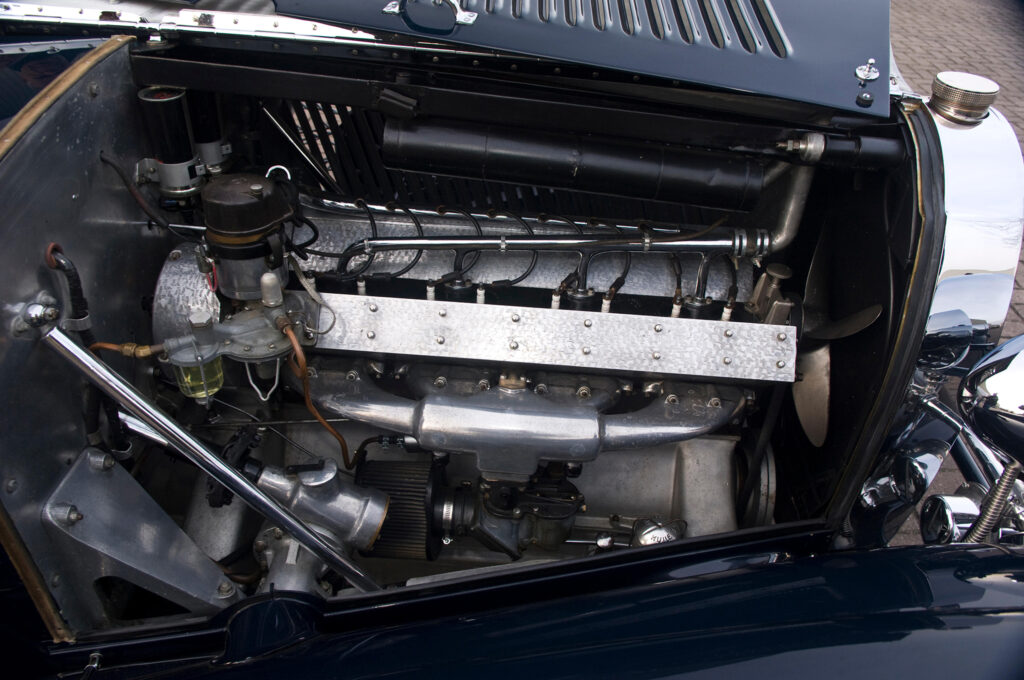
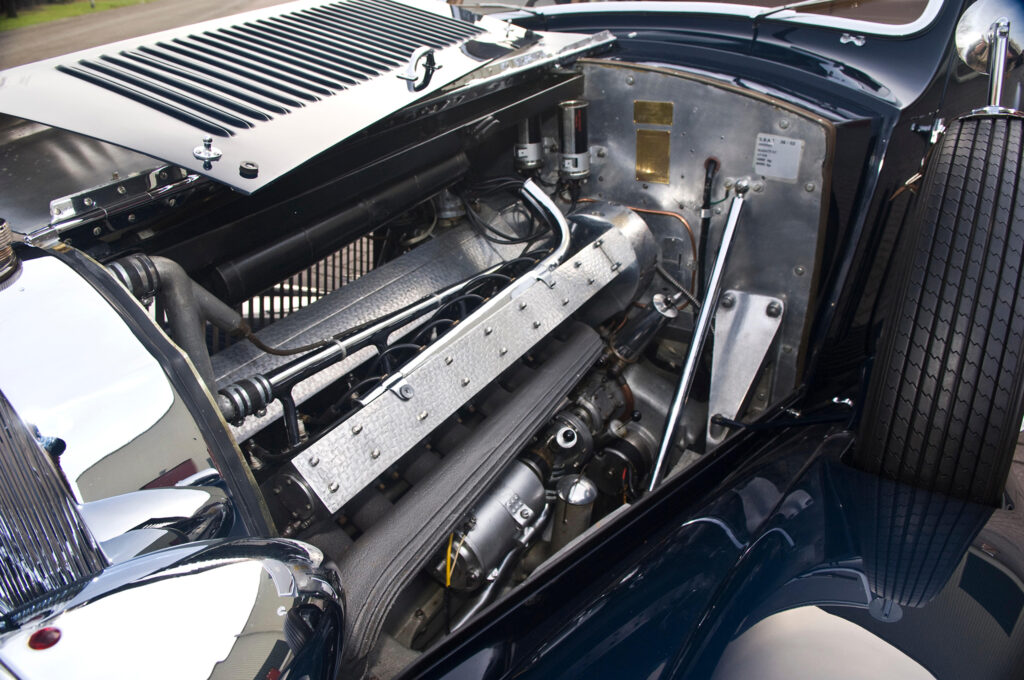
As far as engineering was concerned, the Type 57 was entirely new with the closest model being the Type 49 single-cam car. The engine, displacing 3.3 liters, featured twin overhead camshafts, 90 degree inclined valves and central spark plugs which offered 35 more horsepower than the preceding model. Chassis arrangements included Rudge Witworth wire wheels, fifteen inch drum brakes and an uncluttered chassis having good strength. As with most Bugatti designs the Type 57 was relatively simple in design, but the result of complicated craftsmanship.
Also complementing the Type 57 was a entirely new transmission. It was integrally linked to the engine by means of a bell housing, unlike previous models that cast the engine and transmission as separate units.
Throughout production, the Type 57 was constantly upgraded mostly in the areas of braking and suspension. After around 230 cars had been completed, several changes were made to the from late 1936 onwards. These Series II cars changed the engine mounting from solid to rubber. Since the front of the chassis relied on the engine for rigidity, the rubber mounted cars needed extra reinforcements which made them heavier than the solid mounted cars. Subtle changes to the camshafts and engine timing were also made.
Nearing the end of 1938, all type 57s were built to Series III specification. The most important change was the inclusion of Lockheed design hydraulic brakes with twin master cylinders. Also aiding in the comfort of the car were Alliquant shock absorbers that replaced the de Rams 57S units or Hardford Friction Dampers.
As the Type 57 was a larger chassis compared to earlier models of similar engine size, there was a lot of flexibility to accommodate custom coachwork. Both third party and in house coachwork varied from two to four seat designs.
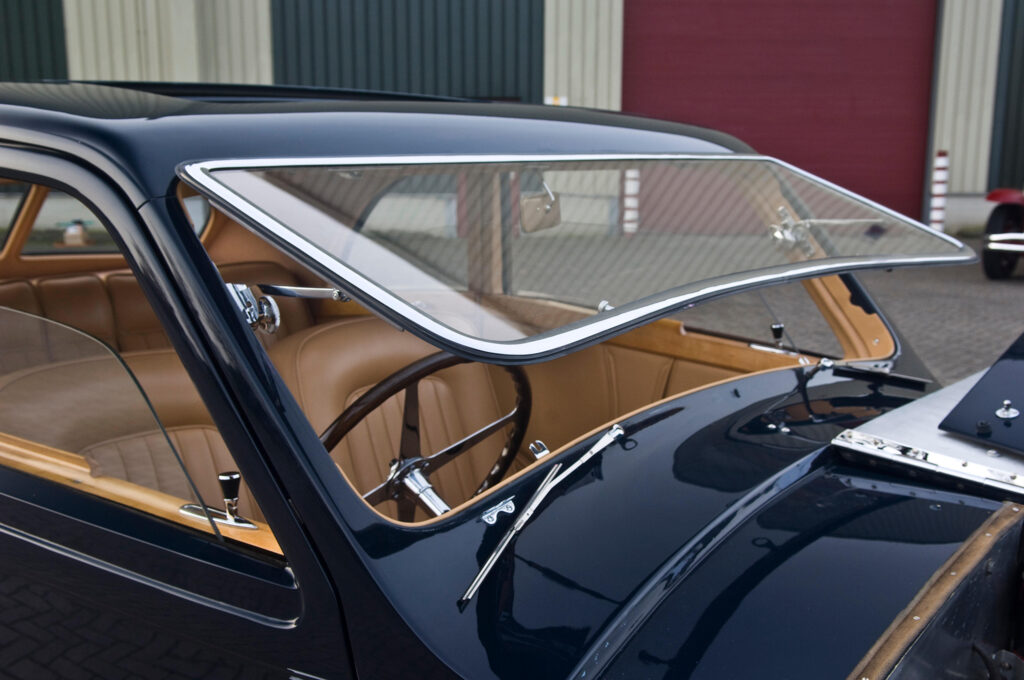
One aspect which really defined the Type 57 design language was the four different body designs available in house. Jean Bugatti and his team were largely responsible for creating four distinct bodies which would clothe the majority of the type 57s. Named after peaks in the Alps, the Ventoux and Galibier bodies were similar except the ladder was a four door model. Reserved specifically for two seats, the Atalante coupe featured kidney-shaped side widows and a split rear window. Almost all Atalantes were built on the SC chassis and cost twice as much as any other design.
The fourth body which was designed by the factory was a two seater Stelvio cabriolet. This was the only Jean Bugatti design which was not constructed in house and instead was entrusted to Gangloff. With the Stelvio, Gangloff became the most popular third party coachbuilder for the Type 57 and added their own touches to each individual car.
Other coachbuilders outside of Molsheim which graced the Type 57 chassis include: Graber, Van Vooren, Labourdette, Guilloret and Warblaufen.
The most exclusive body fitted to the Type 57 was the Atlantic which was penned by Jean Bugatti on the Type 57SC chassis. Only four original cars were made with this body which had unique riveted panels. Classic car aficionados consider the Atlantic one of the very first supercars.
| type | Series Production Car |
| built at | Molsheim, Alsace, France |
| engine | Inline-8 |
| position | Front Longitudinal |
| aspiration | Natural |
| valvetrain | DOHC, 2 Valves per Cyl |
| fuel feed | Dual Throat Updraft Stromberg UUR-2 Carburettor |
| displacement | 3245 cc / 198.0 in³ |
| bore | 72 mm / 2.83 in |
| stroke | 100 mm / 3.94 in |
| compression | 6.2:1 |
| power | 100.7 kw / 135 bhp @ 4500 rpm |
| specific output | 41.6 bhp per litre |
| bhp/weight | 82.82 bhp per tonne |
| body / frame | Aluminum over Steel Frame |
| driven wheels | RWD |
| front tires | 5.5×18 |
| rear tires | 5.5×18 |
| front brakes | Cable Operated Drums |
| rear brakes | Cable Operated Drums |
| steering | Worm & Gear |
| f suspension | Rigid Axle w/Semi-Elliptic Springs, Hartford Friction Shock Absrobers |
| r suspension | Live Axle w/Reversed Quarter-Elliptic Springs, Hartford Friction Shock Absrobers |
| curb weight | 1630 kg / 3594 lbs |
| wheelbase | 3302 mm / 130.0 in |
| front track | 1351 mm / 53.2 in |
| transmission | 4-Speed Manual |
| top speed | ~152.9 kph |