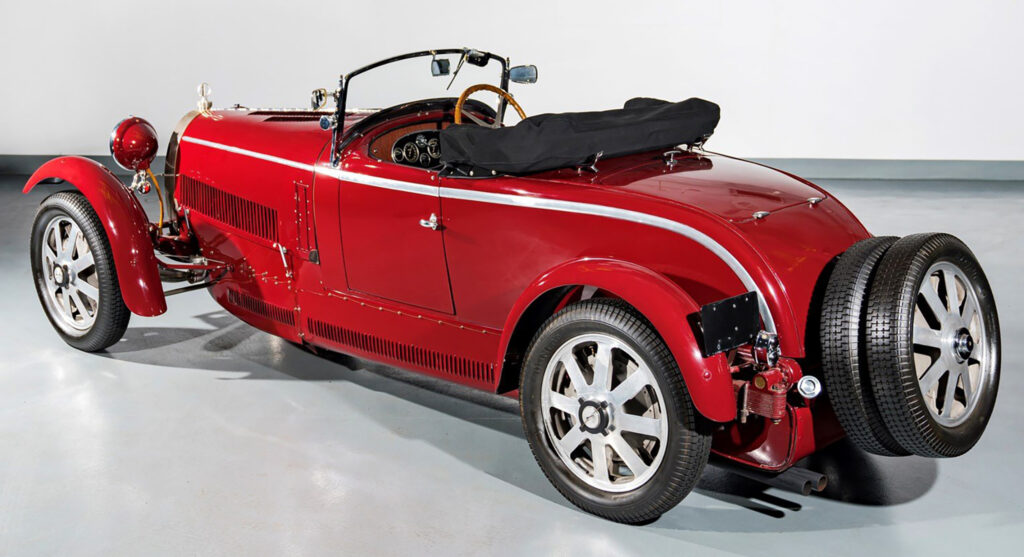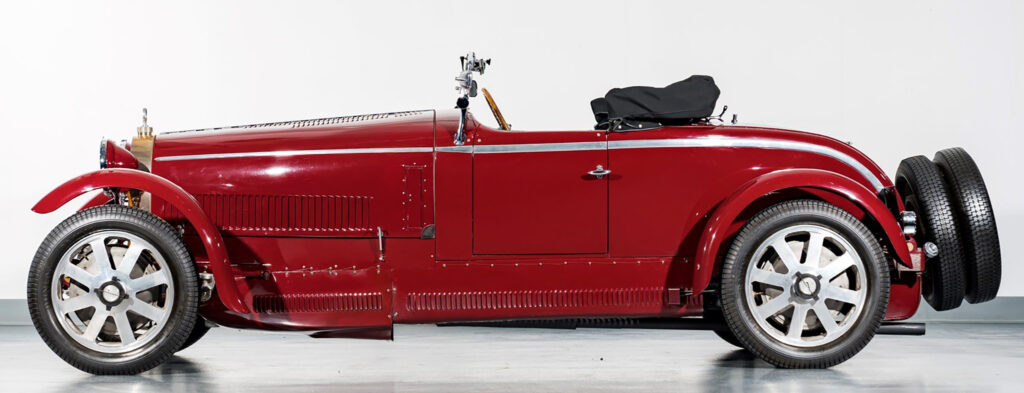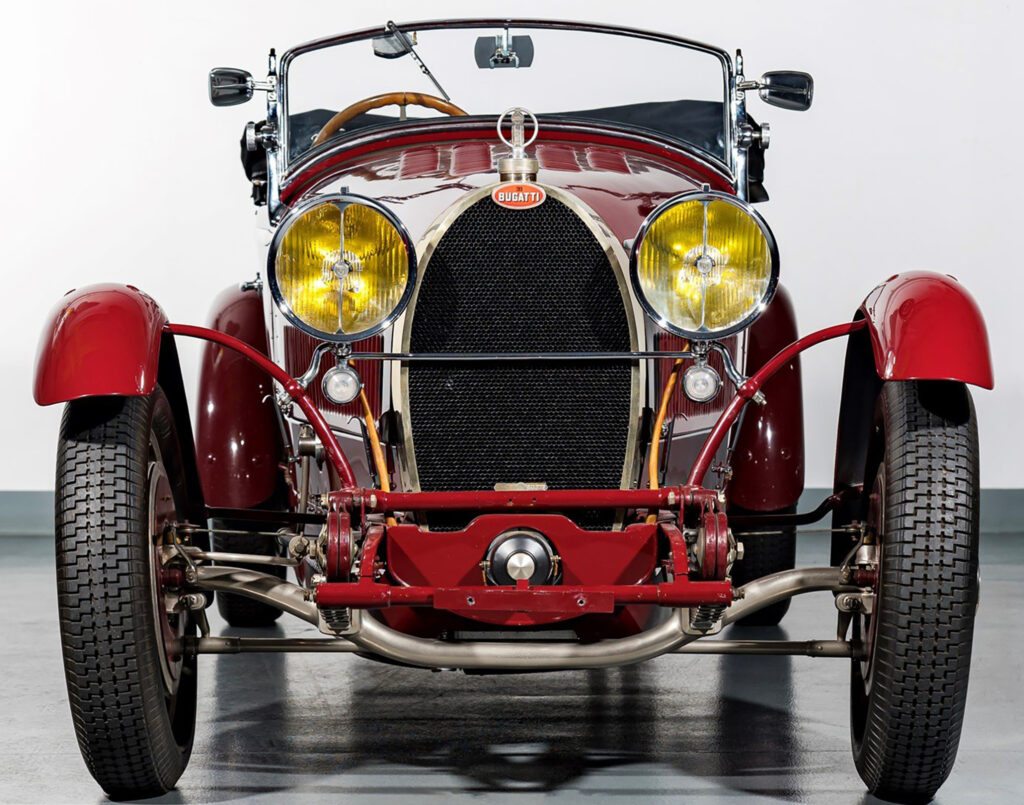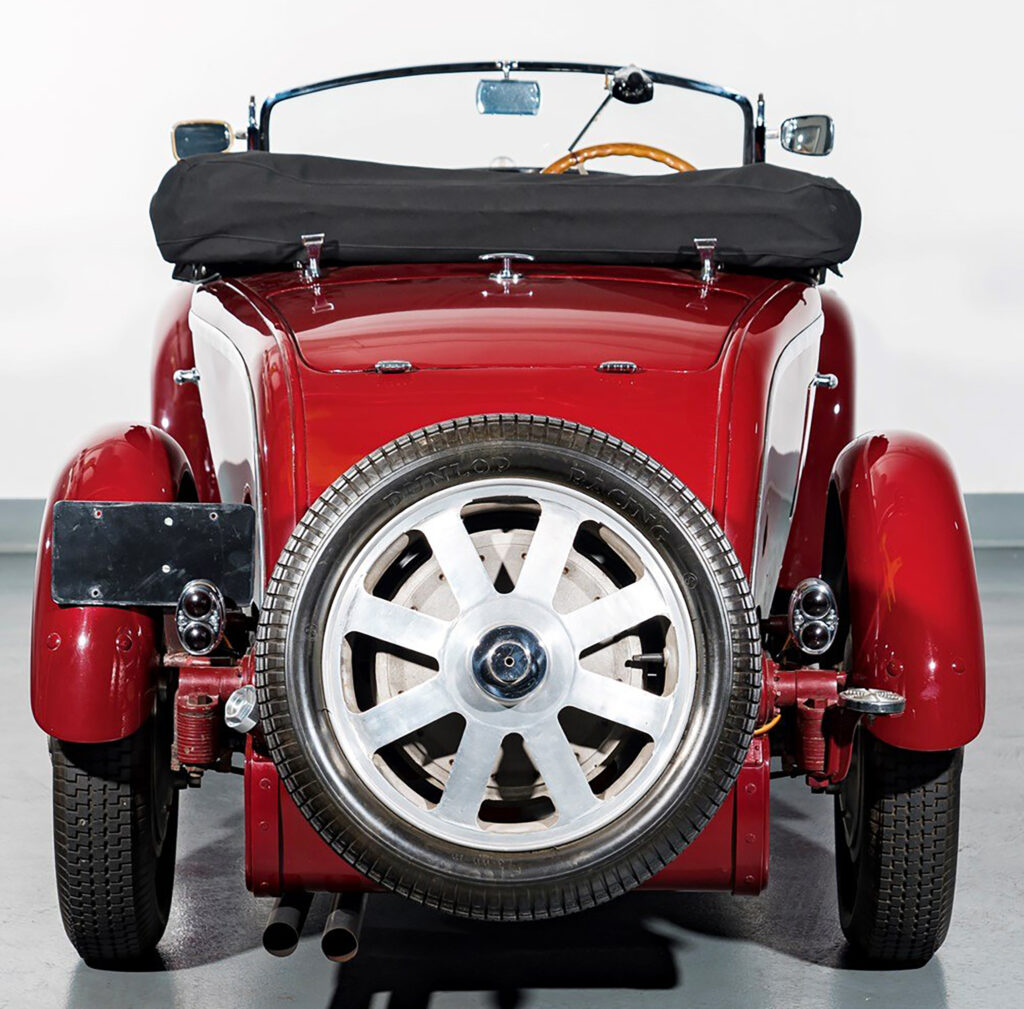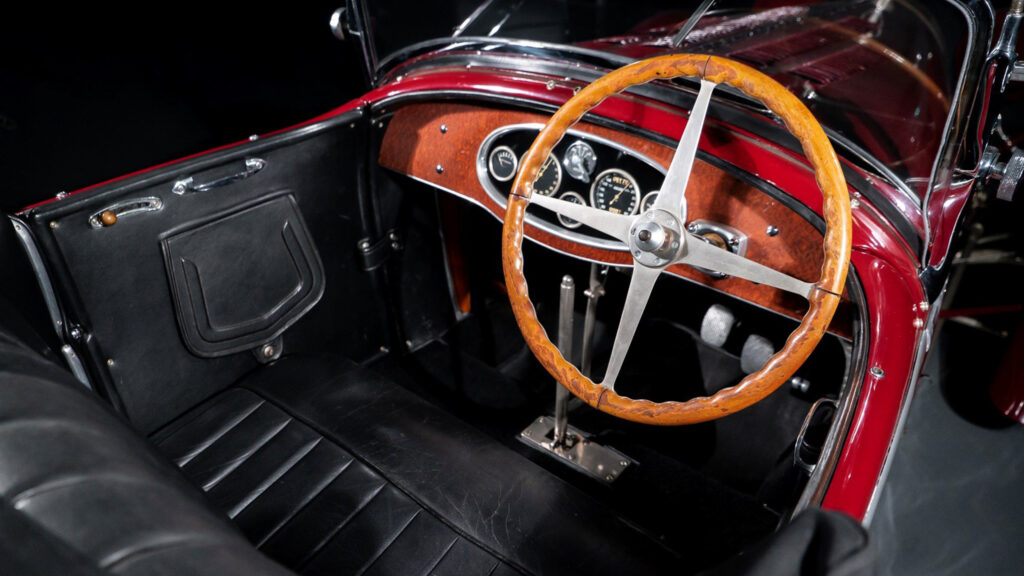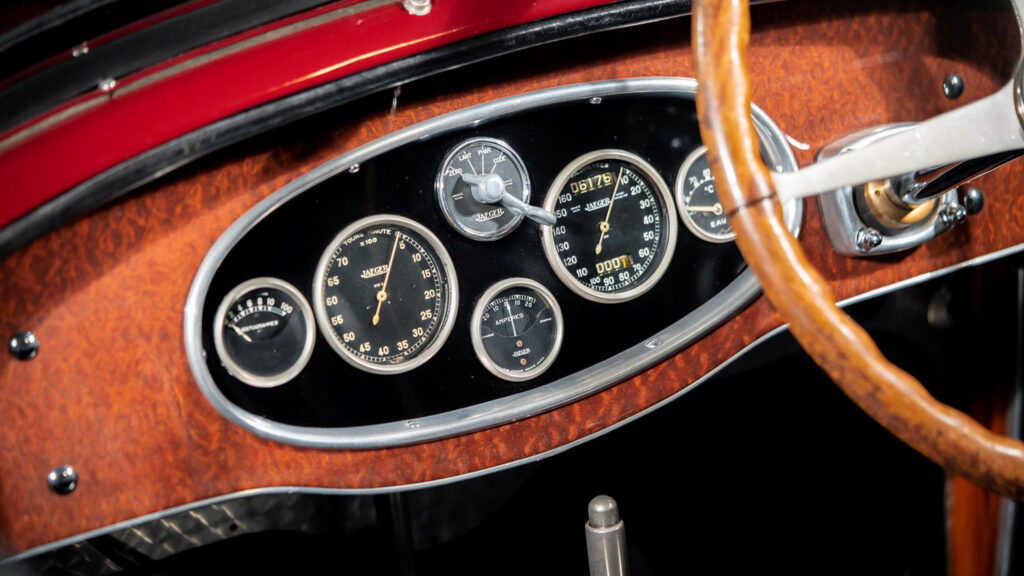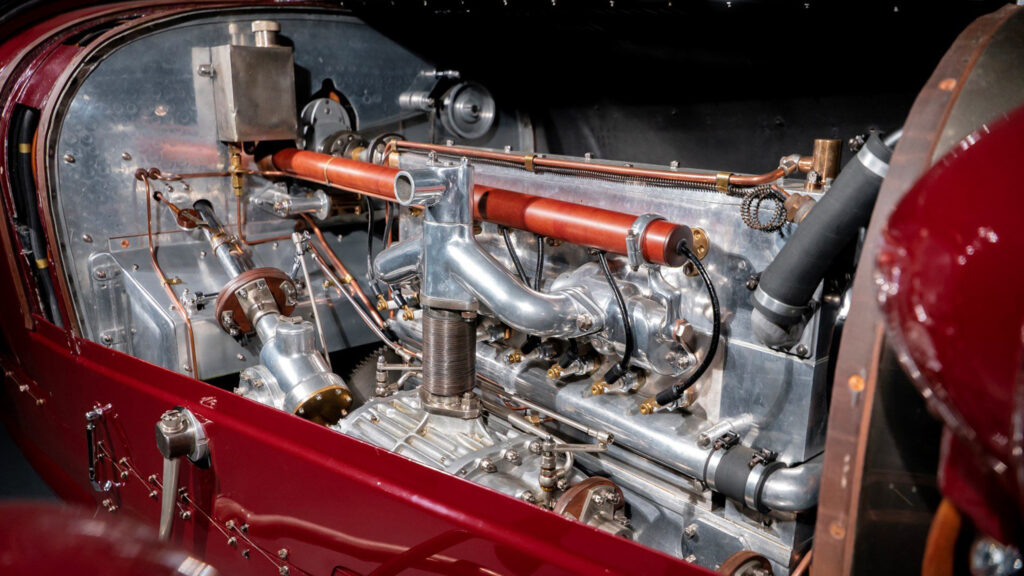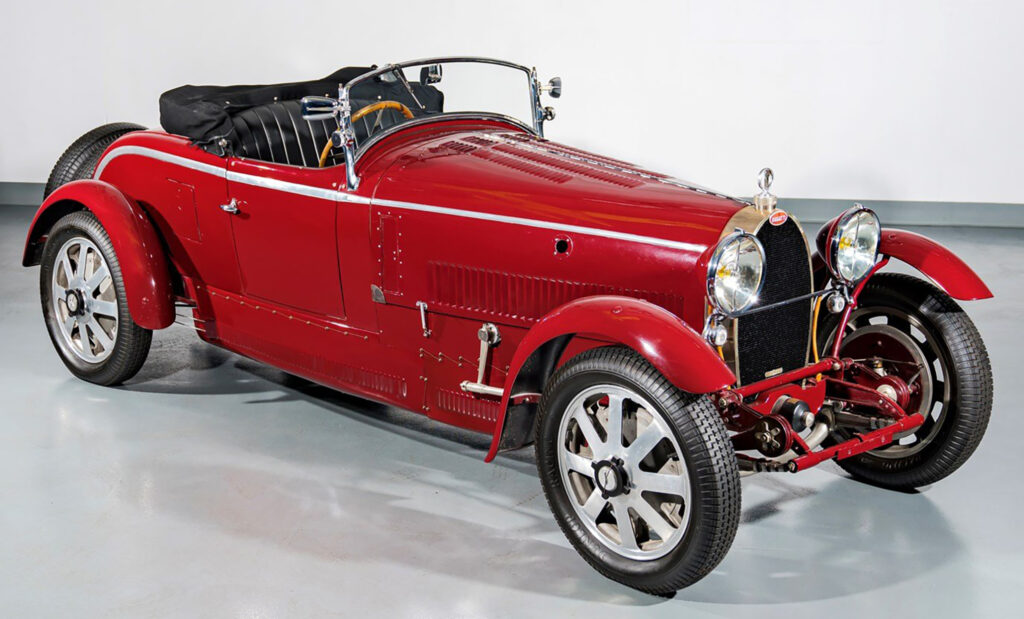
When introduced early in 1927, the Type 43 was one of the only road-going cars that could reach 100 mph. This speed was possible due to the detuned inline-8 borrowed from the Type 35B Grand Prix car that was supercharged to produce 120 bhp.
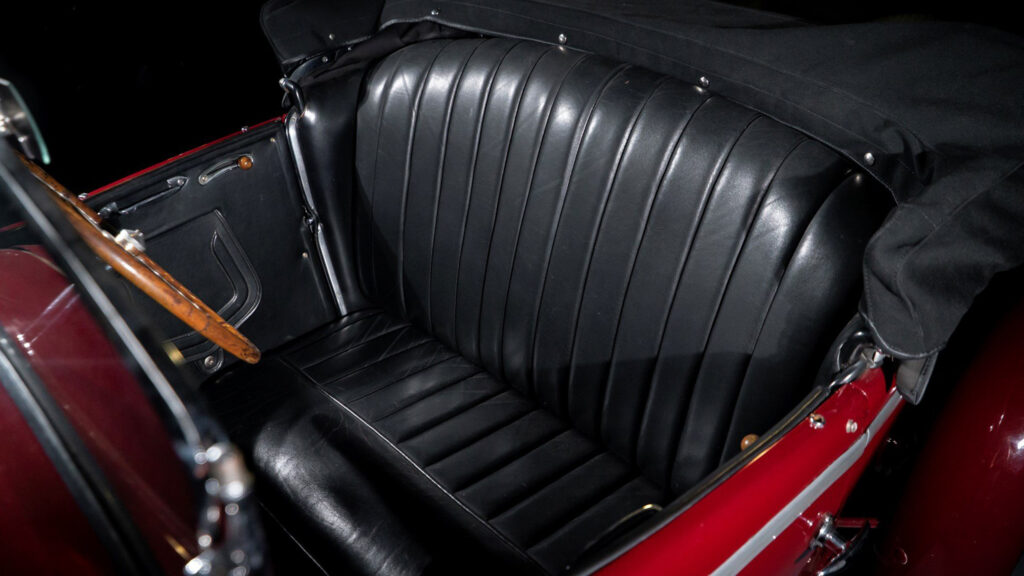
Chassis details were similar to the the aborted Type 33 project, having curve side rails and a longer wheelbase to accommodate two rows of seats.
Like the Type 28 prototype, Type 38 and 40, the Type 43 had a separate mid-mounted transmission. The front and rear axles were from the Type 38 but fitted with larger aluminium wheels and brakes.
The profile of the car was similar the Grand Prix cars with it’s cigar shaped body, pointed tail, louvred sides and aluminum cast wheels.
| Engine | |
| Configuration | Straight 8 |
| Location | Front, longitudinally mounted |
| Construction | cast-iron block and head |
| Displacement | 2,262 cc / 138 cu in |
| Bore / Stroke | 60.0 mm (2.4 in) / 100.0 mm (3.9 in) |
| Valvetrain | 3 valves / cylinder, DOHC |
| Fuel feed | Solex Carburettor |
| Aspiration | Roots-Type Supercharger |
| Power | 120 bhp / 90 kW |
| BHP/Liter | 53 bhp / liter |
| Drivetrain | |
| Front suspension | rigid axle, half elliptic springs |
| Rear suspension | rigid axle, reversed half elliptic springs |
| Brakes | drums, all-round |
| Gearbox | 4 speed Manual |
| Drive | Rear wheel drive |
| Dimensions | |
| Wheelbase / Track (fr/r) | 2,970 mm (116.9 in) / 1,250 mm (49.2 in) / 1,250 mm (49.2 in) |
| Performance figures | |
| Top Speed | 170 km/h (106 mph) |