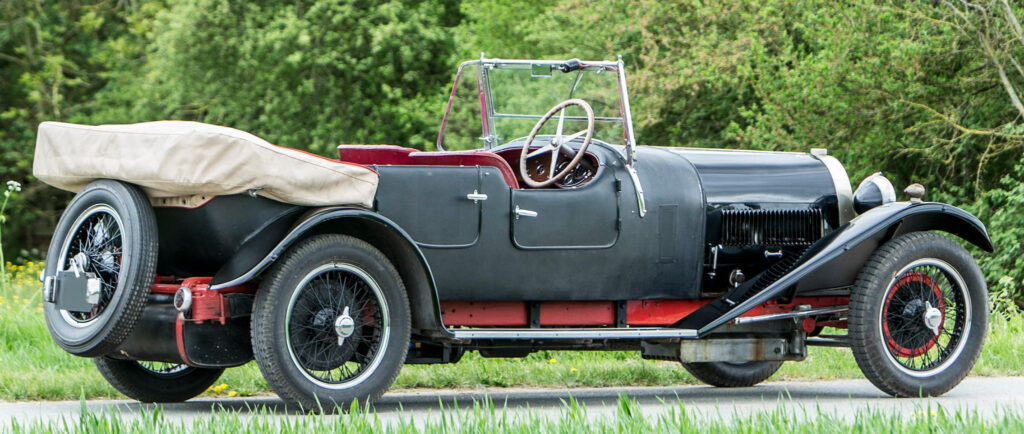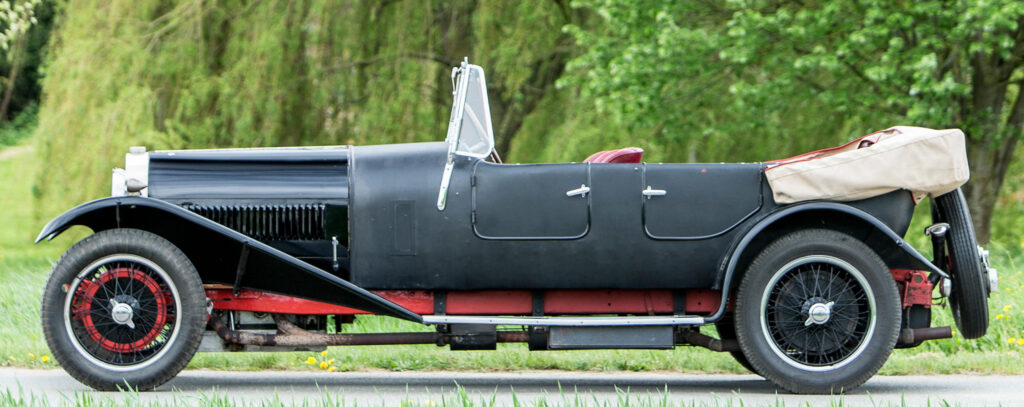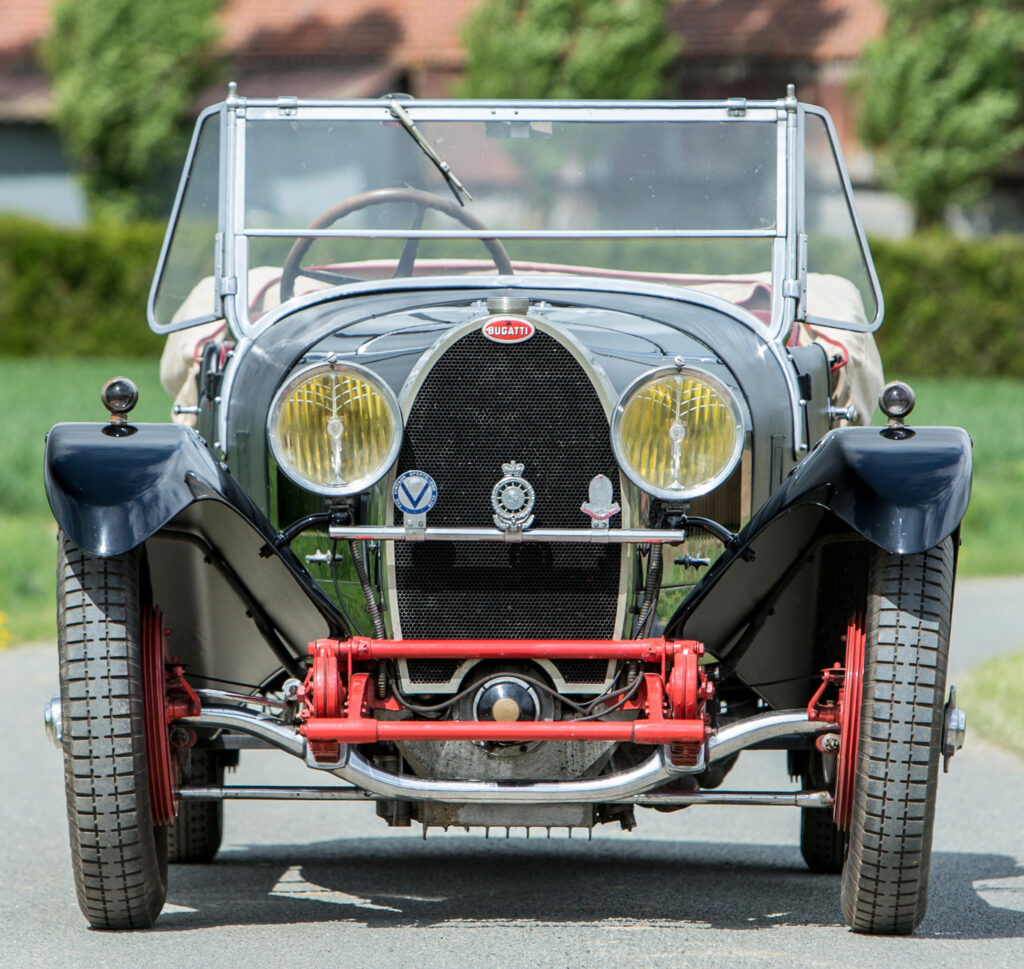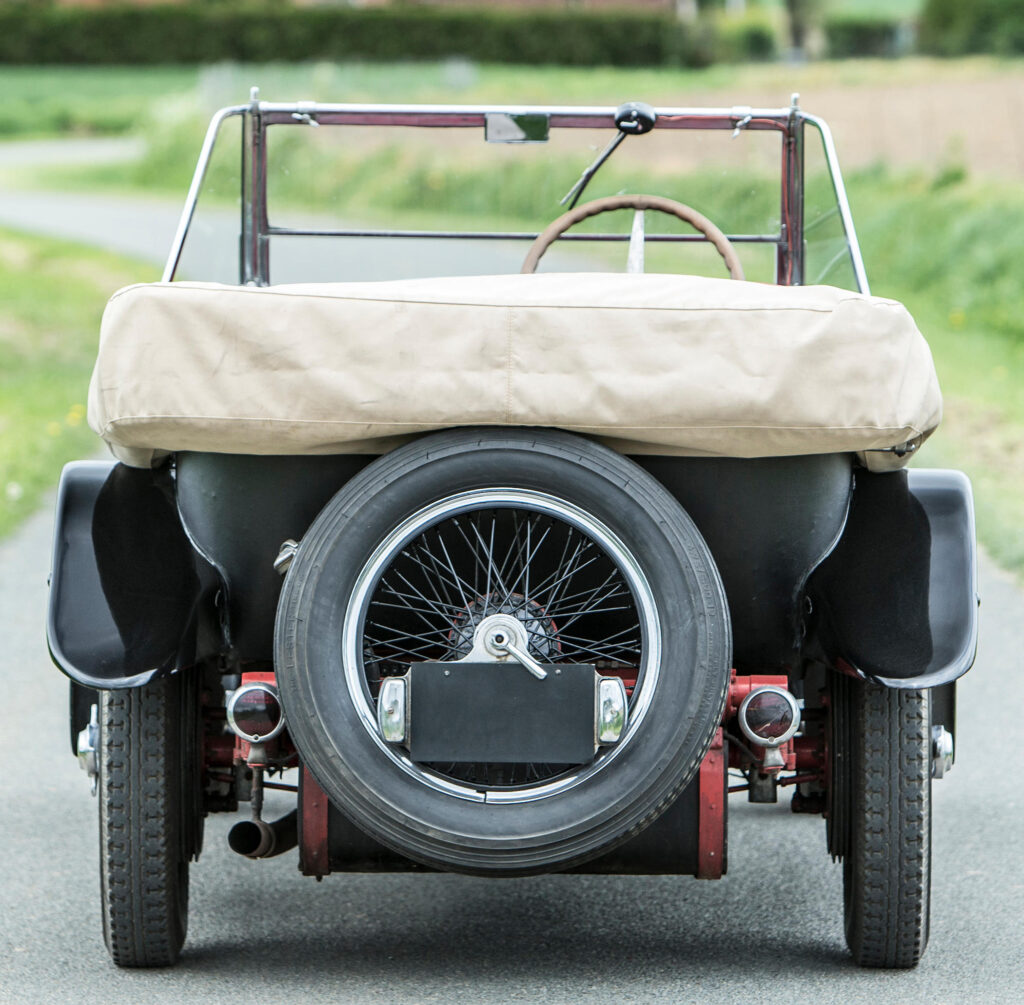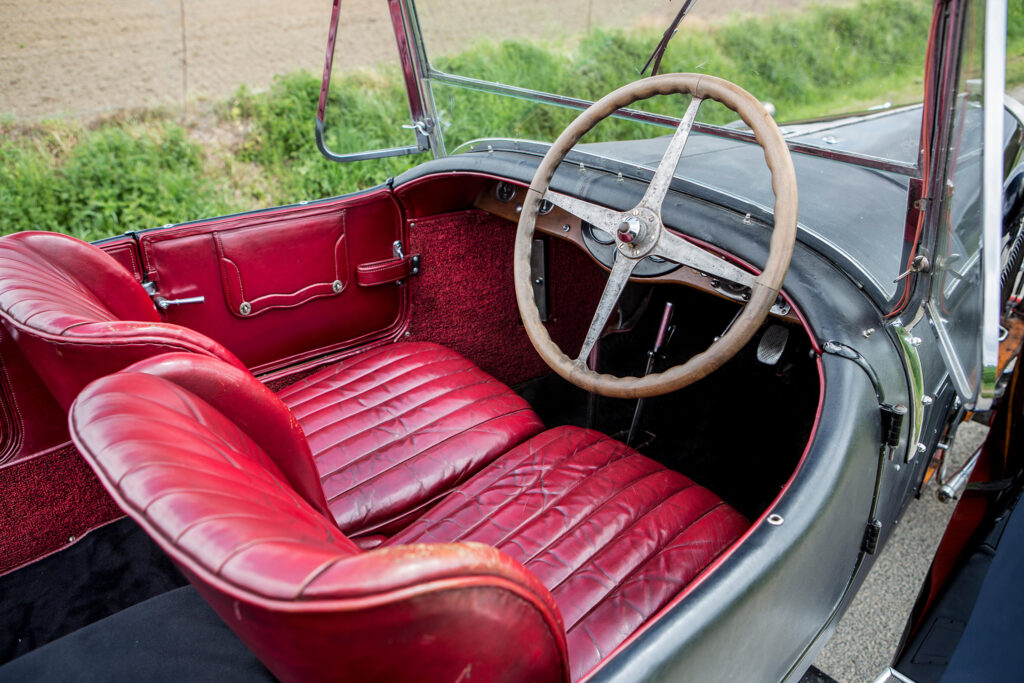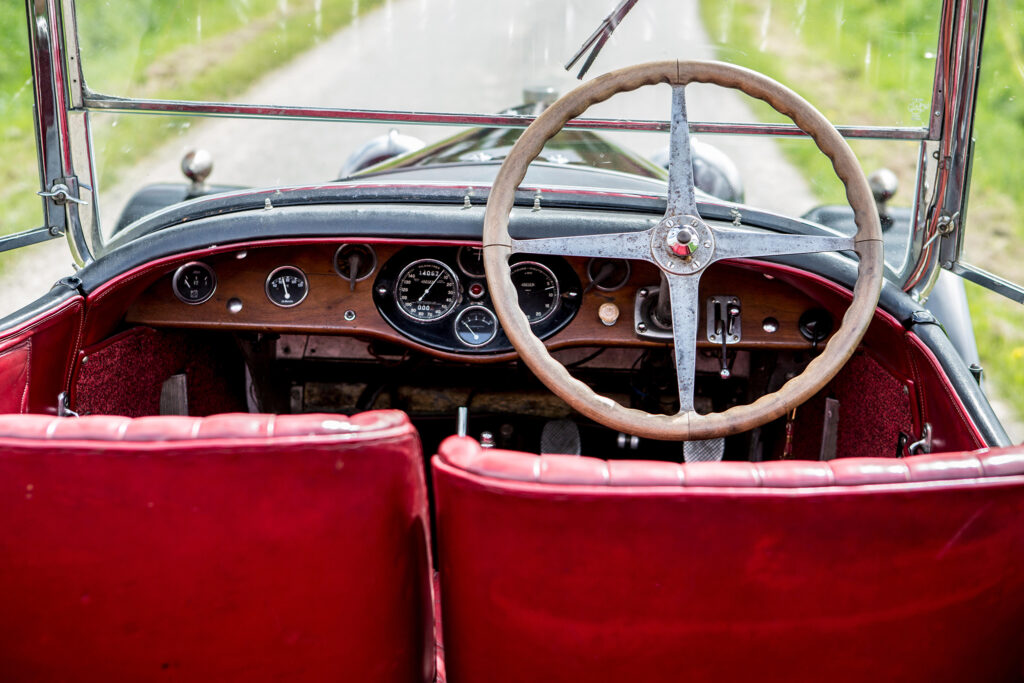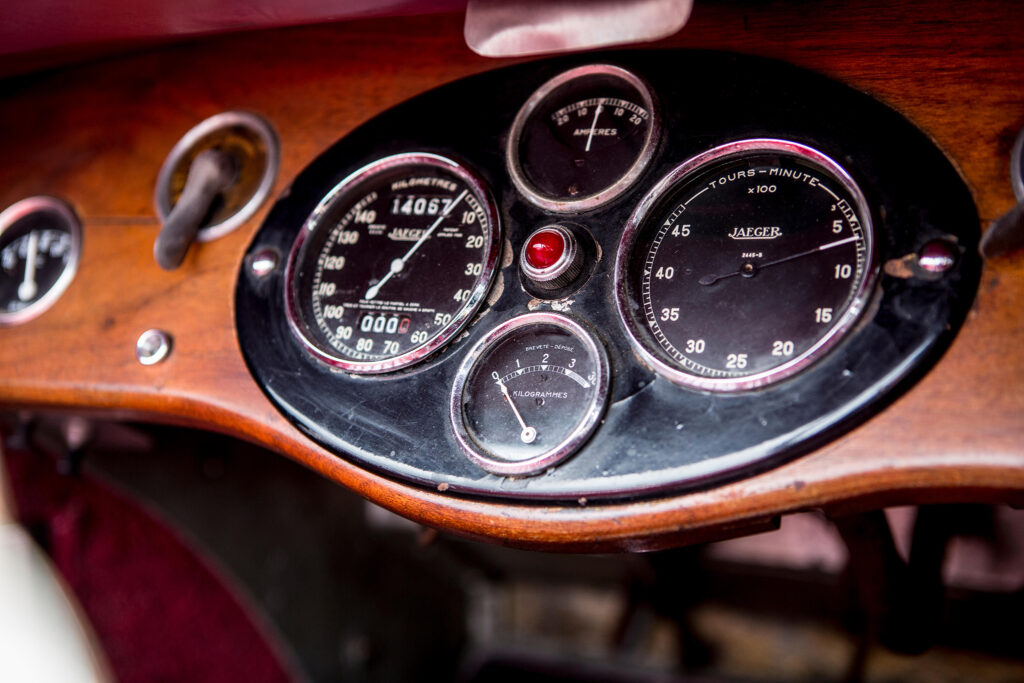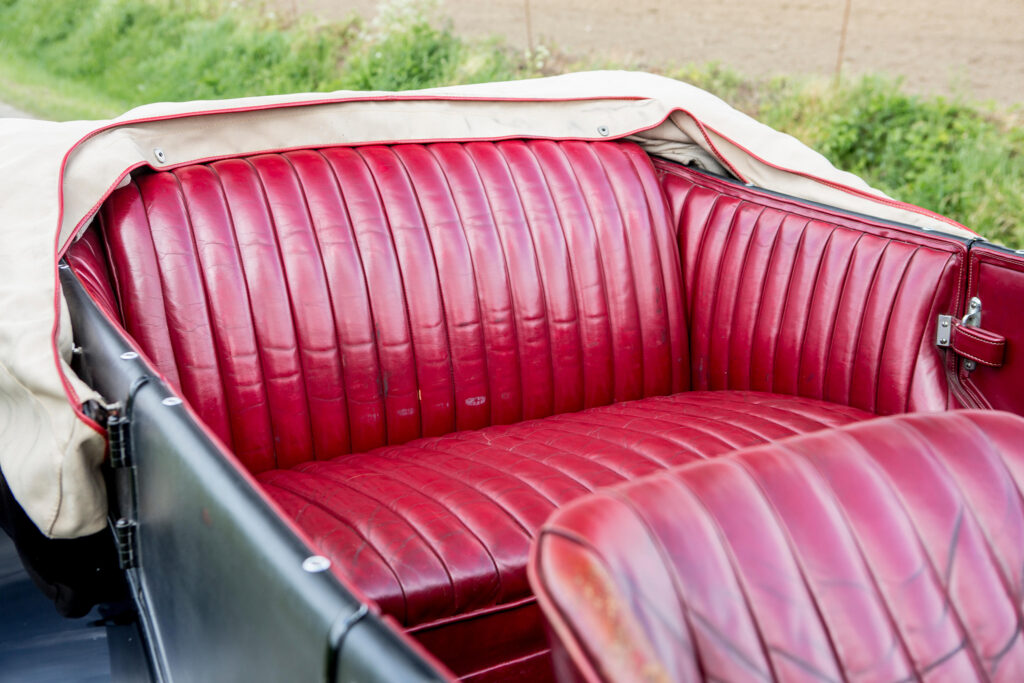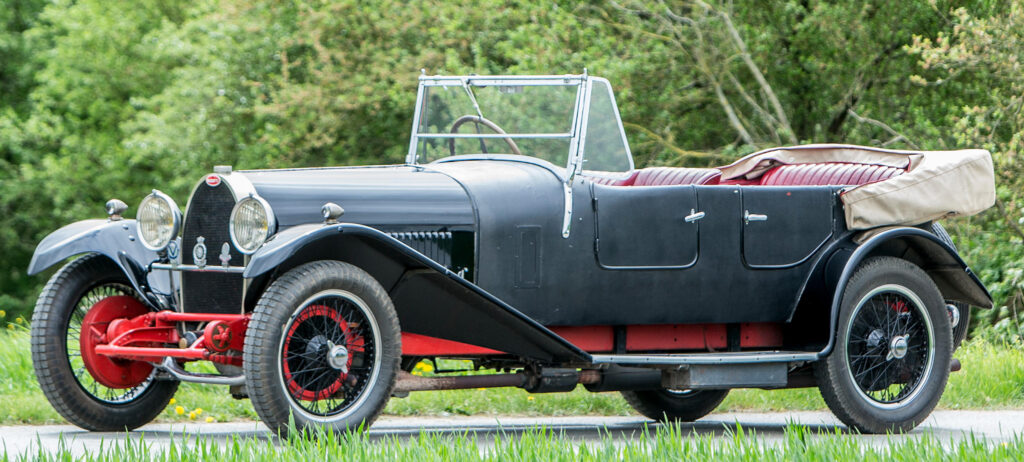
From 1927 to 1930, Bugatti produced the Type 44 as a mid-size car built to the same high standards as their race cars. Thus, it became the firm’s most common model with over 1100 examples sold.
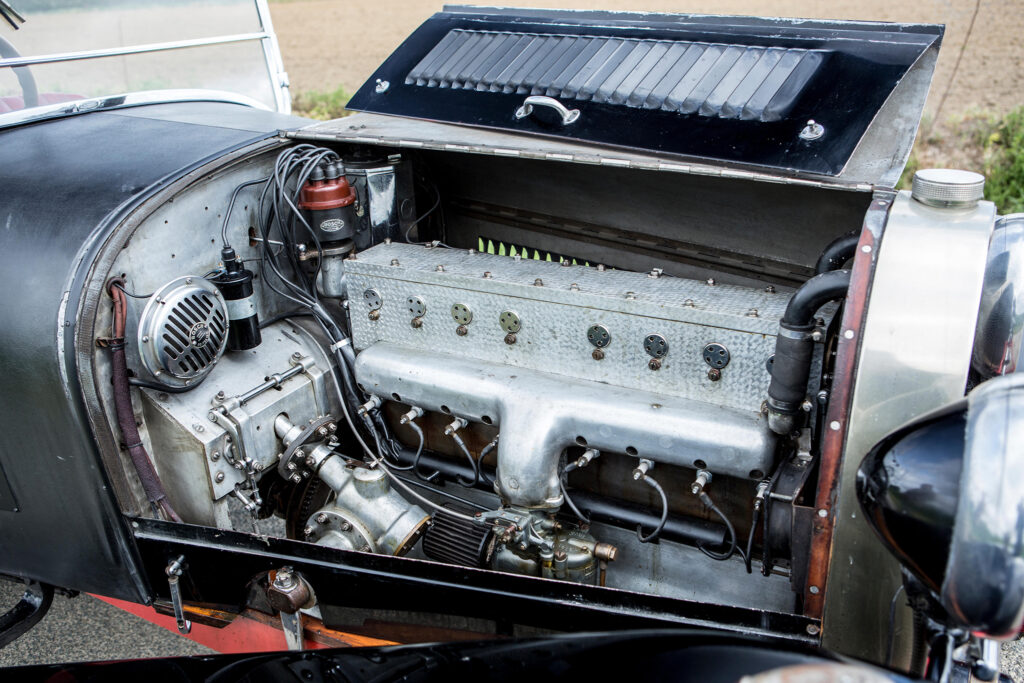
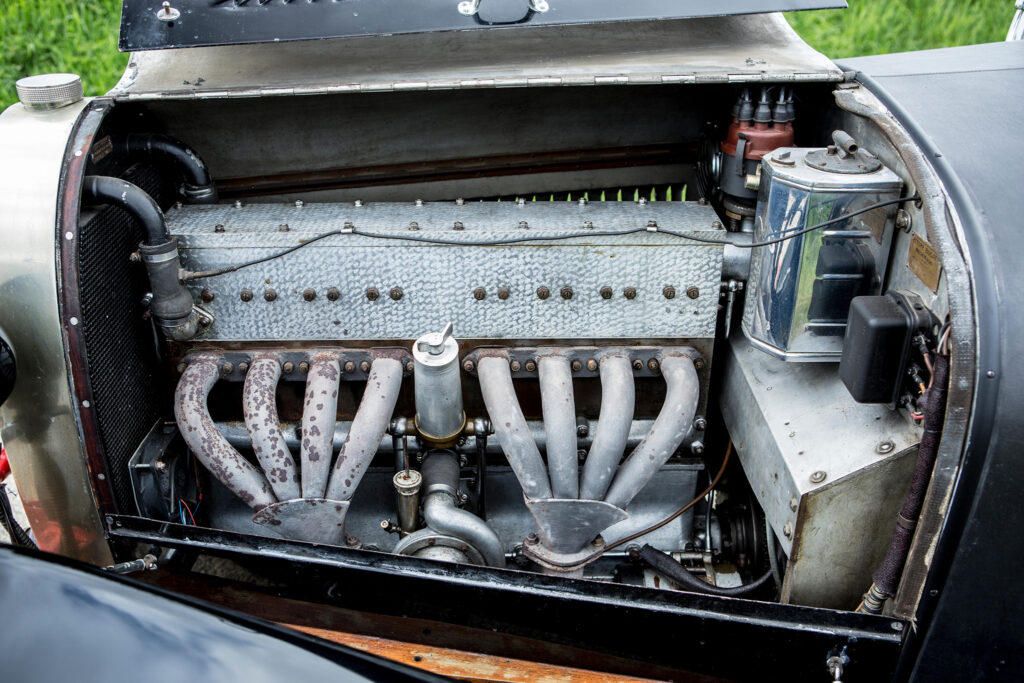
It was built around an inline-8 engine that was similar the Type 35’s with two engine blocks of four cylinders each. Displacing nearly three liters, it produced an ample 80 bhp which was flexible enough to propel any variety of aluminum or steel bodies. Furthermore, it was designed to run quietly and without vibration. As an example, the engine was balanced enough to reach 4,500 rpm.
Chassis details were similar to the other Bugatti models sold concurrently. Semi-elliptic leaf springs were used upfront with reversed quarter-elliptic springs were in the rear. Upgrades from the Type 38 included new shock absorbers, a wet multi-plate clutch and a DeWandre-Repusseau servo for the cable-operated brakes.
Many of the French coachbuilders designed bodies for the Type 44 including Weymann, Kellner and James Young. After 1930, Bugatti upgraded the model to the Type 49 and offered the 5-litre Type 46 as a more luxurious model.
| type | Series Production Car |
| built at | Molsheim, France |
| production | 1095 |
| predecessor | 1926 Bugatti Type 38 |
| successor | 1934 Bugatti Type 49 |
| engine | Inline-8 |
| position | Front Longitudinal |
| aspiration | Natural |
| valvetrain | SOHC, 2 Valves per Cyl |
| fuel feed | 1 Schebler Carburetor |
| displacement | 2991 cc / 182.52 in³ |
| bore | 69 mm / 2.7 in |
| stroke | 100 mm / 3.9 in |
| power | 59.7 kw / 80 bhp @ 4000 rpm |
| specific output | 26.75 bhp per litre |
| bhp/weight | 73.39 bhp per tonne |
| body / frame | Steel Chassis |
| driven wheels | RWD |
| wheel type | Wire Wheels |
| front tires | 28 x 4.95 |
| rear tires | 28 x 4.95 |
| front brakes | Cable-operated Drums |
| rear brakes | Cable-operated Drums |
| curb weight | 1090 kg / 2400 lbs |
| wheelbase | 3119.1 mm / 122.8 in |
| front track | 1249.7 mm / 49.2 in |
| transmission | 4-Speed Manual |
| tran clutch | Wet, multi-plate |