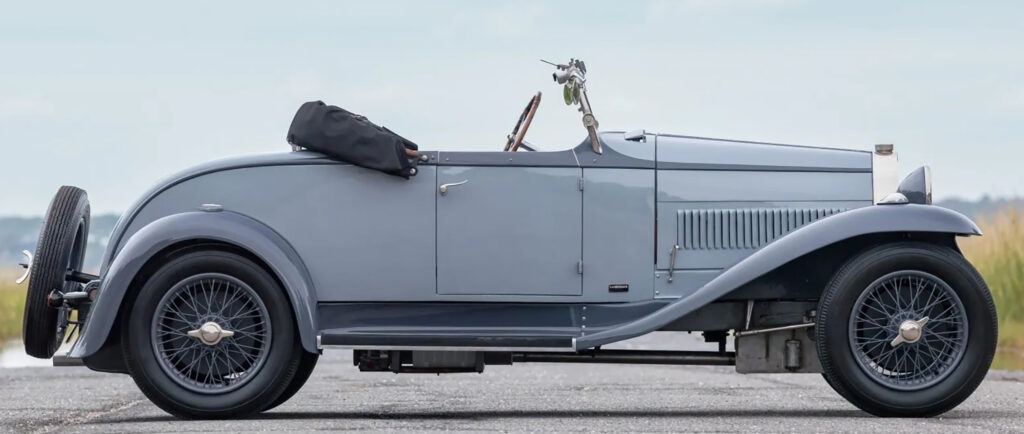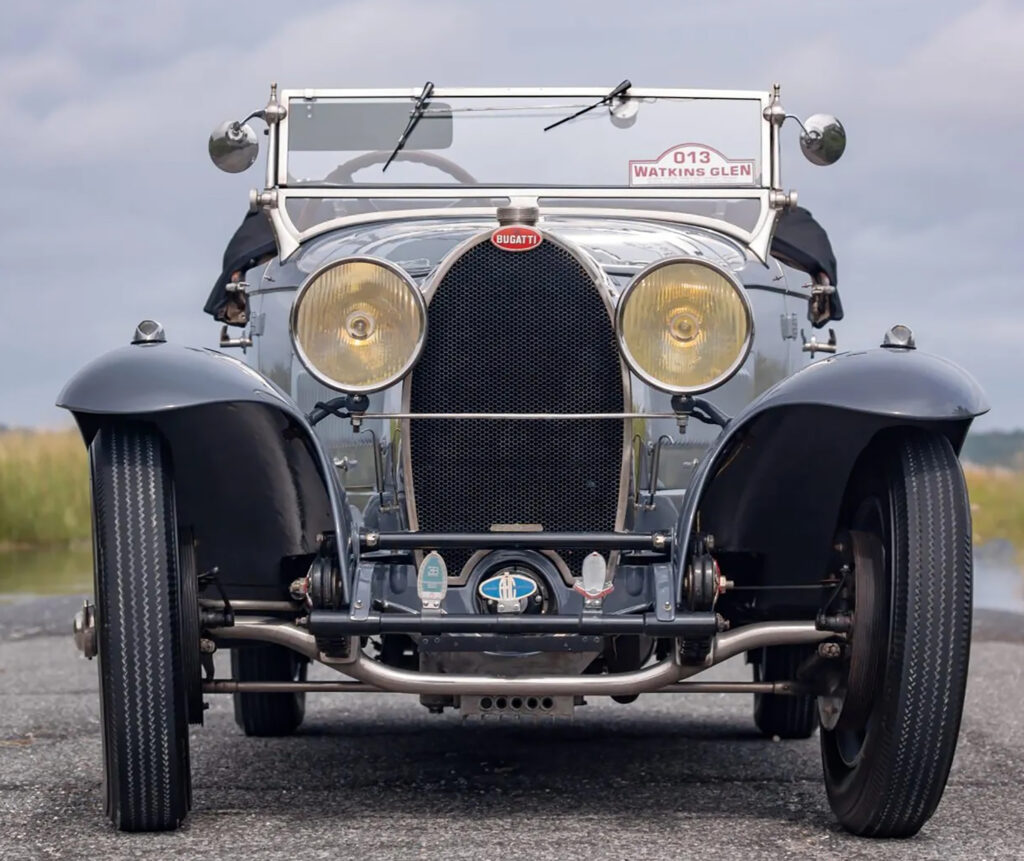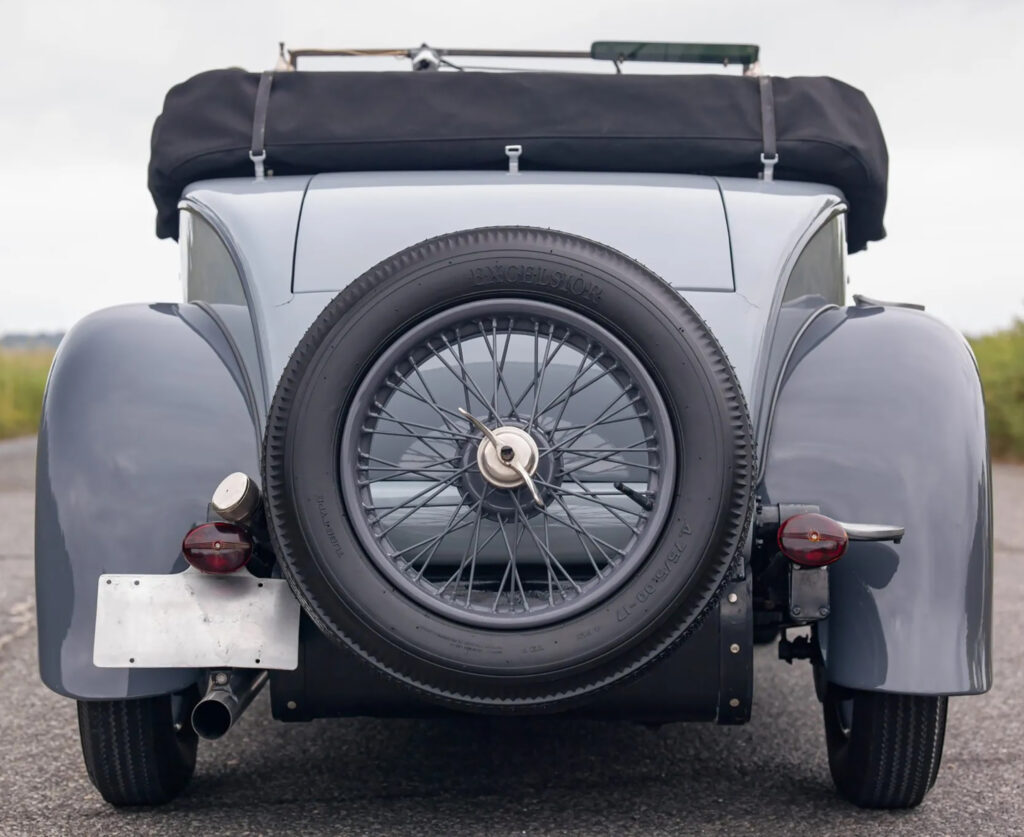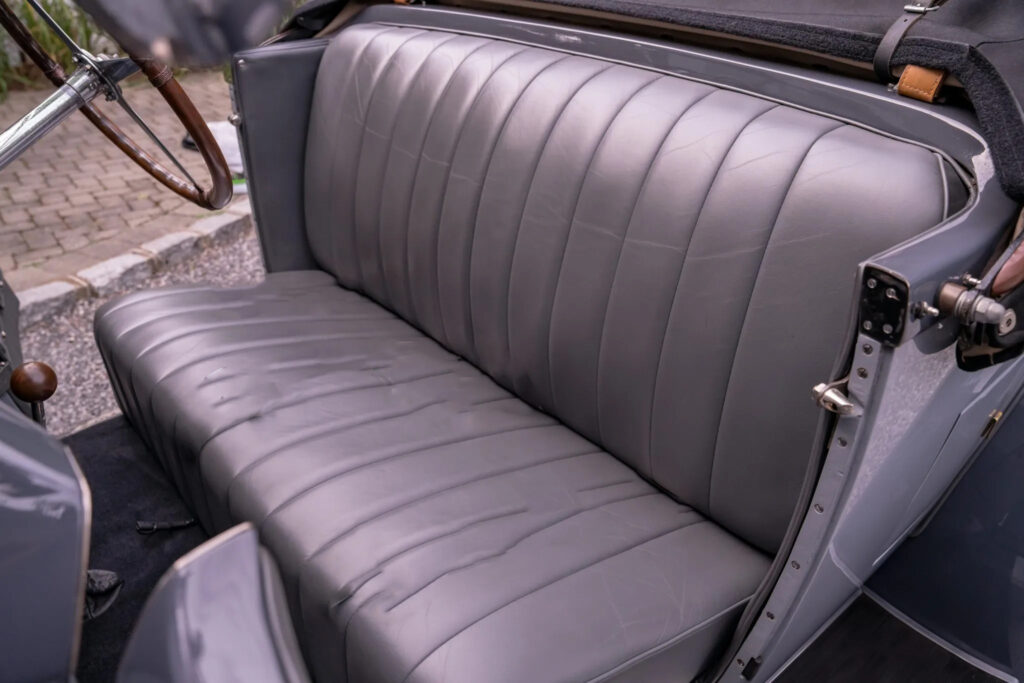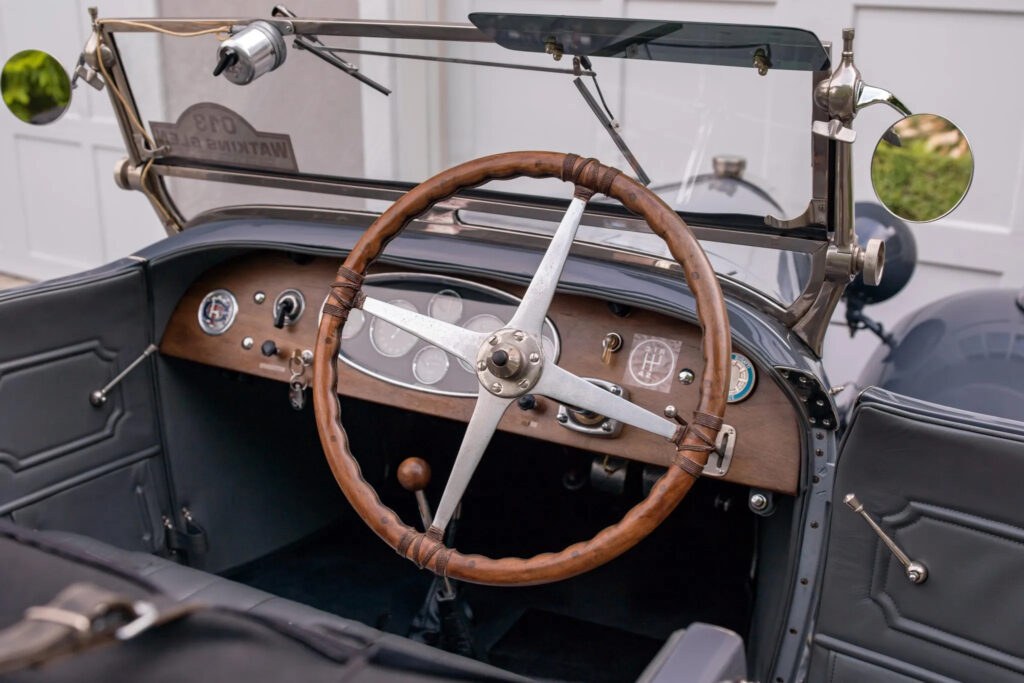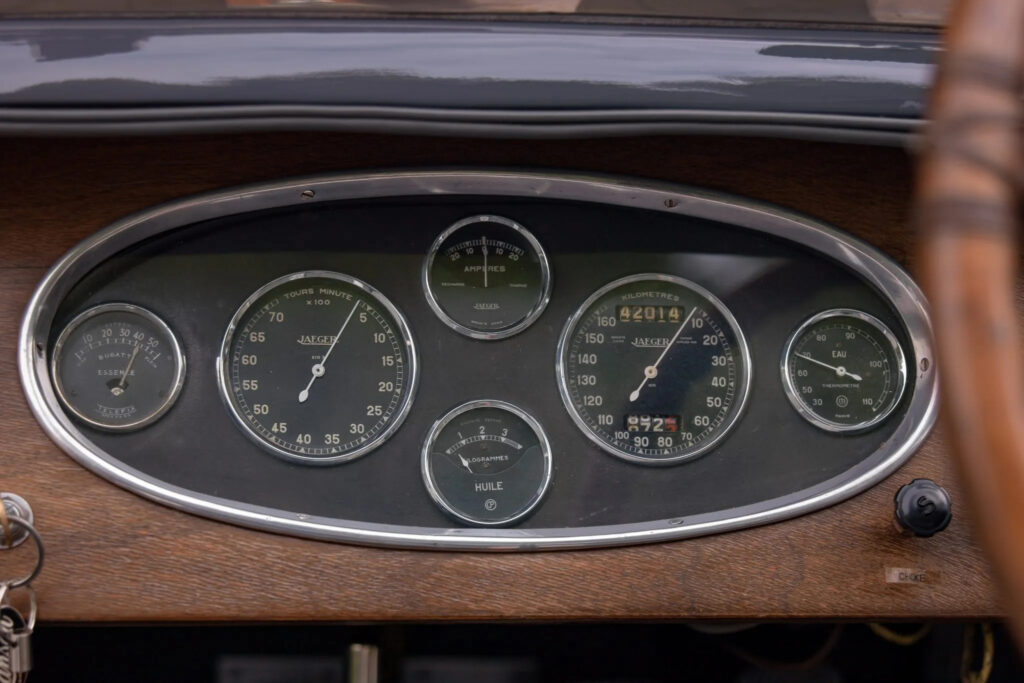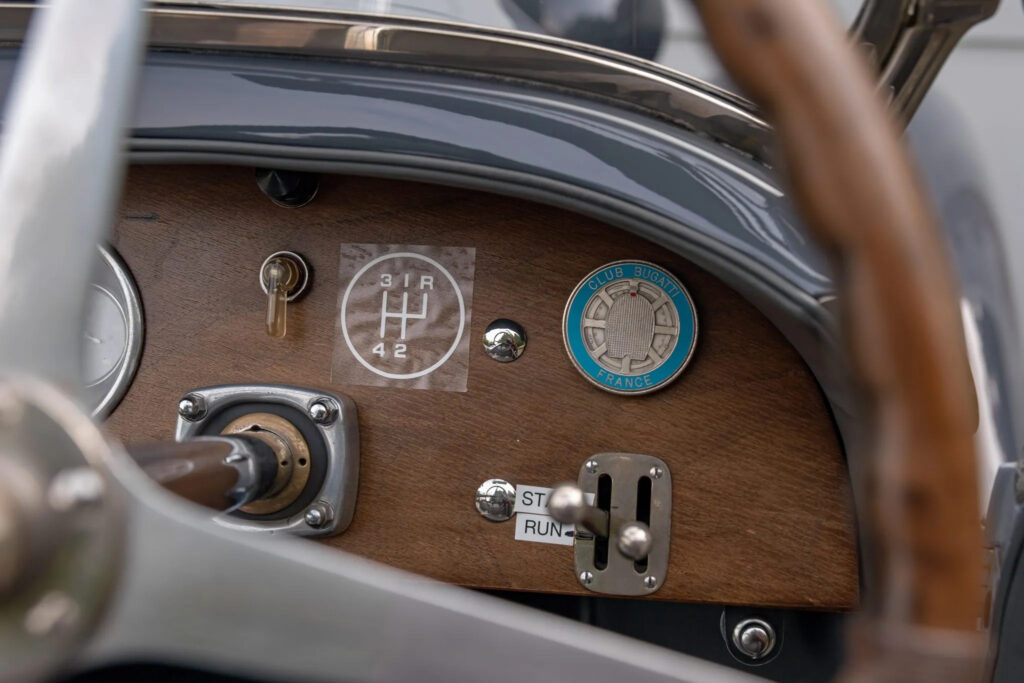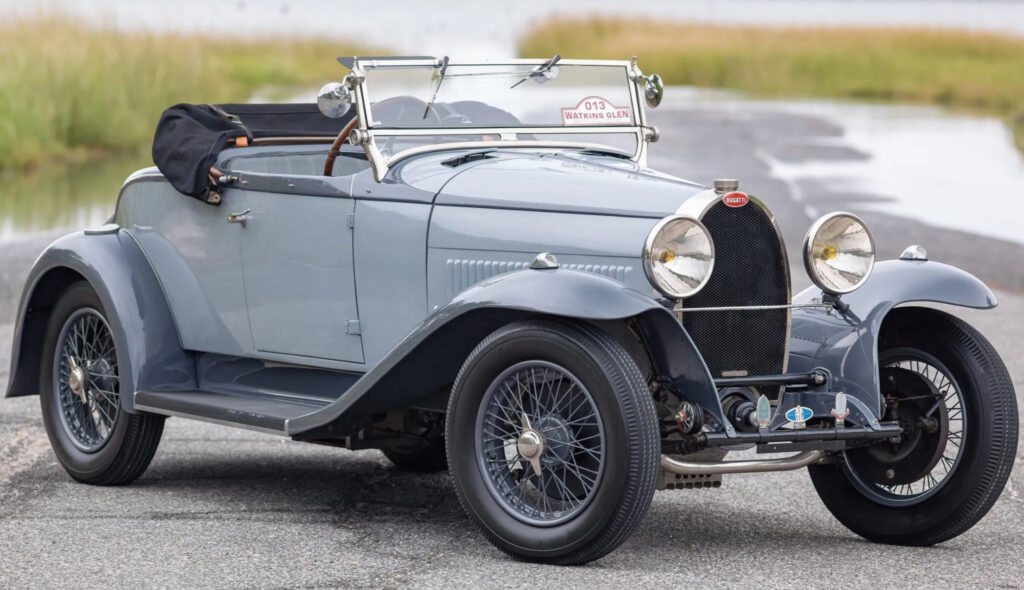
Type 40 Bugattis replaced the early Type 13, 22 and 23 models. As an entry level car, the Type 40 had modest. Simple bodywork and construction methods kept production costs down. As with the early Brescia models it replaced, the Type 40 had road exceptional handling, braking and performance.
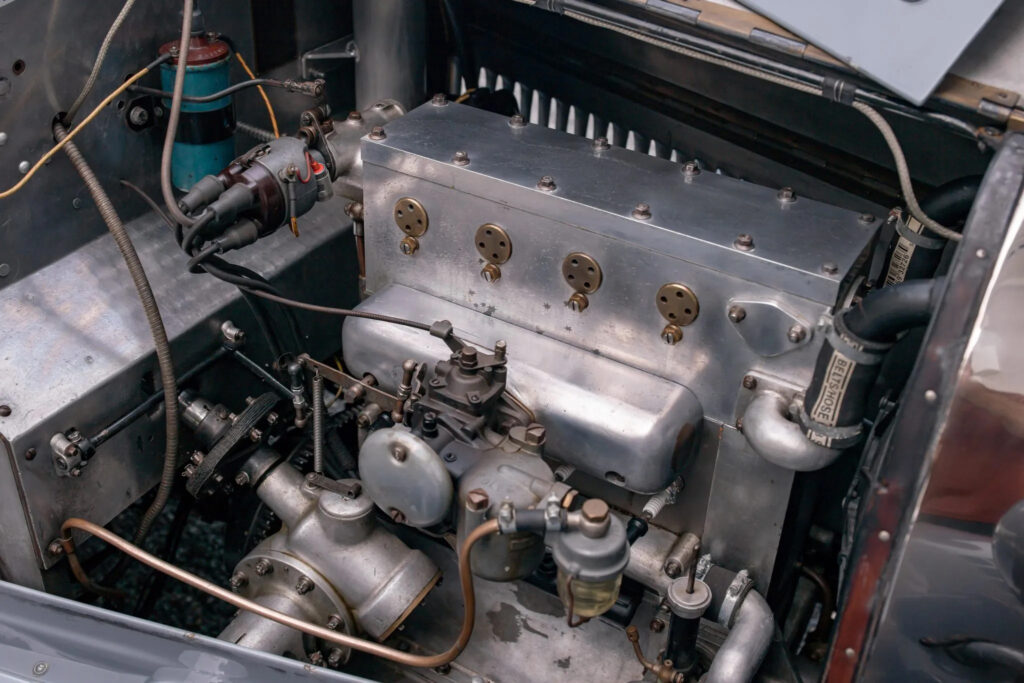
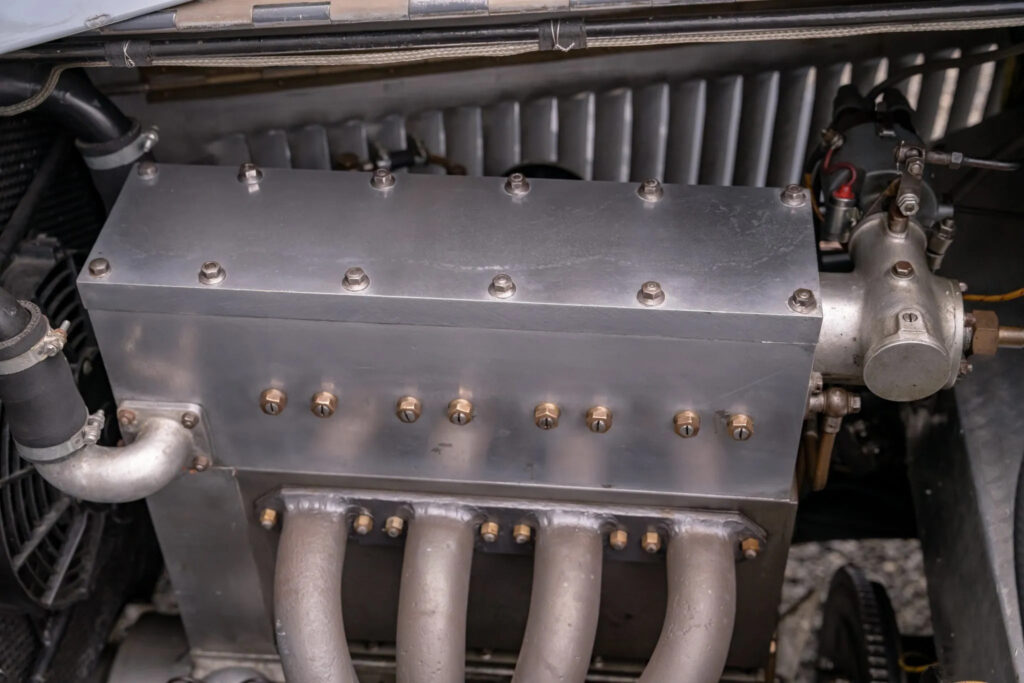
Supporting the Type 40 was a chassis that was similar to the Type 38. The engine was that of the Type 37, having an unblown Inline-4 with 5-main bearings and three valves per cylinder. Essentially the engine was halt the Type 35’s inline-8.
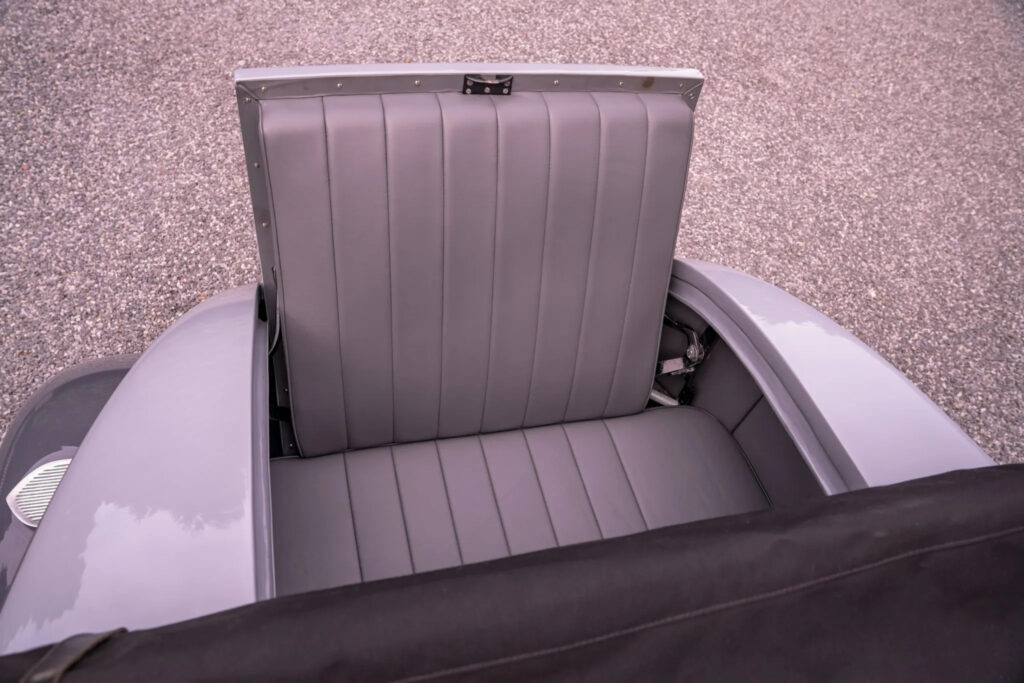
Standard bodywork on the Type 40 was a four-seater coupe in a torpedo form. Many cars did receive custom coachwork.
Back in 1929 the Type 40 offered an affordable alternative to the usual expensive Grand Prix car. However, it is important to note that the same degree of craftsmanship that went into a Grand Prix was held in the Type 40.
| engine | Water Cooled, Inline-4 |
| position | Front Longitudinal |
| aspiration | Natural |
| valvetrain | SOHC, 3 Valves per Cyl |
| fuel feed | 1 Zenith, or Solex Carb |
| displacement | 1496 cc / 91.3 in³ |
| bore | 69 mm / 2.72 in |
| stroke | 100 mm / 3.94 in |
| power | 52.2 kw / 70 bhp @ 4500 rpm |
| specific output | 46.79 bhp per litre |
| front brakes | Drums |
| f brake size | mm / in |
| rear brakes | Drums |
| r brake size | mm / in |
| wheelbase | 2400 mm / 94.5 in |
| front track | 1200 mm / 47.2 in |
| rear track | 1200 mm / 47.2 in |
| gear ratios | :1 |
| top speed | ~128.7 kph |