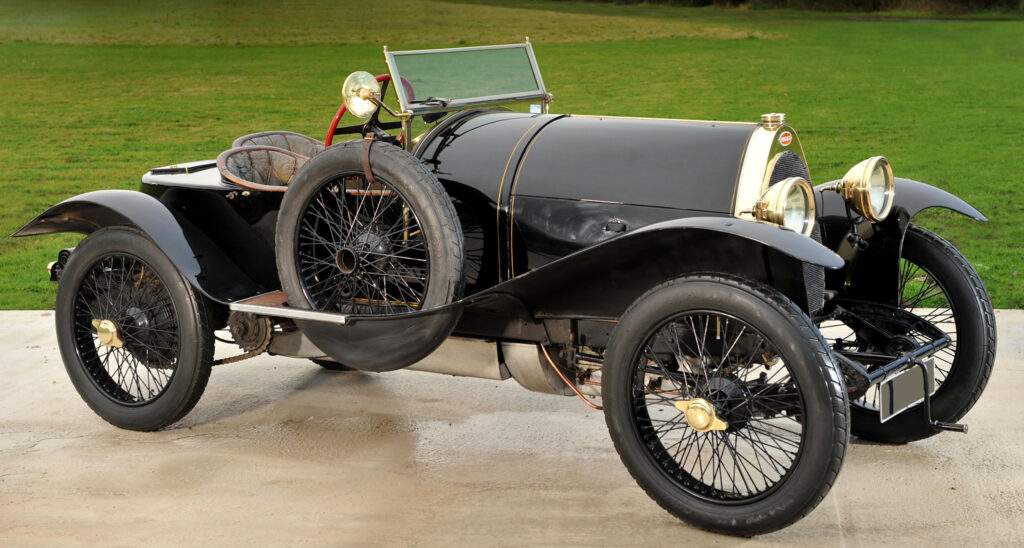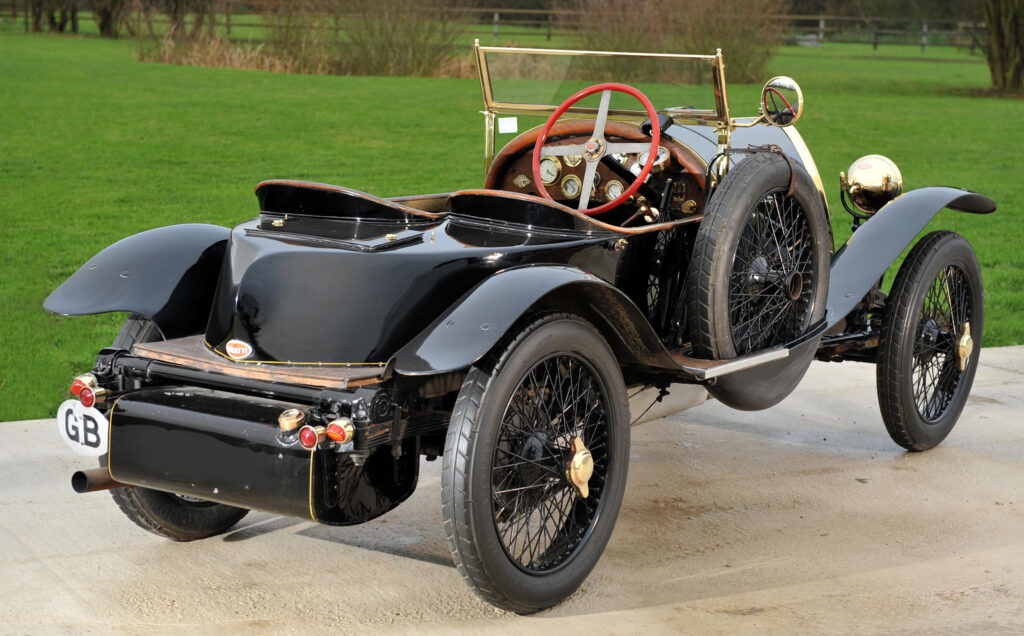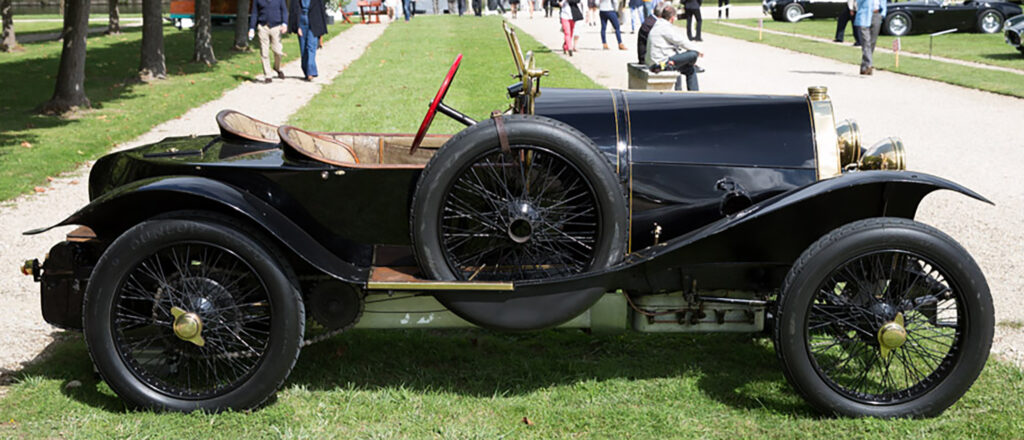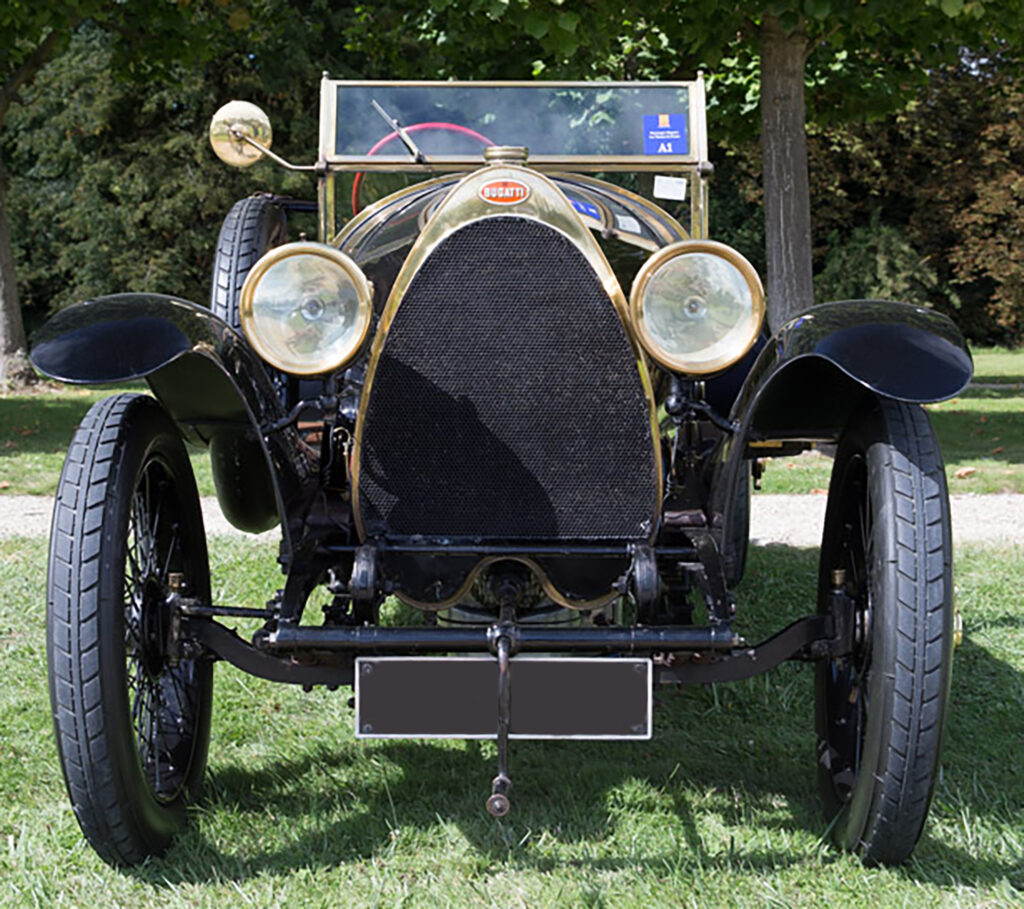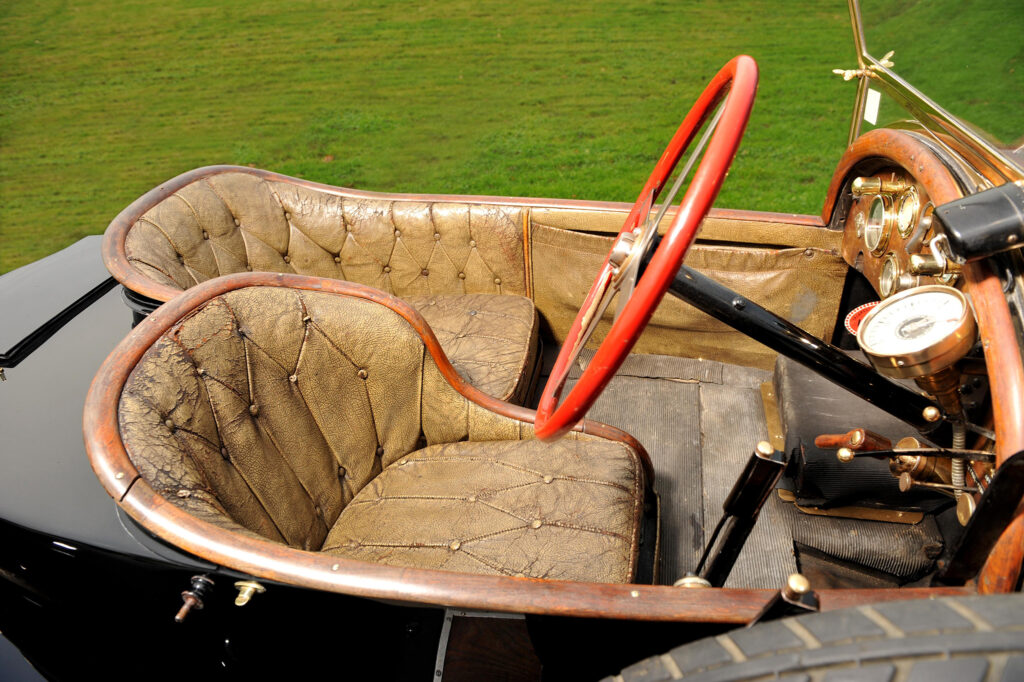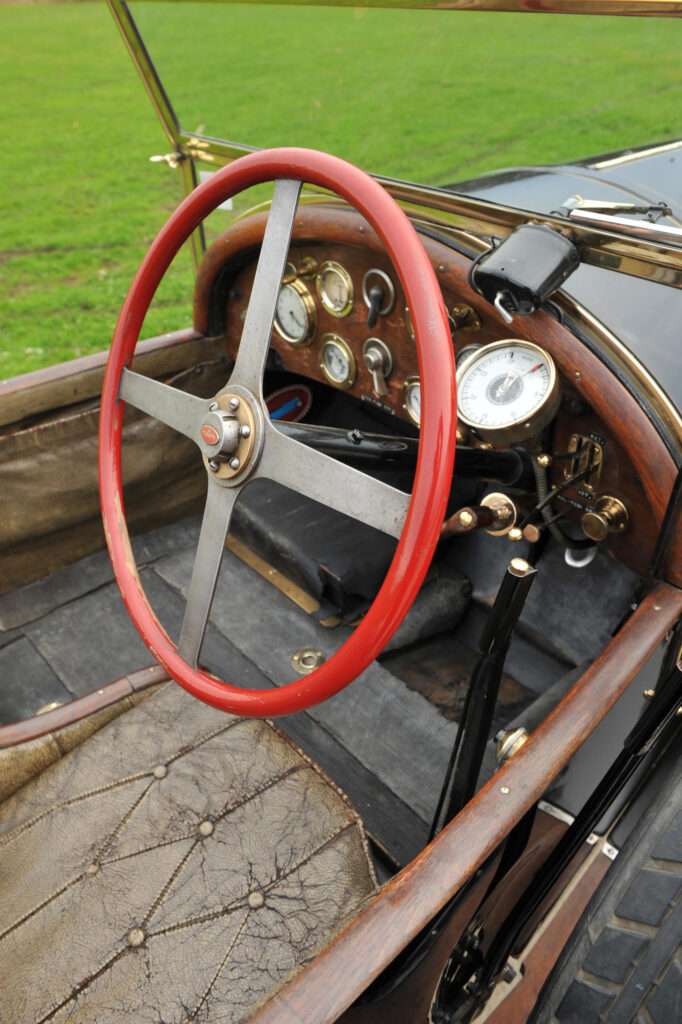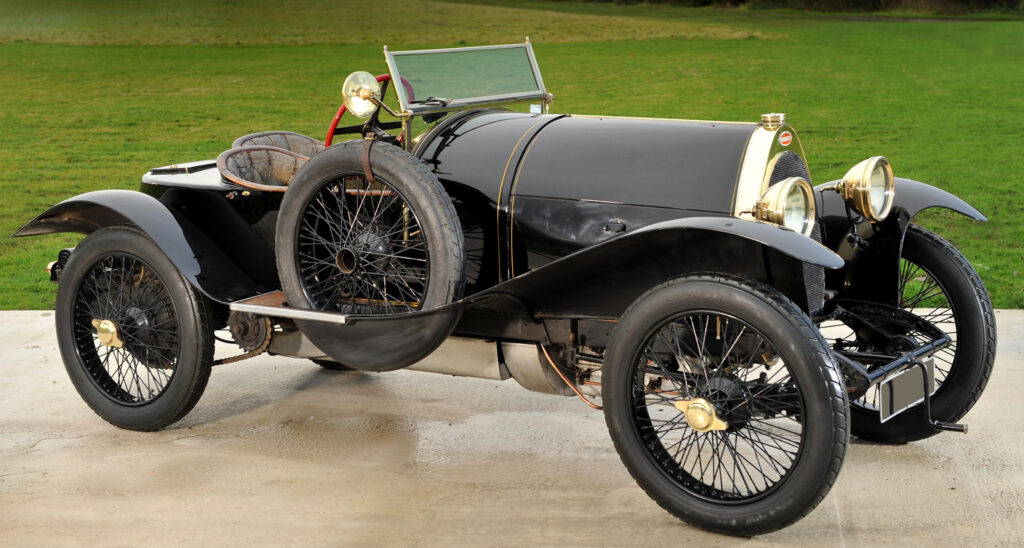
Of all the prewar Bugattis, this Type 18 is the most distinguished and maybe even the most famous. It is also one of the rare five-liter models first sold to aviator Roland Garros. But it was during the car’s second ownership with Ivy Cummings when the nickname ‘Black Bess’ was bestowed.
In its near 100-year history, this car has garnered a roster of impressive owners and race entries that remains almost unrivaled. The tremendous performance of the 5-liter Bugatti kept it on the circuit and challenging newer cars for nearly two decades.
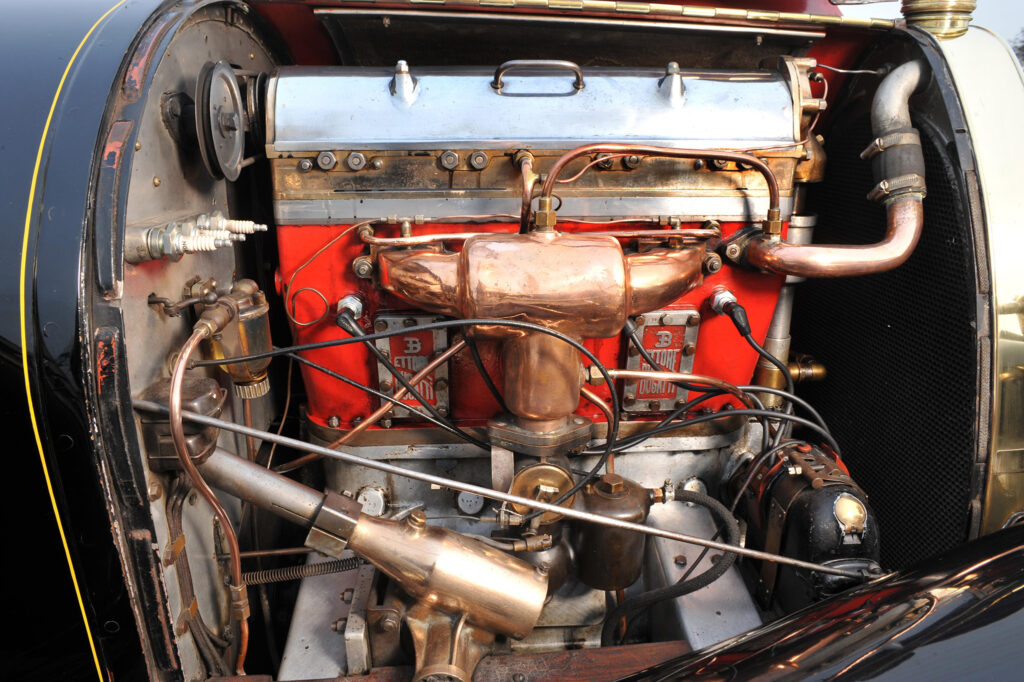
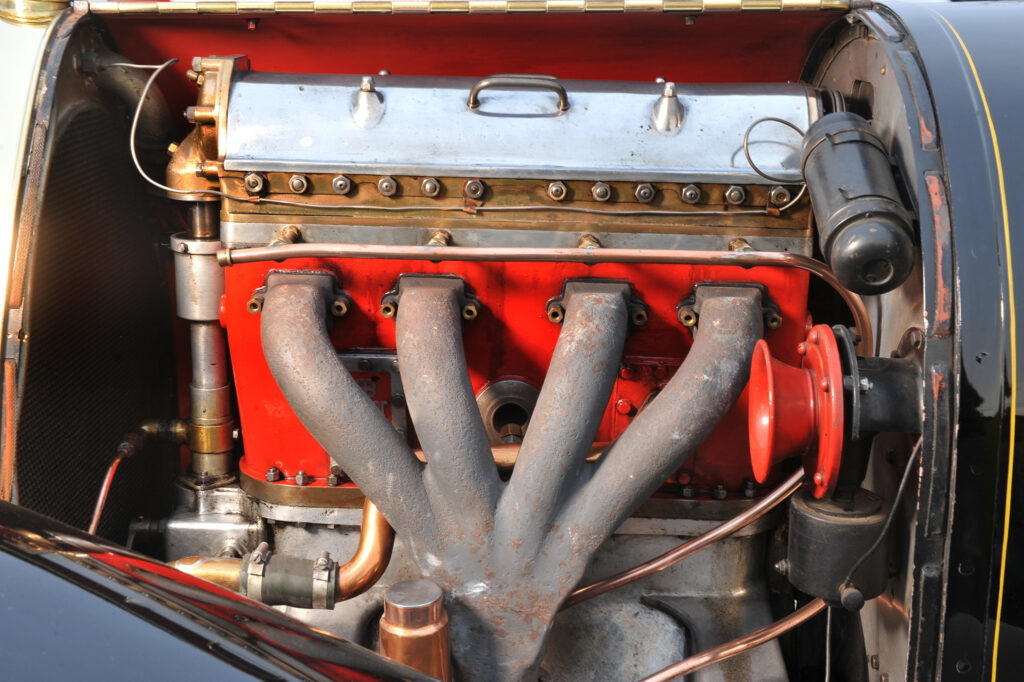
As one of the very first Bugattis made, this car mimicked traits of other marques like Mathis, Hermes and Fiat which Bugatti personally worked for. The centerpiece of Black Bess was its five liter engine that used a bore and stroke of 100 x 160mm to offer 5,027cc. The simple design used a three-bearing crankshaft and SOHC camshaft to produce 100bhp @ 2,400 rpm.
This power was transferred through a metal-on-metal clutch to a 4-speed manual transmission. Twin chains provided drive to the rear wheels. Depending on the chain sprockets, top speed was somewhere near 100 mph—a remarkable speed for 1913!
In traditional Bugatti fashion the steel chassis was suspended by leaf springs with a reversed quarter-elliptic on the rear.
Upon delivery of chassis 474, Roland Garros commissioned Labourdette to fashion a small torpedo body for his Bugatti. After WW1, 474 was sold to Louis Coatalen, the chief engineer of Sunbeam, but the car’s racing history didn’t develop until it was sold again to Ivy Cummings. Having raced other Brecia Bugattis and cars like the Vauxhall 30/98, it was during Cummings’ ownership when 474 acquired the name Black Bess. At this time Cummings raced the car at events across Britain like Kop Hill, South Harting, Octon Bank and the Bexhill Speed Trials.
It stayed with Cummings until 1925, when Oxford student L H Preston purchased the car an continued racing it. He raced it at Brooklands, reaching an average speed of 90.06 mph. A year later is was sold to actor James Robertson Justice who had it maintained by McEvoy’s garage near Derby.
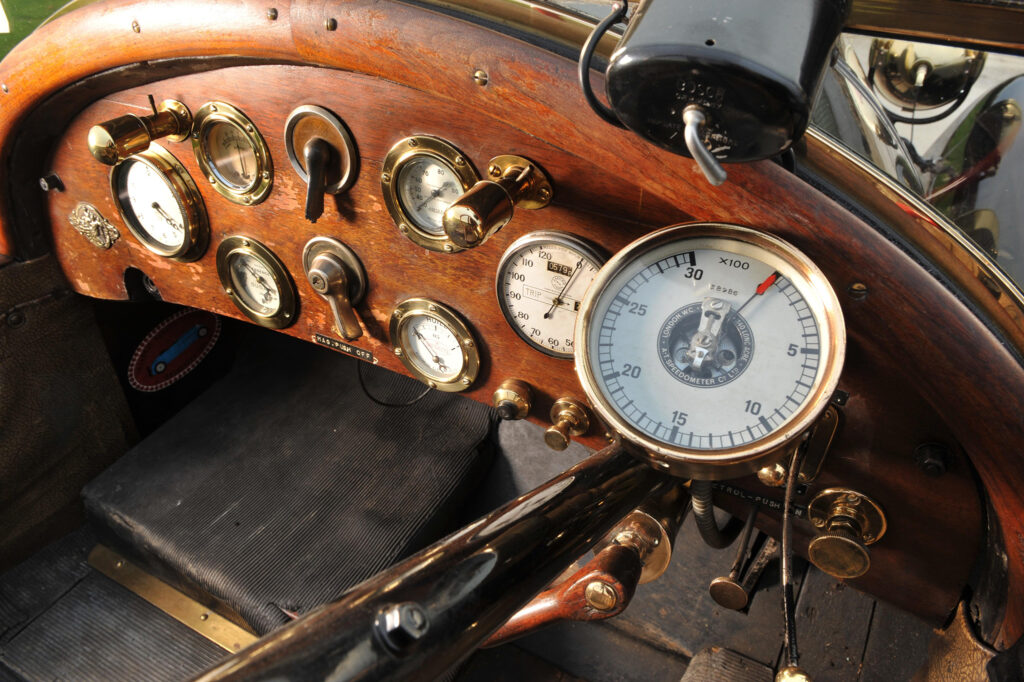
In 1933 Bill Boddy found Black Bess in original condition at McEvoys prompting Bugatti Owners’ Club president Col. G M Giles to purchase it and complete a comprehensive restoration. Fitted were new friction shock absorbers, electric lighting and more dashboard instrumentation while the body was restored by Bertelli. It was campaigned by Giles and his brother at VSCC and BOC events.
After WW2, Black Bess had become one of the most famous surviving race cars. By 1948 it was sold for just £400 and joined Peter Hampton’s excellent collection of Bugattis. There it remained until it’s next sale in 1988.
| Engine | |
| Configuration | Straight 4 |
| Location | Front, longitudinally mounted |
| Construction | cast-iron block and head |
| Displacement | 5,027 cc / 306.8 cu in |
| Bore / Stroke | 100.0 mm (3.9 in) / 160.0 mm (6.3 in) |
| Valvetrain | 3 valves / cylinder, SOHC |
| Fuel feed | Carburettor |
| Aspiration | Naturally Aspirated |
| Power | 100 bhp / 75 kW @ 2,800 rpm |
| BHP/Liter | 20 bhp / liter |
| Drivetrain | |
| Chassis | steel ladder frame |
| Front suspension | live axle, twin semi-elliptic leaf springs, friction dampers |
| Rear suspension | live axle, reversed quarter-elliptic leaf springs |
| Brakes | rear drum brakes |
| Gearbox | 4 speed Manual |
| Drive | Rear wheel drive |
| Dimensions | |
| Wheelbase / Track (fr/r) | 2,550 mm (100.4 in) / N/A / N/A |
| Performance figures | |
| Top Speed | 160 km/h (99 mph) |